I saw Haley Heynderickx this evening at Space in Evanston, IL. She was (once) an obscure, modern folk artist. Then, a song of hers went viral on TikTok. (So, my son tells me.) The crowd this evening was young, even for this trendy venue on Chicago’s ever hip north shore.
Existential angst (or dread, depending on your flavor of melancholy) is the thread that runs through her work. She is a siren for the spirit of this age. Her chords strike true with my son, who turned me on to her, and with my daughter, who accompanied us to the show.
I was young once also, and the existential angst of my youth drove me on a quest that led me to the threshold of Jesus, the Lamb of God who was slain for the sins of the world. A different generation, now, leans into a similar ages old myopia.
“Meaningless! Meaningless!” …. “Utterly meaningless! Everything is meaningless.”
Ecclesiastes 1:2
This words may have accompanied a more ancient tune played on a lyre from a more distant youth, but the melody sounds the same.
Existential first visited me one night when I was too young to have a vocabulary for the experience. We watched old home movies from a projector in our living room. Younger ghosts of my parents and grandparents played on the grainy screen in washed out black and white.
I remember it like a dream sequence. The images and feelings of the past are equally washed out in my mind now, but the poignance and clarity of the dread that I felt is clear.
This was, I believe, the first time I became aware of the unforgiving and unrelenting passage of time. This was the first time, perhaps, that I stared the inevitability of death in the face, and the eyes of death stared back, penetrating into my soul.
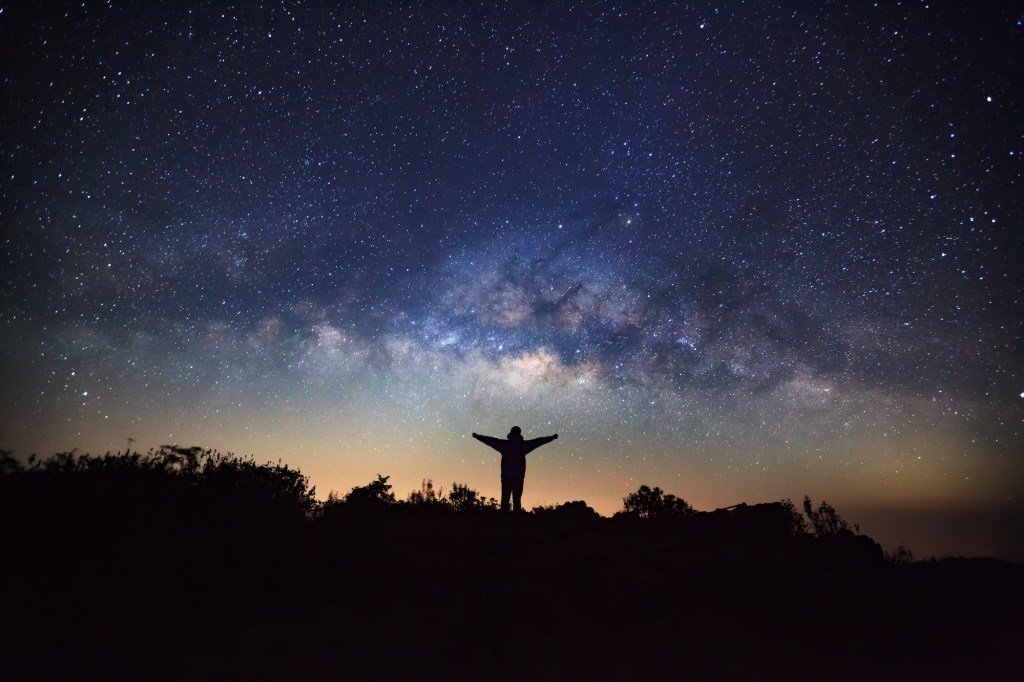
The next sequence in this dream is now (and always has been) more palpable and imminent than those grainy home movies. Later that night, I found myself detached …. floating in a yawning chasm of outer space …. utterly alone and disconnected.
I don’t know to this day whether I had a dream when I fell asleep that night or whether it came to me in a ghastly vision. It doesn’t matter. If claustrophobia can be felt in an endless void, the experience would be close to what I felt. Angst and dread have nothing on the feelings I had that night.
I say this to frame my thoughts as I recall the song with which Haley Heynderickx closed out the evening: the Untitled God Song.
I am afraid that the title to this piece promises more than I can deliver. I don’t have it all figured out. Not even close. If I had it all figured out in my mind, I would still be an impossible gap away from waling it out.
If my mind knew all there was to be known about faith, I am not confident my heart would be sure to follow. In fact, I fear my heart would not follow. It often does not follow where my mind, limited as it is, knows it should go – wretch that I am.
I say this with no love lost for myself and no false humility (to the extent that I can muster a humility that is true).
The worship leader prayed, “You are a God of love”, and he followed with the acknowledgment, “You loved us first.” He continued, speaking to us to remind us that “God forgives is; we fall short, but His mercies are new every day”.
I humbly, gratefully, and joyfully accept these truths. If God were not such as He is, I could not live with myself. I could not forgive myself, but that God forgives me.
This morning I tuned in online to the church service from my easy chair because I tested positive for COVID on Friday. I barely left this easy chair yesterday.
I don’t do well with nothing to do – nothing to do that I want to do anyway, other than mindlessly scrolling through everything my various technological devices will offer me.
Some people are given to doom scrolling, “spending an excessive amount of time reading large quantities of negative news online”, according to Wikipedia, which can cause the mind to race, leading to burnout, and causing you to” feel uncertain, anxious, or distressed”, according to WebMD.
Ironic, isn’t it? The Internet offers conveniently a ready definition to a malady caused by excessive time spent on the Internet. I don’t need to search my mind for the right words. They are at my fingertips with the click of a mouse. I barely need to think about it!
Not that it helps at all. I can define doom scrolling, acknowledge it, understand it and still fall victim to it. Knowledge is like that. It gives us a false sense of mastery and control.
Boredom and mindlessness are a bad combination for me. I constantly desire to be intrigued, engaged, entertained, piqued, inspired … yet I am not always willing to put in the work or thoughtfulness out of which real inspiration, meaning and purpose comes. I also sometimes look for inspiration and meaning in sources that are not capable of delivering it.
Sometimes, I simply don’t want to be bored, but I am too lazy to work at not being bored. Like I said, this is a bad combination for me. It’s a real time suck. An utter waste of time. It leaves me feeling completely unfulfilled and tempted to fill that gap with shadowy pleasures.
After getting up in the morning yesterday and reading through the daily Scriptures that are mapped out for me in the bible app I use, I failed to devote my attention to God or anything meaningful for the rest of the day. I might have said a half-hearted prayer or posted half a thought here and there – nothing but a mist floating over a never-ending torrent of things to see and hear on the Internet.
The sermon this morning was on “the crisis of pleasure”. The crisis of pleasure is a crisis of faith.
It’s a crisis of focusing our primary attention on seeking the scraps we can scrounge up in a world subjected to futility, heads down, eyes focused in the dust, when God is nudging us to look up. It’s a crisis of settling for the meager samplings found in the here-and-now while ignoring Christ, the hope of glory, who offers us things we can’t even imagine.
My mind knows these things full well. I write about them often. It might even be the most common theme of my writing – letting go of the things of this world to seek first the Kingdom, living as strangers and aliens in this world that is passing away, because we long for a heavenly country.
The pleasure we seek in this world is to please the self. There is no other kind. The pleasure we long for is the pleasure God gives back to us when we please Him:
“Give, and it will be given to you. A good measure, pressed down, shaken together and running over, will be poured into your lap. For with the measure you use, it will be measured to you.“
Luke 6:38
That brings us to the sermon, which was about Enoch, a man who was commended for his faith, because he pleased God. (Heb. 11:5) Enoch was a man who “walked with God”. (Gen. 5:22, 24) Reading these passages together tells us that walking with God and pleasing Him are the same things, and they are evidence of our faith, because:
[“W]ithout faith it is impossible to please God, because anyone who comes to him must believe that he exists and that he rewards those who earnestly seek him.”
Heb. 11:6
Once again, we see that faith is an action word, something I have noted a few times lately. Faith is an action that involves walking!
Will the world know you by your family, your ancestors and the legacy that comes after you?
Will the world know you by your wealth, your fiscal responsibility and ability to turn a profit?
Will the world know you by your great intellect, by the diplomas on your wall, the articles you have written? and the collection of books on your shelf you have read?
Will the world know you by your creativity, your command of a color palette, graceful and unique strokes of the brush and eye for design?
Will the world know you by your fame, by the number of people who know your name?
Will the world know you by your physical prowess, your ability to come through in the clutch, and your wins?
Will the world know you by your command of the English language, your artful turn of a phrase and your ability to move people with the written word?
Will the world know you by the instrument you play, the finesse of notes and rhythms, and the virtuosity with which you play your instrument?
Will the world know you by your professionalism, by your reputation for excellence in your field, and the accomplishments you have achieved?
Will the world know you by your stunning good looks, your impeccable fashion taste, and the company of beautiful people you keep?
Will the world know you by your eloquence, the depth and richness of your voice and your ability to command the attention of a crowd?
Will the world know you by your scientific mind, your understanding of technical details, and ability to apply scientific method and sound logic?
Will the world know you by your leadership, the number of people who follow you and your influence?
Will the world know you by the music you compose, the divine harmonies and intricate melodies you weave together in symphonic wonder?
Will the world know you by your politics, the platforms you have championed, and the dedication to your party allegiances?
Will the world know you by the roles you have played, the tears you have coaxed from fawning audiences, and the adoring fans you have?
Will the world know you by your architecture, by your complex end subtle designs, by the magnificence of the structures created from your drawings?
Will the world know you by your dedication, reliability and number of sick days you did not take?
How will the world know you?
In the end, we all go down to the grave, and the world is passing away. When an Ode to a Grecian Urn fades from collective memory, Jesus said we will be known as his disciples simply by our love for each other.
“Love one another. As I have loved you, so you must love one another. By this everyone will know that you are my disciples, if you love one another.”
John 13:34-35
“We know that we have passed from death to life, because we love each other. Anyone who does not love remains in death.”
1 John 3:14
“Be devoted to one another in brotherly love. Outdo yourselves in honoring one another.”
Romans 12:10
“Love never fails. But where there are prophecies, they will cease; where there are tongues, they will be stilled; where there is knowledge, it will pass away….” And now these three remain: faith, hope and love. But the greatest of these is love. “
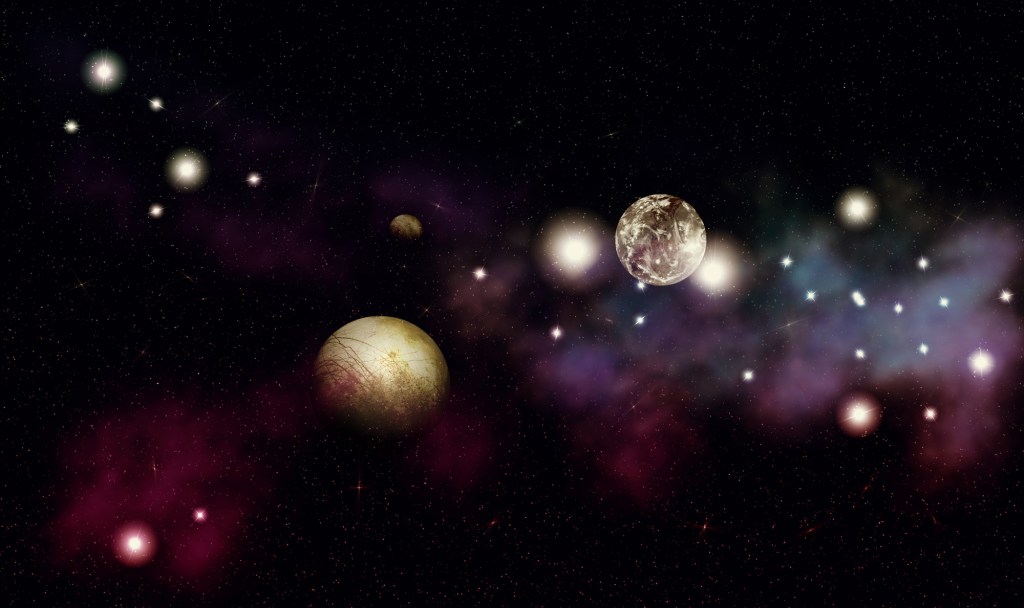
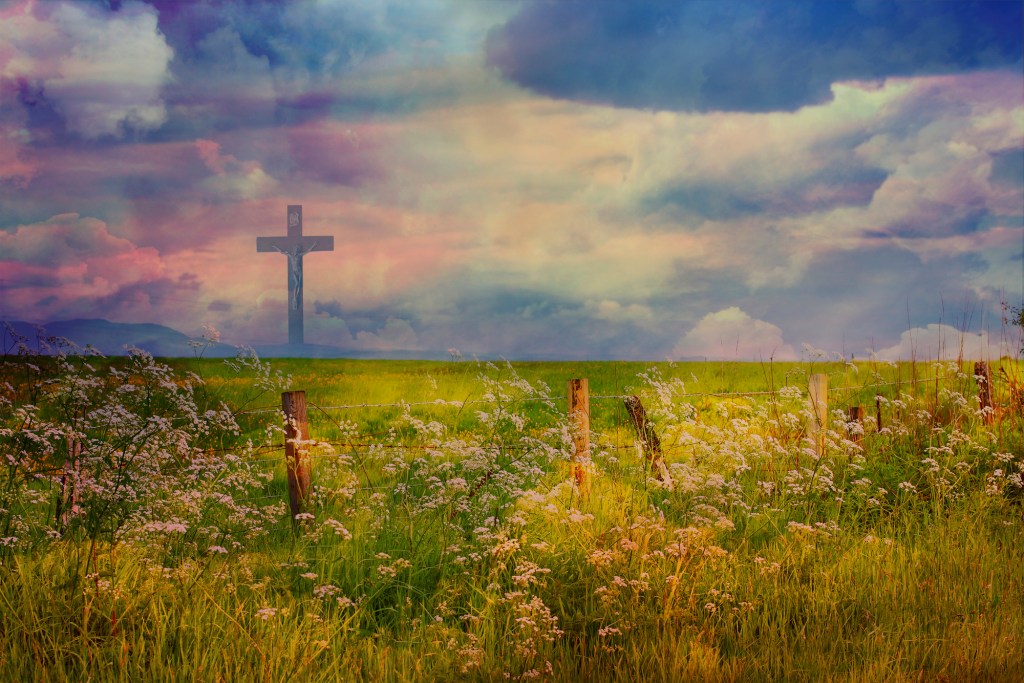
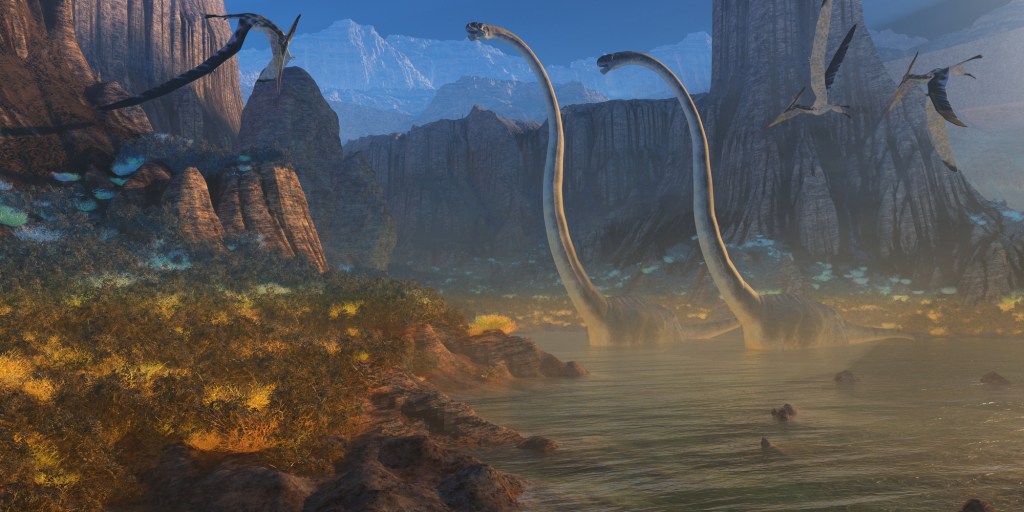
So Will I (A Hundred Million Times) by Hillsong is my inspiration today. Listen to the version by the UPPERROOM, featuring Abbie Simmons while you read the lyrics and view the photos of the wonders of God’s creation.
God of creation There at the start Before the beginning of time
With no point of reference You spoke to the dark And fleshed out the wonder of light
And as You speak A hundred billion galaxies are born
In the vapor of Your breath the planets form
If the stars were made to worship so will I
I can see Your heart in everything You’ve made
Every burning star A signal fire of grace
If creation sings Your praises so will I
God of Your promise You don’t speak in vain No syllable empty or void For once You have spoken All nature and science Follow the sound of Your voice
Photo credit Deb Zehyer
And as You speak
A hundred billion creatures catch Your breath
Evolving in pursuit of what You said
If it all reveals Your nature so will I
I can see Your heart in everything You say
Every painted sky A canvas of Your grace
Photo credit Miriam Higgs
If creation still obeys You so will I
So will I
So will
If the stars were made to worship so will I
If the mountains bow in reverence so will I
If the oceans roar Your greatness so will I
For if everything exists to lift You high so will I If the wind goes where You send it so will I
If the rocks cry out in silence so will I
Photo credit Paul Smith
If the sum of all our praises still falls shy
Then we’ll sing again a hundred billion times
God of salvation You chased down my heart Through all of my failure and pride
One of the most hauntingly beautiful songs ever written and recorded is On the Willows from Godpsell, the musical. Take a moment to listen to the song and the words.
The song lyrics are found in Psalm 137 from the Hebrew Bible and the Christian Old Testament:
“By the waters of Babylon, there we sat down and wept, when we remembered Zion. On the willows there we hung up our lyres. For there our captors required of us songs, and our tormentors, mirth, saying, ‘Sing us one of the songs of Zion!’ How shall we sing the Lord’s song in a foreign land?”
Psalm 137:1-4 ESV
The Psalm is a communal lament of the exiled people of Abraham’s ancestry in Babylon yearning for Jerusalem in their homeland. The rivers of Babylon are the Tigris and the Euphrates and their tributaries.
As I meditate on these things, I find it ironic that the region of the Tigris and Euphrates are thought to have been the location of the Garden of Eden. When the Psalm was written, the area was governed by Nebuchadnezzar II, the most powerful ruler in the known world at the time, who had sieged Jerusalem, captured its inhabitants, and driven them to Babylon.
The song captures beautifully the sorrow and longing of a people who had recently lost their homes and all that was familiar to them. Not just their homes, but their way of life, their safety and security, their community, their culture, their ancestral roots, and their spiritual sanctuary – the Temple. Everything they valued most highly was lost in the exile, even their purpose and reason for living.
Jerusalem was the gem of the land God had promised to their ancient father, Abraham. Abraham had wandered from Ur, not far from Babylon, at the direction of God over one thousand miles to a “land God would show him”, a land God promised for his descendants.
Several generations after Abraham, his descendants were forced by famine to find refuge in Egypt where they were initially welcomed with open arms. They were eventually enslaved there for the ambitions of the Egyptian Pharaohs. They labored there, captives in slavery, for approximately 400 years.
Through a miraculous series of events, Moses led them out of Egypt and out of the grasp of their captors. They wandered 40 years through desert regions between the land of their former captivity and the land God promised many, many generations earlier to Abraham. God lead them by cloud during the day and by fire at night.
When they finally arrived in the land God promised so many years earlier, a land flowing with milk and honey, it was a homecoming of epic proportions. They lived and flourished there for many generations and centuries.
They were able to fend off the surrounding threats and to establish an Eden of sorts for themselves. Their safety and security that allowed them to construct a grand Temple where they could commune intimately with their God who rescued them out of slavery and delivered them to the promised land.
But all was not well in this Eden. Much like the first Eden, choices were made that ran counter to the designs and intentions for their wellbeing.
Through the Prophets, we learn that they became complacent in their comfort and abundance. They forgot the God who rescued them and delivered them into the land and gave themselves to idols. They stopped doing justice among one another, and they became as corrupt, wicked and evil as the nations that were driven out of the land before them.
This cycle of Edenic living, exile, longing, deliverance, redemption, Edenic living, exile and longing is the story of humankind. The exile is long and the yearning for Eden is great.





















 Navigating by Faith