The God that We Judge

CourthousePeople say that they reject Christianity because of the Old Testament. They say that they cannot believe in a God who strikes people dead and instructs His people to wipe out (kill) other people.

There are other reasons, of course, that people give for not believing. My focus in this writing is only this pop culture view of Christianity and the God of the Bible.

I think what people are saying when they say they cannot believe in the God who is described in the Old Testament is that they can’t believe in a God who seems to be (to us) so arbitrary, angry and jealous as God is portrayed in the Old Testament.

There are many things that can be said in response to this popular sentiment. For one thing, if there is a God, it doesn’t matter what I believe or what you believe: God is God regardless of our beliefs. There is Truth in the world, and it transcends me and you. The important question is, then, not what we think about God as revealed in the Old Testament, but whether it is true.

Considering whether God as revealed in the Old Testament is true should begin with some understanding of the Old Testament. In reading what people write and listening to what people say, most people (in my opinion) reject “the God of the Old Testament” or God as revealed in the Bible with very little understanding of what they are rejecting. They are rejecting a distortion or caricature. If you are going to reject something, at least understand what you are rejecting!

Continue reading “The God that We Judge”

Doing the Right Thing

Doing the right thing: If we are not faithful with the little things, we will not accomplish the big things.

Man Standing on PinnacleMany people would like to save the world. Many of us find fault with our world in which poverty, homelessness, war and other evils exist. We want to be part of the solution, and we think we are. We have aspirations to take on the big things, but we ignore the little things.

We fail to realize that, if we are not faithful with the little things, we will not accomplish the big things. When we fail in the little things, we are part of the problem and not part of the solution.

I count myself among the many. I don’t always do the right thing. So, I am preaching to myself and to anyone who cares to listen.

One little, petty example got me thinking about this. It is not a big thing, but that is exactly the point. The little things that we ignore and discount add up. The little things are what define our character and the direction of our lives. The little things become the big things.

Before I give you the example, I urge you not to react the way I would be inclined to react. I might be tempted to say, “Well, I didn’t do that. He is not talking about me.” If you have not done what I am going to describe, don’t think you are off the hook. I guarantee you, if you are human, you have done something else that is similar.

Continue reading “Doing the Right Thing”

Abraham and the Love of God

The pagans knew their place in the world, the utter separateness between them and the creative force of the world and the fearful sense of a being so much greater than us that might as soon squash us as let us live. That creative force it turns out, however, loves us and desires relationship with us.

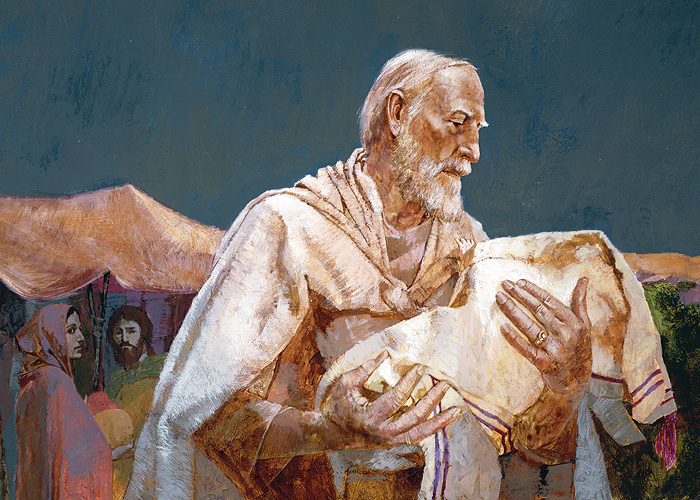
abrahamAbraham, by Sufjan Stevens, ends with these words:

    Abraham

  Put off on your son

Take instead the ram

   Until Jesus comes

Abraham lived around 2000 B.C.E. in Mesopotamia. (Answersingenesis) Child sacrifice was common practice in that time in that area of the world to appease the gods that people thought existed. It would not have been a foreign concept to Abraham for God to ask him to sacrifice his son. That practice was part of the life and culture of the time in which Abraham lived.

The request, however, would have been particularly difficult for Abraham to honor. God had promised him a son. God promised that Abraham’s child would populate the earth as the stars in the sky. Abraham was already old and past normal child rearing age when God made these promises.

The request by God for Abraham to sacrifice his son would have hit Abraham hard. It would have made no sense. It flew in the face of the promises Abraham thought God made to him. Continue reading “Abraham and the Love of God”

How Can a Loving God….?

Sunscreen

~~~~~~

In 1 Samuel 15, God told King Saul to wipe out the Amalekites, every last one of them, and leave no survivors. The story is about Saul failing to follow God’s directions while claiming to have done so. He kept King Agab alive and allowed his men to save the best of the sheep and other animals. When Samuel, the prophet, asked, “What is this bleating of sheep I hear?” Saul blamed the men for his failure to obey God, but Saul was the one who did not obey God. That is how the story goes….

But, wait a minute! …. God told Saul to kill them… all of them. That sounds incredibly harsh. It sounds worse than harsh. Is God not supposed to be a loving God?

This is a pretty common question (a rhetorical one) posed by people who oppose Christianity and reject the Bible. “A loving God would not kill people,” they say. Since the Old Testament, in particular, depicts God in this way, the Bible cannot be true, the Christian God is fiction and the whole thing is bunk.

The unspoken sentiment behind that line of thinking is that “we” (humankind) have come a long way since primitive times. We have evolved past the Enlightenment into a modern scientific age in which we have superior moral and intellectual stature. We are the gods of our own world. We have thrown off superstitious belief in a tyrant God that stifles human potential in this post-enlightenment age.

But does history add up that way?

Continue reading “How Can a Loving God….?”

Immigration: the Strangers Among Us

If Christians are to be instructed by the Word of God on immigration, what would that instruction be?

In the wake of Obama’s executive orders on immigration and the outcry and fallout from it, I realized that I did not have a biblical framework on which to analyze the issues. I could not definitely say exactly what the Bible instructs us on the issue of immigration.

The Syrian refugee crisis at that time was much in the news, and I was conflicted by the many Christians urging our government not to allow Syrian refugees into the country. I was conflicted because I didn’t know what to think.

I realized that, as a Christian, I need to be instructed by the Word of God, and I wondered, “What would that instruction be?” Therefore, I took the time to study it, and the answer surprised me in its clarity.

Continue reading “Immigration: the Strangers Among Us”