Christmas Thoughts: Uriah’s Wife and The Redemption Plan of God


My Christmas thoughts a year ago were focused on the women in the genealogy that Matthew included in the beginning of his Gospel. Tamar, Rahab and Ruth are all women whose stories foreshadow the ultimate redemption saga of God entered into our story as human being to redeem the world. The grand story of global redemption is what we celebrate at Christmastime, and these women are each instrumental in that global redemption story.

A total of five women are listed in the patriarchal lineage included at the beginning of Matthew’s Gospel. The oddity of including women in a patriarchal lineage bears some investigation. Indeed, we find the redemptive theme when we look into it, and, that theme continues with the next woman on the list, but with a twist.

The twist begins with the fact that the next woman isn’t even named. The genealogy in Matthew reads like this:

Boaz the father of Obed, whose mother was Ruth,
Obed the father of Jesse, and Jesse the father of King David.
David was the father of Solomon, whose mother had been Uriah’s wife[i]

Another oddity signals that something is different here. The stories of Tamar and Ruth were stories of kinsman-redeemers, women who sought the shelter and protection of the relatives of their deceased husbands, and, thereby, gave birth to sons who would carry on the line that would eventually lead to Jesus, the Christ (Messiah). The stories of the first three women, including Rahab, are also stories of trust in God that are met by God in His faithfulness.

The story of “Uriah’s wife” is another example of God’s faithfulness, but the human side of the story is one of unfaithfulness. Bathsheba is the mother who had been Uriah’s wife. She isn’t named, perhaps, for the scandalous reason that King David murdered her husband and took advantage of her.

Continue reading “Christmas Thoughts: Uriah’s Wife and The Redemption Plan of God”

Christmas, Taxes and a Heart for God

What do Christmas, taxes and King David have to do with each other? You might be surprised to find out.

Archaeological site, City of David in Jerusalem, Israel 


This blog article is prompted by a Christmas tax article. Yes, Christmas and income taxes go together. Who would’ve thunk it?!

In Luke 2:1, we read that Caesar Augustus sent out a decree for a census. It turns out the census was declared so that the Caesar could tax people.

That fact, though, isn’t what caught my eye or what prompts this article, though. The article is also not about unjust taxes that burden the poor and avoid the rich. This article also isn’t about the controversy over whether Luke is accurate about the census and the timing of it.

What prompts me to write this piece is the reference to a previous census and previous tax and the surprising and shocking instigator of that tax – the man of God who allowed it to happen, David.

Continue reading “Christmas, Taxes and a Heart for God”

Emptied of Glory and Obedient to Death

Depositphotos: 31617591 Copyright: DesignPicsInc

On Good Friday we remember the ultimate sacrifice God made for us. Not only did He empty Himself of His glory to become like us, taking on human flesh, but He was obedient to the law that He established for us – obedient to death – even death on the cross. We shudder at the thought of hanging on a cross, but it’s hard for us to imagine how utterly shameful crucifixion was in the 1st Century.[1]

This was not just a person, though, this was God who had already shed his glory to become like us and walked in humble obedience to all that He required of us – something that we do not even do ourselves. This man who hung tortuously and shamefully on the cross was also fully God who certainly suffered all the pain and shame that a man and God could possibly feel at the hands of His own creation.

In the article linked at the end of this blog piece, Trevin Wax makes three observations that have stuck with me since I read them: Continue reading “Emptied of Glory and Obedient to Death”

Remembering Jesus on Good Friday

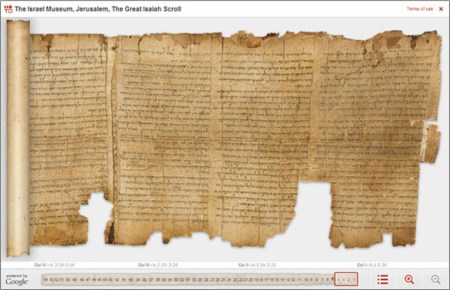
The Great Isaiah Scroll (1QIsaa) • Qumran Cave 1 • 1st century BCE • Parchment • H: 22-25, L: 734 cm • Government of Israel • Accession number: HU 95.57/27

These words where written by a man named Isaiah[1], considered a prophet, about 700 BC, before Christ Continue reading “Remembering Jesus on Good Friday”

The Resurrection: 2nd Century Legend? or 1st Century Factual Claim?


Easter is just around the corner so thinking about the Christian claim that a man from Nazareth in 1st Century Palestine died and rose from the dead three days later is a timely consideration. The accounts of this event don’t read like mere story or legend. They have all the characteristics of Greek biographies capturing historical accounts.

Many modern scholars accept the Gospels as part of the Greco-Roman biography genre (focusing on the similarities), while others find them uniquely Jewish (focusing on the differences). Central to this ongoing debate is the apparent intention of the authors to assert a factual, historical narrative.[1]

The difficulty modern scholars have with the text, which reads like biographical and historical accounts, is the inclusion of fantastical claims of miracles, the resurrection of Jesus and theological statements, many of which are penned as statements made by Jesus.

From the early to mid-19th Century, much of the biblical scholarship has leaned in a skeptical direction, and that inertia continued robustly into the 20th Century. That scholarly trend produced a skeptical consensus weighted toward a view for instance, that the Gospels, were written long after the events they describe, probably in the 2nd Century, making the resurrection and appearance of Jesus to his followers something akin to legend.

This thread of scholarship suggested that early formulations of the message of Jesus did not include his resurrection or appearances. These things were believed to have been added many decades and two or more generations after the events took place.

The 20th Century view began with skepticism and ended with a skeptical conclusion explaining the resurrection claim by the kind of embellishment that comes with the passage of time. This was the consensus view when I studied religion in the late 1970’s.

But one man, wrestling with his own doubts, took the facts the skeptics would give him and pieced together an analysis that does not square with the view that the resurrection claim is a later embellishment of what the first followers of Jesus believed. These “minimal facts” have changed the views of most 21st Century Scholars, even skeptical ones.

The Scholarly consensus has now changed on when the Gospels were written and on what the early message of the first followers of Jesus was. For instance, the scholarly consensus now agrees that all the Gospels were written in the First Century. Even skeptical scholars date the Gospels between 70 AD and about 95 AD. The scholarly consensus also agrees that the message included the death and resurrection of Jesus from very early on.

Continue reading “The Resurrection: 2nd Century Legend? or 1st Century Factual Claim?”