Islam & Christianity Through a Former Muslim’s Eyes


I am going to do something a little different in this blog. I often weave other people’s presentations and thinking into my articles, but, in this one, I am going to lay out another’s person’s presentation in its entirety.

No one topic, perhaps, in all the world today has demanded more of the world’s attention than the happenings involving radical Islamic terrorists.  This article is not going to attack Muslims; neither is it going to defend them. Rather, if you will listen to each of the segments, it will help you to understand Islam and Christianity in comparison to each other from the viewpoint of a man raised a devout Muslim of Islamic missionary parents.

Continue reading “Islam & Christianity Through a Former Muslim’s Eyes”

Dating the Gospels and the Resurrection Story

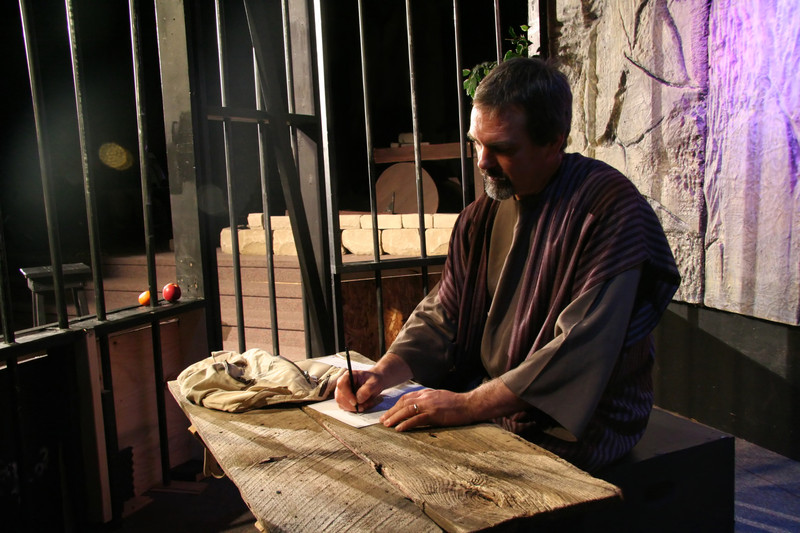
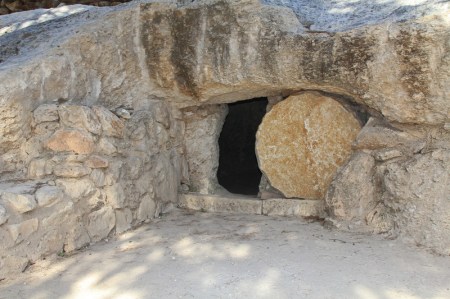
© Can Stock Photo Inc. / CWMGary

When were the Gospels written? This is an important question.

Most scholars date the Gospels between 40 and 65 years from the death of Christ as follows: Mark 70 AD, Matthew 80 AD, Luke 85 AD and John 95 AD. The scholarly position is stated concisely in the narrative on Dating the Gospels linked here.  Other scholars date them much earlier than that, but Gary Habermas, adopts the majority scholarly view in making his argument for the historical resurrection. (Gary Habermas Explains The Earliest Source Of Resurrection Facts.)

Virtually no one disagrees that Paul’s letters (the ones scholars concede) were written in the 50’s AD. James, Peter and Paul all died in the 60’s AD during the persecution of Christians by Rome. Another key date is the destruction of the Temple in Jerusalem in 70 AD. The scholarly consensus is that “the deaths of these important figures likely encouraged the writing down of the narratives about Jesus”.

Some scholars maintain the narratives were written down well before that time, the reasons for which I will explore in this article. Incidentally, that was the the common view until about the 19th Century, when scholars from the Tubingen school in Germany began to posit the idea that the Gospels were written much later, even as late as the 2nd Century. They also began to question that the Gospels were written by the people attributed to them.

That view of the Gospels is what I learned in college in the late 1970’s, but modern scholars have backed off that view and concede that the Gospels were written within a generation of the death of Jesus. Most scholars agree that Mark was the first Gospel to be written, and that Mark was written around the year 70 AD. Most scholars believe the Gospels of Matthew and Luke were composed in the 80’s, using Mark as source material and a “collection of Jesus’s sayings” (oral tradition). The Gospel of John was believed to derive from different sources (like the Apostle John, himself) and was written toward the end of the 1st Century..

While there is some disagreement on how early the Gospels were written, the work of Gary Habermas has convinced many (most?) scholars, even skeptical ones, that the message of the Gospel – that Jesus, lived, died and rose from the dead, appearing to his followers – goes back many years before the Gospels are believed to have been written. 

In fact, it seems fairly clear that this message (of the resurrection) goes back virtually to the beginning. It goes back, at least, to the time when Paul says he “received” the message at his conversion, but it goes back further than that because he corroborated the message he received with the apostles in Jerusalem who were sharing the same message before Paul did. That message was also at the heart of all the creeds found in Paul’s writings, which were arguably before the Gospels were written.

Continue reading “Dating the Gospels and the Resurrection Story”

The Ebla Tablets Confirm Biblical Accounts

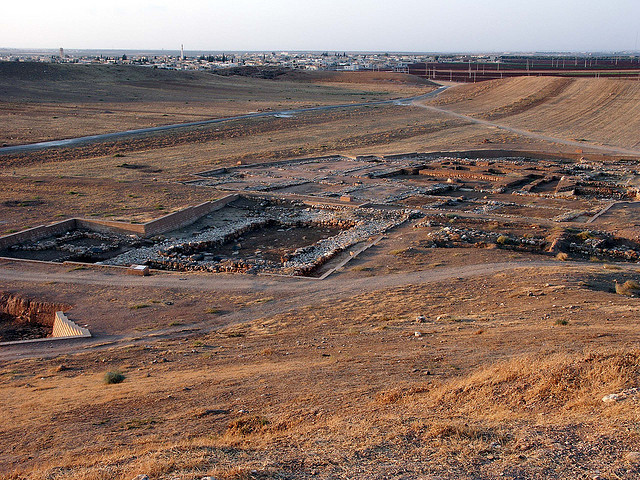
Ebla (Syria) by Klaus Wagensonner

Bible skeptics often talk as if there is a dearth of evidence that any of the events in the Bible took place. Skeptics consider the Bible, and especially the Old Testament, as fictional, a fanciful product of the imagination trumped up many, many years after the actual events took place, and full of places and characters that never actually existed. The Ebla Tablets found in Northern Syria tell a different story.

The Ebla Tablets predate the Biblical record that is ascribed to Moses and confirm many of the names, locations and other assertions found in the Mosaic text of the Old Testament.  Continue reading “The Ebla Tablets Confirm Biblical Accounts”

Exploring the Gospels from Different Angles: Location, Names and Nuance

Dr. Peter J. Williams looks at the Gospels from the angle of location, names and nuances that confirm the authenticity of the Gospels.

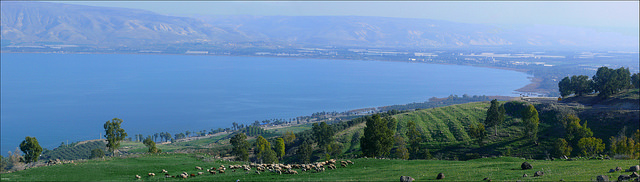
Kinnereth (Sea of Galilee), Israel - panorama of the southern end, February 5th, 2014

I am continually interested in the latest evidence for God and the authenticity of the Bible. Not that I am doubting and looking for evidence to bolster my faith. for me, it’s more like opening presents on Christmas.

I searched, and I found the path that I am on long ago. Not that I was a great discoverer; far from it. God saw me coming. Not that I have arrived, but there is no other path for me. I was meant to be on this one. When Jesus said, “I am the way, and the truth, and the life, and no one comes to the Father but through me”, I believed, and I have not been disappointed in that belief.

I still believe. Not that this belief is unsubstantiated faith. Far from it! God made Himself known to me years ago. He met me where I was then, and He continues to be true, trustworthy, faithful and present today. The older I get and more I learn, the more true it rings. 

At the same time, I have never been more open to entertaining truth than at any other time in my life, except (perhaps) for those years of searching before I became a believer. If God is true, then He stands up to truth wherever we can find it!

Continue reading “Exploring the Gospels from Different Angles: Location, Names and Nuance”

Previewing the Minimal Facts Critique of the Resurrection

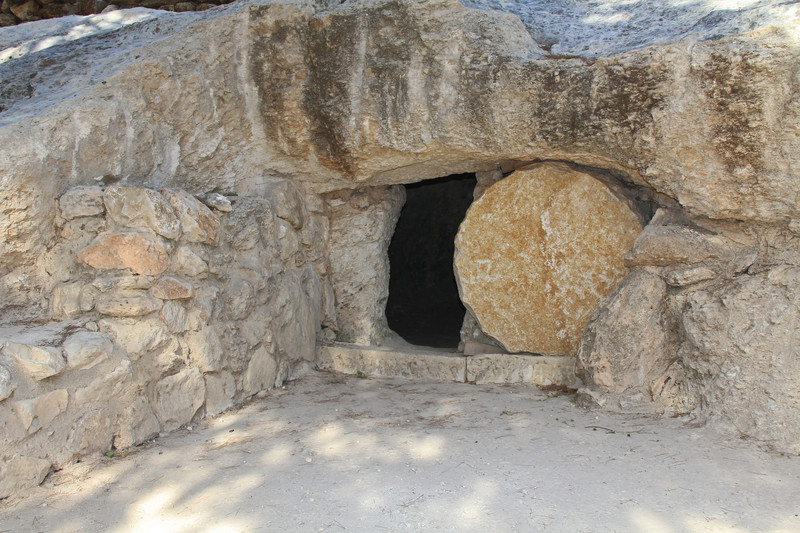
canstockphoto18553034


If Jesus Christ was not raised from the dead, Christians are to be pitied above all people. These are not my words, or even the words of a famous pastor or teacher. These are the words of Paul right out of his first letter to the Corinthians:

“[I]f Christ has not been raised, then our preaching is vain, your faith also is vain. Moreover we are even found to be false witnesses of God, because we testified [concerning] God that He raised Christ, whom He did not raise…. and if Christ has not been raised, your faith is worthless; you are still in your sins. Then those also who have fallen asleep in Christ have perished.  If we have hoped in Christ in this life only, we are of all men most to be pitied.” (1 Cor. 15:14-15, 17-19)

Christianity, far from being closed to reason, invites investigation. The importance of reason is built into the greatest commandment: love God with all your heart, soul and mind.

The earliest adherents to Christianity did not hide the fact that the resurrection of Christ is the central tenet of Christianity. They put it out there, front and center, and they were not shy to state the importance of the resurrection.

If the resurrection really happened, it is the single most important event in human history. If it is false, it is the single most influential hoax of all time. Christianity is built on the foundation of the resurrection, and without it, the entire structure of Christianity crumbles.

Dr Gary Habermas knew this when he was struggling with his faith, doubting the veracity of the Bible and Christianity. He knew that the resurrection was the central and crucial component of Christianity. If the resurrection did not happen, not only is the tomb not empty, Christianity is a complete and utter sham.

That was over 30 years ago when Dr. Habermas began exploring the claim that Jesus rose from the dead to confirm or deny his own doubts. That personal exploration led to a career of scholarship on the subject of the resurrection.

Continue reading “Previewing the Minimal Facts Critique of the Resurrection”