Myth, Seasons, and the Resurrection of Jesus

Should the claim that Christianity is similar to prior, pagan mythology concern us?

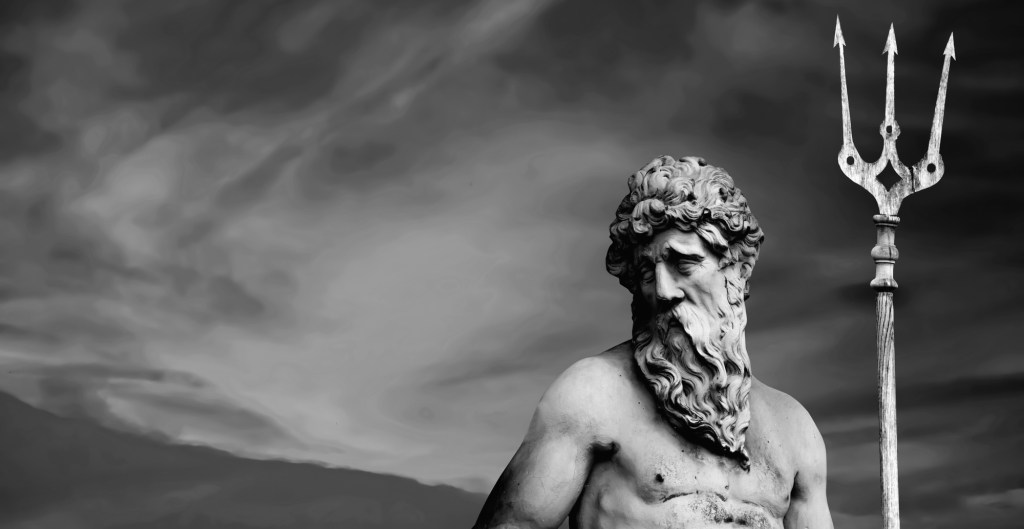
The god of the sea and oceans Neptune (Poseidon).

Popular trends arise in culturally contingent ways, and those trends often dominate the public mind for a season. Thus, the idea that Christianity borrowed from prior pagan mythology gained notoriety with the rise of New Atheism. The Zeitgeist: The Movie (2007) is a poster child for this popular trend in thinking.

The Zeitgeist movie forces the narrative, ignoring glaring dissimilarities, and manufacturing similarities that don’t really exist. It ignores (or isn’t familiar with) the relevant academic scholarship, but it has been watched well over one million times. We might say that the Zeitgeist movie has become legendary in a truly mythic sense itself.

I will go out on a limb, nevertheless, to say that Christians have shown far too much angst over this trend of claiming that Christianity is similar to prior pagan mythology. There are critical differences, and they are significant, but there are some similarities also. Do the similarities pose a problem for Christianity?

The short answer is, no. In fact, if truth is truth and reality is reality, ancient, pagan attempts at explaining that reality are likely to hit on some metaphysical truth. If they didn’t, I might begin wonder about the nature of reality and our ability to recognize and understand it.

Mythic literature as a genre is an attempt to provide some explanation and understanding of basic realities and the ebb and flow of life. I am reminded of these things as I sit outside on an unseasonably warm day in November with a view of trees bared of their multicolored leaves that have been collected by my earnest neighbors in piles lining the suburban streets for pickup.

Fall is ebbing into the dark night of winter. The subtle coolness in the breeze portends (what seems to me now) a distant spring. I am braced for what comes next as I enjoy what is likely to be the lest vestige of warmer days for longer than I care to think about.

My hope for the spring, however far off it seems in my present mood, is rooted in my experience of the certainty of the seasons. I know my hope is not fanciful, even as I brace (all too knowingly) for the cold, bleak trudge ahead.

It seems completely natural that ancient mythology captures this duality in stories that have religious significance. These experiences are common to man. We remind ourselves of the hope of spring as we gaze in wonderment at fall trees in the throes of seasonal death and the chill onset of winter. It reminds us of our own life and death sagas, even now in all our modern comforts.

Our modern comforts allow us to be a bit more disconnected and circumspect, perhaps, than our ancient forbearers. Those comforts and great advances in scientific knowledge allow us to be intellectual about these things. Ancient pagans lived literally at the mercy of the seasons, and all the things they didn’t know played like gods on the stage of their fraught imagination.

Modern people chalk seasonal changes up to natural cycles that just happen. We believe humans chased all the gods off long ago. The ownership we have asserted in our knowledge of the way the world works gives us an illusion of control that I surmise is not all that much different than the ancients, who sought some ownership and control of this world through the mediators of gods they thought they could appease.

Pagans found solace in the seasons as we do. Myth is rooted in collective experience, and it is driven by an impulse to understand and import control into our experience. We also have a natural inclination to seek meaning. We might call this impulse a “religious” one.

Though we have the chased the gods off, we still have a religious impulse. Though we no longer believe in many gods, and we no longer venerate ancient myths with more than a curious read, the idea of one, Creator God God persists, and it is not explained away by modern science and knowledge. The Bible, though it has ancient origins, stands up to our modern scrutiny in ways that pagan myth does not.

Continue reading “Myth, Seasons, and the Resurrection of Jesus”

Narnia, and the Danger of Becoming an Accidental Christian

“I don’t think I ever really feel in danger of accidentally believing… or stumbling into it.” Laura Miller


I’m listening to the Unbelievable? podcast replay of the discussion with Holly Ordway & Laura Miller: A convert and skeptic in Narnia. As always, I find the conversation on the Unbelievable! podcast intriguing and thought provoking, engaging people on opposite ends of the thought spectrum.

Holly Ordway and Laura Miller had similar experiences in reading the Chronicles of Narnia by CS Lewis. They read them as young children and loved the books purely for the fantasy. When they were older and discovered that the books had Christian themes and symbolism, they felt betrayed.

Laura Miller explained her sense of betrayal. The fantasy world she imagined and loved turned out to be something different than she thought. The discovery left her feeling like she was on the outside looking in.

As I think about it, the allure of the Chronicles of Narnia is exactly the sense of being on the inside, of discovering a world through the back of an ordinary wardrobe that is unknown and unseen by adults. As a child, perhaps nothing is as intriguing as a secret adventure unknown by your parents.

The experience of finding a whole new world quite by accident through an ordinary wardrobe that is unknown to the greater world, is a fantastical and intimate experience for a child. That intimacy, perhaps, is what gave way to Laura Miller’s feeling of betrayal.

The discovery of “hidden” Christian symbolism, allegory, and themes “planted” in the Chronicles of Narnia betrayed her sense of intimacy with the story. The unveiling of the “secret” behind the secret world she loved for its own sake, destroyed the world of her imagination. The secret that lured her in was a facade.

Holly Ordway felt the same betrayal at first. The secret behind the secret turned the story on its head. The secret, the real secret, was initially hidden from them. When the secret was exposed, they found a world they didn’t expect or know they had encountered.

For Miller, the experience was like losing innocence. In a moment, her childlike fantasy world was forever undone. The story wasn’t the same.  The magic was lost.

For Holly Ordway the sense of betrayal gave way to curiosity – like the curiosity with which a young child might explore a hidden world found inside a wardrobe. It led her eventually out of atheism and into the world of faith in God. The secret behind the secret opened up a better, larger world to her.

The discussion was a good one. I am reminded of a series of dreams I had as a child. The first night found I could fly as I clutched Silly Putty in my hand. It was the most exhilarating dream I ever had. It seemed real, and the realness of it lingered after I woke.

I had the same dream the next night, but I became but I self-conscious. I didn’t know how it worked. I was afraid I couldn’t repeat the feat. I was still able to fly but not as long. My self-consciousness seemed to dispel the magic, leaving me with a dreaded sense of not knowing how the magic worked.

The next night I had the Silly Putty in my hand, but my wishful thinking didn’t work. Try as I might, to make myself fly. I could not recreate the magic, and I never had another dream of flying.

In the initial dream I had tapped into magic quite by accident, like wandering into a wardrobe that opened into an unknown world. But, I could not reproduce the magic because I didn’t have the knowledge of the magic. In Laura Miller’s case, the discovery of the secret behind the secret, the knowledge of the magic, undid the magic for her.

She says that the world of Narnia was no longer as she imagined it when she first read the Chronicles. That knowledge was the undoing of her own understanding of that world. Faced with the reality of it, it was no longer magic to her. Some adult turned the lights on, and the magic was gone.


I am putting some words into what she said, but I can feel her sense of loss. It was the same sense of loss I felt when I could no longer fly in my dreams and never dreamed of flying again.

While I feel her sense of loss, the similarities in our experiences end there. In my case, a lack knowledge about the magic flying was my undoing, or so I felt. In Laura Miller’s case, the knowledge of the Christianity behind the Chronicles of Narnia was her undoing, or so she felt.

She developed her own image of that fantasy world of Narnia, and discovering Christian themes in the Narnian fabric betrayed her own imagination. I read the Chronicles of Narnia in college as a very new Christian. The way those Christian themes played out for me in the pages of those books was entering the wardrobe inside the wardrobe. It was like black and white giving way to technicolor. The nuance and subtlety in which Lewis wove those themes into a beautiful story was inspiring. Images from those books live in my imagination still today and color my theology.

Laura Miller had a distasteful experience of religion as a child. She didn’t get into much detail, though she says she grew up Catholic. I grew up Catholic also. I don’t want to be unfair to Catholics or Catholicism, but I can relate to her negative feelings. (Holly Ordway, on the other hand, found the wardrobe inside the wardrobe, so to speak, and became a believer, and a Catholic.)

Laura Miller went on to claim that “believers” live in a reality that “operates on another plane that, if I am lucky, I can fall in a hole and be in the reality they live in.” She assumes that Christian faith is just another fantasy world – one that is foreign to her.

She says, “I just don’t experience it that way,” meaning life, I suppose, though I don’t want to put words in her mouth. I encourage you to go back and listen to the conversation yourself. The following statement, however, sets the stage for my thinking today, which is this:

“I don’t think I ever really feel in danger of accidentally believing… or stumbling into it.”

She goes onto to explain her interpretation of Lewis’s past: that “he found himself wanting to believe…. and then he was able to find the pathway… towards the thing that he wanted.” She goes on to say, “I don’t really feel that desire…, and it’s kind of impossible to accidentally, or sort of inadvertently, to come into a state of a desire to believe.” She concluded, “I have emerged from all kinds of literature from all kinds of faith without feeling [such a desire].”

Her comments about “accidentally believing,” and “stumbling into” faith,” and “a desire to believe,” as she puts it, is what inspires me to write today. It begs for comment.

Continue reading “Narnia, and the Danger of Becoming an Accidental Christian”

Tolkien, Lewis and True Myth

Are myths just arbitrary inventions of fiction? Do we pull them out of thin air?

From a clip from EWTN’s “Tolkien’s ‘The Lord of the Rings:’ A Catholic Worldview”

Are myths fiction? The stories they tell aren’t true. Are they, therefore, lies? Are they worthless? Nothing but “beautiful lies”? Nothing but fairy tales?

These are the questions posed by one man playing J.R.R. Tolkien to his counterpart playing C.S. Lewis in a fictional conversation between the two men: Lewis and Tolkien Debate Myths and Lies (embedded at the end of the article).

This interplay, while fictional, is intended to capture the essence of the relationship between Lewis and Tolkien as Lewis was transitioning from the materialism he embraced as a young man to theism. At this point, he is wrestling with doubts that were rising in his mind about the truth of that materialist  world view. He was becoming convinced his previous conclusions no longer made sense.

Lewis had been raised on a diet of classical Greek and Latin literature that he learned to read in the original languages. He read these classics along with Celtic, German and other literature filled with myth, allegory and symbolism. The literature captured his imagination as a child and young adult.

As he got older, he embraced materialism, but that materialism eventually clashed with a profound undercurrent of something “real” that appealed to him in that ancient literature. The reality Lewis was confronting might, perhaps, be considered nothing more than a love of art, beauty, poetry and love itself that the materialist enjoys in common with more metaphysically minded men.

But it raises some existential questions: Is matter and energy all that exists? What of the sublime reality we all intuitively “know” and sense in classic, timeless literature and art?

Tolkien’s response to Lewis’s existential angst is the subject of this article. The substance of it continues to resonate and illuminate such modern thinkers as Jordan Peterson, whose thoughts on the same subject are contained (briefly) in a short video embedded at the end.

Meanwhile, I have done a transcript of the fictional reimagining of the Tolkien and Lewis discourse to follow:

Continue reading “Tolkien, Lewis and True Myth”

Without Leaving a Trace

I am as spiritual as the next guy. I try to be a good person. I don’t hurt anyone.

people
               Depositphotos Image ID: 15819245 Copyright: Kuzmafoto

via Daily Prompt: Trace

The crowd pushed and heaved to get a better view.

“This man, Jesus, was saying some crazy things, and people were just as crazy to believe it. I just happened to be in the area. I certainly wouldn’t go out of my way, but the spectacle caught my attention,” I said to guy next to me.

“I am comfortable with my life,” I told him. “I don’t need the drama. I don’t need to go chasing after every man who claims to have a direct line to God, and God knows there are many of them these days. They’re all crazy! They end up getting carried away with their own rhetoric. They make the Roman authorities nervous, and then they are thrown in jail or killed to make an example of them, and the crowd disperses. It always does.”

The guy next to me didn’t seem to hear what I said. He was listening to Jesus, so I listened for a few seconds.

“This guy Jesus is a good talker, isn’t he,” I said in case the guy might hear me this time. “The people hang on every word. He talks like he really knows what he is talking about, but no different than the last guy I guess. I didn’t really listen to him. Never really had the chance. More like, I wasn’t really interested.”

He looked at me only long enough to signal that he knew I was there, but he went on focusing on Jesus apparently wrapping up his message.

“Not that I’m not spiritual or anything,” I continued. “I am as spiritual as the next guy. I try to be a good person. I don’t hurt anyone. I’m certainly not like those guys this Jesus hangs around. Good for them, though. They need someone like Jesus to straighten them out. Maybe they will get their lives together.”

And, with that, the crowd began to break up and wander off. The guy next to me apparently left also. He was nowhere to be found.

“I guess this Jesus is done talking”, I thought. “Not sure what he was even talking about. I thought I heard someone say something about a miracle. Crazy! I would never get suckered like that.”

And the Son of God moved on without leaving a trace that He had ever been there, that I had ever encountered Him or ever heard anything He might have said.