J. Warner Wallace, the “cold case detective”, has become a leading Christian apologist. He brings a unique perspective to the world of faith.
Having grown up in an atheist family, he didn’t come to faith until well into adulthood. He didn’t grow up in the church, obviously. The traditional focus on personal experience and testimonies in evangelicalism was not part of his background. He didn’t come to faith through experience or the influence of personal testimonies. For him, it was simply a matter of the facts.
Wallace observes that the most popular answer people give for being a Christian is that they were raised in a Christian family. The second most popular answer people give for being a Christian is some experience that demonstrates to them personally that Christianity is true.
Wallace criticizes these bases for Christian faith because Mormons give similar answers to explain their belief in Mormonism. The number one answer people give for being a Mormon is that they were raised in a Mormon family, and the second most popular answer is some experience that demonstrated for them that Mormonism is true.
Christians don’t think Mormonism is true, but their stories of coming to faith are the same as ours. Thus, Wallace concludes, experience can be a powerful thing, but it doesn’t necessarily settle the truth of the matter, and people who rely on personal experience are relying on a weak anchor to faith.
More important than experience is whether something is true.
Wallace goes on to share his testimony in the short interchange linked at the end of this article with the caveat given above – don’t put too much faith in his (or anyone else’s) testimony. Still, we like testimonies, right?
From the sermon I heard today, I have come away with a couple of things that I am meditating on. One is personal – my need to get over myself. The need to crush the pride in me that wants to appear respectable. The desire to be liked and honored by people.
I believe God is speaking these things to me, and I need to listen and respond. I can’t be afraid to speak the truth because of fear that some people will think me a fool. I need to be willing to appear foolish for the sake of the Gospel. I confess these things today (and ask you to pray for me if you feel so compelled).
The other thing is something God has been laying on my heart over many years now. A more prophetic message for the church, the body of Christ. It goes all the way back to my earliest reading of Scripture when I noticed that the focus of the harshest words Jesus spoke was directed at the Pharisees – the religious leaders (and presumably the people who followed them).
The year 2020 will be remembered as a year of hardship and difficulty, but the ways in which people reacted to those hardships may be longer lasting than those difficulties themselves. I am thinking specifically of the religious people in the United States when I say this.
The sermon today was about the story of Zacchaeus, the wealthy tax collector who was short in stature. A more despised person one might not be able to imagine.
Tax collectors were sellouts to the Roman occupiers for personal gain. They not only collected the taxes imposed by Roman rulers; they used their position and authority to collect more than was required to line their own pockets.
Tax collectors took advantage of the Roman occupation to gain wealth for themselves at the expense of their own people. They turned their backs on fellow Hebrews and were, therefore, despised by them (and likely by the Romans as well for the same reason).
We might have a modicum of compassion and understanding for a prostitute washing the feet of Jesus with her tears, or the adulterous, Samaritan woman at the well, or the woman caught in the very act of adultery who was brought to Jesus to be stoned. Zacchaeus, though, was a man people could love to hate.
He was an outcast of a different kind. He was an outcast by choice. He wasn’t a victim of his own weakness. He exploited the weakness of his own people to benefit himself. He was alone because he chose exploitation as a way of life over family, friendship, compassion, faith and doing what was right.
It’s no wonder that, when Jesus called Zacchaeus down from the tree and invited himself to his house for a meal and fellowship, the crowd was indignant.
Of all the people Jesus could have chosen, why in the world did Jesus choose this guy? Didn’t he know who he was and what he did for a living?
Nothing would likely have stirred the indignation of moralistic, self-righteous, religious people then this!
Many of the reputable, religious people were not fans of Jesus to begin with. They had already judged who Jesus was. He came from Nazareth, a small town of little influence and lesser reputation. Does anything good come out of Nazareth.[1] (John 1:46)
Many more “common” people were saying Jesus was a prophet, and even the Messiah. Jesus seemed to encourage them. He didn’t say he wasn’t, but the Messiah was supposed to come from the line of David, the seed of Jesse, from Bethlehem, the City of David, the place where David was born.[2]
The religious people knew their Scripture.
They knew their Scripture, but they jumped to conclusions about Jesus that were incorrect. Though Jesus was from Nazareth, he was also born in Bethlehem like David was, and his parents were from the line of David.
The Pharisees applied their undeniable scriptural knowledge, but they judged by appearances, rather than giving more careful consideration to the matter. Once they came to a conclusion about Jesus, they were unwilling to consider alternative possibilities.
The crowd present when Jesus invited himself into the home of Zacchaeus included Pharisees and moralistic, self-righteous, religious followers of the Pharisees (the blind leading the blind, as Jesus called them), who criticized Jesus for associating with tax collectors (and other sinners). Some of these people were very likely in the crowd that would demand that Pontius Pilate “crucify him”!
Does anyone doubt that Jesus would be just as critical of the moralistic, self-righteous, religious people today if he lived among us?
Have people changed in the last 20 centuries? The writer of Ecclesiastes suggests the answer when he said, “There is nothing new under the sun”, centuries before Jesus.
Who are the Pharisees of today and their religious followers?
We struggle with the same issues and the same tendency for sinfulness. Jesus came to his very own! The Hebrews, of all the people on earth who should have recognized him and received him, but they didn’t recognize him. They rejected him.
They knew the Scriptures. They could recite Scripture by heart. They studied to show themselves approved. They knew right doctrine. They were proud of their religious heritage. They were pious, moral, upstanding, devoted, reputable people who had not sold out their birthright for personal profit.
But they were dead wrong about Jesus.
These are words of warning to us today. Perhaps, we should not to be so quick with our judgments or so slow to consider other alternatives.
The warning is all the more poignant for the religious among us. The interaction of Jesus with the Pharisees and the moralistic, self-righteous, religious people in the first century crowds is no less a warning for moral, upstanding, reputably religious people today than it was for them.
I recently gave a presentation on faith (and doubt). We moderns tend to think of faith as the opposite of doubt – as in proof or evidence, or the lack thereof – but that isn’t the way Scripture presents faith to us. Cosmological and fine-tuning arguments for the existence of God and so on are elementary.
We shouldn’t be commended for merely believing God exists. God has made himself obvious. (Rom. 1:20) Even the demons believe … and bristle! (James 2:19)
Rather, faith involves trust and relationship. It involves a willingness to rely on God, rather than rely on ourselves. A willingness to wait on Him, to trust Him, and to be confident in His goodness toward us. Faith is believing God loves us and desires us to love Him.
We receive God’s grace by faith; it’s not anything we do, lest anyone boast. Rather the grace we receive is the gift of God offered to us out of His love for us. (Eph. 2:8-9)
“Anyone who comes to God must believe He exists”
Hebrews 11:6a
Of course!
“and that He rewards those who earnestly seek Him.”
Hebrews 11:6b
Faith is not just believing that God exists, but believing that He really does reward those who desire Him.
I had not previously thought of the story of Adam and Eve in the context of faith before. After all, they didn’t doubt God existed. God walked with them in the cool of the day in the garden. They knew God face to face!
When Satan tempted them, however, they lacked faith. They failed to trust that God was trustworthy.
It may not seem immediately obvious that the story of Adam and Eve is a story of unbelief, but I think it is. When Satan focused their attention on the seeming goodness of the fruit to eat and questioned why God would not want them to eat what was good for them, Satan was tempting them to doubt God’s goodness toward them.
Adam and Eve ignored God’s warning, determining for themselves what was best for them. Unbelief is an unwillingness to rely on God and a choosing to rely on ourselves and our own ability to determine what is best for us – rather then rely on God.
Adam and Eve were intrigued by Satan’s claim that eating the fruit would make them like God. They bought into the claim that God didn’t want them to be like Him, knowing good from evil. At the core of that temptation is the desire not to be dependent on God and to be self-sustaining, self-determining, and self-righteous.
Of course, God did want them to be like Him. After all, God made them in His very image! It was the very core purpose of His plan for them to be like Him!
The Adoration of the Magi; Border with the Queen of Sheba before King Solomon, from a prayer book of Cardinal Albrecht of Brandenburg (text in German), Bruges, Belgium, about 1525-30, Simon Bening. The J. Paul Getty Museum.
Matthew provides us the story of the Magi priests (not kings) visiting Jesus with gifts “from afar”. Magi is a Zoroastrian term referring to “dream interpreting astrologers-astronomers from Persia or Mesopotamia who possessed secret knowledge”.[i] We don’t know the actual number, though three is the popular legend.
The number was postulated by Origen in the Third Century based on the number of gifts they brought: gold, frankincense, and myrrh. The Feast of the Epiphany, which was first celebrated in Alexandria, Egypt, at the end of the Second Century or beginning of the Third Century (the home of Origen), celebrates the appearance of God to the world who became flesh in the person of the Christ child.
The arrival of the Magi is acknowledgement of the worldwide, universal significance of the event.
“Matthew’s story about travelers following the trail of a mysterious star was all about including ‘foreigners’ in the Christmas story. Matthew showed Gentiles—in other words non-Jews, people who worshipped so-called pagan gods—acknowledging Jesus as king and, presumably, savior.”
The universal availability of Jesus beyond the Jewish community into which Jesus was born to the world is built right into the beginning of the narrative in Matthew. It resonates with Paul’s letters in which he maintains, to his own detriment among his fellow Jews, that Christ came for Jew and Gentile, alike.
That the offering of God in the flesh to the world which is built into the very beginning of the story was first celebrated in the Feast of the Epiphany in Northern Africa is intriguing to me. Though the Magi would have come from a different area of the world, the point of the story is the universality of Christ.
We also forget how prominent in early Christian history was the African church. This intrigues me as well.
The story in Matthew is only 12 verses long (Matt. 2:1-12). A longer version of the story exists in one other manuscript, the “Revelation of the Magi”.[ii] This Syriac text that was translated into English only recently is apocryphal and likely dates to the Second or Third Century.[iii] It depicts the wise men coming from Shir, which is in China today.
Like many apocryphal texts, it smacks of myth and legend (the star they follow comes down and transforms into the baby Jesus). It is a whimsical story, perhaps, like the Chronicles of Narnia.
While the Revelation of the Magi is apocryphal and fantastical in its details, the idea that men came from the Far East is not. The Spice Route that comes into Jerusalem connects all the way to China and can be observed still today.
I have meditated before on the thought that Jesus came at just the right time in history when much of the known world was unified by a system of Roman roads and order opening the world to the west and north (to the British isles) for the spread of the Gospel. So also, we see that the Spice Route opened the world for the spread of the Gospel to the east, just as other trade routes allowed the Gospel to spread south into Africa, with Alexandria being one of the three pillars of early Christian authority.
While I am very familiar with Paul’s ministry to the Gentiles and faithful devotion to the promise God made to Abraham to bless all the nations through his seed, I had not noticed the significance of the Magi in the Gospel of Matthew (a more Jewish-orientated Gospel).
My great, great grandfather, Enoch Jones, and his brother, Silas Jones, fought in the Civil War for the north. They were members of the 40th Illinois Infantry, Company F. They mustered in August 10, 1961, at Springfield.
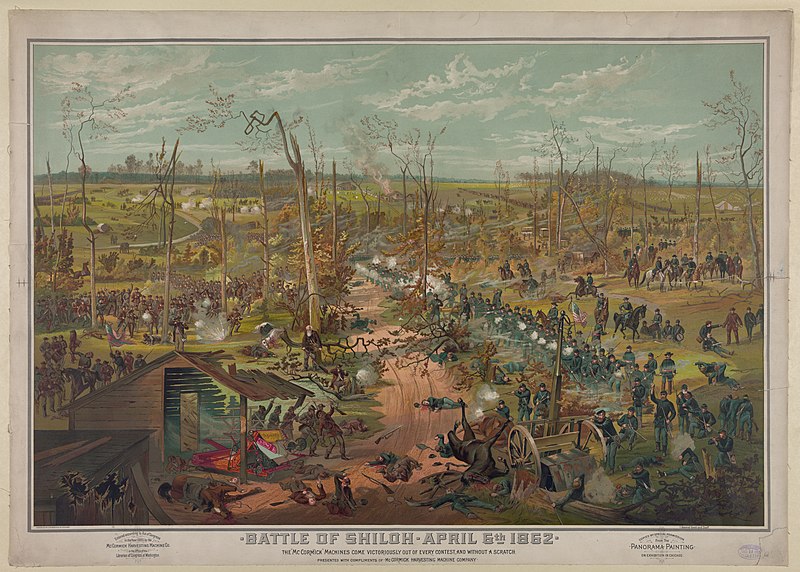
In March 1862, the 40th Illinois, 46th Ohio and Morton’s Battery was organized into a Brigade commanded by Colonel Hicks under General Sherman, and they boarded transport ships that carried them up the Tennessee River. They re-combined with the 6th Iowa under Colonel McDowall and entered the Battle of Shiloh. It would be their first armed conflict.
The north took a beating at Shiloh. The 40th Illinois was commended for standing ground under heavy enemy fire even after their cartridge boxes were empty. A total of 196 men of the 40th Illinois were killed or injured in the one battle, including Colonel Hicks.
Silas suffered mortal injuries. He mustered out of this life two weeks later. Enoch mustered out of the 40th Illinois Infantry on May 15, 1865, two days after Jefferson Davis was captured and one month after President Lincoln was assassinated. The north was victorious, but at great cost.
Enoch saw action at the Battle of Shiloh, Siege of Vicksburg, Battle of Missionary Ridge, Battle of Kennesaw Mountain and Siege of Atlanta, and other places before he returned to a humble life in central Illinois. Enoch didn’t participate in the famous “March to the Sea”, because he took a bullet in Atlanta. The bullet drove a button into his chest, but that button saved his life. It earned him the Purple Heart my parents have to this day.
I was fortunate at a Civil War memorabilia show years ago to find a tattered and yellowed dairy written by another volunteer in the 40th Illinois Infantry. He was in a different company, but his periodic reports of the movements and activities of the Brigade gave me a ground level view of the experiences of my ancestors as Union Civil War infantrymen.
When the diary opens, the author anticipates with patriotic and religious confidence the mission they are about to partake. The 40th Illinois was a completely voluntary unit. The diary expresses a kind of righteous hope and abandon to the cause of fighting for God and for country.
I could not help but think of the horrendous carnage of human and equine life they would encounter. Sinew, flesh and bone left exposed to the gaping air as the smoke slowly drifted off future battle scenes. The groans of shattered men lying in their own blood would be the only sound remaining as infantrymen regrouped to count their ranks. Trees splintered by the shrapnel of canons and muskets would stand starkly against the acrid stench of gunpowder lingering still that gaping air.
Did they know what they were in for?
I recalled seeing Civil War physicians’ bags. They carried saws, and picks, and hammers and other objects of painful reminders of the brutality of war without modern anesthetic or antiseptic. Saws saved what was left of the living by cutting off limbs susceptible of gangrene. Many, like Silas Jones, survived the battle with injuries only to die later of infection.
Knowing these things, I was intrigued to read the thoughts and expressions of resilient faithfulness to the duty fight for God and country continue on the pages of that diary after the Battle of Shiloh, and all the way past the Battle of Kennesaw Mountain. Then the diary ended – abruptly. No resolution. No postscript. No clue as to why it simply ended.
I can only imagine the writer mustered out early – maybe in Atlanta. I assume he wasn’t as lucky as my great, great grandfather. But I am not writing merely to tell a story of my ancestor. There is a bigger picture.




 Navigating by Faith