Slavery in the New Testament re-examined.
Category: Christian

Slavery in the New Testament
Slavery was common in the culture in the 1st Century AD, and it is, therefore, not surprising to find references to it in the New Testament. Following are the references to slavery in the New Testament and some commentary to put it in perspective.
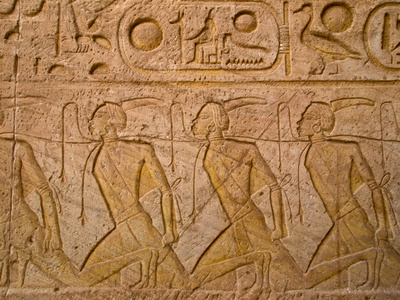
A recent conversation with one of my sons spurred me to consider slavery as it is addressed in the New Testament because the Bible is sometimes criticized by skeptics who point to its treatment of slavery. Indeed, there are instructions given to the nation of Israel that seem to accept slavery as a practice, and the New Testament does not expressly condemn it.
So, what does the Bible really say about slavery?
Continue reading “Slavery in the New Testament”
Share this:

Conservatives, Progressives and Sheep
 Christians are a very diverse group of people. From fundamentalists to Unitarians, there is a quite a range of beliefs. There seems to be little in common at the ends of the spectrum, and sometimes even from the middle to the ends.
The temptations are to stick stubbornly to one set of beliefs to the exclusion of others or to accept them all.
It can be rather daunting to consider all of the very earnestly and sincerely held beliefs of people who call themselves by the label “Christian”. Live and let live is certainly my tendency. When Jesus says, “Enter through the narrow gate”; however, I want to be one who enters that narrow gate (or door), wherever it is! For wide is the gate and broad is the road that leads to destruction, and many enter through it.” (Matt. 7:13-14 & Luke 13-23-34 (door)) Much rests on being “right”.
There are certain accepted, fundamental and core doctrinal statements that most of the Christian world accepts. Jesus was God who came in the flesh, was born of the virgin Mary, lived a sinless life, suffered and died on the cross and rose again. He died as atonement for our sins, and by his death and resurrection we are forgiven and may enter into fellowship with God. Jesus was God and man. He is part of the godhead – being God the Father, God the Son & God the Holy Spirit – three in one. There are certain things that are accepted by most people who call themselves Christian. Is this the narrow gate? (or the wide path?)
There were certain things that were accepted by the religious leaders of Jesus’s time, too, and it turns out they were wrong about many of those things. Jesus called into question the spiritual interpretations and conventions of His time. The Sadducees and Pharisees were the spiritual leaders, and they more or less represented the conservative and progressive points of view. The Sadducees were the conservative “old believers”, accepting only the Mosaic Law and rejecting the newer revelation. They were the aristocratic priesthood focusing on temple worship. The Pharisees were the progressives, embracing the newer revelation (the rest of our Old Testament), believing in resurrection, angels, spirits and rewards and punishments after death.
The Pharisees were a lay group of priests and more in touch with the common man. That may explain why Jesus seemed to run into them more often. Significantly, though, Jesus raised the ire and was rejected by both groups. It seems both the conservatives and progressives of the day missed the boat. (And, that is the problem with labels.)
Jesus did not embrace the conventional beliefs of his day. He was God who became man and walked among His own people, and his own people knew Him not. He seemed attracted most to the irreligious and sinners.
Jesus took issue with accepted beliefs of religious leaders in His time (calling the Pharisees such endearing terms as “white-washed tombs”!), but we also see him describing the right way as narrow and few will find it. No wonder so many Christian groups see themselves as the only way. Who wants to admit their way is not “the” way, especially if there is only one Way.
I am not sure we can really compare today with the time of Jesus. God was doing a new thing, something that had never been done. God was inserting Himself into His own creation and moving the story of man in a whole new direction. Still, I think it is noteworthy that both the conservative and progressive religious leaders had issues with Jesus, and He with them.
When Jesus addressed the Samaritan woman at the well, he was speaking to one who would be rejected by both camps of Jews. She questioned why He, a Jew, would ask her, a Samaritan, for water. Jews and Samaritans had fundamental disagreements over where to worship and who were the chosen people of God. There was even a greater chasm between Jews and Samaritans than Sadducees and Pharisees. Jesus blew through the doctrinal divide by speaking of living water that quenches thirst so that anyone drinking of it will never thirst again.
It was not that Jesus was rejecting what we might call “closed-minded” thinking. He was rejecting wrong thinking. Jesus clearly thought it important that people believe and understand truth. Jesus says one of the most “closed-minded” things imaginable when He said He is the way, the truth and the life, and no one comes to the father except through Him. (John 14:6)
And, so the “dilemma” continues: who is right and who is wrong? In some sense, it is not a matter of right and wrong thinking. When the Samaritan woman asked Jesus whether the Samaritans who worshiped on their own mountain or the Jews who worshipped in Jerusalem were right, Jesus threw her a curve ball: it is not where you worship, but who you worship (the Father) and how (in spirit and truth).
Jesus says the sheep hear the voice of the shepherd, and so His followers will hear the voice of the Good Shepherd and follow Him. (John 10:7-11)
I was prompted to write this after reading an article on 16 Ways Progressive Christians Interpret the Bible compared to how fundamentalists interpret the Bible.
I do not want to be dismissive of doctrine. I am reminded that, from early on, the disciples and apostles who were entrusted with the very message of Jesus, delivered to them in person and visited upon them by the Holy Spirit in dramatic fashion on the Day of Pentecost, were very protective of that message. Examples of their concern for the truth of the message exist throughout the New Testament. The message, itself, is obviously of central importance.
They also learned that things like the food a person eats, whether a person is circumcised or uncircumcised, whether a person is a Jew or a Gentile does not matter. It does not matter if a person worships on a mountain or in Jerusalem, in a temple or not in a temple; what matters is the living water, God the Father, worshiping in spirit and truth. It is a matter of the heart. The Shepherd calls His sheep, and the sheep know His voice. We are ultimately all either in a relationship with our God or not. And that makes all the difference that matters.
Share this:

In My Place
 Few things really bring the story of Christ and what he did for us into sharp focus. We know it intellectually, but it does not really register with the clarity and presence that such a cosmic event should. We get distracted with the mundane elements of life and the fleeting excitements that pull our attention away from God’s ultimate act of love.
I am as guilty as anyone. I find myself registering somewhere in the depths of my soul, somewhere in the back of my mind, that this amazing, unbelievable act of love was (is) as real as anything in my life, actually the most real and profoundly significant reality in my life, and yet I do not live as if that were really true. The fact that it registers so dully with my senses most of the time is something I recognize, but seem powerless (or lacking in will) to summon to the surface of my daily consciousness.
There are times when that eternal Act becomes more present than others. For some people, experiences have etched the reality of that Act more deeply into the consciousness, and it usually comes through pain, tragedy or great mercy and near avoidance of pain and tragedy. I think it can happen on both sides of that divide.
This link is to one of those events, an event that we know all too well. This is a view from a pilot who sat in the cockpit of one of the planes that never reached its intended destination on 9/11.
In My Seat – A Pilot’s Story from Sept. 10th-11th
Share this:

An Overview of the Genesis Story
Sometimes we get lost in the forest and miss the trees. Below is a take on Genesis from 30,000 feet as told by some creative folks at www.http://jointhebibleproject.com/ I enjoyed and the fresh look at age old stories put together in an overview. Below is my breakdown. At the end of this article is a link to the entertaining video.
God & the World
God made the world and declared it is good
God made man in God’s image: Adam is the Hebrew word for humanity; and Eve is the Hebrew word for life. Representative of God’s character in the world God made.
God sends them out into the world to be creative, as God was, but he gives them a moral choice about how they do it.
The moral choice is what the tree of the knowledge of good and evil is all about
God tells them not to eat of it or they will die.
Up to that point God provided and defined what is good (His creation)
God has the knowledge of good and evil and made it attainable for humans (the choice)
The tree represents that choice: will humans accept God’s definition of what is good, or will they define what is good for themselves.
This sets the stage for sin – the desire and act of defining and controlling what is good for me and my tribe, even at the expense of you and your tribe
People are not good at defining good and evil without God – Genesis 3-11
Downward spiral
Adam & Eve can no longer trust each other – they were naked and felt fine about it before, but now they feel shameful after eating the forbidden fruit and hide from God and each other
Cain becomes jealous of Abel and kills him
Lemak accumulates wives, property and sings songs of being more violent than Cain and is proud of it
Things get so bad that God proceeds to wipe out humanity except for Noah and his family
We think of God as angry, but he is sad and grief stricken; to save the world He washes it clean with the flood
But even Noah takes a turn – he plants a vineyard, gets wasted and things get sketchy
Babel ends this portion of Genesis – God knows that men, if unified, will seize the opportunity to seek to become like God and that will be bad
God scatters them so they can not wreak anymore havoc
When humans seize autonomy from God and define good and evil themselves it results in corruption, tragedy and death
Abraham & His Family
Begins God’s mission to rescue and restore humanity
Before the video link, I want to make a few comments. First, it seems elemental to me that God creative Adam and Eve to be creative beings like God (in the image of God), but the link between that and the tree of knowledge of good and evil I find interesting. God gave them a choice to accept what God provided them and defined as good or to eat of the tree and define what is good for themselves. I have not heard things put exactly that way before.
Building on that, the choices that humanity makes are awful. Cain kills Abel. The strong become boastful of violence and domination over others. Even after the flood “cleanses” the world for a fresh start, Noah, himself, stumbles into weirdness. And when humankind repopulates, they become unified in an endeavor to reach the heavens for themselves, which will only allow them to cause more trouble and damage than they would otherwise be able to do; so God divides them by language and scatters them. In doing that, He creates some checks and balances that minimize the trouble they can cause.
The beginning of Genesis is the story of the moral choice that humanity made, to seize control of defining good and evil for themselves, and rejecting God’s definition. It does not go well. We do not do well with the choices we make.
While the video ends here, the next portion of Genesis is summarized as the beginning of God’s rescue mission to save and restore humanity through Abraham and his family. We will have to wait for the summary of the rest of Genesis.
I am certain that the overview can be done in different ways and emphasize different aspects of the Big Picture. I think this overview is compelling. The fundamental choice that we all make is whether we will “do it my way” or submit ourselves to God’s way. Will define good and bad for ourselves or accept how God has defined it?
Here is the video: https://www.youtube.com/watch?v=KOUV7mWDI34
What is your take? Is this a good overview?
 Navigating by Faith