Musings on Shakespeare and One Less God

 (c) Can Stock Photo

(c) Can Stock Photo

Stephen F. Roberts famously said that we are all atheists, he just believes in one less God (or less gods) than others. It is a rather clever statement that many self-described atheists or agnostics have repeated, but it’s more kitsch than substance.

Atheism could be defined as belief in no God, but atheists often object to that because they don’t perceive themselves, or don’t want to perceive themselves, as believing or having faith in anything. That’s absurd, of course. We all believe in something – even if we only believe in the material world and our ability as humans to comprehend it. Continue reading “Musings on Shakespeare and One Less God”

Ramblings on Faith and Unbelief

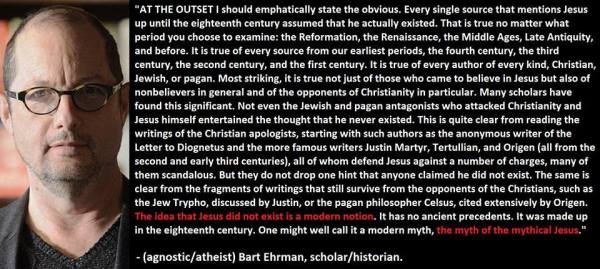
Bart Eherman Quotation


I became a believer, and then a follower, of Jesus Christ in college. It wasn’t just academic for me, though the beginning of my life as a believer and follower of Jesus began in an academic environment and was shaped and influenced by academics. I think that’s why I like the academic pursuit of faith even now, over 30 years later.

It’s important for me to be mindful that faith is not purely an intellectual affair. I think I may differ from many people in that respect, but I need to constantly be reminded of it. Faith is a relationship with the Living God; faith is a life and heart commitment; faith triggers action and change or it isn’t real faith.

I know that the words intellectual and faith probably don’t fit together in the minds of some people. Some people see those terms as opposites. They aren’t, but they can chaff with each other at times. Intellectualism, for instance, really does get in the way of faith (more so in fact than the other way around). Faith and intellectual pursuit can be perfectly compatible unless we compartmentalize them and pit them against each other.

Faith, or the lack thereof, depends on something other than intellectual coinage.  Continue reading “Ramblings on Faith and Unbelief”

Olympic Lessons – Running the Spiritual Race

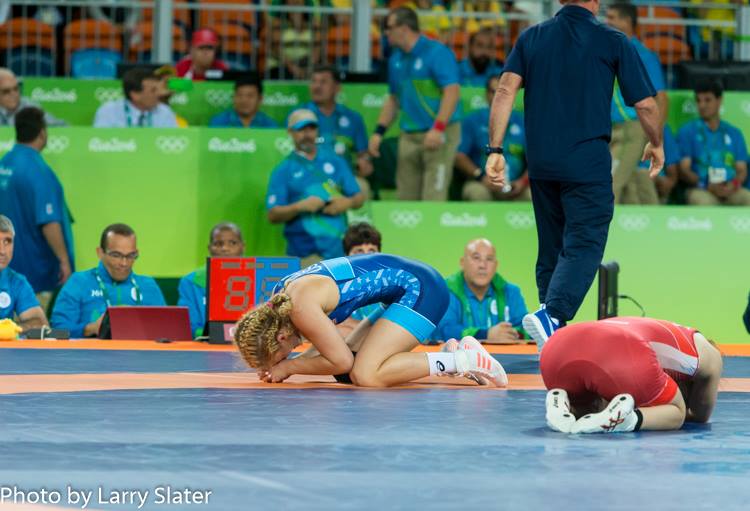
Joy and Sorrow on the Gold Medal Mat by Larry Slater

The Summer Olympics is a singularly unique time every four years when the world fixes its eyes on athletes who have trained a lifetime, many of them, for one Olympic moment. Other competitions pale in comparison to the Olympics. The world tunes in to watch sports that can’t fill the seats at any other time.

As a child, the kids in my neighborhood created our own “Olympic games”. We played out the drama of agonizing defeats and thrilling victories. The Olympic games capture the attention and imaginations of all people. Many, many people dream of Olympic glory as children, but some only a few exceptional individuals among us live those dreams in real life.

The sacrifices of an Olympic athlete are tremendous. To achieve the pinnacle of human athletic accomplishment, the Olympic athlete must train harder, longer and more effectively than all the other athletes in the world who have similar Olympic dreams. The dedication of the athlete and follower of Christ are similar journeys.

Continue reading “Olympic Lessons – Running the Spiritual Race”

The Message in the Earliest Creeds in the New Testament

 (c) Can Stock Photo

(c) Can Stock Photo

According to Dr. Gary Habermas, Paul cites a number of early Christian creeds in his letters, and Peter cites one as well. Perhaps, the most significant creed is found in 1 Corinthians 15:3-7.

The other creeds include 1 Corinthians 11:26; Acts 2:22-36; Romans 4:25; Romans 10:9; Philippians 2:8; 1 Timothy 2:6; and 1 Peter 3:18.[1]  Other scholars identify creeds in 1 Corinthians 11:23-29; Romans 1:3-4; Romans 10:9; 1 Timothy 3:16; 2 Timothy 2:8; and Philippians 2:6-11.[ii]

The importance of these creeds is that they include the earliest message of the church following the death of Jesus. They reveal the most fundamental and central message of the early followers of Jesus. The most significant characteristic of these creeds is a common theme – the death and resurrection of Jesus. Continue reading “The Message in the Earliest Creeds in the New Testament”

Looking Back and Looking Forward, From the Beginning to the End

 (c) Can Stock Photo

(c) Can Stock Photo


“To Him who loves us”

God loves us. Love is the beginning and the ending of the story. And love is everything in between. God created us in the beginning for love.

He gave us choice, because love does not coerce. All the misery in the world, all the pain and suffering, is because God gave us freedom of will and allowed us to go our own way. He released us to our own choices in hope that we would choose Him because we want to, because we love Him.

God sustains the world on a delicate edge, finely-tuned from the moment of creation to sustain life, and He holds it in balance to give humanity the opportunity to enter into relationship with God our creator. His handiwork is obvious if we want to see it, not so obvious if we don’t, because love does not coerce. Continue reading “Looking Back and Looking Forward, From the Beginning to the End”