Love of God and Wrath of God though the Filter of Human Experience

If we draw near to God, we experience His love and His grace. When we move away from God, we do not feel His love or grace, because there is no love apart from God.

by Treasure Noel Tatum
photo by Treasure Noel Tatum

This is the fourth segment in the series, Putting the Wrath of God in Perspective, beginning with Warming Up to the Wrath of God, then moving to The Wrath of God in History, and then to The Wrath of God and Eternity.

The idea of the “wrath of God” comes with a certain amount of discomfort, but we should never be afraid to confront the most difficult questions or statements. Truth is truth, and God and truth must necessarily be harmonious. Richard Dawkins says,

“The God of the Old Testament is arguably the most unpleasant character in all fiction: jealous and proud of it; a petty, unjust, unforgiving control-freak; a vindictive, bloodthirsty ethnic cleanser; a misogynistic, homophobic, racist, infanticidal, genocidal, filicidal, pestilential, megalomaniacal, sadomasochistic, capriciously malevolent bully.”
― Richard DawkinsThe God Delusion

The angry God of the Old Testament problem is often a line of first defense (or is it offense?) for those who do not believe in God, or at least do not believe in “the God of the bible”. It is a problem that believers wrestle with too.

The sermon in church today was on the book of Ezra. Ezra 8:22 reads,

“The gracious hand of our God is on everyone who looks to him, but his great anger is against all who forsake him.”

This is the kind of thing that people like Richard Dawkins criticize, but they do so without any understanding (and likely with no desire to understand) what they are criticizing. Continue reading “Love of God and Wrath of God though the Filter of Human Experience”

Abraham, Isaac and Paradigm Shift

The story of Abraham and Isaac establishes a significant and remarkable shift in worldview for the time.


We live in a specific cultural and historical time and view things through cultural, historical, social, political, and other contexts that are familiar to us. Things in the Bible often do not make sense to us immediately because the filter through which we see the world with modern eyes obscures the context in which the stories in the Bible were told. Whether one believes the Bible is God’s word, no one can understand it as it was written without understanding the context.

The story of Abraham and Isaac is particularly hard to understand in modern context. Why would anyone think to sacrifice a child? They very thought is barbaric! A God who would ask such a thing must be barbaric too! So, the thinking goes.

Let’s set that thinking aside for the moment before we come back to it. Let’s not jump to 21st Century conclusions. Let’s consider the historical and cultural context and give the story the benefit of the doubt to see what we might find.

First, Abraham clearly was doing what he thought God was asking of him. He was willing to do it, even if, perhaps, he didn’t understand it, and it would would be painful to him. Isaac was his only son. Not only that, he was the son God promised to give him and through whom God promised Abraham descendants as many as the stars in the sky.

According the written account, Isaac was a miracle. Abraham and Sarah were past child-bearing age, but God had promised them a child. Now, God seemed to be urging him to take that child’s life. Just as it makes no sense to us, it would not have made sense to Abraham. Even if there was no other reason, it would not make sense because it went against what God had promised.

Yet, Abraham was convinced that he must do it, or at least that he must follow through with this urging from God to wherever it would lead. This belief is central to story, and we need to understand the why before we can fully understand the story.

We have a hard time understanding this particular commitment by Abraham to God in our modern world. Why would Abraham think it was ok for God to ask this of him?

We would never believe that God would tell anyone to murder a child, let alone our child. We would call anyone who believed such a thing psychotic, delusional, or worse – downright wicked. We lock people like that up and throw away the key!

But, not so fast. Let’s take a step back into the Ancient Near East and consider Abraham’s world. We have thousands of years of human progress to thank for how we think, thousands of years of Christian influence by which we now judge the world.

The Christian influence permeates the thinking of post-modern secularists who don’t even appreciate how Christian their thinking is! We have “advanced” in many ways in our collective thinking. Ancients would have never dreamed of the modern notions of humans rights and basic freedoms.

We now live in a world in which an individual’s pursuit of happiness is a protected right, and people are free to follow their own dreams. We highly value individualism. “I did it my way” is an anthem in our modern society. Religion is largely frowned upon if it cuts against these modern grains.

In terms of morality, however, we are not really as different from the ancients as we think. You may know someone who has sacrificed a child. Maybe you have done it yourself. I am talking about abortion.

I don’t say this to condemn anyone. I simply point out that abortion is an accepted practice in our time. Some societies would view our acceptance of abortion with shock (including our own society 50 years ago). Others in the future may think the same.

Therefore, let’s put aside our modern prisms through which we tend to view the story of Abraham and Isaac. Let’s consider the story in it’s ancient context.

Continue reading “Abraham, Isaac and Paradigm Shift”

Bitterness Into Sweetness

13-6 Miners Beach River 3


And when they came to Marah, they could not drink the waters of Marah, for they were bitter[1]; therefore it was named Marah. So the people grumbled at Moses, saying, “What shall we drink?” Then he cried out to the LORD, and the LORD showed him a tree; and he threw it into the waters, and the waters became sweet. (Exodus 15:23-25)

Moses had just led the Israelites out of Egypt and across the Red Sea that God parted for them.  All the women had taken up timbrels[2] and followed Miriam[3] dancing and celebrating, exalting God for rescuing them from the Army of the Pharaoh. From there, Moses began to lead the newly freed nation into the wilderness.

They had wandered only three days, but it was three days without water. They found water at Marah, but it was too bitter to drink. So, the people began to get restless and “grumbled[4]” to Moses. This is only the beginning of the grumbling, a theme that would continue throughout the years wandering in the wilderness. Even after God did miraculous things, like part the Red Sea and rescue them from certain capture and calamity, the people were quick to fall back to the habit of complaining.

Continue reading “Bitterness Into Sweetness”

God Reminds Us Who He Is

Is it out of character for God to make unequivocal statements about Himself?

2015-09-21 Sunrise by Heather Wagner Russell
By Heather Russell

Isaiah declared that the Lord says, “I am the first and I am the last; apart from me there is no God…. Is there any God besides me?” (Is. 44:6, 8)

Is this arrogant for God to say? My son says so; he says, “I cannot respect a God like that.” He believes that statements like this in the Old Testament were written by men and do not accurately reflect the Creator of the Universe.

Certainly, if you or I made a similar statement, it would be the height of arrogance. Imagine how our siblings, parents or friends might respond if we made a statement like that?

No, actually, it would be delusional. Though we sometimes may act like the world begins and ends with us, we might be committed if we actually said something that like.

But, is it out of character for God to say something like that?

If there is a God, the world actually does begin and end with Him.

On the other hand, the “books” of the Bible were written by men, right?

Continue reading “God Reminds Us Who He Is”

How the New Testament Canon Arose

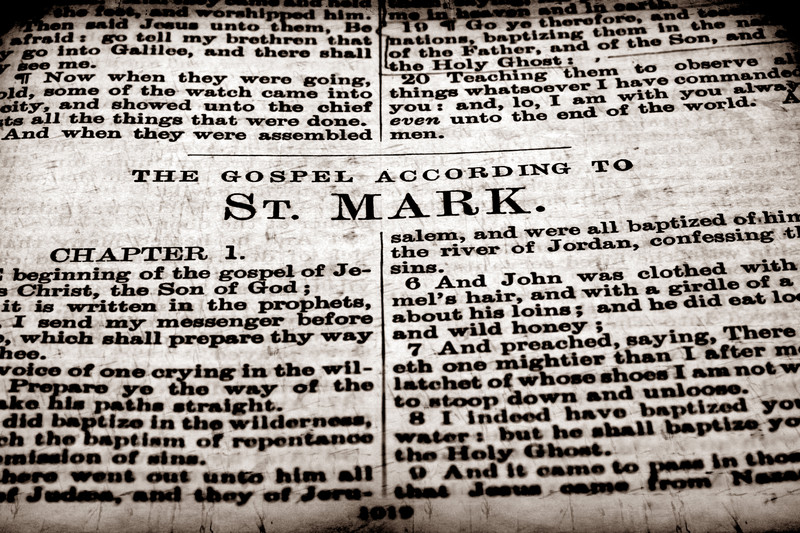
How the Gospels and other documents that have come to comprise the New Testament became recognized as scripture and other documents did did not, is the subject of this piece.

© Can Stock Photo Inc. / janaka

In this piece, I largely follow a presentation given by Dr. Danial Wallace*, but I add in some additional information about the early church to round out the information. Dr. Wallace underscores the fact that the early church was particularly concerned about the authorship of the writings they relied upon. They only trusted the writings of the apostles and associates of the apostles. We see this concern reflected in the writings of the earliest church fathers.

The original gospels, however, were anonymous, notes Wallce; that is they did not have internal references to who wrote them. They were only given names to distinguish them from each other externally, and this tradition went all the way back as far as we can trace them. The fact that the early church was so concerned with authorship, but universally accepted and used the four canonical gospels, suggests that the authorship of the Gospels was never in doubt.

This point will become more important below. How the Gospels and other documents that have come to comprise the New Testament became recognized as scripture and other documents did not, is the subject of this piece.

Continue reading “How the New Testament Canon Arose”