Myth, Seasons, and the Resurrection of Jesus

Should the claim that Christianity is similar to prior, pagan mythology concern us?

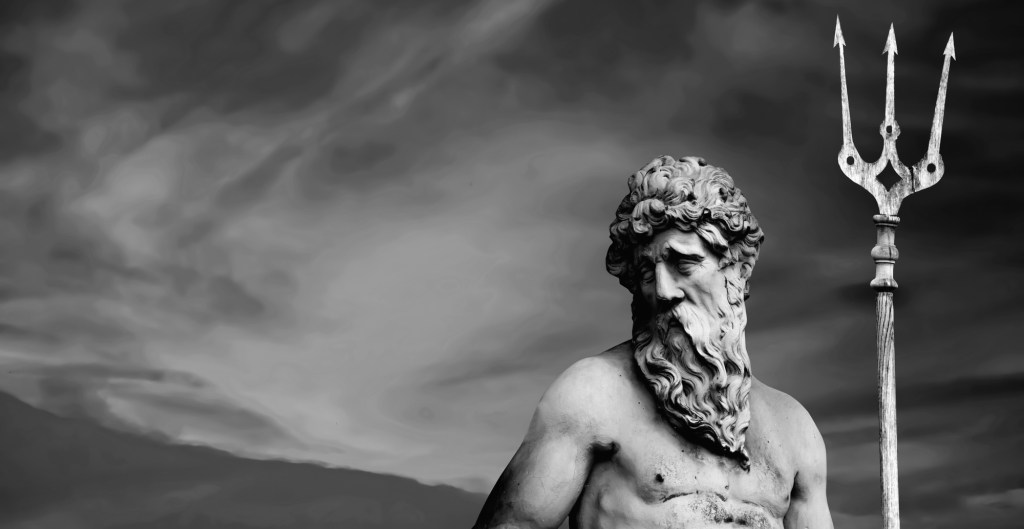
The god of the sea and oceans Neptune (Poseidon).

Popular trends arise in culturally contingent ways, and those trends often dominate the public mind for a season. Thus, the idea that Christianity borrowed from prior pagan mythology gained notoriety with the rise of New Atheism. The Zeitgeist: The Movie (2007) is a poster child for this popular trend in thinking.

The Zeitgeist movie forces the narrative, ignoring glaring dissimilarities, and manufacturing similarities that don’t really exist. It ignores (or isn’t familiar with) the relevant academic scholarship, but it has been watched well over one million times. We might say that the Zeitgeist movie has become legendary in a truly mythic sense itself.

I will go out on a limb, nevertheless, to say that Christians have shown far too much angst over this trend of claiming that Christianity is similar to prior pagan mythology. There are critical differences, and they are significant, but there are some similarities also. Do the similarities pose a problem for Christianity?

The short answer is, no. In fact, if truth is truth and reality is reality, ancient, pagan attempts at explaining that reality are likely to hit on some metaphysical truth. If they didn’t, I might begin wonder about the nature of reality and our ability to recognize and understand it.

Mythic literature as a genre is an attempt to provide some explanation and understanding of basic realities and the ebb and flow of life. I am reminded of these things as I sit outside on an unseasonably warm day in November with a view of trees bared of their multicolored leaves that have been collected by my earnest neighbors in piles lining the suburban streets for pickup.

Fall is ebbing into the dark night of winter. The subtle coolness in the breeze portends (what seems to me now) a distant spring. I am braced for what comes next as I enjoy what is likely to be the lest vestige of warmer days for longer than I care to think about.

My hope for the spring, however far off it seems in my present mood, is rooted in my experience of the certainty of the seasons. I know my hope is not fanciful, even as I brace (all too knowingly) for the cold, bleak trudge ahead.

It seems completely natural that ancient mythology captures this duality in stories that have religious significance. These experiences are common to man. We remind ourselves of the hope of spring as we gaze in wonderment at fall trees in the throes of seasonal death and the chill onset of winter. It reminds us of our own life and death sagas, even now in all our modern comforts.

Our modern comforts allow us to be a bit more disconnected and circumspect, perhaps, than our ancient forbearers. Those comforts and great advances in scientific knowledge allow us to be intellectual about these things. Ancient pagans lived literally at the mercy of the seasons, and all the things they didn’t know played like gods on the stage of their fraught imagination.

Modern people chalk seasonal changes up to natural cycles that just happen. We believe humans chased all the gods off long ago. The ownership we have asserted in our knowledge of the way the world works gives us an illusion of control that I surmise is not all that much different than the ancients, who sought some ownership and control of this world through the mediators of gods they thought they could appease.

Pagans found solace in the seasons as we do. Myth is rooted in collective experience, and it is driven by an impulse to understand and import control into our experience. We also have a natural inclination to seek meaning. We might call this impulse a “religious” one.

Though we have the chased the gods off, we still have a religious impulse. Though we no longer believe in many gods, and we no longer venerate ancient myths with more than a curious read, the idea of one, Creator God God persists, and it is not explained away by modern science and knowledge. The Bible, though it has ancient origins, stands up to our modern scrutiny in ways that pagan myth does not.

Continue reading “Myth, Seasons, and the Resurrection of Jesus”

The Untitled God Song and the Deity of Our Existential Angst

The solution to our existential angst and a “god like me”


I saw Haley Heynderickx this evening at Space in Evanston, IL. She was (once) an obscure, modern folk artist. Then, a song of hers went viral on TikTok. (So, my son tells me.) The crowd this evening was young, even for this trendy venue on Chicago’s ever hip north shore.

Existential angst (or dread, depending on your flavor of melancholy) is the thread that runs through her work. She is a siren for the spirit of this age. Her chords strike true with my son, who turned me on to her, and with my daughter, who accompanied us to the show.

I was young once also, and the existential angst of my youth drove me on a quest that led me to the threshold of Jesus, the Lamb of God who was slain for the sins of the world. A different generation, now, leans into a similar ages old myopia.

“Meaningless! Meaningless!”
….
“Utterly meaningless!
Everything is meaningless.”

Ecclesiastes 1:2

This words may have accompanied a more ancient tune played on a lyre from a more distant youth, but the melody sounds the same.

Existential first visited me one night when I was too young to have a vocabulary for the experience. We watched old home movies from a projector in our living room. Younger ghosts of my parents and grandparents played on the grainy screen in washed out black and white.

I remember it like a dream sequence. The images and feelings of the past are equally washed out in my mind now, but the poignance and clarity of the dread that I felt is clear.

This was, I believe, the first time I became aware of the unforgiving and unrelenting passage of time. This was the first time, perhaps, that I stared the inevitability of death in the face, and the eyes of death stared back, penetrating into my soul.

The next sequence in this dream is now (and always has been) more palpable and imminent than those grainy home movies. Later that night, I found myself detached …. floating in a yawning chasm of outer space …. utterly alone and disconnected.

I don’t know to this day whether I had a dream when I fell asleep that night or whether it came to me in a ghastly vision. It doesn’t matter. If claustrophobia can be felt in an endless void, the experience would be close to what I felt. Angst and dread have nothing on the feelings I had that night.

I say this to frame my thoughts as I recall the song with which Haley Heynderickx closed out the evening: the Untitled God Song.

Continue reading “The Untitled God Song and the Deity of Our Existential Angst”

How Will the World Know You?

How will the world know you?

Will the world know you by your family, your ancestors and the legacy that comes after you?

Will the world know you by your wealth, your fiscal responsibility and ability to turn a profit?

Will the world know you by your great intellect, by the diplomas on your wall, the articles you have written? and the collection of books on your shelf you have read?

Will the world know you by your creativity, your command of a color palette, graceful and unique strokes of the brush and eye for design?

Will the world know you by your fame, by the number of people who know your name?

Will the world know you by your physical prowess, your ability to come through in the clutch, and your wins?

Will the world know you by your command of the English language, your artful turn of a phrase and your ability to move people with the written word?

Will the world know you by the instrument you play, the finesse of notes and rhythms, and the virtuosity with which you play your instrument?

Will the world know you by your professionalism, by your reputation for excellence in your field, and the accomplishments you have achieved?

Will the world know you by your stunning good looks, your impeccable fashion taste, and the company of beautiful people you keep?

Will the world know you by your eloquence, the depth and richness of your voice and your ability to command the attention of a crowd?

Will the world know you by your scientific mind, your understanding of technical details, and ability to apply scientific method and sound logic?

Will the world know you by your leadership, the number of people who follow you and your influence?

Will the world know you by the music you compose, the divine harmonies and intricate melodies you weave together in symphonic wonder?

Will the world know you by your politics, the platforms you have championed, and the dedication to your party allegiances?

Will the world know you by the roles you have played, the tears you have coaxed from fawning audiences, and the adoring fans you have?

Will the world know you by your architecture, by your complex end subtle designs, by the magnificence of the structures created from your drawings?

Will the world know you by your dedication, reliability and number of sick days you did not take?

How will the world know you?

In the end, we all go down to the grave, and the world is passing away. When an Ode to a Grecian Urn fades from collective memory, Jesus said we will be known as his disciples simply by our love for each other.

“Love one another. As I have loved you, so you must love one another. By this everyone will know that you are my disciples, if you love one another.

John 13:34-35

“We know that we have passed from death to life,  because we love each other.  Anyone who does not love remains in death.”

1 John 3:14

“Be devoted to one another in brotherly love.  Outdo yourselves in honoring one another.”

Romans 12:10

“Love never fails. But where there are prophecies, they will cease; where there are tongues, they will be stilled; where there is knowledge, it will pass away….” And now these three remain: faith, hope and love. But the greatest of these is love. “

1 Corinthians 13:8,13

How Does a Living God Relate to a Pagan World?

We have our gods, though we don’t give them names or ascribe human personalities to them.

My thoughts today are based on the story of Paul and Barnabas while they were in Lystra, a city in central Anatolia, part of present-day Turkey. While Paul was speaking, his gaze came to rest on a man listening to him speak who was “crippled at birth”.

Paul saw the man had faith, so he loudly told the man to stand up. (Acts 14:8-10) The man sprang up, and the crowd was awed, saying, “The gods have come down to us in the likeness of men!” (Acts 14:11)

The people in Lystra were pagans. They worshiped Roman gods and, perhaps, other gods as well. They started calling Barnabas Zeus and Paul Hermes and began making preparations to worship them.

When Paul and Barnabas realized what was happening, they were appalled! They rushed into crowd, saying, “Don’t do that! We are just men like you!” (Acts 14:14-15 (paraphrasing)). Then, Paul addressed his pagan audience like this:

“[W]e bring you good news, that you should turn from these vain things[i] to a living God, who made the heaven and the earth and the sea and all that is in them. In past generations he allowed all the nations to walk in their own ways. Yet he did not leave himself without witness, for he did good by giving you rains from heaven and fruitful seasons, satisfying your hearts with food and gladness.”

Acts 14:15-18

This is, perhaps, the first sermon preached in the early church to people who are not Jews. The pagans did not believe one God. They didn’t understand Mosaic Law, the concept of sin or the prohibition against worshiping idols considered to be false gods.

Thus, Paul didn’t address them as he did his Jewish audiences. He didn’t appeal to Mosaic Law, or accuse them of sin, or call them to repent.

Just as the Gospel is good news to the Jews, it is good news to the pagan Gentiles. The message, however, is different. Paul urged them merely to “turn from vain things to a living God”!

By “vain things” Paul meant their gods, the idols that the pagans worshiped. Instead of calling them idols, as he would have done to a Jewish audience, he referred to them descriptively by their character – their worthlessness, emptiness and utter inability to accomplish anything.

We have a hard time relating to idol worship in the 21st Century. Idol worship is so Bronze Age! Our ancestors long ago stopped believing in gods and sacrificing to them, right?

Tim Keller, in his sermon, The Gospel for the Pagan, paints a different story. These pagans were not so different from us.

In a polytheistic society, of course, people worshiped and sacrificed to a variety of gods. There was no supreme god. People had to decide what gods to worship. Thus, people chose gods to worship based on how those gods could help them.


A a merchant might sacrifice to the god of commerce. A farmer might sacrifice to the god of agriculture. Other people might sacrifice to the god of art and music, or love and beauty, or a combination of gods, depending on what was most important to them.

Keller says that sacrificing to the god(s) of choice was, in effect, worshiping the things people valued most. By sacrificing to the gods of commerce, agriculture, art and music, love and beauty, etc., they were worshiping whatever it was the god represented.  Whatever a person sought help for was the thing from which they sought meaning in life, hope and fulfillment.

Thus, says Keller, “vain things” (idols) are things that “promise fulfillment, but leave you empty”.

We may think of ancient pagans as a brutish and unsophisticated lot, but we are no different than they in the sense that we sacrifice for the things we think will fulfill and satisfy us. The only difference is that we have dispensed with the representative gods.

The person who values career, or accomplishment or being respected by peers as a matter of first priority will sacrifice for those things. The person who thinks that love, romance and family are the highest forms of meaning will devout primary attention to those things. The person who loves art and music will sacrifice for those things and from them seek meaning and fulfillment.

We aren’t that different, really from our pagan ancestors, though we might scoff at the idea of gods, as in idols. We have our gods, though. We just don’t call them names or ascribe human personalities to them.

Paul’s message to the pagans in Lystra was, “These are worthless things!” They can’t fulfill you. Only the Living God can do that. His message has more application to us in the 21st Century than we might think at first glance.

Continue reading “How Does a Living God Relate to a Pagan World?”

Evidence of a Beautiful Mind

Beauty is hard to explain on the basis of naturalism.

Sunrise over Hawaii by Miriam Higgs

Everyone recognizes beauty. That is undeniable. Everyone recognizes beauty in nature. Nature is virtually saturated in beauty from mountain peaks, to ocean shores, to barren Antarctica and the desert landscapes, to the starry host and the living cell. We recognize beauty in things we see, in things we hear, words that are spoken and in the personalities of exceptional people.

We see beauty in human art, and that beauty is usually produced by effort and design. The beauty in art is rarely produced unintentionally. Art, itself, is an intentional activity. If “art imitates nature” (Aristotle), then our proclivity toward art suggests that nature is also the product of intentionality.

Just as human art reveals something of the personality and character of the artist, nature reveals something of the personality and character of its Creator.

Beauty has a certain objectivity to it. While people disagree may differ on whether certain things are beautiful, no one denies that beauty exists and that some things are beautiful. Further, there are some things that nearly all people agree are beautiful.

If beauty wasn’t, to some degree, objective it could not be taught by experts in universities. The study of beauty includes principles of symmetry and asymmetry, color palate, texture and many other things that these experts agree make good art. A principle that is not the least important is the meaning behind the art, not just for the artist, but for the viewer of the art.

Virtually no one disagrees that these are objective truths, self-evident in quality and character. The fact that people will disagree over what is beauty, or what is most beautiful, doesn’t negate the universality of the idea of beauty – beauty does exist, we can recognize it and we can replicate it.

Beauty is hard to explain on the basis of naturalism. What sort of function does beauty supply? And why does it persist? The more advanced human civilization becomes, the more we insist that beauty be incorporated into our world, the more we desire it and the more we seek to make things beautiful. The best explanation for the source of beauty is a Beautiful Mind of which we are but images.