The Resurrection: 2nd Century Legend? or 1st Century Factual Claim?


Easter is just around the corner so thinking about the Christian claim that a man from Nazareth in 1st Century Palestine died and rose from the dead three days later is a timely consideration. The accounts of this event don’t read like mere story or legend. They have all the characteristics of Greek biographies capturing historical accounts.

Many modern scholars accept the Gospels as part of the Greco-Roman biography genre (focusing on the similarities), while others find them uniquely Jewish (focusing on the differences). Central to this ongoing debate is the apparent intention of the authors to assert a factual, historical narrative.[1]

The difficulty modern scholars have with the text, which reads like biographical and historical accounts, is the inclusion of fantastical claims of miracles, the resurrection of Jesus and theological statements, many of which are penned as statements made by Jesus.

From the early to mid-19th Century, much of the biblical scholarship has leaned in a skeptical direction, and that inertia continued robustly into the 20th Century. That scholarly trend produced a skeptical consensus weighted toward a view for instance, that the Gospels, were written long after the events they describe, probably in the 2nd Century, making the resurrection and appearance of Jesus to his followers something akin to legend.

This thread of scholarship suggested that early formulations of the message of Jesus did not include his resurrection or appearances. These things were believed to have been added many decades and two or more generations after the events took place.

The 20th Century view began with skepticism and ended with a skeptical conclusion explaining the resurrection claim by the kind of embellishment that comes with the passage of time. This was the consensus view when I studied religion in the late 1970’s.

But one man, wrestling with his own doubts, took the facts the skeptics would give him and pieced together an analysis that does not square with the view that the resurrection claim is a later embellishment of what the first followers of Jesus believed. These “minimal facts” have changed the views of most 21st Century Scholars, even skeptical ones.

The Scholarly consensus has now changed on when the Gospels were written and on what the early message of the first followers of Jesus was. For instance, the scholarly consensus now agrees that all the Gospels were written in the First Century. Even skeptical scholars date the Gospels between 70 AD and about 95 AD. The scholarly consensus also agrees that the message included the death and resurrection of Jesus from very early on.

Continue reading “The Resurrection: 2nd Century Legend? or 1st Century Factual Claim?”

What’s In Your Primordial Soup?

 (c) Can Stock Photo / jgaunion
(c) Can Stock Photo / jgaunion

I am reminded of a Farside cartoon when I think of primordial soup. For instance, the amoeba reading a book titled, Primordial Soup for the Soul. The concept of a primordial soup isn’t a joke, of course. It is the idea that life began many millions of years ago as chaotic elements churned in the boiling atmosphere and electric charges of a primitive earth – a kind of Frankenstein-like beginning to be sure, but a serious elementary concoction.

The ramifications of this primal stew are far reaching. They imply that nothing but natural forces were necessary for the creation of life. For many, the ultimate implication is that God doesn’t exist or we don’t need God (which isn’t quite the same thing): we don’t need God to explain the origins of life because there is a plausible natural explanation.

But is that the case?

For a century or so, people have sought alternative explanations for the origins of the universe and of life as a way of chasing off the specter of God. Richard Dawkins, for instance, asserts that the “greatest achievement” of mankind is the theory of evolution, giving man the power to cast off the shackles of faith in God and allowing man to stand unfettered on his own two feet firmly planted in terra firma against all odds.

Whether God exists, or doesn’t, what ingredients might have primed that primordial soup that seems to explain how life can rise from non-life, without need of a God, without anything other than the basic stuff of an infantile universe? Continue reading “What’s In Your Primordial Soup?”

Did Nature Cause Itself?

 (c) Can Stock Photo


I haven’t heard anyone say specifically that nature caused itself, in so many words,(other than the Hawking axiom about the laws of gravity causing the universe), but that is the question begged by any assertion that God doesn’t exist. Anyone who maintains that nature and natural causes are the beginning and the end of all reality is begging that question: did nature cause itself?

Perhaps the greatest obstacle to the assertion that nothing supernatural exists is the Big Bang. The Big Bang is accepted science. The evidence is very compelling, though it wasn’t received well when it was first postulated. The thought that the universe was not eternal and had a beginning was thought to be “repugnant” and to “betray the very foundations of science”.[1]

This is because a beginning to the universe suggests that the universe had a Beginner. The initial reluctance to accept the Big Bang has long ago changed, however, as the evidence has accumulated. Stephen Hawking proved it mathematically, but struggled with the implications of it the rest of his life. Continue reading “Did Nature Cause Itself?”

Can You Be Good Without God?

As Dostoevsky said, “If God does not exist, everything is permissible.”

 (c) Can Stock Photo
(c) Can Stock Photo

Theists claim that people could not do good without God. But, people do good things all the time, even without believing in God. Atheists, agnostics and people of all stripes can do good things and they do good things.

Obviously, believing in God is not a prerequisite to doing good things. A better question, is whether good can exist without God?

If God does not exist, what basis exists for determining good or bad? Right or wrong? Continue reading “Can You Be Good Without God?”

Counter-Critiquing the Moral Argument for God

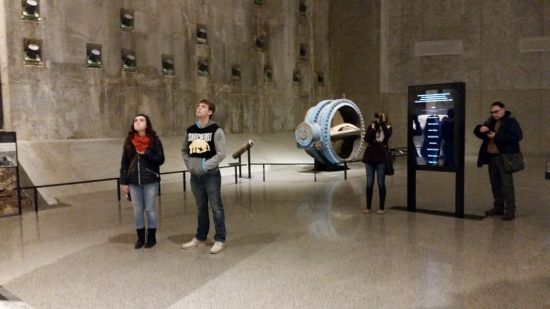
At the 9/11 Museum underneath the World Trade Center

The moral argument for God is one of the basic arguments for proving that God exists. In this piece I follow a critique Dr. William Lane Craig presents of a critique done by Richard Dawkins of the moral argument for God. Continue reading “Counter-Critiquing the Moral Argument for God”