 via Loving Our Neighbors During a Corona Virus Outbreak
Author: kevingdrendel
I am sixtiesh, an English Literature major in college and an attorney by profession. Faith informs my life, and this blog is about my faith journey.

Loving Our Neighbors During a Corona Virus Outbreak
We live in trying and interesting times. In the midst of enormous political and social polarization in the United States, we are now dealing with the announcement of a global pandemic. The reactions have ranged from virtual panic and hoarding of toilet paper to mocking and distrust.
Yesterday, a group of people I gather with once a month under the auspices of Reasons to Believe, a ministry that blends science and faith. We were live with Anjeanette (AJ) Roberts, who is a research scholar with RTB.
Timing was perfect. AJ is a virologist. She studies viruses for a living. She was one of the small group of people who studied the SARS virus in the early 2000’s at the National Institute of Health. SARS is a coronavirus, the same type of virus as COVID-19, the one we are dealing with now. She was on the ground floor of dealing with SARS, so she is in a unique position to provide wisdom and guidance.
I took notes as best I could yesterday and will pass on what I was able to capture in them. The facts are the facts, but how we respond to them is more important than the facts, themselves. As Christians, we need to be guided by the commands of our Lord to love one another, to love our neighbors.
Politics has a way of creeping into and tainting everything. We should not allow politics to color the facts or affect how we follow the clear direction of Scripture. Jesus is the way and the truth. We should not ignore truth in favor of political agendas or deviate from the way, which involves taking up our crosses and following Jesus, loving others as He demonstrated his love for us.
With that said, which is my paraphrasing of the guidance AJ Roberts gave us at the end of her presentation on the current state of COVID-19 in the world and in the US, I will summarize the facts she presented as best I can recall them. It’s important to note that the landscape is rapidly changing as the virus spreads around the world and in the US. In fact, she said the situation is changing on a daily and even an hourly basis.
Continue reading “Loving Our Neighbors During a Corona Virus Outbreak”
Share this:

A Mic Drop Moment in First Century Galilee

If the phrase, “mic drop,” had been coined in the First Century, Jesus would have cornered the market. One of those mic drop moments occurred on the day his public ministry began.
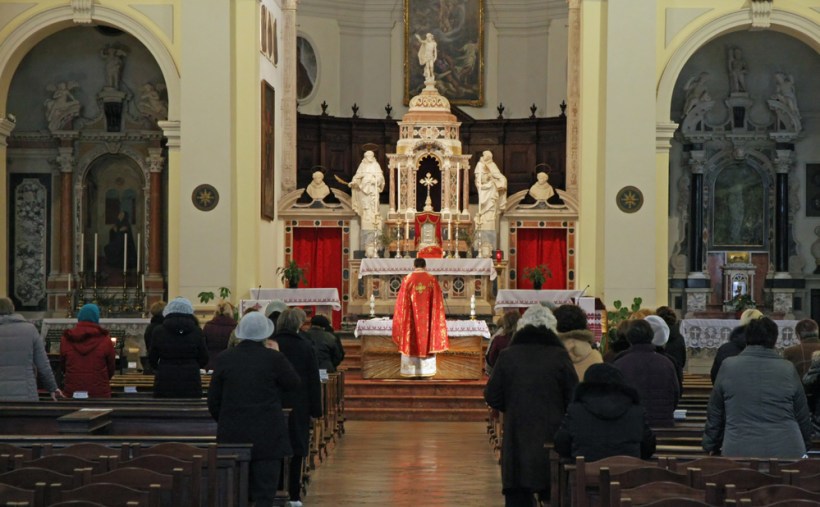
Picture this: Jesus walks into the church (synagogue) where he grew up. Everyone knows him well because he grew up among them. Nazareth was a small town, and everyone knew everything about everyone.
Jesus was visiting a church where he had grown up and studied Torah. He was still very much part of the religious community as an adult. When he attended church/synagogue on that Saturday morning and stood up to read, he was doing what he had likely done done before. Only this time would be different.
Jesus had been making quite the stir lately. His cousin, John the Baptist, was well-known for his unrelenting, uncompromising message about the coming of the one – the Messiah – and word undoubtedly spread fast when John baptized Jesus and announced that he was it! (Luke 3:4-6)
Prepare the way for the Lord,
make straight paths for him.
Every valley shall be filled in,
every mountain and hill made low.
The crooked roads shall become straight,
the rough ways smooth.
And all people will see God’s salvation.
Cousin John was literally quoting Isaiah 40:3-5 as if it were coming true right there in the countryside, outside of town where he spent most of his time. Crowds of people made their way out to hear him, but he wasn’t very popular among the church leaders. In fact, they rather despised him, and the feeling seemed to be mutual. He even called them a “brood of vipers”!
Until recently, Jesus seemed more respectable than that. Though they were cousins, it wasn’t like they spent a lot of time together. They were each keenly devoted to their Hebrew lessens, Bible reading, and participation in synagogue life from a young age, but John always seemed a little off, and he especially seemed to “go off the rails” as he got older.
John the Baptist was out there in the countryside calling for all who would listen to repent, He was baptizing people. Lots of people. He was attracting quite the crowd, and kept talking about the Messiah. Hi I’m
It wasn’t like John was the only one. Other men claiming to be the Messiah had come and gone. Not that John claimed himself to be the one. That was the crazy part: he lived like a homeless person, eating bugs and shunning even the modest comforts that most people had become used to. He didn’t exalt himself. His focus was always on someone else – someone greater than he.
John was attracting a less than reputable crowd too, including tax collectors. Tax collectors were sell-outs to the Roman occupiers, collecting Roman taxes from their own people, often collecting more than they should to line their own pockets. They were an unsavory and despised lot – worse than the Romans because they preyed on their own people.
The fact that John was attracting tax collectors didn’t speak well for his efforts, but the common people loved John anyway. They practically worshiped him. This was particularly galling to the faithful leaders in the synagogues who had given their lives in service to the Lord. Who did he think he was?!
They view John, no doubt, like the other so-called modern prophets who came and went, claiming to be the Messiah spoken of old. They stirred up crowds of disgruntled and marginalized Jews for a short time before the Romans got tired of the charade and put an end to it.
John seemed just like the ones who came before him, though his message was different. He was bold like the others, but in a different way. He wasn’t stirring people up against the Romans, like the others did. In fact, John seemed more interested in criticizing the religious community than the Romans, and that irked them to no end.
When Jesus attended synagogue that day, the word was all over Galilee that Jesus had gone out to meet John. It was apparently quite a meeting by the reports that were circulating. Jesus even let John baptize him. In fact, he insisted on it, and this is where things got a little sideways.. if you could believe the reports.
People said they heard a loud voice. Some said it was the voice of God. Others said they saw a dove swoop down and land right on his head. People were saying Jesus was a prophet. Some seemed to think he was the Messiah that John was talking about. It seemed like Jesus was getting caught up in John’s delusion, and he was starting to believe it.
When Jesus stood up to read that day, these things were going through the minds of the people who heard him read. They knew something was up, but they weren’t at all prepared for what he was going to do.
Continue reading “A Mic Drop Moment in First Century Galilee”Share this:

Keeping God’s Commands By Loving Him
“If you obey the commandments of the LORD your God that I command you today, by loving the LORD your God, by walking in his ways, and by keeping his commandments and his statutes and his rules, then you shall live and multiply, and the LORD your God will bless you in the land that you are entering to take possession of it.” (Deuteronomy 30:16)
This is the way the English Standard Version translates Deuteronomy 30:16, the verse of the day today in a Bible I use. I highlight the phrase that jumped out at me today, the one I have been contemplating since I read it this morning.
When I went looking for some deeper meaning, I found the other translations take it in a slightly different direction:
“For I command you today to love the LORD your God, to walk in obedience to him, and to keep his commands, decrees and laws….” (NIV)
“I command you today to love the LORD your God, to walk in His ways and to keep His commandments and His statutes and His judgments….” (NASB)
“I command you today to love the LORD your God, to walk in His ways, and to keep His commandments, His statutes, and His judgments….” (NKJV)
Only one the English Standard Version instructs us to obey the commandments of God “by loving the Lord….”. Most of the time I believe we think about loving God by obeying His commands – not obeying God’s commands by loving Him. It’s a subtle difference, but it piqued my curiosity further.
I also discovered that the Hebrew word for love in this verse is “aheb”, which means (not surprisingly) “to love”. But it dawned me as I looked at the other verses in which that word is used that it seems to mean to love with affection. Abraham loved Isaac (Gen. 22:2); Isaac loved Rebekah (Gen. 24:67); Isaac loved Esau (Gen. 25:28)(more than Jacob); Rebekah loved Jacob(Gen. 25:28) (more than Esau); Isaac loved the “savory meat” that Esau provided (Gen. 27:4); and Jacob loved Rachel (more than Rachel’s sisters that his father-in-law insist he marry first) (Gen. 28:18).
Clearly, all of these uses of the word for love used in the commandment in Deuteronomy to love God imply a kind of personal affection, even to the exclusion of affection for other things (or people). Thus, we are commanded to have affection for God and to walk in His ways and keep His commandments: or, as the ESV translates, to obey God’s commands by loving Him (with affection).
The real light bulb moment today, though, wasn’t in the breaking down of this verse, but in its juxtaposition with my daily Bible reading, which is taking me currently through Numbers (after having left the detailed instructions about the Tent of Meeting in Leviticus). So many rules for the priestly duties of the Levites in connection with the Tent of Meeting and Ark of the Testimony and the altar where endless sacrifices were to be offered up have me wanting to get through these passages quickly!
And they have me asking, why? I know… they foreshadow the sacrifice of Jesus on the cross. “Without the shedding of blood, there is no forgiveness of sins.” (Lev. 9:22; Heb. 9:22) The writer of Hebrews tells us Christ has appeared, now, as the ultimate high priest, entering once for all into the holy places, securing for us eternal redemption. (Heb. 9:11-13) All the sacrifices commanded by God in Leviticus, Numbers and so on were just copies of heavenly things: “For Christ has entered, not into the holy places made with hands, which are copies of the true things, but into heaven itself, now to appear in the presence of God in our behalf.” (Heb. 9:24)
All the many sacrifices offered by the Levites at God’s commands as God’s chosen people wandered in the wilderness, carrying with them the Tent of Meeting and all of its accouterments, were just copies of the one sacrifice, “once for all at the end of the ages to put away sin by the sacrifice of himself.” (Heb. 9:26)
As I read through these passages in the Old Testament, I find myself asking, “Why?” as if I were one of them, not knowing anything about the plans of God that were devised before the foundation of the world. What were they thinking as they did these things?
Continue reading “Keeping God’s Commands By Loving Him”
Share this:

Finding Humility and Civility in Loving the Truth and Loving Others
The shades of grey are difficult to navigate, no doubt, but it isn’t all black and white. Life isn’t that simple.
 I am finding some solace today in the increasingly polarized world in which we live. I can always find some balm in humor! Over the last half decade or more, I have stepped outside the political fray psychologically, taking a seat in the audience and observing the circus. I vacillate from horror to sadness, but there is always humor to which I can turn for solace.
Today, someone posted on Facebook an article with the following clickbait headline: No one blamed Obama during the 2009 swine flu pandemic that killed over 12k! Killer headline, right? It didn’t take another poster to find this gem: Trump in 2014 said Obama was ‘a psycho’ not to immediately cancel flights into the US amid Ebola outbreak in West Africa.
I have not checked the facts, by the way. Does it matter anymore? Doubt everything. That’s just easier!
I have been meaning to “collect” a bunch of articles and memes in pairs that are the exact opposites of each other. For instance, one article might say, “Trump beats up little girls!” While, another article might say, “Hillary Clinton approves of beating up little girls!”
When I start looking for these supremely ironic pairings, I begin noticing them often, but I haven’t found the energy to do the collecting. Democrat says, “Scientists have proven the world is black”; Republican says, “Scientists have been debunked: the world is white.” Each posting is made with the certainty of inalienable truth.
Most people respond with hearty signals of knowing acknowledgment, replying according to the identities and protocols of their particular form of group think. Though one or two brave souls might dare to post rebuttal, this modern ritualistic dance on social media is practiced to perpetuate and strengthen what we already think, gaining the knowing approval of the people “who matter” in a series of empty triumphs over the time and energy it takes to be candid and introspective about truth.
The truth is that there is plenty of rebuttal to be found if one is simply looking for it. For every black, there is a white. It’s easy, of course, to get lost in the myriad shades of grey. And, perhaps, that’s the real problem of modern (postmodern) people. We fear getting lost and sucked down in the shades of grey. If we can “rise” above that gravitational force of contrary facts, virtually skimming the surface lest we get sucked under the waves, we can maintain our preferred position.
Might I dare suggest another course? The shades of grey are difficult to navigate, no doubt, but it isn’t all black and white. Life isn’t that simple.
That isn’t to say that truth doesn’t exist in a postmodern world. Truth is still truth. It just isn’t as simplistic as we prefer it to be.
Continue reading “Finding Humility and Civility in Loving the Truth and Loving Others”

 Navigating by Faith