
In Luke four, Jesus announced his public ministry in his hometown synagogue with these words:
“The spirit is on me because he has anointed me to proclaim good news to the poor. He has sent me to proclaim freedom for the prisoners and recovery of sight for the blind, to set the oppressed free, to proclaim the year of the Lord’s favor.”
Luke 4:18-19
Good news to the poor, freedom for prisoners, and freedom for the oppressed echoes Isaiah 61. “[T]he year of the Lord’s favor” echoes Leviticus 25, where Moses passed on the jubilee instructions given by the LORD to the LORD’s people.
Jesus was saying that these things foretold by Isaiah and the Jubilee instructions from Moses were fulfilled in him. Most of us are familiar with the way that many of the prophecies in Isaiah were fulfilled in Jesus, but we may not appreciate how Leviticus 25 takes on special significance – and controversy – in the life and ministry of Jesus.
Jesus announced his public ministry in a dramatic way in his hometown synagogue when he asked for the Isaiah scroll, opened it, read the words quoted above, and sat down. The people in the synagogue were initially “amazed at the gracious words” Jesus spoke. (Luke 4:22) By the end of the short exchange that occurred after that, the people wanted to throw Jesus off a cliff. (Luke 4:28-29) What happened?
The words of Jesus that provoked his hometown people to anger were these:
“‘Truly I tell you,’ he continued, ‘No prophet is accepted in his hometown. I assure you that there were many widows in Israel in Elijah’s time, when the sky was shut for three and a half years and there was a severe famine throughout the land. Yet Elijah was not sent to any of them, but to a widow in Zarephath in the region of Sidon. And there were many in Israel with leprosy in the time of Elisha the prophet, yet not one of them was cleansed—only Naaman the Syrian.'”
Luke 4:24-27
Why did these two stories provoke the people to anger? Maybe the better question (the one we might not want to ask) is whether we are much different than they were?
The tension that played out in that Galilean synagogue when Jesus announced his ministry presages our modern reality 2000 years later. We still have a difficult time with the instructions, intentions and long-term plans that God announced when He told Abram that all the nations of the earth would be blessed through his descendants.
Today, I want to review some relevant provisions in Isaiah 61 and Leviticus 25 to explore why that reference did not sit well with God’s people. It wasn’t the references so much as the stories of Elijah and Elisha that he connected to them. Those stories – and what they suggest – may still not resonate well.
In Leviticus 25, the LORD instructs the people how to live in the land He is going to give them. They were instructed to sow the land for six years and give it a rest every seventh year. In the seventh year, they were told not to sow the ground and to harvest only “whatever the land yields.”
“Whatever the land yields during the sabbath year will be food for you—for yourself, your male and female servants (ebed), and the hired worker (sakir) and temporary resident (toshab) who live among you….”
Leviticus 25:6
Notice how God (through Moses), embeds caring for foreigners in these instructions the LORD gave the people for how they should live in the land.
They were to do this for seven cycles of seven year periods. The 50th year was to be a Year of Jubilee (the “year of the Lord’s favor”). In the 50th year, they were “to proclaim liberty” to all the inhabitants. (Lev. 25:8-11) The land was to be returned to the original owners, including to people who lost their land because they fell on hard times.
These instructions are grounded in the principal of God’s divine ownership of the land and the relationship of the Israelites to their God (our God – the Creator of Heaven and Earth):
“The land must not be sold permanently, because the land is mine and you reside in my land as foreigners [ger] and strangers [toshab].”
Leviticus 25:23
God considered the Israelites foreign guests (ger – resident aliens) and sojourners (toshab – temporary dwellers) in God’s land. In turn, the Israelites were to take care of the resident aliens (ger) and temporary dwellers (toshab) in the land.
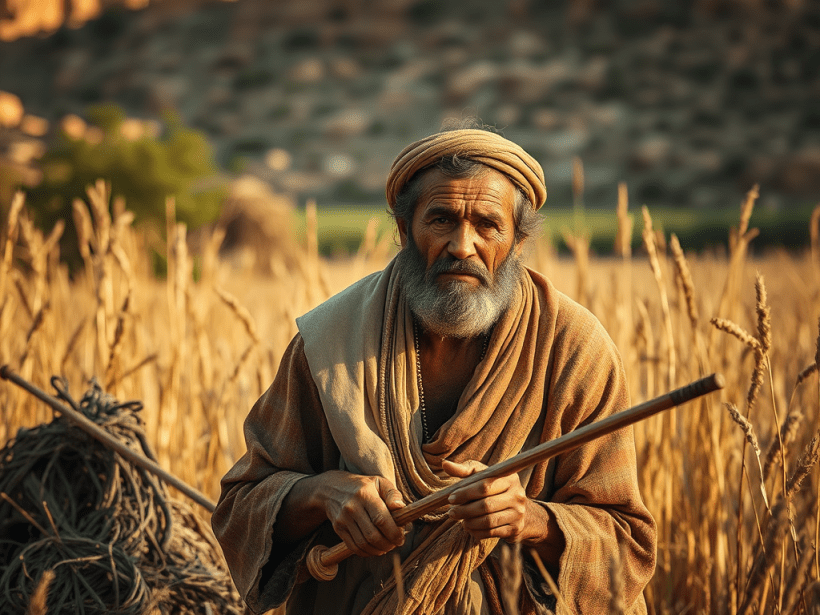
In between the year of the Lord’s favor – every 50 years – if any Israelites became poor and unable to support themselves, God instructed His people to help the poor Israelites “as you would a foreigner (ger – resident alien) and stranger (toshab – temporary dweller), so they can continue to live among you.” (Lev. 25:35)
The support God commanded His people to provide for foreigners who lived in the land with them is the same support He instructed them to show for fellow Israelites who fell on hard times.
Leviticus sits in the middle of the Torah that contains the Law God gave through Moses to His people. The Torah is full of God’s repeated commands to His people to recall the memory of their sojourn in Egypt as foreigners. This is key. God reminds His people of their identity as former aliens and strangers in Egypt. (For more on the significance of Leviticus 25 and the Jubilee instructions, see The Under-Emphasized Significance of Leviticus 25 in the Ministry of Jesus and Its Importance for Us)
Over and over again the Lord connected the identity of His people as former aliens in a strange land to repeated instructions not to mistreat or oppress foreigners residing with them (Exodus 22:21; 23:9; Lev. 19-34), to “love them as yourselves” (Lev. 19:34; Deut. 10:18-19), to include the foreigners in their festivals (Deut. 16:12), not to despise them (Deut. 23:7), not to deprive them of justice (Deut. 24:17-18), and to allow them to glean the fields (Deut. 24:19–22).
The Law is peppered with these instructions:
“Remember that you were foreigners — and treat foreigners accordingly.”
By the time God became incarnate and lived among His people as a man in the First Century, the Israelites had suffered many defeats at the hands of warring nations. Every time they fell into worshipping other gods and acting unjustly, God removed His protective hand, leaving them vulnerable to invading foreign armies.
The northern kingdom of Israel was conquered by the Assyrians and exiled to Babylon between 734 – 720 BCE. These were the famous ten tribes of Israel who were “lost” to history. The Assyrians forced them to resettle and assimilate, and they never returned.
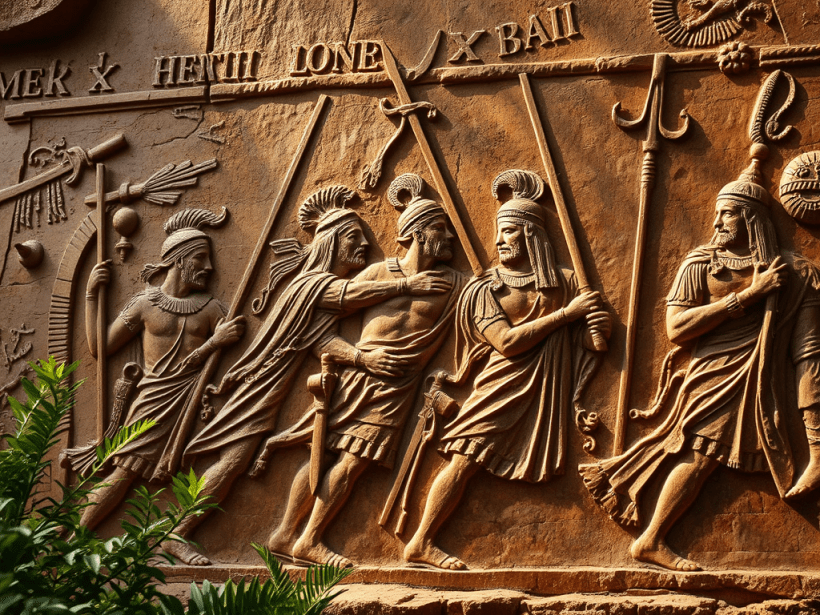
Only the tribes of Judah and Benjamin remained in the land, and they lived under the shadow of the Assyrians until they were exiled also between 597 – 586 BCE. Some stragglers who escaped the Assyrian onslaught and did not flee to Egypt remained in the land. They assimilated with the neighboring tribes and changed their religious practices.
When the Persians conquered the Assyrians, they were favorably disposed to the Israelites and allowed them to return to the land God promised them long before, The returning exiles were only a remnant, however, and the land was occupied by foreigners – including their kin who abandoned their religious practices and assimilated into the culture of non-Israelites.
When the remnant returned from exile, their kin who were not exiled and did not flee to Egypt had intermarried with other tribes. Instead of welcoming their exiled brethren, there was animosity. The Samaritans as they were eventually called resisted and did not aid returning exiles in rebuilding the walls, the Temple, and the city of Jerusalem.
These people had developed their own religious practices that did not focus on the Temple, which was destroyed by the Assyrians. They “worshipped on another mountain” (John 4:19-20) and were despised in turn by the returning exiles.

The land was still controlled by the Persians until the Greeks conquered the Persians in 332 BCE, and the Greeks controlled the land until around 141 BCE. After the Maccabean revolt and 70-80 years of Hasmonean (Jewish) rule, the Romans conquered and occupied the land (in 63 BCE).
From the 8th Century BCE to the 1st Century, God’s people lived uneasily under foreign threat and foreign control. When Jesus read from the Isaiah scroll in his childhood synagogue, the people were weary of foreign occupation. The air was pregnant with the hope of the Messiah’s coming. All of Israel expected the coming Messiah to overthrow the foreign occupation and restore the land to the rule of David’s line.
These hopes and expectations may explain why the people reacted so strongly to Jesus. Jesus likely knew what was in their hearts, and he provoked that response out of them by telling the story of Elijah visiting and blessing a Canaanites widow and healing a Syrian/Aramean general.
We can understand why the people were provoked to anger by these stories of God’s grace shown to Gentiles/foreigners – rather than to the Israelites who had suffered so much at the hands of foreigners. But, why did Jesus provoke them? It seems to me that he did it on purpose, but why?
Certainly, Jesus was aware of the hundreds of years of foreign control and oppression, but Jesus also knew His Father’s heart.
He had the perspective of the Father’s divine plans and purposes promised to Eve when He said her seed would crush the serpent’s head and to Abram when He promised to bless all the nations through his descendants. Jesus came not just for the Jews, but for the Gentiles.

God’s plans and purposes were never just about Abraham’s descendants. It’s easy to see, though, how the descendants of Abraham, Isaac, and Jacob missed God’s emphasis on “all the nations” in the many, many centuries that passed between God’s promises to Abraham and the coming of Christ. Human tendency is to assume “it’s all about us.”
God specifically called this people out from among the nations and spent generations and generations impressing on them how special they were, but God repeatedly told them His plans were to bless all the nations through them. Three times God emphasized to Abraham that His blessing was provided through Abraham’s offspring “for all the nations” – Genesis 12:3; Gen. 18:18; and Gen. 22:18. God reinforced this directly to Isaac (Gen. 26:4), and God reinforced it again to Jacob. (Gen. 28:14)
The promises to Abraham, Isaac, and Jacob set the trajectory of God’s plan, and that trajectory is embedded – if not as explicitly stated – in the rest of the story. In Exodus 19:5-6, the people are told, “You will be for me a kingdom of priests and a holy nation.” A nation of priests implies that they were to be a nation of mediators between God and the other nations.
Throughout the Torah, God commands the radical inclusion of foreigners into the community of His called-out people: in Exodus 12:48–49 God tells them to include foreigners in the Passover celebration; in Leviticus 19:33–34 God tells Israel to “love the foreigner as yourself”; and in Numbers 15:14–16 God says His people are to have the “same law for you and the foreigner.”
The Law is full of economic and social structures specifically designed to welcome, protect, and bless foreigners who come to reside among God’s people. Gleaning laws and tithes for foreigners (and widows, and orphans) created an economic safety net (Lev. 23:22; Deut. 14:28-29; and Deut. 24:19-22). Foreigners (and widows and orphans) were intentionally included in the joy of and celebration of religious festivals. (Deut. 16:11, 14)

There were foreigners among the people who left Egypt with Moses. (Ex. 12:38) Moses, himself, went to live in a foreign land (Midian), married a foreign woman, and named his firstborn son Gershom. (Ger sham) literally means “a stranger there” or “a sojourner there,” reflecting Moses’ statement, “I have been a sojourner in a foreign land” (Exodus 2:22, 18:3)
This people who God called out from among the nations was intended to be a light to which the nations would be attracted. (Deut. 4:6-8) This was the point of God calling them out – to be separate – to be a nation unlike all the other nations where people might be drawn to seek refuge, protection, and the blessing of God.
Of course, the people of God repeatedly rebelled against God and His plans. From the golden calf they made while Moses was receiving the Law, to their grumbling and complaining and Karah’s rebellion in the wilderness, they were constantly rebelling. In the last entreaty Moses gave to the Israelites before they entered the promised land, he warned them of their inevitable rebellion and gave them a song to remind them to return to God after they rebelled.
The time period of the Judges involved a repeated downward spiral of one rebellion against God after another until everyone was doing right in their own eyes. (Judges 17:6, 21:25) Rahab (a Canaanite woman) and Ruth (a Moabite woman) stand out for the way God intended things to work – foreigners assimilated into the support and protection of Jewish community – but these stories were the great exceptions.
The Israelites failed to live holy lives, set apart to God. They lusted after foreign women and their gods. Rather than assimilate foreigners into the holy community of people set apart for God, they assimilated foreign ways, practices, and idolatry into their community. Instead of being a light to the nations around them, they were constantly at war with them as they repeatedly fell out of favor with God and became vulnerable to foreigners without God’s protection.
The kingship of David (after the rebellion of King Saul) was a brief bright spot. Though David’s hands were red with the blood of warring nations he conquered, his heart was for God. He set Israel back on a path of right relationship with God, and David gained peace and favor with the nations that remained. That peace lasted through the reign of Solomon.

Alas though, it did not last. Instead of living into the Law and set-apartness God intended, Solomon (though wise) succumbed to the temptations of power, wealth, and lust. From Solomon’s reign until the Israelite and Judite exiles, God’s people lived out the same downward spiral of rebellion that characterized the period of the judges.
The fighting with foreign nations was not a sign of success. It was a consequence of their rebellion. Their rebellion and failure to live set apart lives prevented them from being the blessing God promised to all the nations.
When Jesus quoted from Isaiah 61 in the synagogue, he was incorporating God’s great plan and purpose into the announcement of his ministry. Isaiah 59 is a reminder that the iniquities of the people separated them from God, that blood was on their hands, and guilt was on their fingers. (Is. 59:1-2) They abandoned the way of peace and justice. (Is 59:8-9) They walked in darkness. (Is. 59:10) God saw there was no one to intervene. (Is. 59:15-16), so God stepped in as a Redeemer to those who would repent. (Is. 59:17-20)
Isaiah 60 says “arise, shine, for your light has come,” and “Nations will come to your light.” (Is 60:1:3) Isaiah 60:4-16 describes all the nations coming to Israel “bringing your [Israel’s] children from afar” (v.9), and “foreigners will rebuild your walls” (v.10) , and “you will drink the milk of nations and be nursed….” (v.16) Isaiah 60:17-22 promises peace, no more violence, everlasting light, and righteousness.
That is the context of the words Jesus read from the Isaiah scroll (Isaiah 61:1-2):
The Spirit of the Sovereign Lord is on me,
because the Lord has anointed me
to proclaim good news to the poor.
He has sent me to bind up the brokenhearted,
to proclaim freedom for the captives
and release from darkness for the prisoners,
to proclaim the year of the Lord’s favor
….
Jesus was announcing a time for proclaiming good news to the poor, binding up the brokenhearted, proclaiming freedom to captives, release from darkness for prisoners, and proclaiming the year of the Lord’s favor. Significantly, the words Jesus left out are these: “and the day of vengeance of our God….”
The people wanted God’s vengeance on their foreign occupiers, but Jesus did not come for judgment. “For God did not send his Son into the world to condemn the world, but to save the world through him.” (John 3:17) This salvation was for the Jews first, yes, but then for the Gentiles. (Romans 1:16) God came to “his own”, but many of his own “did not receive him”; “Yet to all who did receive him, to those who believed in his name, he gave the right to become children of God….” (John 1:11-12)
The blessing was always for “all the nations” including the Gentiles (all who were not descendants of Abraham). The Jews were called out of the nations and to be set apart from the nations not to be at constant war with the nations – but to be a light to the nations – to attract all the nations to community with them and with God.

This was not fulfilled by God’s covenant people; it was and is fulfilled in Christ. This was the ministry of Jesus. “For he himself is our peace, who has made the two groups [Jews and Gentiles] one and has destroyed the barrier, the dividing wall of hostility.” (Ep. 2:14-16)
When the Jews in the Galilean synagogue where Jesus announced his ministry were confronted with God’s plans and purposes to show grace to all the Gentiles, they were enraged because they had lost the story. They had lost the thread of God’s great intentions for all mankind in the details of their own story.
Instead of a blessing, the people had become a curse among the nations, according to Zechariah (Zech. 8:13), but Jesus came to save them to make them the blessing God intended from the beginning for them to be. In exile, Jeremiah said God’s people would become a source of joy, praise, and honor, before all the nations.” (Jer. 33:9)
Isaiah foretold the servant of God and offspring of Abraham (Jesus) who would restore Israel AND be the light to the nations that God promised to the ends of the earth. (Is. 49:6) Isaiah reminds us of the blessing God promised Abraham to restore his descendants and bless the world through his offspring (Is. 51:2) through the root of Jesse (Is. 11 & 53), the father of David, the son of Obad, and grandson of Ruth (the foreigner) and Boaz.
The thread of God’s intentions to bring foreigners (of Israel) under His protection and save them from sin and death runs throughout Scripture. It may have gotten lost to the Israelites, and it might be missed to us as we struggle with the same temptation to think the story is about us.
We should take note of what was in the hearts of the Jews in Galilee when Jesus provoked them to anger – lest a similar hardness of heart be found in us. It isn’t about us, and it isn’t about protecting and holding onto God’s blessings for ourselves. The land is not ours.
We only truly gain God’s blessings when we become a blessing to others – not the least of which are the strangers, the foreigners, the orphans and the widows – at the margins of our world. It seems we have lost that thread in our world today. May we repent and reap the blessing God intended for us and all the nations.

 Navigating by Faith