
I have yet to find my equilibrium after the Charlie Kirk killing. I didn’t know Charlie Kirk. I didn’t follow him. I heard him speak one time at an event in which Ravi Zacharias was the keynote speaker, but I never watched, or listened, or read anything from Charlie Kirk online. I didn’t agree with his Republican apologetic, though I couldn’t have identified anything Charlie Kirk specifically said before his death.
Since his death, I have heard and read testimony of his love for Jesus. His wife, Erika, publicly forgave his killer in an ultimate act of sacrificial obedience to Jesus.
Charlie Kirk’s legacy will always be that of a follower of Jesus and a staunch Republican, friend and defender of Donald Trump, who maintained political views opposed to mine.
I am a born again Christian. I believe in the death of Jesus Christ for the forgiveness of my sins and his resurrection from the dead. I believe the Bible is the word of God and His revelation to mankind. I read the Bible daily. I believe there is only one path to God, and that is through Jesus Christ. I go to church every Sunday, and I am involved in Wednesday evening and Saturday morning Bible studies.
I have been a Christian for 45 years. The fundamentals of my faith have not changed in that time, but I have gone down some side roads from which I had to retreat back to a more orthodox faith. I was tempted by the prosperity gospel, and I once embraced an Americanized Christianity verging on idolatry.
Jesus is the same yesterday, today, and forever. God has not changed during my life (or at any time since the foundation of the earth), but I have changed often, as I have had to adjust my thinking, confess my sin, and allow my mind to be transformed by God’s Word and the influence of the Holy Spirit in my life.
I am a work in progress, of course. I have yet to arrive at any final destination, but I look forward with yearning for the day when I see Him face to face, and I will know as I am fully known!
I used to believe that all true Christians should (and therefore must) believe all of the same things about everything. That makes sense in a rationalistic way because we all have the same Holy Spirit, and we all read the same Bible, so we all should believe exactly the same things about everything. Right?

That line of thinking brought me dangerously close to throwing my lot in with a very exclusionary theological camp. That line of thinking squeezes the narrow road into a very tight path on which “true believers” teeter and are ever in danger of falling off either edge.
The allure of the thinly narrow road is self-assured certainty. Jesus warned about that kind of self-assured certainty when he confronted the Pharisees: calling them blind leaders of the blind, self-righteous, and white-washed tombs.
Our faith must be in God, whose thoughts are not our thoughts. We must yield our certainty to God who (alone) knows the beginning from the end. Our unity must be in Christ and Christ alone. We are saved not be our perfect knowledge, but by the One who is perfect, who gave His life up so that we might live.
Our unity must not be in what we think we know. In this life, we will only ever know in part, and we will only prophesy in part. Where there is knowledge, it will pass away. When completeness comes, partial knowledge will disappear. (1 Corinthians 13:11) Only then will we know as we are fully known!
The Body of Christ is one. Each member is attached to each other member like the leaves and branches in a great Vine that is God the Father, God the Son, and God the Holy Spirit. No portion of the vine can survive separate from the vine. No member of the Body of Christ can survive separate from that body whose head is Christ.
I say these things, because it seems as if Christians today are more polarized than at any time in our history since the Civil War era. I do not attempt to know or to comment on who the “true Christians” really are other than to acknowledge what Jesus said:
“Many will say to me on that day, ‘Lord, Lord, did we not prophesy in your name, and cast out demons in your name, and perform many miracles in your name?'”
Matthew 7:22-23
“And then I will declare to them, ‘I never knew you; depart from me, you workers of lawlessness!'”
Jesus warned us that weeds will grow up among the wheat, but we should not attempt to weed them out because we will inevitably dig up wheat as we try to remove the weeds. Jesus said he will sort it out at the end. Meanwhile, we should strive to be faithful to the calling for which Christ called us.
Jesus said, the world will know us by the love we have for one another. (John 13:35) He didn’t say the world would know us by our knowledge; nor even by our theology. He didn’t say the world would know us by our denomination, and he didn’t say the world would know us by our political affiliation. The only distinction that sets us apart, according to Jesus, is our love for one another – our unity in Christ
Abraham Lincoln is famous for his House Divided speech that closed the Republican Convention at which he was nominated as the Republican presidential candidate in 1858. He quoted Jesus when he said that a house divided against itself cannot stand, saying further, “I believe this government cannot endure permanently half slave and half free.”
Lincoln went on to say that the Union would either become all one way or the other, but it would not remain divided. He was right of course, and we count it to our credit as a country that we eliminated slavery and became one free nation, under God. But, Lincoln was also wrong: we remain divided over many things – not the least are our racial and ethnic differences.
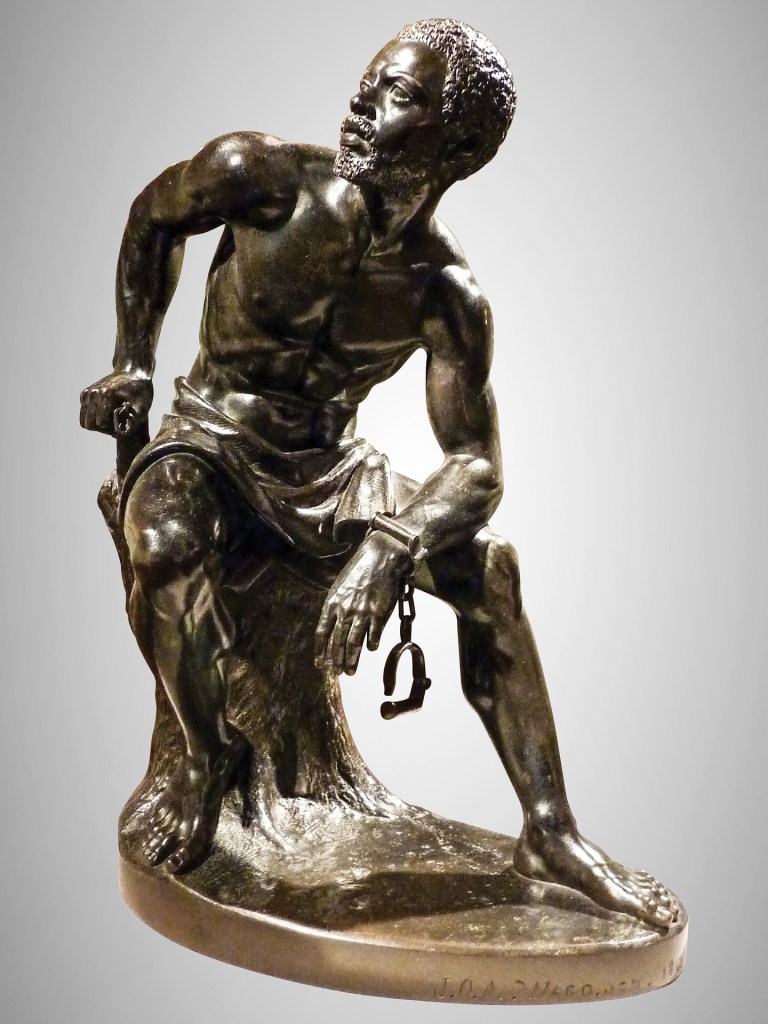
The vestiges of slavery remained after Lincoln and the Civil War. Jim Crow laws perpetuated the injustices of slavery and hardened them into ongoing discrimination that remained lawful into my own lifetime. Many southerners still defend the effort to protect the Confederacy, flying their flags to this day. Many people are still divided over whether we have done enough to remedy the racism of our past, whether racism exists in our present, and what our future should look like as a country – whether it will be predominantly white, or black, or multi-colored.
As Christians, we know what the future looks like for us: people from every nation, tribe, people and language will stand before the throne of God in white robes saying in one voice, “Salvation belongs to our God!” Why, then, do we still fight over these things?
We are unified in the fact that all have sinned, and we are unified in salvation. We are unified in Christ, the Lamb, who saved us from ourselves. We can, therefore, be unified in our love for each other.
That unity in love is the one distinctive Jesus said would mark the true believer. Where there are differences, they will cease. Our partial knowledge will pass away. Our partial prophecies will come to an end when we stand together before the throne of God face to face fully knowing and fully known

In the meantime, we cannot focus on what appears to be wheat or what appears to be weeds because it is not for us to sort them out. We cannot do it without damaging the harvest that God is preparing. Our focus must be on Christ, and Christ alone, who tears down the dividing walls and binds us in unity in Him.
If some of us who dare to call on the name of Christ and seek to enter the house of God are not truly “in Christ”, that is for Christ to sort out as he said he would.
There is no end to the things that we know in part that work to divide us. Racial, ethnic, national, political, theological, social, cultural, economic, emotional, and personal differences buffet us from every direction threatening to unmoor us from the Rock on which we alone can stand.
A house divided cannot stand. The house of which Lincoln spoke is the United States of America. The house of which I speak is also know as the Body of Christ, the house of God. One of these houses will truly stand in the glory of God’s eternal light, and one will eventually sink in the shifting sand of everything under the sun.
Jesus taught that the world would recognize us by the love we have for one another. Our unity is found in Christ alone. We will never be unified in the fading glory of nationality or anything other than Christ.
If Christ is truly the focus of all that we do, our politics should not divide us. This does not imply that we will not have disagreements over politics. It simply means that our politics should not divide us, despite our disagreements, because our unity is in Christ.
If our unity is based on anything other than Christ, we stand not on the Rock of Ages but on the shifting sands of the spirits of our age.
I often think about the diary I found at a Civil War memorabilia exhibit of a soldier in the Union army in the same battalion as my great, great grandfather. This soldier prayed to his heavenly Father and reveled in what he believed was his divine duty to march against the Confederacy to the glory of God.

History reveals similar diaries with similar prayers expressing similar confidence in God by Confederate soldiers spoken in similar devotion for their efforts on behalf of the Confederacy. That we can look back on those expressions and say with confidence, but ever partial knowledge, that one sentiment was right, and the other sentiment was wrong, is seductively deceptive.
When Joshua was confronted by the Angel of the Lord before entering into the land God promised Abraham to drive out the Canaanites, he asked the Angel, “Are you for us, or for our adversaries?” The Angel responded, “Neither, I am the commander of God’s army.”
That seems ever to be the question we ask (if, indeed, we stop to ask a question at all): “Is God for us, or is God for our enemies?” The answer is perpetually, “Neither!” The only thing that matters is God’s purpose. The only thing that matters is whether we are with God or against Him in what we do.
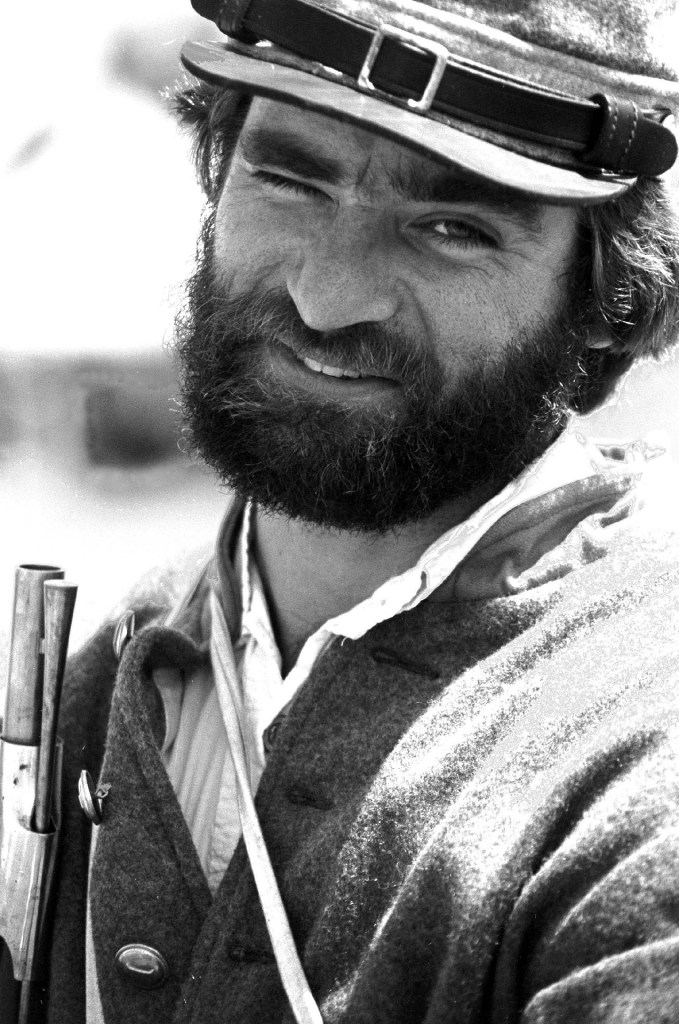
On that day, Joshua and his rag tag army of wandering Israelites prevailed, but only because he was aligned with God’s purpose at that time. The Union Army prevailed in the Civil War. We might say (with imperfect knowledge in hindsight) that the Union prevailed because they were aligned with God’s purpose at that time.
It’s not quite so simple, though. The Bible reveals that the Assyrian army prevailed against the nation of Israel, and the Babylonian army prevailed against Judah for the same reason; those barbaric, cruel, and godless nations prevailed against God’s people because they were aligned with God’s purposes at that time. But, I would not want to count myself in league with them!
If we can say anything with clarity about the centuries that followed Joshua’s life, the Israelites more often aligned against God and His purposes at least as often – if not more often – than they were aligned with God. Thus, it seems, we can never rest in confidence that once we have acted obediently in faith to God, we will always act in obedience to God. The human heart is too finite, too fickle, and too deceptive for that kind of confidence.
The fact that Joshua even stopped to ask the question, “Are you with us or against us,” before committing to the battle is instructive, though it is clear that he asked the wrong question. Wrong as he was to ask whether God was for them (and not whether they were acting in line with God’s purposes), he was right to ask.
God so loved the world. In that sense, God is for the whole world, but God is also opposed to the proud. He gives grace only to the humble. God’s heart is for the world, and He gives grace to those who approach Him in humility.
Whether we act in humility or in pride, however, God’s purpose is what will prevail. The only question that ultimately means anything to any of us is whether we are with God or opposed to Him.
Which way is the truly godly way? It’s easy for us to look back and say that God was on the side of the North but the story of Joshua provides us the sober reality that God does not take sides in the wars that we fight. The only important question is where we stand in relation to God and His purposes.
We only know in part. We may be aligned with God at one time and aligned against Him at another. As brothers and sisters in Christ, therefore, we need to find our unity in Him alone.
At times, I may be right in how I view things, and my brother may be wrong. At other times, I may be wrong, and my sister in Christ may be right. Yet, I can love my brothers and sisters in Christ at all times, and that love is the only standard by which Jesus said the world will know us to be followers of him.
To the Corinthians, who were known for their division, Paul said, “Examine yourselves to see whether you are in the faith; test yourselves.” (2 Cor. 13:5) The Apostle Peter, with whom Paul had his own differences, said, “[M]ake every effort to confirm your calling and election.” (2 Pet. 1:10) Focus on Christ; examine and test yourself; make every effort to confirm your calling.
Both Paul and Peter respected the influence of the Holy Spirit in each other, though they had their differences, and they loved each other. Therefore, Paul was able to say,
“May the grace of the Lord Jesus Christ, and the love of God, and the fellowship of the Holy Spirit be with you all.”
2 corinthians 13:14
And so be it with all who call on the name of Christ.

 Navigating by Faith