I have become hyper vigilant about the influence of our current times, culture, politics, etc. on my theology. We can’t help ourselves but to struggle with the currents of our times as they threaten to push us along in their path.
We might find ourselves swept along without even noticing it. Or we might take the opposite course and fight against those currents in the opposite direction. Both responses are problematic for the Christian who desires to follow Christ and to live according to his kingdom that is not of this world.
Whether we are being carried along by the currents of this present world, or fighting in opposition to them, we can find ourselves being wholly defined by the world – what we are for and what are against – instead of the purpose and commission Christ Jesus gave to us. Both types of responses to the world lead us off the path of following Jesus.
My views on this come from a sermon I heard in my early twenties 40 some years ago. I forget the biblical texts that laid the foundation, but the foundation remains with me: whether we allow the currents of our world to sweep us along or we fight in opposition to those currents, we are constantly in danger of defining ourselves and our theology in relation to the world – rather than in relation to God and His kingdom.
If we are followers of Jesus Christ, we might look at times as if we are going in the direction of the world. At other times, we might look as if we are going in direct opposition to the world. In reality, the Christian who follows Christ is walking a straight path. His path will take us at times in the same direction the world around us seems to be going and at other times in the opposite direction.
Christopher Watkin calls this Christian phenomenon “diagonalization” because it often looks like we are working at cross purposes to the world in both directions. As the world is pushes left, we appear to be pulling right; and as the world pushes right, we appear to be pulling to the left.
The key is that we should not allow ourselves to be defined by the world around us. We should be influenced and defined by God alone and His revelation to us found in the Bible.

I made one statement above that is not exactly true. I do remember one verse on which the sermon that influenced me so many years ago hung: “It is good that you grasp one thing, and also not let go of the other; for the one who fears God comes forth with both of them.” (Ecclesiastes 7:18) I call this holding things in tension.
We do this with the Bible itself. We learn to hold things in tension. Our fear (respect) for God and His word compels us to grasp one thing we know to be true while not letting go of other things we know to be true – even when it is difficult holding onto both things.
We fear (respect, trust) that God has greater perspective than we do. When He tells us to hate sin as He hates sin and to love people (who are all sinners), we need to grasp and hold onto both things as true, even though they may seem (to us) to be in tension with each other.
When we do that, we find that we come forward with both truths and a better understanding of Truth (capital T). We understand, for instance, that God hates sin because of what it does to us and to the rest of His creation, among other things.
As finite beings, we always have an understanding gap. Even when we think we know something, we are ignorant of what we don’t know. The Bible describes that reality by saying that God’s ways are not our ways, and His thoughts are not our thoughts.
We all know “religious” people who are hard, self-righteous, and unloving. They find it easier to hold onto the idea that God hates sin and more difficult to grasp the love God has for people who sin. We also know people who tolerate, accept, and even embrace sin in everyone (including themselves) because they feel that the tension between love for people and hating sin is too difficult to navigate.
People tend to want to gravitate to one end or the other of a spectrum of thoughts that seem to be in tension with each other because it might seem simpler and make more sense to us. For instance, some people reject the idea that human beings can even know truth because of our finitude, while others (in rejecting this post modern skepticism) double down arrogantly on the things we think we know. If we hold these things in tension, we reject the idea that human beings cannot know truth while we remain humble in what we think we know.
The person who fears God, grasps the one thing without letting go of the other. We may not do this perfectly well, but we understand that both of these things are true, and we strive to hold them in tension.
I have taken longer to get to the point than I expected, so I am going to finish this train of thought now by tying it back into the opening paragraph. What does this have to do with influence of the currents of the culture, politics, and spirit of our times on our theology?
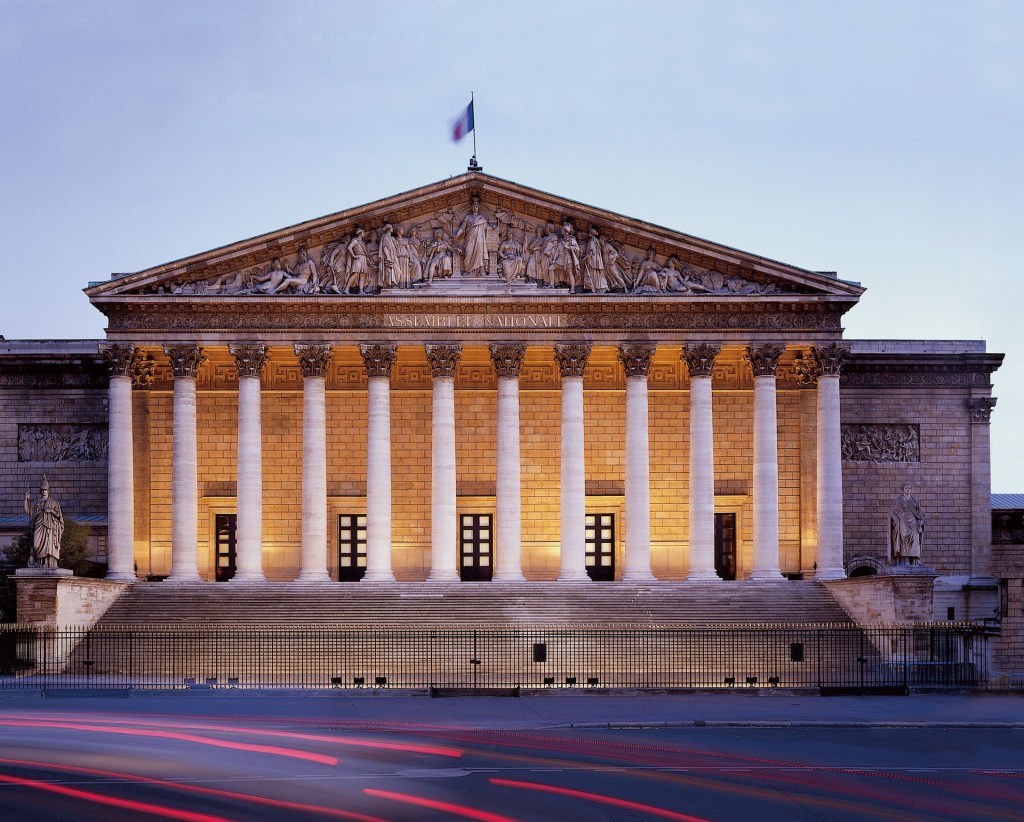
I am just going to be blunt. Our culture in 2025 in the United States of America offers us two political choices. If we are going to be politically involved (and I see no biblical reason why Christians should not be politically involved), we tend to adopt the Republican platform of the Democratic platform. Naturally, those are the only two viable options available to us.
I don’t think that a Christian being Republican or Democrat is (necessarily) untenable, but the political currents of the spirit of our age are strong, and we need to be careful.

Once we throw our hats into the political ring, the strong temptation is to wrap our Christian theology into a Republican looking faith or a Democrat looking faith. This is the danger. We allow ourselves to be carried along by the political current we gravitate toward, and we fight upstream against the current we reject. In other words, we begin define ourselves and our theology by pour political persuasion.
If we follow Christ, we cannot do this. We cannot allow our political choices to define our theology. No political, ideological, philosophical current of our world is going to align perfectly with following Jesus. The Christian will also look and act differently than her political counterpart who does not bow a knee to Jesus if, indeed, the Christian is truly following Jesus.
Jesus told us to pray for God’s kingdom to come here on earth as it is in heaven. Revelation shows us the answer to this prayer in Revelation when the new Jerusalem comes down out of heaven to establish a dwelling place for God on earth and makes all things new. (Rev. 21:1-5)
This happens by God’s doing in His time. We can pray for it, as Jesus taught, but God determines the time and manner in which this will occur.
Meanwhile, Jesus preached the coming of God’s kingdom, which looks (now) like an unassuming mustard or yeast in a loaf of bread. It is hardly noticeable, but it is at work as surely as Jesus lives.
Jesus calls us to be salt and light. Salt enhances flavor and preserves, but it is hardly noticeable in and of itself. Light allows us to see everything clearly, but we hardly are conscious of the light until we find ourselves in darkness. Even then, we can get used to darkness.
We have heard it said that the kingdom of God is here now and not yet. As with many spiritual things, we hold these truths together in tension. We may not fully understand them, but we hold on to them nevertheless, because we believe both things are true.
My point in writing this is not to urge Christians to be less (or more) politically engaged in the world. If you feel compelled by the Holy Spirit to be fully engaged, then do it! But, be careful to maintain the right perspective – a godly perspective that prays for the coming of God’s kingdom that has arrived, but is not yet here.
Strive to be aligned with Christ and to God’s kingdom even when doing that puts you at odds with the political currents in which you swim. Jesus told us to align ourselves with him and to his kingdom in the Sermon on the Mount and other places. Though it may look like foolishness to the world, it is the wisdom of God.
3 “Blessed are the poor in spirit,
Matthew 5:3-10
for theirs is the kingdom of heaven.
4 Blessed are those who mourn,
for they will be comforted.
5 Blessed are the meek,
for they will inherit the earth.
6 Blessed are those who hunger and thirst for righteousness,
for they will be filled.
7 Blessed are the merciful,
for they will be shown mercy.
8 Blessed are the pure in heart,
for they will see God.
9 Blessed are the peacemakers,
for they will be called children of God.
10 Blessed are those who are persecuted because of righteousness,
for theirs is the kingdom of heaven.
We are called to holy (separate from the world) as God is Holy.

 Navigating by Faith
Every day, I struggle with this. Every day.
LikeLike