
A funny thing happened to me one evening recently. I received a text from a number that was not in my contacts. The texter introduced himself and said he was from “VBC”. He said he emailed me, but I didn’t respond, so he was sending me a video of the child I sponsor from Uganda with a link for me to click.
I didn’t know the person. I didn’t get an email, and I don’t sponsor a child from Uganda.
Since scamming people is a billion dollar industry, I was cautious,. I do sponsor a child from Africa, but she lives in Ethiopia. The initials, “VBC”, are the initials for the church I go to, so I didn’t just delete it. I looked up name of the texter, but I couldn’t find his name in the directory.
I wanted to respond positively if he was a brother in my church, but I didn’t know him. What if someone hacked into the church directory? What if they found just enough information to make it sound good and to get me to click on a malicious link?
I texted him back and asked what email he had for me. The email he sent back was one letter off. He also sent an email with a shortened version of my former wife’s name, but it isn’t the shortened version she uses. It was close, but wrong. He had just enough of the right information for me to think it was legitimate but just enough of the wrong information for me to pause.
Finally, I texted the campus pastor, and he confirmed that the man was from VBC (but a different campus). He also did go to Uganda where the church has an ongoing missionary presence.
Then, I remembered: there is a young man in the church with exactly my first and last name. I have only met him once because he is a distant relative, and he goes to a campus of the church that is furthest from the one I go to. With this information, I called the man who texted me, and we had a good a laugh.
My name isn’t common. We both sponsor children in Africa. We both were marred to women with the same first name (different nicknames). The similarities were uncanny, but the differences signaled the need for caution.
I was thinking about this after doing my routine reading the next morning. The reading plan focused on James’s letter “to the twelve tribes scattered among the nations” (James 1:1), and it posed this question:
Have you ever been confused about who sent a text, email, or note?
In light of my experience the previous night, I realized that God might be talking to me! The follow up questions ask whether not knowing who sent the message confuses the meaning and whether knowing who the sender is changes our understanding.
The answer is definitely, yes and yes! I was confused when I wasn’t sure who sent me the original text, and knowing it came from a trusted source changed everything.
The context in which this story and my thoughts arise this morning is the confusion in the church caused by Donald Trump and his sidekick, Elon Musk. I have seen red flags since 2015 and reason for caution. The topic has been much on my mind, because some Christians champion these men and defend everything they do, and other Christians don’t.
It seems to boil down to who you trust and whether we should ignore look the other way at the things that seem a little “off”.
What are we to think? Can we trust them? Do we know who they are? Do we ignore the red flags? Perhaps, more importantly: Do we know who we are?
I am afraid I can’t get very deep into this subject without writing a tome, and I have already written much, so I want to stick with the context out of which this experience and these thoughts flow. Specifically the controversy over Elon Musk’s comment to Joe Rogan: “The fundamental weakness of western civilization is empathy.”
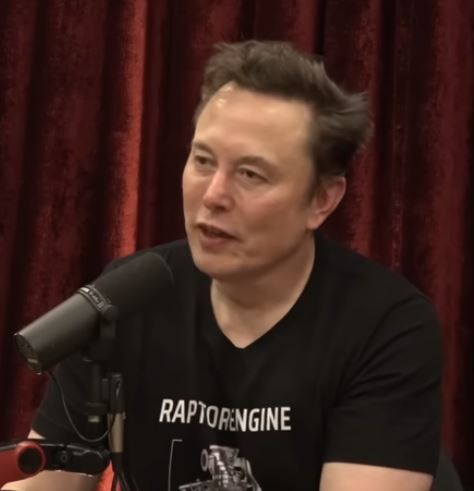
At face value, that statement sounds contrary to Christian values. “Love is kind” (1 Cor. 13:4), right? Consider others (Phil. 2:3); bear with each other (Col. 3:13); and be kind to one another, tenderhearted and forgiving. (Eph. 4:32) These things all require empathy.
On a whim I asked Google’s AI engine to provide me the characteristics of a psychopath. The summary began as follows: “Psychopathy, characterized by a lack of empathy and remorse….” (Psychopathy differs from sociopathy in that the former is more severe and calculating, while the latter is more impulsive and reactive.) That’s what I thought!
I don’t want to claim that Trump and Musk are psychopaths, but Elon’s statement made to Rogan was a red flag. I also don’t want to be overreactive.
Our reactions are often dictated by who we think we can trust. We often trust those who seem to align with our politics, but that can be dangerous for a Christian who has sworn allegiance to God alone.
People often respond immediately at a gut level to what they hear or read. We do this without without even knowing all the facts, and our response is often driven by the source. If it is from someone we think we can trust and/or aligns with our views, we believe it. If we don’t know the source or don’t trust the source, we are skeptical.
My experience with not knowing whether I could trust the text with a kink that was sent to me brings this home to me today. I didn’t know the person who texted me, so I was skeptical.
Even if I knew it came from a trusted source, however, I had reason to be cautious. The message had some information that indicated “inside” knowledge of me, but it was just a little “off”. If it was a hacker, and I clicked on the link because it purportedly came from a trusted source, I would have been sorry.
This inspired me to find the Rogan/Musk podcast and listen to the segment where Musk said the biggest weakness of western civilization is empathy. (Linked here at about 1:16:00) If you listen to the context of the statement Musk made to Rogan, Musk qualifies his statement by saying,
“I believe in empathy. You should care about people, but I want to have empathy for civilization as a whole, and not commit civilizational suicide…. I just want to keep the civilization around longer.”
We should never take statements out of context and consider them the gospel truth. Even when we think we know, it pays to give it a fair hearing.
I also learned that Musk’s comment comes from Gad Saad, a Canadian evolutionary psychologist. So, I looked him up. Gad Saad has an impressive resume. He has in his own podcast, The Saad Truth with Dr. Saad. I listened to a couple of his episodes on the subject of “suicidal empathy”, including Episode 801: The Parasitic Mind + Suicidal Empathy Are Destroying the West.
Saad has an evolutionary worldview. I am not going to villainize evolutionary theory here. The jury is still out for me on evolution. I do not necessarily see it as antithetical to God or the Bible, but I do see some issues in the science, and the application of evolutionary theory to worldview is often antithetical to faith and belief in God.
Most people who hold to an evolutionary worldview do not believe in God and do not honor or understand the Bible. Modern evolutionary worldview is still haunted by a survival of the fittest view of life that led to social Darwinism in previous generations and inspired and informed Hitler’s Nazi ideology.
I am not saying modern evolutionary thinking is Nazi ideology, but it comes from the same root. This can be seen in Saad’s development of the concept of “idea pathogens” that destroy logic, reason, and common sense.

These “parasitic ideas”, Saad says, are like tapeworms that take residence in the stomach of its unsuspecting host. In similar fashion, “parasitic ideas” take residence in the brains of people and alter the neuronal circuitry in ways that are destructive to survival.
He uses the spider wasp as an example. When the wasp stings a spider, the sting renders the spider compliant to the wasp, which takes the spider into its burrow, and lays its egg on the spider. When the eggs hatch, they eat the spider.
Saad says the spider wouldn’t normally go into the wasp’s nest, but the insertion of the sting numbs the spider’s defenses and makes it vulnerable. Saad says that political correctness is like the spider wasp sting. Ideas (like men can menstruate, men can bear children, borders are racist, he says) are ideas we haplessly go along with like a spider who has been numbed into compliance by spider wasp sting.
Saad uses the example of the wood cricket that normally hates water. Certain parasitic worms change the neurology of the cricket to induce it to jump into water where the worm completes its life cycle. Crickets would not normally jump in the water because of fish who eat them and other dangers, but the parasite disarms the wood crickets’ defenses by getting inside and changing the neurology of the cricket.
Saad says, “Queers for Palestine are wood crickets.” If a queer person had to choose between Tel Aviv and Gaza, they would choose Tel Aviv (apparently one of the queerest cities in the world, according to Saad). They wouldn’t choose Gaza, where queer people have been thrown off buildings headfirst.
He says that “suicidal empathy” is the emotional version of a parasitic idea. A parasitic idea changes brain neurology to trigger a response that makes an animal vulnerable to dangers it would normally evade. Suicidal empathy turns a good and noble emotion into a self-destructive impulse. It is the weaponization of a good emotion against the host who becomes infected by a parasitic idea.
These things seem perfectly plausible. Maybe there is even some element of truth to them, but they come from a worldview that does not honor God and is not informed by the Bible. It is the wisdom of men, but we know that worldly wisdom is foolishness to God, and God’s wisdom seems like foolishness to the world.
The conclusions Saad reaches line up in some ways that Christians see the world (on political correctness and gender issues, for example), but something is “off”. Something isn’t quite right, and our “spidey senses” should be tingling.
Perhaps, Saad’s ideas are the parasitic ones! They are ideas that come from a different worldview. They have a different source, and they ultimately run counter to to a biblical mindset.
How do you think Saad might view the idea of God stripping Himself of power and position, becoming a vulnerable baby, experiencing the weakness of humanity, and submitting to death at the hands of His own creation? Wouldn’t Saad view Jesus like a wood cricket infested with parasitic ideas that led him to allow himself to be crucified? (Like a lamb led to the slaughter)
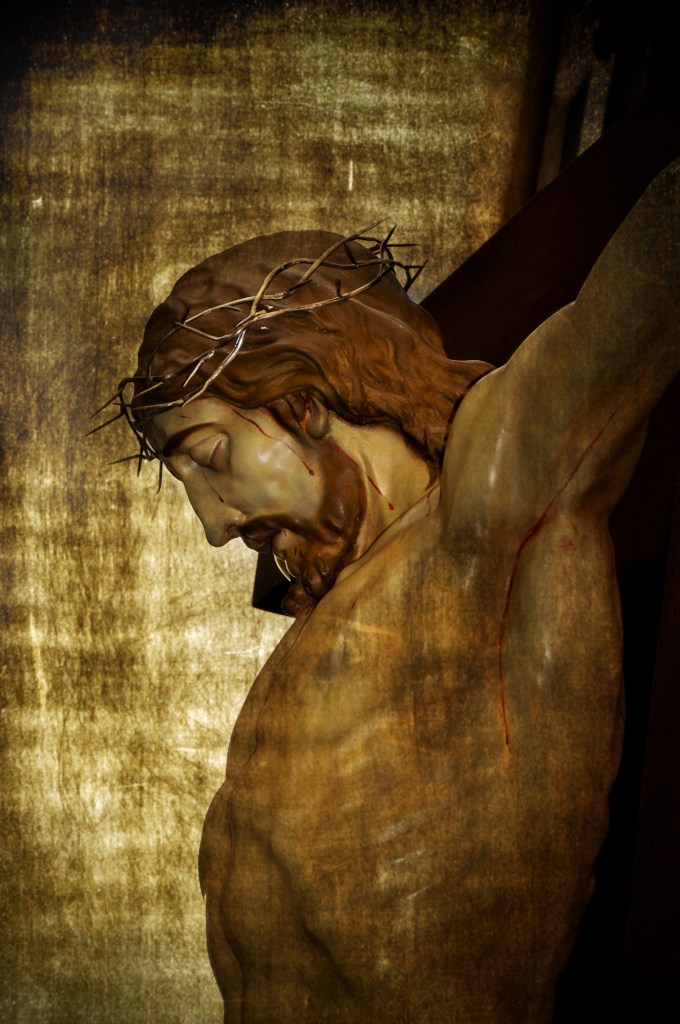
This of course is just what God did! This is the Gospel, and, Jesus calls us to take up our crosses and follow him. To surrender our lives in similar fashion.
Are these not parasitic ideas that cause otherwise “rational” people to become vulnerable to influences that jeopardize our own survival? On an evolutionary worldview, these things do not make sense, but the wisdom of men is foolishness to God, and God’s wisdom seems like foolishness to men.
These are the ideas driving Elon Musk’s and Donald Trump’s mass lay offs, closure of agencies, funding freezes, and break up of USAID, the purpose of which was to provide humanitarian help to vulnerable people. In a world of survival of the fittest, these moves make perfect sense, but they are antithetical to the kingdom that is not of this world in which God invites us to become citizens.
Elon Musk, at least, is being influenced by an evolutionary worldview, and not a biblical one. Why do Christians trust him? Many of us don’t trust liberal ideology. Why would we trust the ideology of Musk’s and Trump’s “conservatism”? (Even if we could call it conservatism, as he ignores the rule of law, thinking himself above it, to accomplish he ends).

To the extent that Christians have aligned with the Republican party and have ignored the red flags, I believe, those Christians have been led off the path Jesus told us to walk. I could equally say this of the Democratic party. I am not being political in saying these things. The kingdoms of this world run counter to God’s kingdom.
Party politics on both sides is informed by worldly wisdom. Some of it will line up with biblical principals, and some of it won’t. If we hitch our wagons to one side or the other, party politics will inevitably take us wide of the narrow path.
Christians, we should not swallow what we are offered from the world just because it seems to line up in some ways with our own thinking. We need to wash our minds with God’s Word and be ever renewed in our thinking by it and by our knowledge of God and his character.
The only source we should trust is God and His word. Every other source should be viewed with skepticism. We need to be mindful of the red flags and inconsistencies, and we should not allow ourselves to be swept along by political and cultural currents that originate from the headwaters of human wisdom, even if that wisdom might seem to intersect at some points with biblical principles.
We should settle for nothing but the whole counsel of God. We should understand who it is that we are listening to and who we are. We are children of the most high God, and we are citizens of the kingdom of God that we can live in here, but which has not yet fully come and until Christ comes again.

 Navigating by Faith
This! I couldn’t agree more! Thank you for taking the time to provide us suc a deep dive!
LikeLike