
The Parable of the Good Samaritan has a backstory in Hebrew Scripture I previously didn’t know, and it relates to our present times. Specifically, it relates to the issue of immigration.
The context of the parable is a question put to Jesus by an expert in the law: “What must I do to inherit eternal life?” Jesus turned the question back on the expert, asking, “What is written in the law? … How do you read it?”
It’s interesting that Jesus does this. Maybe he wanted the legal expert to think it through for himself, rather than repeat what others have told him.
The expert answered, “’Love the Lord your God with all your heart and with all your soul and with all your strength and with all your mind’; and, ‘Love your neighbor as yourself.’”
Jesus affirmed his response, and said, “Do this and you will live.”
But, the expert in the law wasn’t satisfied with that answer. He asked Jesus, “Who is my neighbor?” This is where the backstory begins. To understand the backstory, we need to know where in Scripture the law expert was pulling his answers from and what he (and Jews of his time) likely thought about them.
The first half of the formula (love God…) comes from Deuteronomy 6:5. The second half of the formula (love your neighbor…) comes from Leviticus 19:18. The full verse in Leviticus reads like this:
“Do not seek revenge or bear a grudge against anyone among your people, but love your neighbor as yourself.”
Because of the first phrase of the verse – “do not seek revenge or bear a grudge against anyone among your people…” – the expert in the law and Jewish scholars in the First Century believed their neighbors were only “from among their people” – fellow Jews. The Jews believed that Gentiles, and especially Samaritans, did not count as “neighbors” who must be loved, and this verse became a proof text of that view.
As we will see, they were wrong. We need to be careful, also, of our understanding of what the Bible when we focus on verses in isolation. When we do that, we use verses as proof texts to affirm what we already believe, rather than letting Scripture guide us in what it actually means.
We should also understand the context of the times. First Century Jews had contempt for the Samaritans. The animosity was reciprocated, and that led the Samaritans to side with the Romans against the Jews. (See the Jewish Encyclopedia) The Romans, of course, were seen as enemies of the Jews for obvious reasons.
It seems natural, then, that First Century Jews read Leviticus 19:18 to mean that their neighbors were those who were “from among their people”, and we can understand why Jews did not consider Romans and Samaritans as neighbors they were required to love. This view also explains why Jesus says earlier in the Sermon on the Mount,
“You have heard that it was said, ‘Love your neighbor and hate your enemy.’ But I tell you, love your enemies….”
Matt. 5:43-44
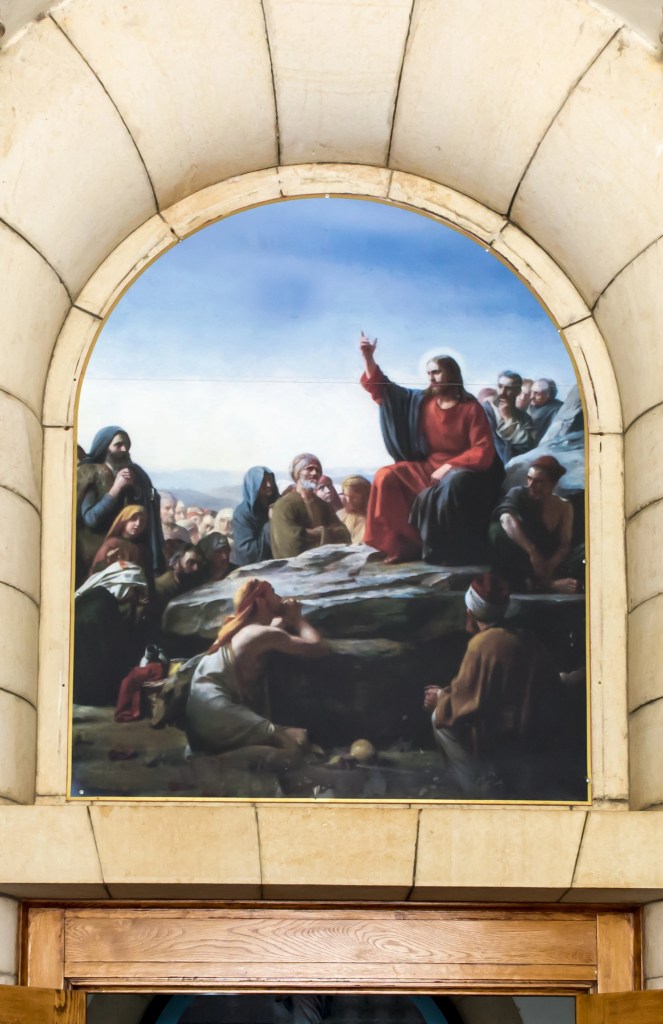
In the Sermon on the Mount, Jesus dispels the notion that God only commands us to love our related and friendly neighbors. He goes on to say, “If you love those who love you, what reward will you get? Are not even the tax collectors doing that? And if you greet only your own people, what are you doing more than others? Do not even pagans do that?” (Matt. 5:46-47)
When the expert in the law asked, “Who is my neighbor?”, then, he may been aware of what Jesus said in the Sermon on the Mount. Luke 10:29 also says he asked this question to justify himself. That could mean that he wanted Jesus to affirm him and the way he thought about these things. As an expert, he also may have wanted to challenge what Jesus had been saying.
In response to the loaded question, Jesus tells the Parable of the Good Samaritan. This parable is an application of the statement he made in the Sermon on Mount. You can read the parable at Luke 10:25-37, but I will summarize it briefly.
A unidentified man was robbed and left for dead on the side of the road. A priest and a Levite – who represented the most upstanding and religious of Jews – passed by on the other side of the road, and they did not stop to help the injured man. A Samaritan, who was considered an inferior outsider and enemy of the Jews, does what the religious men failed to do, and he helps the poor, injured man. When Jesus asked the expert in the law who is the good neighbor, the expert had no choice but to say, “The one who had mercy on him.”
Interestingly, Jesus took the idea of a neighbor out of the intellectual, theological context of First Century Jewish Scholarship in which they had convinced themselves their neighbors were only those from among their people. Jesus illustrated the meaning of loving your neighbor in a basic, human story.
Perhaps, we need to be careful about spending too much time theologizing and not enough time humanizing what we read. It’s easy to miss the human impact when we keep our discussion and thought process on a purely theoretical, theological, and intellectual plane.
It’s also hard to ignore the human impact when we are sitting face to face with someone. Perhaps, this is why Jesus said, “Go and do likewise.” We can not fully understand God’s love for us and what it means to love others unless we model it. Only in doing what Jesus says, do we truly understand.
By telling the expert to go and do (love your neighbor), Jesus signaled that there was nothing more to say about it. At some point, we need to stop thinking and talking about what God says and start doing it. Thus, Jesus says, “[E]veryone who hears these words of mine and does not do them will be like a foolish man who built his house on the sand.” ( Matt. 7:26) Likewise, James says, “Do not merely listen to the word, and so deceive yourselves. Do what it says.” (James 1:22)
Jesus, of course, cast the Samaritan (the person not from among the Jewish people) in the role of the person who loved his neighbor. That was the whole point. Good neighbors include those who are not from among us. Even more importantly, we need to treat those who are not from among us as our neighbors.

We are no different than First Century Jews, and we struggle just as hard with loving our neighbors today. The timeless truth of God is not new, and people today are not different than people in days gone by for all of our theological sophistication and knowledge.
If the Jews had not learned to isolate verses as proof texts, they might have seen the full scope of the truth about loving their neighbors. It was right there in Leviticus, just 15-16 verses further on:
“When a foreigner resides among you in your land, do not mistreat them. The foreigner residing among you must be treated as your native-born. Love them as yourself, for you were foreigners in Egypt.”
Leviticus 19:33-34 NIV
I dare say that we proof text Scripture at least as much they did. (Maybe more!) Drink deep from the divine spring of God’s word lest you be deceived into thinking you know exactly what it says, and be wrong!
This is where we get to the relevance for today. The relevance of this timeless lesson for us today is the larger context. The truth that Jesus drove home in the Sermon on the Mount and the Parable of the Good Samaritan about loving our neighbors was couched originally (in Leviticus) in the context of “the foreigner residing among you.”
God says, “The foreigner residing among you must be treated as the native-born. Love them as yourself….”
Christian, this is the attitude God desires you to have for the immigrant in your midst. If your attitude is any different than this, you need to repent and ask forgiveness.

I am sorry to be so blunt, but we need to be clear on what God demands of His children. The expert in the law wanted to debate and philosophize about it, but Jesus didn’t indulge him; he simply said, “Go do it!” We should not indulge contrary attitudes in ourselves either.
Please note that I do not believe Scripture requires us to open up our society to harm. We are not compelled by God to welcome terrorists into our midst or people who intend to tear down and destroy our society. That would not be loving to our neighbors who are already here, and love should always be our goal.
At the same time, our natural tendency is to be self-protective and not consider the well-being of others. That human tendency explains why the Jews read Leviticus 19:18 in isolation, and they failed to consider verses 33 & 34 as relevant to the subject.
In the same vein, we find reasons to be unkind in our attitudes towards immigrants. If they aren’t citizens, we believe we don’t have to give them the basic respect we give people who are citizens; we don’t have to give them due process; we can round them up and send them back where they came from without notice or a hearing.
Of course, most of us reading this article don’t actually do those things, but we remain silent while others do. Even worse, we defend them because we have convinced ourselves theologically that it is the right thing to do. The law is the law! Right?
A quick look at the law, however, should dispel some of our indignation. Overstaying a visa, for instance, is not a crime. It is not even a misdemeanor; it is considered a civil violation. Thus, “unlawful presence” in United States is not a crime. It is considered a civil violation on par with a speeding violation. (8 U.S.C. § 1182(a)(9)(B))
Coming into the country without proper documentation is a criminal violation, but it is only a misdemeanor (for the first offense). (8 U.S.C. § 1325(a)). It isn’t a felony, and therefore it should not be treated as one. The punishment should fit the crime, as they say.
Up until recently, documentation wasn’t required to cross the US border. People crossed freely at the Mexican and Canadian borders.
In fact, there were no formal immigration restrictions for much of U.S. History. The first significant immigration law at the federal level was the Chinese Exclusion Act (1882). It targeted specific groups, but it didn’t require passports for general travel. Thus, Ellis Island functioned as a processing center, not a restriction point, from 1892-1954, for most immigrants.

People used to come and go without the need for passports or visas in the Western Hemisphere. If you are as old as me, you will remember those times, and you probably crossed the border yourself without a passport or a visa.
Policies changed dramatically after 9/11. The Patriot Act of 2001 imposed tighter security. The Intelligence Reform and Terrorism Act of 2004 required passports and enhanced IDs for border crossing. They became mandatory only 16 years ago (in 2009) for all people entering the U.S. from Canada, Mexico, and the Caribbean.
Everyone understands why security was tightened, but perhaps we have gone too far in our efforts to protect ourselves. For Christians who believe in the Bible, we need to align our attitudes and posture on immigration with what the Bible says.
Regardless of what the Bible says, we are a country built on immigration. We have fallen below zero population growth. Our society is aging, and we lack enough new workers to carry the load. Immigrants who are not citizens pay taxes that support our country though they cannot reap the benefits of the taxes they pay. Immigrants are not a burden on our society; they benefit us.
But, it isn’t our great heritage of welcoming immigrants or the practical need for workers in our fields, factories, and places of business who pay taxes that drive me to write this. I write because God commands people to treat the foreigner residing among us as we would want to be treated.
The immigration laws are complex, and most people who come here are not experts in the law. Some of them come because of poverty and lack of opportunity. Others come because of drugs, violence, and political unrest. Still, others come because of persecution.
Regardless of the reasons people come here, as long as they do not intend harm, our attitude as Christians should be to welcome them. This is what Jesus teaches. It is how we would want others to treat us if we were in their shoes. It is what separates sheep from goats in in god’s economy.



Excellent post. Thank you.
LikeLiked by 1 person