
I engage in many conversations with people of faith on just about any topic. I remember one conversation (on the topic of guns, I believe) in which a fellow believer cited Mathew 11:12 in support of a Christian defense of gun ownership.
“From the days of John the Baptist until now, the kingdom of heaven has been subjected to violence, and violent people have been raiding it.” Matthew 11:12 NIV
My friend also mentioned Jesus turning over tables and instructing his followers to buy swords (Luke 22:36, though he tells them in the same chapter to but them down (Luke 22:49-51); “for all who draw the sword will die by the sword.” (Matthew 26:52)). My friend believes that Jesus was saying that force, and even violence, is ok as long as it is used for a good purpose.
I am reminded of his comments as I read through Matthew 12 in my yearly reading plan. I didn’t follow up on his comment then, but reading this passage in context brings it to mind, and it brings clarity to me at the same time.
Does this passage justify violent or forceful behavior in defending Christianity? That is the question
Let’s start with the context. Jesus is preaching in Galilee where John the Baptist has recently been imprisoned for calling out Herod for adultery. John was no shrinking violet. He was bold and forthright, and it landed him behind bars when Herod didn’t take kindly to the criticism.
While in prison, John heard reports of the miraculous things that Jesus was doing. These reports prompted John to send his own followers to ask Jesus, “Are you the one who is to come, or should we expect someone else?” (Matt. 11:3).
I imagine John the Baptist was wrestling with doubt as he languished in prison. In his mind, and in the minds of most Jews at that time, the Messiah was expected to come and take over the world, but it didn’t seem to be happening. The Roman Empire was still very much in charge.
John’s imprisonment must have given him second thoughts about the Messiah stuff. The miraculous signs seemed to mark Jesus as the Messiah, but why was he not wielding the power and the glory of God against the Roman occupation and Roman Empire? John the Baptist may have been hoping that Jesus was just biding his time when he sent for a report.
Jesus sent this message back:
“Go back and report to John what you hear and see: The blind receive sight, the lame walk, those who have leprosy are cleansed, the deaf hear, the dead are raised, and the good news is proclaimed to the poor. Blessed is anyone who does not stumble on account of me.” (Matt. 11:4-6) (quoting Isaiah 35:5-6)
Was that the report John was expecting? Jesus didn’t say anything about driving out Rome and restoring King David’s throne. He didn’t pull from the prophetic messages about a conquering messiah. He pulled a different thread from the Prophets.
When John’s followers left, Jesus praised John the Baptist to the disciples. He affirmed that John the Baptist is the one spoken of in Malachi 3:1 – the messenger sent ahead of the Messiah to prepare the way. He affirmed that he is the Messiah, but the response he sent back to John was about healing, cleansing, and proclaiming good news to the poor.
In this context, Jesus said, “the kingdom of heaven has been subjected to violence, and violent people have been raiding it.”
Jesus seems to be confirming only what John was already hearing about the miraculous signs, but John already knew about those things. Therefore, I think Jesus was doing more than confirming what John already knew. Jesus was tying what he was doing to prophetic passages like the language he quoted from Isaiah when he announced his public ministry (Luke 4:18-19):
“The Spirit of the Lord is on me,
because he has anointed me
to proclaim good news to the poor.
He has sent me to proclaim freedom for the prisoners
and recovery of sight for the blind,
to set the oppressed free,
to proclaim the year of the Lord’s favor.”
These words from Isaiah 61:1-2 with overtones from Isaiah 58:6 were read aloud by Jesus in his hometown synagogue in Nazareth before he sat down with all eyes on him and said, “Today this scripture is fulfilled in your hearing.” (Luke 4:21) These are the words Jesus used to to characterize the purpose for which he came.
We know, of course, that Jesus came to die on a cross, but John and his followers didn’t know that and probably could not have imagined it. Jesus’s followers also didn’t get it even when he tried to tell them.
Jesus pulled passages from Isaiah that alluded to the suffering servant motif to affirm his identity. John the Baptist would have immediately recognized the thread Jesus was pulling, but it wasn’t likely what he was expecting or what he was hoping.
First Century Jews were expecting the Messiah to reestablish the Davidic kingdom “here and now”. The Romans were well aware of that Jewish sentiment and had been putting down factions of zealots who took up the sword to attempt to bring it about.
Imagine Pontius Pilate’s confusion that prompted him to ask Jesus, “Are you the king of the Jews? …. Your own nation and the chief priests have delivered you over to me. What have you done?” This is how Jesus responded to Pontius Pilate:
“My kingdom is not of this world. If my kingdom were of this world, my servants would have been fighting, that I might not be delivered over to the Jews. But my kingdom is not from the world.” (John 18:36)
With this as the backdrop, let’s turn back to Matthew 12. If we understand the context, and the bigger picture, we see that Jesus is not advocating violence or force: he is doing just the opposite.
Everyone, including the disciples of Jesus, expected a conquering Messiah, but Jesus came to suffer for the sins of the world and to introduce his kingdom, which is not of this world. Jesus promised to return as the conquering Messiah, but that time still has not yet come.
Everyone expected a conquering Messiah, but Jesus came in the First Century for a different purpose. He came to heal, to cleanse, to announce good news to the poor, and he came to invite people into God’s kingdom, which is not of this world.
God’s kingdom was introduced into this world by Jesus, but the ultimate coming of that kingdom is yet to occur when he returns. In the meantime, Jesus warned his disciples, “In this world you will have trouble….” (John 16:33); and “You will be hated by everyone because of me….” (Matthew 10:22)
This is the context in which Jesus said, “[T]he kingdom of heaven has been subjected to violence, and violent people have been raiding it.” (NIV) Other translations read differently, including the English Standard Version:
“From the days of John the Baptist until now the kingdom of heaven has suffered violence, and the violent take it by force.”
The kingdom of heaven has been subjected to or suffered violence. I believe Jesus is saying the kingdom of heaven is on the receiving end of violence. He isn’t advocating violence to establish God’s kingdom. (Go read the Sermon on the Mount)
John didn’t use violence or force to advance the kingdom of heaven. John boldly called people to repent for the kingdom of God was near. He was bold, but he was not violent, and he didn’t resort to violence. In fact, the violence was done to him (not by him).
John criticized Herod for adultery, but he was not a violent man. Herod was the violent man. Herod imprisoned John for criticizing him, and Herod later had John beheaded. The violence was done to John and the force was used against him. Not the other way around.
Consider the Prophets. Did the prophets use violence or force? No! The Prophets were the ones who were subjected to violence. The Prophets were the ones who were persecuted and killed, like John the Baptist.
Keep in mind that Jesus was just asked for some assurance that he was the Messiah by John who was in prison. Jesus reassured John and his followers with the news that he was healing people and proclaiming the gospel (not overtaking Rome with violence or force). Perhaps, Jesus was signaling the violence that John the Baptist would be subject to, by Herod, a violent man, who would raid the kingdom of God if he thought he could.
When Jesus turned to his disciples to commend John, he was using John as an example of what it means that the kingdom of heaven is subjected to violence. John’s situation prompted Jesus to comment about violence being done to God’s people who are faithful to speak the good news to the poor.
Jesus wasn’t saying that his followers should be violent and take the kingdom of heaven by force. He was saying the kingdom of heaven is subjected to violence and to violent men who try to take it by force.
John the Baptist and all the prophets experienced that reality. Jesus experienced that reality. The early church and many Christians throughout the centuries in many times and locations – even today – have experienced that reality.
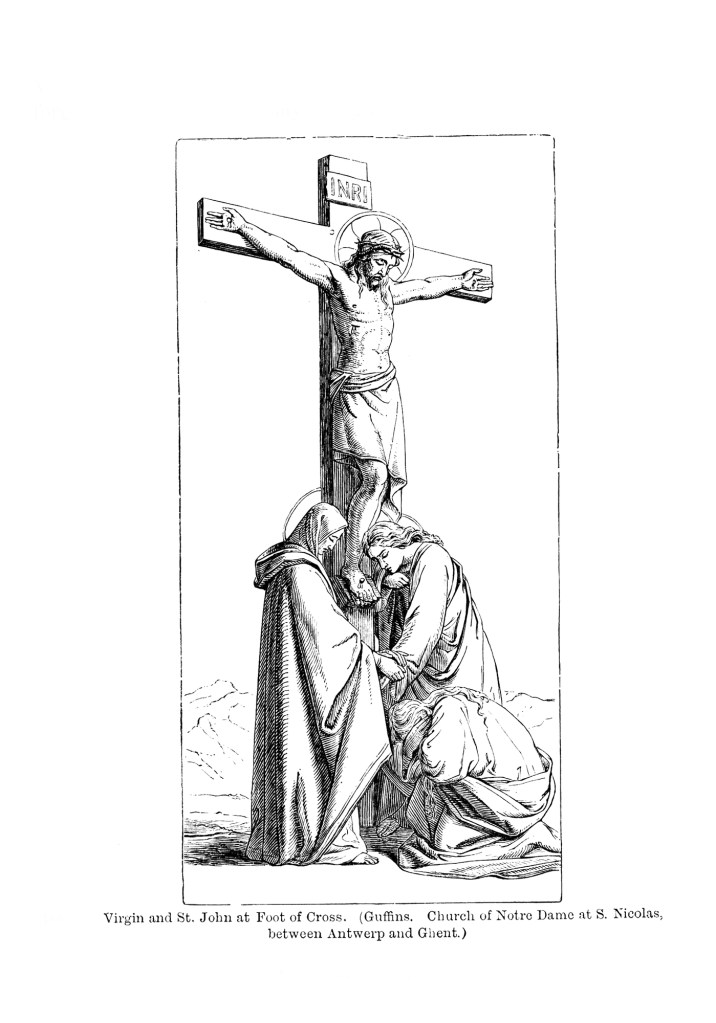
Jesus told the disciples that they should not expect to be treated well and that they should expect to be persecuted like he was. (See for example, John 15:18-25) Jesus said that servants are not greater than their master, and just as he encountered rejection and persecution, they would be rejected, persecuted, and face difficulty in this life.
“In the world you have tribulation, but take courage; I have overcome the world.” John 16:33)
Paul and the early Christians suffered persecution just as Jesus said. The Apostles rejoiced in their suffering (Acts 5:41); Paul rejoiced in his suffering (Rom. 5:3; Col. 1:24); and Peter rejoiced in his suffering. (1 Peter 4:13) They even counted themselves worthy to suffer as Jesus did!
Jesus is not saying in Matthew 12 that the kingdom of heaven is advanced by violence and that violent people are advancing the kingdom of heaven by force. He is saying that the people who spread the good news (the Gospel, the kingdom of heaven), like he did, will be subjected to violence and violent people will attempt to take it by force.
Jesus isn’t telling us to be violent people and try to take the kingdom of heaven by force. He is telling us just the opposite: that we will encounter violent people who attempt to take over what we are doing by violence and force.
People may be confused because Jesus calls John “the Elijah who was to come”. Elijah was a particularly flamboyant and forceful man who called down fire on the people who opposed him. We may think that Jesus was making Elijah the example that we should follow, but I don’t believe that isn’t what Jesus is doing.
He was commending John for being faithful to do what God created for him to do, though it landed him in prison and would get him beheaded. John lived true to the calling of God on his life, like Elijah, but Jesus was not commending John for being violent like a Elijah.
How do we know that?
I recently wrote the article, Should Christians Be Like Elijah and Call Down Fire on People Who Reject Them?, in which I examined how God in the Old Testament and Jesus in the New Testament treated Elijah’s antics. Far from commending Elijah for his forceful and violent behavior, God decommissioned Elijah as a prophet, and Jesus rebuked his disciples for suggesting that they should be like Elijah in that way.
Elijah is commended for his faith and commitment to God, but he is not commended for calling down fire on the people who opposed him. Jesus does not promote violence or force in defense of the Gospel. He demonstrated just the opposite in his life, and he calls us to follow him on the same path.
“If anyone would come after me, let him deny himself and take up his cross and follow me.” (Matt. 16:24)
Paul does the same thing:
“Follow my example, as I follow the example of Christ.” (1 Cor. 1:11)
Thus, this verse should not be used by Christians to justify the use of violence to advance God’s kingdom. Rather, we should put down our swords and take up our crosses as Jesus more clearly instructed. We should be faithful. We should be salt and light. We should love our neighbors, and we should maintain our hope in what God will do to establish His kingdom on earth when the New Jerusalem comes down from heaven. (Revelation 21)

 Navigating by Faith