A New Donald Trump?

“I’m going to be watching to see if this was really a life-changing, life-altering moment….”


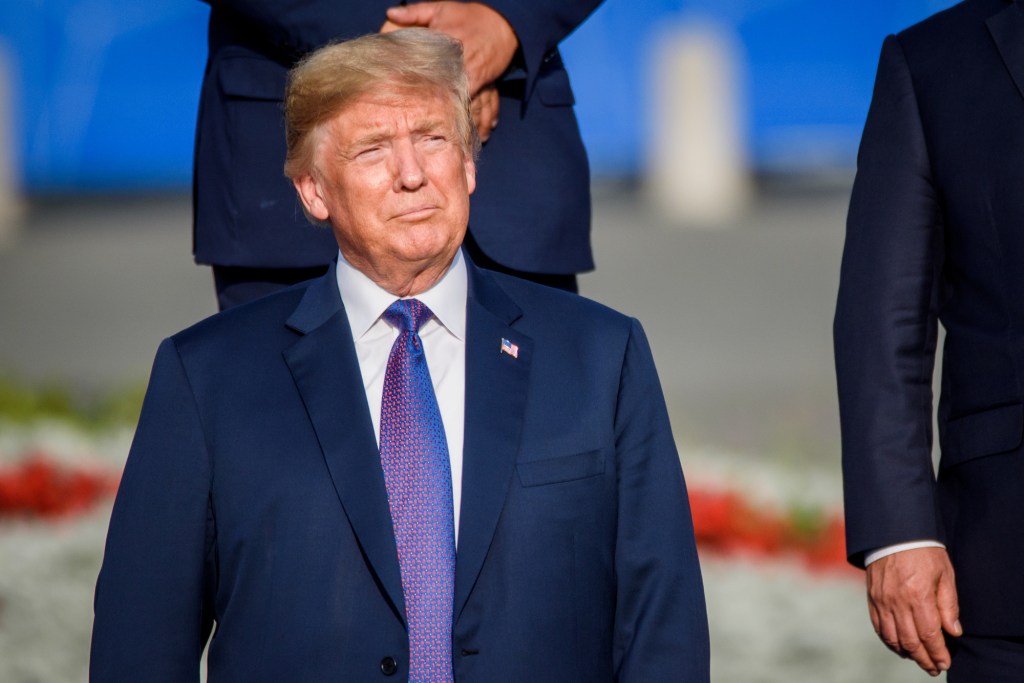
This morning I watched two different videos about Donald Trump in the aftermath of the assassination attempt that came within millimeters of ending his life. Such an experience would sober the hardest of self-made men. Trump experienced the proof of the reality of personal mortality and the razor line between alternate fates.

The first video I might have ignored, but for the source. Capturing Christianity is a YouTuber who manages a thoughtful and circumspect apologetic presence online. He interviews good people and engages in civil conversation with people who disagree with him. I am attracted to people like that.

The video purported to be about a prophecy predicting the assassination attempt on Donald Trump. I don’t run after so-called prophecies. I am immediately skeptical when I see anyone claiming to be a prophet or to have some message from God.

With that said, I do not completely dismiss the idea that God could speak to or through anyone. If we believe anything in the Bible, we have to accept that God has spoken to and through people in the past. I also don’t see anything in the Bible that indicates God can no longer do that if He chooses to speak to or through people in the present.

I believe that skepticism is the right posture from which to consider any claimed prophecy, but I believe we also have to acknowledge and respect Paul’s admonition:

“Do not quench the Spirit. Do not despise prophecies, but test everything; hold fast to what is good.”

1 Thessalonians 5:19-22 (ESV)

The title of the video is, Viral Trump Prophet Now Admits THIS. I don’t like clickbait headlines either, though I admit to being persuaded to click on them sometimes. When I do, my Spidey senses are always tingling, expecting to be disappointed by another bait and switch or overblown story that has little to no factual support, is (likely) full of misinformation and disinformation, and (maybe) even outright misleading information. I have seen it too many times.

I respected the source, however, so I clicked.

The 15-minute video walks through a purported prophecy published by one, Brandon Biggs, four days before the assassination attempt. Mr. Biggs seems very sincere and forthright, but many people can be sincerely and forthrightly wrong. I will let you discern for yourself:

The gist of the Capturing Christianity take is that Biggs got some things wrong, though he accurately predicted the assassination attempt.

Of course, anyone could predict an assassination attempt. I have personally heard people speculate that such an attempt might be made, given the current, polarized and tensely emotional political climate.

The video commentary includes clips of what Mr. Biggs claims he saw in a vision and his interpretation of it. Some of what he saw and reported days before the incident are generally accurate to the events that occurred. In particular, he saw a bullet whiz past Trump’s right ear. He saw blood coming from Trump’s right ear, and he saw Trump down on his knees.

As the commentary points out, anyone might predict an assassination attempt, but the details of this vision are remarkably close to what actually happened. The bullet didn’t whiz past the left ear. It didn’t whiz past the top of the head, or chin, or cheeks, or neck or chest. It whizzed past Trump’s right ear.

Biggs added that Trump’s eardrum was ruptured and that he was “radically born again”. This is where the reality differs. Donald Trump’s eardrum was not ruptured. We also have no way of knowing what happened in Donald Trump’s mind or heart.

The central point of the commentary focused on Mr. Biggs’s “admission” that he added to what he saw in the vision. Biggs says that he didn’t see the bullet pierce Trump’s ear, but he saw the blood coming from the ear. He also mentioned seeing sonic waves behind the bullet, as in the movie, Matrix.

(I am reminded in this comment that prophets are people who perceive things in the context of their culture, experience, and understanding. Food for thought as we read the Old Testament prophets – not that Brandon Biggs should be compared to an Old Testament prophet.)

Briggs admits that he assumed the bullet somehow caused Trump’s eardrum to burst. He added that part, because it seemed like be a logical conclusion to him from what he believed he saw. What he saw, and what he assumed are two different things.

I believe Biggs was sincere and forthright, as I said above, and he was humble in explaining these things. He wasn’t defensive. He didn’t seem intent on defending himself. In fact, he was apologetic and called himself “immature” in not recognizing the difference between what he saw and what he assumed.

So much for these basic facts. They aren’t what I want to focus on here.

As I stated just three days ago, the original prophecy about Trump being President (in 2011) and the miraculous escape from death this week (even if we admit God’s hand in the prophecies and the saving of Trump’s life) do not mean that Trump is God’s man and that Christians should uncritically support him in whatever he says and does.

Paul said we need to “test everything” (1 Thess. 5), so I think that is exactly what we should do. Some people may say that I am vacillating, but I am not. I am keeping an open mind in taking a closer look.

Continue reading “A New Donald Trump?”
The Trump Assassination Attempt: Knowing the Times

The church needs to maintain perspective and test everything


The world is chattering about the Trump assassination attempt. Some people are gnashing their teeth, and others are thumping their chests and pumping their fists. I don’t want to rush to conclusions about anything. There is far too much of rushing to conclusions in our world – or reflexively doubling down on the conclusions we reached long ago.

The assassination attempt, however warrants some kind of response. No one is without some thoughts on the matter. My goal, though, is to be circumspect and seek perspective

I have not been shy in my writing on my concerns about Donald Trump and the uncritical support of Trump by the body of Christ in this country. The most read article on this blog, Who Were the Sons of Issachar? And What Might They Mean for Us Today?, is an attempt to find some perspective in the swirl of religious fervor with which people support Trump.

As I write this, I recognize that Trump may likely become the next President of the United States – an unlikely two-time President. I also recognize the prophecies about the first Trump presidency and the prophecies predicting a second Trump presidency that did not come to fruition four years ago. They appear (to me) about to be vindicated in 2024.

If Donald Trump is elected for a second time, we must admit that these prophecies came true. The test of a true prophet and of a prophecy from God is whether the events predicted happen.

That isn’t the end of the story, however. Paul exhorts us to test everything and hold onto only what is good. (1 Thess. 5:21) The context in which these words were spoke is prophecies, among other things:

Do not quench the Spirit. Do not despise prophecies, but test everything; hold fast what is good. Abstain from every form of evil.

1 Thessalonians 5:19-22

What do we hold on to here? What is God saying, and what is God doing in these times

Does a second Trump presidency as prophesied mean that Trump is God’s anointed? Like David? Or Like Saul? Does it mean that the American church must put its uncritical allegiance behind Donald Trump, including all that he says, all that he does, every position he takes, and all that he stands for?

These questions are ways of asking, “What God is doing in our times?” And, maybe more importantly, “What should we be doing in these times?”

We need to be careful – to test everything. God has a way of doing things that we don’t expect and don’t understand. If we don’t believe that, we are not reading our Bible closely enough.

Continue reading “The Trump Assassination Attempt: Knowing the Times”

Of the Holy Spirit, Truth, Tares, and Wheat at the Asbury Revival

“[N]o one can say, ‘Jesus is Lord,’ except by the Holy Spirit.”


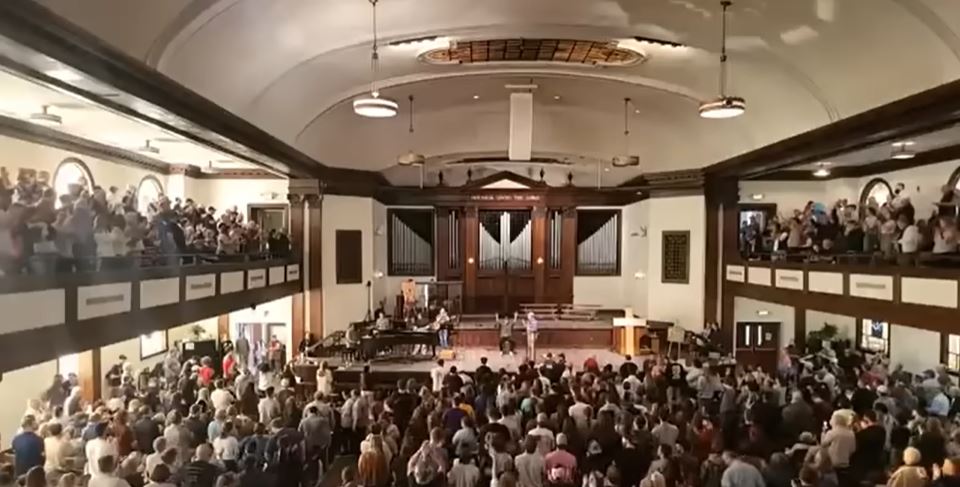
I listened to Voddie Bauchaum summarize what is wrong at Asbury recently. The video title is (Wow) The Asbury Revival is NOT of God. His summary is similar to other skeptical takes I have heard, so I will summarize his summary here. (You can also watch the video and hear what he says for yourself.)

Bauchaum said he listened to four testimonies of students who attended the “revival”, and they “confirmed exactly what I figured was going on.” It’s a small sampling size, but I have no reason to believe he didn’t hear what he heard.

His conclusions were more in number than his sampling size. First, he said, “This event is nothing more than strange fire.” (The whole event.) For proof, he offered what the students said in their testimonies: One student admitted said he experienced a “fit of laughter”; another student claimed his mother began speaking in “unknown tongues”. (If Bauchaum supplied a summary of the other two testimonies he heard, I missed it.)

The phrase, “strange fire”, is a reference to Leviticus 10:1-3 an incident in which two priests put incense into censors and offered “strange fire before the Lord, which he commanded them not.” (KJV) Those men were consumed by fire from the Lord, the passage says. Therefore, Bauchaum is comparing the people at Asbury to the two rogue priests who presented offerings to God they were not instructed to give and were killed for it.

Clearly, Bauchaum is suggesting that “this event” is not of God; it is “unauthorized” worship; and God views it like He viewed the priests who offered strange fire and were killed for it.

As further proof that this event could not be from God, he said, “A lot of this took place out of the church!” He added that “the university ordains women for ministry, so there is a lot wrong here.”

He went on to explain to say that he was looking for a man of God taking the pulpit to open the Bible and preach the word of God, “and it never happened.” Though he didn’t say it, I am left to assume that revivals must happen only inside church buildings, and then only when a man of God preaches the word of God from a proper pulpit.

I note that he didn’t do much research if he only heard four testimonies, as I found testimonies all over the Internet, including many statements by professors and school administrators. The happenings at Asbury took place over roughly a two-week period, so there was a lot of footage to see and many people who were there talking about it.

I also note that the chapel service began with someone preaching, but, then, I don’t know if he was “a men of God”, and I don’t recall whether he used a pulpit. (Sarcasm alert.)

Bauchaum warned that Satan tricks people with music. As anecdotal proof, he recounted his own experience attending a Pentecostal church a few times when he was a new believer. He recalled feeling emotional, on the verge of tears, because he felt like God was moving, but he determined it was “nonsense” after reading the Bible for himself for several weeks.

To his credit, he said that he “matured really fast” during during those few weeks. (I am not being sarcastic now. These were his words, not mine.) He said he desired to hear someone preach the Word of God because he was hungry for preaching.

To be fair, I can appreciate. I have been in his shoes before when all I wanted was to hear a meaty sermon that dug deep into God’s word.

Bauchaum recalled an old Paul Washer sermon in which people were moved by the preaching of the word, not by the music. As proof that this is the way it should be done, he quoted Romans 10:17: “Faith comes by hearing, and hearing by the word of God.” (No issue there.)

I don’t know if Bauchaum is a cessationist (someone who believes the “gifts of the Holy spirit” have ceased), so I don’t want to make any assumptions. If he is a cessationist, then it would not matter if people had limbs grow back: a cessationist has already determined God doesn’t do those things anymore.

To give him the benefit of the doubt, I can admit that his concerns might be just as validly expressed by someone who is not a cessationist. His concerns do suggest a need for some circumspection, but I have greater concern over his conclusions than any of the spectacle he described that took place on the Asbury University campus for over two weeks in February of 2023.

Continue reading “Of the Holy Spirit, Truth, Tares, and Wheat at the Asbury Revival”

The Place for Experience in the Mix of Science, Faith and the Evidence for God

When asked what would make them believe, some atheists say a personal experience with God would do it.


On the show and podcast, Unbelievable! On Christian Premiere Radio in the UK hosted by Justin Brierley, the host often asks people, atheists and Christians, what would make them believe (or not believe, as the case may be). Most people think of arguments or historical or scientific proofs, but not everyone.

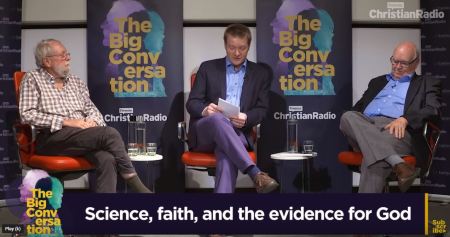
In one particular episode Michael Ruse, a professor and philosopher of biology at Florida State Universality, participated in discussion with John Lennox, a professor of mathematics and philosophy at Oxford, on the subject of Science, Faith and the Evidence for God. When asked the question about what would make him believe, Michael Ruse surprisingly (for me at least) said that it would have to be a personal experience with God.

Michael Ruse is a Fellow of the Royal Society of Canada and the American Association for the Advancement of Science. Ruse is an evolutionary biologist who has debated against intelligent design proponents. He has been on the Advisory Council to the National Center for Scientific Education. He is a Bertrand Russell Society award winner for his dedication to science and reason.

Thus, my surprise to hear him provide such an “unscientific” answer to the question of what it would take for him to become a believer. I have since heard other atheists provide similar answers. Intelligent Christians, I think, underestimate the power of personal experience.

To be fair of Michael Ruse, though is a decided atheist, he has a healthy respect for theology. Maybe that is because he is a philosopher, and not just a scientist.

I say “just a scientist” because there is a school of thought among modern scientists that we don’t need philosophy anymore, that science is all we need. (People like Richard Dawkins and Neil deGrasse Tyson have expressed this view.)

But science, by definition, is limited to the study of the natural world, matter and energy (or “molecules in motion” as some like to say). Anyone who makes the claim that science is all we need has made an a priori determination (an initial presupposition) that molecules in motion are the sum of all reality. Neither theology, nor philosophy, fit into a world like that. And, where, then, does that leave mathematics and logic?

Michael Ruse, being an expert in philosophy takes great offense at the notion that philosophy has gone the way of God and is dead (alluding to Nietzsche’s great contention). It’s natural for a philosopher to take that position, I suppose, even an atheist philosopher. After all, he has devoted his life to philosophy!

But then, consider that he knows something of what he talks about. Just as scientists know a great deal more about science than me, a philosopher knows a great deal more about philosophy than, well… a scientist (who studies only molecules in motion). It isn’t hard to understand why such a person might begin to see the world as nothing but molecules in motion when that is the constant and continual focus of life long study, but the theologians and philosophers, even atheistic one, protest there is more.

Continue reading “The Place for Experience in the Mix of Science, Faith and the Evidence for God”