Trusting God from Beginning to End in 2026

How do trust God in a world that is violent and corrupt?


Jesus is the Alpha and the Omega, the beginning and the end. (Revelation 1:8; 21:6; and 22:13) Jesus was in the beginning with God, the Father, and the universe and all that is in it was made through Jesus. (John 1:1-3)

At this time of year, we celebrate God descending to become man in Jesus of Nazareth, born in Bethlehem into a common family in a far flung place. Jesus was God in his very nature, but he deigned to shed himself of that glory and power to become man, to become a servant to his own creation, and to humble himself to the point of death at the hands of his own creation. (Philippians 2:5-8)

In the end, Jesus will be exalted to the “highest place” with a “name that is above every name.” (Phil. 2:9) Every knee in heaven and on earth will bow to him, and every tongue will acknowledge that “Jesus Christ is Lord,” to the glory of God the Father.” (Phil. 2:10-11)

From the garden of Eden to the new heavens and earth and the New Jerusalem in which God will dwell with His people, God has had a plan from the beginning to the end. God set eternity in the hearts of people, but not so that we would know the beginning from the end. (Ecclesiastes 3:11) We don’t know, but God knows. Do we trust Him?

That is the question in my mind on this 1st day of the New Year in 2026. That is the question with which I challenge myself. Will I trust Him with my life? With the world? With the insanity that seems to characterize the year that just ended in United States of America where I live?

Since God created the universe and populated it with people and animals, God ordained and allowed people to populate the Earth. God didn’t dictate how the history of His creation would unfold. He created Adam and Eve with the capacity to live in sync with God and the universe, but He also gave them the capacity to go their own ways. God had a plan from the beginning, but He allowed the universe and mankind, His crowning creation, to unfold as it would.

I am beginning a new year of reading through the Bible as I have done many years in the past. I have read through the first handful of chapters in Genesis, and my thoughts gather around the question: will I trust God better in the New Year?

Continue reading “Trusting God from Beginning to End in 2026”

Christmas Thoughts: The Heart of God’s Redemptive Story is Revealed through Mary

The final woman mentioned in the lineage of Jesus is central to God’s redemptive work in human history.

I have written a Christmas series of blog posts on the genealogy in Matthew that sets the stage for the narrative of the birth of Jesus, but I haven’t finished it… until now. The theme is the redemptive work of God in human history through the perspective of the five (5) women mentioned in the genealogy.

If that last statement gave you pause, you may have a hint of the radical nature of that storyline, which is the point of this redemotive story: There are five women mentioned in the genealogy. Five women.  

The Hebrew culture was paternalistic, like all cultures in the Ancient Near East, and almost all cultures down through history (and even now). The oldest male in that culture inherited his father’s estate. Lineage was traced from male to male.

So, what are five women doing in the sacred lineage of Jesus?

That Matthew mentions five women in his genealogy is truly remarkable. We might gloss over it in our modern thinking, maybe even being tempted to sneer that he didn’t include more. That he included ANY women is the the amazing thing.

I described four of those women in previous blog posts. I began with a post that sets out the genealogy in full and links to each of the subsequent blog posts. (Christmas Thoughts: God’s Redemptive Actions Through Women of the Old Testament). The posts continue in the following progression, from oldest to most recent:

  1. Christmas Thoughts: God Redeems the Line of Judah through Tamar;
  2. Christmas Thoughts: Rahab, a Foreign Prostitute & God’s Redemptive Plan;
  3. Christmas Thoughts: Ruth & God, the Kinsman-Redeemer;
  4. Christmas Thoughts: Uriah’s Wife and the Redemption Plan of God

All of the stories I have covered so far are of women from the Old Testament, showing God’s redemptive work leading up to the birth of the long awaited Messiah. The last of the woman is Mary, who gave birth to him.

This piece is inspired by Craig Keener, who has a Ph.D. in New Testament and Christian Origins from Duke University and is a prolific writer of scholarly works on the New Testament, among other things. He was interviewed recently by Preston Sprinkle on Theology in the Raw as part of a series on Christmas.

He contrasts the appearances of an angel to Zechariah (Luke 1:8-22) and to Mary (Luke 1:26-38). The passages are parallels, announcing the birth of the Messiah, but the response of the two are different. The contrast is intended, no doubt, to catch our attention: Zechariah responds with unbelief, while Mary responds, “May it be according to you word!”

The parallelism of the two passages is striking, so the difference in the responses stands out. It is meant to stand out.

Zechariah is an aged man, a priest operating at the center of the life and culture of his people, serving in holiest place in Hebrew culture: in the temple. He is male of course. Zechariah, of all people, might be expected to recognize and embrace God’s great entry into human history and the fulfillment of the long-foretold Messianic prophecies.

Contrasted to him is Mary, a young female (probably in her mid-teens), a relative nobody in a nowhere place in the eyes of that culture. She would not have been privileged to know Scripture like Zechariah She would have no stature, no power, no influence nor importance.

The contrast in status would be more evident to First Century Hebrews, but we can understand it even today. Despite the elevated stature of Zechariah, Mary is the hero of this story. She embraces what the angel says, while Zechariah hesitates in doubt at the threshold of God’s entry into the world.

Mary’s song (Luke 1:46-55) is one of the most eloquent and poignant responses to God’s redemptive work in all of Scripture.[i] Mary is glorified over the venerable old priest in the story. The spotlight is on her, and

Mary’s words also set the tone for the coming of the Messiah. She says God scatters those who are proud, but He lifts up the humble. He fills the hungry, but he empties the rich.

Leading the way to God’s appearance human history are five women who stand out in Matthew’s genealogy by the very fact that they were included at all. Their stories are at the center of God’s redemptive work and plans for mankind that He envisioned from before the foundations of the world.

The mention of five women in the genealogy of Christ, the Messiah, is no accident. In our western minds, we might tend to gloss over genealogy as a mundane recitation of historic fact. For Hebrews, the composition of a genealogy is not just about fact, but an emphasis of key facts.

The genealogy with the mention of five women sets the stage for the appearance of God. It is foundational and a central a part of that story. Take a moment to consider how utterly unusual that genealogy would have seemed at the time, and it’s significance in story of Jesus. Consider Mary’s grand response to God, and take some time to read the stories of the other women in the lineage of Jesus.


[i] And Mary said:

“My soul glorifies the Lord
and my spirit rejoices in God my Savior,
for he has been mindful
    of the humble state of his servant.
From now on all generations will call me blessed,
for the Mighty One has done great things for me—
    holy is his name.
His mercy extends to those who fear him,
    from generation to generation.
He has performed mighty deeds with his arm;
    he has scattered those who are proud in their inmost thoughts.
He has brought down rulers from their thrones
    but has lifted up the humble.
He has filled the hungry with good things
    but has sent the rich away empty.
He has helped his servant Israel,
    remembering to be merciful
to Abraham and his descendants forever,
    just as he promised our ancestors.”

The Story of Abraham and God’s Redemption of all Mankind – Part 3

God works through the hot mess of our choices to accomplish His purposes.

I am covering some ground in the story of God’s redemption of mankind through Abraham and his progeny. This is a story of God redeeming people because of their faith (trust in God), not for their morality. It’s also a story of God accomplishing His purposes through people despite their messiness.

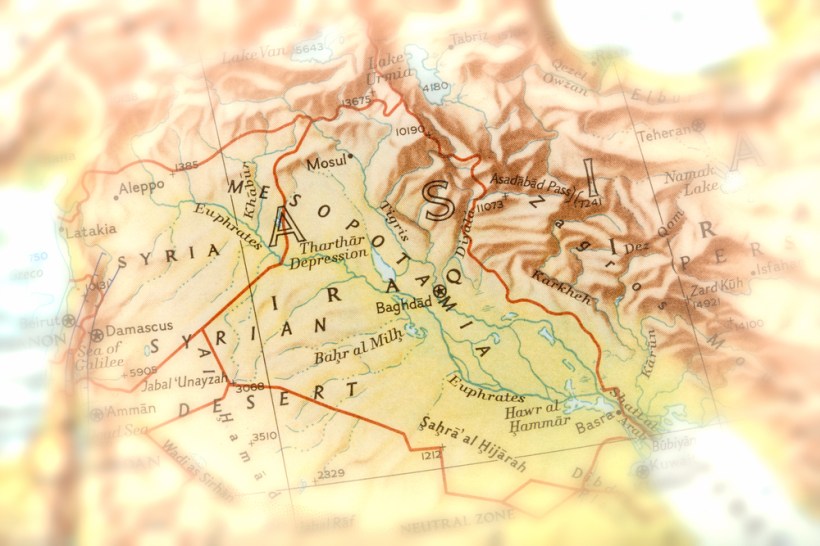
Abraham and Sarah were childless for 25 years after God gave Abraham promises that He would give Abraham a land for his descendants who would be numerous and that God would bless all the nations through them. On the basis of those promises, Abraham left his ancestral home and journeyed to “a land God would show him”. 

Through those 25 years, Abraham and Sarah continued to live their lives. The moved many times over those years, in and out of the land of Canaan, which is the land God promised to them.

Abraham wavered at times. At one point, when God visited Abraham, Abraham questioned God, saying, “[Y]ou have given me no offspring….”, and telling God (as if He didn’t know), “[T]he heir of my house is Eliezer of Damascus.” (Gen. 15:2-3)

God God didn’t waiver, though. He renewed the promise, saying, “This man shall not be your heir; your very own son [out of your loins] shall be your heir.” (Gen. 15:4)

Years went by. Abraham and Sarah had been in Canaan for 10 years already (Gen. 16:3), and Abraham was 86 years old. (Gen. 16:16), Sarah got impatient and offered her Egyptian servant, Hagar to Abraham, they conceived, and Hagar gave birth to Ishmael. (Gen. 16:1-4)

We find out that this wasn’t God’s plan either, but He let 13 more years go by before letting Abraham know. Abraham was 99 years old when God visited again!

God said again, “I will make you very fruitful; I will make nations of you, and kings will come from you” (Gen. 17:6); and, “The whole land of Canaan, where you now reside as a foreigner, I will give as an everlasting possession to you and your descendants after you.” (Gen.17:8)

How would Abraham have taken that?

God had made this same promise since Abraham stood in Haran imagining the land God was promising him and the descendants he would have, but that was 25 years ago! Abraham was now 99, and Sara was 90. The likelihood that the two of them would have a child together was slim to none.

Thirteen years prior, Abraham had a son. His name was Ishmael. Surely, Abraham thought by that point that Ishmael was the fulfillment of God’s promise, but it wasn’t so.

After almost 25 years, God finally gave Abraham some missing details:

“As for Sarai your wife, you are no longer to call her Sarai; her name will be Sarah. I will bless her and will surely give you a son by her. I will bless her so that she will be the mother of nations; kings of peoples will come from her.” (Gen. 17:15-16)

Abraham’s response isn’t surprising:

“If only Ishmael might live under your blessing!” (Gen. 17:18)

Abraham had not only come to accept that Ishmael was the fulfillment of God’s promise; Abraham had embraced it. Abraham undoubtedly loved Ishmael, despite his abrasiveness. Thus, his response to God’s new direction was, “What about Ishmael?!”

Why did God wait 25 years from the time He first promised to fill the land with Abraham’s descendants to give Abraham all the details? Why did God let Abraham sleep with Sarah’s servant and have another son first? Why did God wait 13 more years before letting Abraham in on the additional details?

I’m not sure I know the answers. It was obviously God’s plan, though, to fulfill the promise to Abraham through Sarah, his half-sister, the daughter of Abraham’s father, Terah. God also wasn’t done with using the line of Terah in this story.

Continue reading “The Story of Abraham and God’s Redemption of all Mankind – Part 3”

The Story of Abraham and God’s Redemption of Mankind – Part 1

As I start my third journey through Scripture from beginning to end in as many years, I am picking up on things I didn’t see the first two times through. In this series of articles I am tracing some stories in the great theme of God’s redemption of mankind through the descendants of Abraham.

Scripture is multi-layered and contains many themes large and small. I expect a person can study Scripture for a lifetime and always be seeing new things. Today I am seeing something in the line of Abraham that I kind of knew already, but I am digging into it in more detail.

The intricate tapestry that is the 60-some writings of the Bible authored by 40 some different people over 1500 or so years always amazes me. That tapestry is often veiled to us, as if we were seeing it from the wrong side. Unless we see it from the side from which it was meant to be viewed, the picture won’t be clear to us.

When we read the stories of ancient people, they feel foreign to us today. For instance, Sarai (later known as Sarah) is the wife of Abram (later known as Abraham), and she is also his half-sister. (Gen. 20:12) They shared the same father, but they had different mothers.

We shudder at the thought today of a person marrying a close, blood relative like that – a sister to boot! (Such close relations were later explicitly banned in Leviticus 18:9.) It was common a couple of thousand years before Christ, though. Perhaps this was due to limited spousal options and the greater distances people lived from each other.

We also need to understand that large segments of the Bible read like a narrative of things that simply happened, often without commentary. A recitation of the facts does not necessarily mean an “endorsement” of them. They simply are what they are, and we are often left to draw our own conclusions.

What we see throughout Scripture is that all people are deeply flawed, even the people with whom God found an audience. Ethical shortcomings have existed throughout every era of recorded human history. The Bible is nothing if not candid about the human condition.

I am setting the stage, here, for the point I eventually want to make about God’s plan to redeem all of mankind that weaves through the tapestry of the biblical narrative. I will have to lay this out over a number of articles.

In this article, I want to focus on Sarai and Abram and their origins. In Abram, who God renamed Abraham, God found a willing ear, and so God made His covenant with Abraham and gave Abraham a promise to bless not only him and his descendants, but all the nations.

This covenant and promise becomes the central story of all Scripture and needs to be recognized to make sense of it. It is one of the biggest themes in the biblical narrative tapestry.

Continue reading “The Story of Abraham and God’s Redemption of Mankind – Part 1”

Christmas Thoughts: Ruth & God, the Kinsman-Redeemer

Originally posted on Navigating by Faith:
maxresdefault REFUGE CHURCH Copyright © 2016. My Christmas thoughts have taken me to the genealogy in Matthew of the lineage of Jesus and the curious inclusion of five women in that patriarchal history. They stand out, not only as women in a patriarchal society, but as examples of faith…


Have you ever wondered why the genealogy of the lineage of Jesus in Matthew includes five women? The inclusion of women in the genealogy of Jesus, the Messiah, from the First Century account of the life of Jesus by one of his closest followers, Matthew, should stick out as a curiosity to explore. At least it did for me.

I am reblogging a series of articles I wrote last year leading up to the celebration of the birth of Jesus at Christmas on the women in the genealogy of Jesus. Their stories are interesting and reveal something about the heart of God that shines through them precisely because they are women in a patriarchal society.

Some of these women are not even descendants of Abraham! Yet, they are included in the lineage of Jesus, the Messiah from the root of Jesse’s seed of the people of Abraham. What does that say about God? About His plan of salvation for the world?

The story of Ruth is such a tale. Ruth isn’t a descendant of Abraham, yet her timeless story is part of the lineage of Jesus. Her story has central significance in the story of God’s redemptive work through Jesus whose birth we are about to celebrate.

kevingdrendel's avatarNavigating by Faith

maxresdefault-refuge-church-copyright-2016 maxresdefault REFUGE CHURCH Copyright © 2016.

My Christmas thoughts have taken me to the genealogy in Matthew of the lineage of Jesus and the curious inclusion of five women in that patriarchal history. They stand out, not only as women in a patriarchal society, but as examples of faith and of God’s redeeming love.

Tamar and Rahab, the first two women in the list, were unlikely examples. Tamar prostituted herself with Judah, and Rahab was actually a prostitute. That God would use such sinful and lowly women is shocking, if not remarkable. Their stations in life and their choices before the encounters which defined them were humble and base.

Their faith, however, is the story. They believed God. They made a choice to trust God and His promise. Though they were both flawed and of low station in life, they are remembered in the genealogy of Jesus Christ, the…

View original post 790 more words