
Why Doesn’t God Reveal Himself to Me?

Have you prayed, and God didn’t respond?


I have heard many people say that they would believe in God if God revealed Himself to them in clear, undeniable ways. Richard Dawkins, the New Atheist, said that God would have to write a direct message in the sky before he would believe (and then, he added, he would still assume that he was hallucinating or something else before believing it).

Young children tend to believe in God innately. This is true whether children are raised in religious homes or non-religious ones and in countries that are predominantly religious and in countries that are not. Even atheist sociologists have observed this phenomenon that some people have called “universal design intuition.” (See Universal Design Intuition & Darwin’s Blind Spot)

Since the Enlightenment, the general assumption in scientific and academic circles is that children outgrow naïve faith and civilizations do too as they advance in knowledge and sophistication. Thus, the modern assumption is that we outgrow faith in God as people and societies mature.

There is some truth to that assumption as we can see anecdotally (maybe in your own life or in the lives of people you know) and from the history of Western Civilization, with evidence of declining religious belief. Still, 81% of people in the United States in 2022 believed in God (or a higher power) (as reported in a Gallup poll), and the number increased to 82% in 2023 (according to a Pew Research poll).

We have all heard about the “Great Dechurching” – the 40 million Americans who used to go to church, but no longer do. We have also heard about “the rise of the nones“, the increase in the number of Americans who are atheist, agnostic or religiously unaffiliated, which increased precipitously from 16% in 2007 to 30% by 2022!

The nones include people of every age, but the highest percentage of nones are Gen Z and millennials. These age groups have largely grown up not going to church, yet, Bible sales surged in 2024 by 22% (after years of declining sales), and that surge is attributable to first time purchasers among Gen Z and Millennials. (See Bible boom: Why are people buying so many Bibles?; and US Bible Sales Jump 22% in 2024, Driven by First-Time Buyers and New Versions: Circana BookScan)

The hint of a spiritual renewal in the West isn’t limited to young Americans. Justin Brierley has reported on and written a book about the Surprising Rebirth of Belief in God in the UK. (See The Surprising Rebirth of Belief in God: Why New Atheism Grew Old and Secular Thinkers Are Considering Christianity Again) Agnositics and atheists, at least in the UK, are rethinking their positions on Christianity in noticeable numbers.

While Brierley’s thesis is largely based on anecdotal evidence, the volume of his anecdotal evidence is impressive. He has been hosting dialogues between atheists and Christians regularly since the mid-2000’s, and his data comes from a combination of atheists who have recently cozied up to the idea of God and religion and former atheists who unabashedly believe in God now.

My writing today is inspired by one such former atheist, a bio-chemist with a robust career in science, who became a believer in his middle age. Sy Garte wrote a book about his journey from atheism to faith, The Works of His Hands: A Scientist’s Journey from Atheism to Faith, in which he explains how a combination of science and his experience led him to believe.

The science opened his mind to the possibility of God. His study of religions, philosophy, and theology led him to an intellectual acknowledgement of the likelihood of God, but his experience and willingness to embrace it brought him in the door to faith in God.
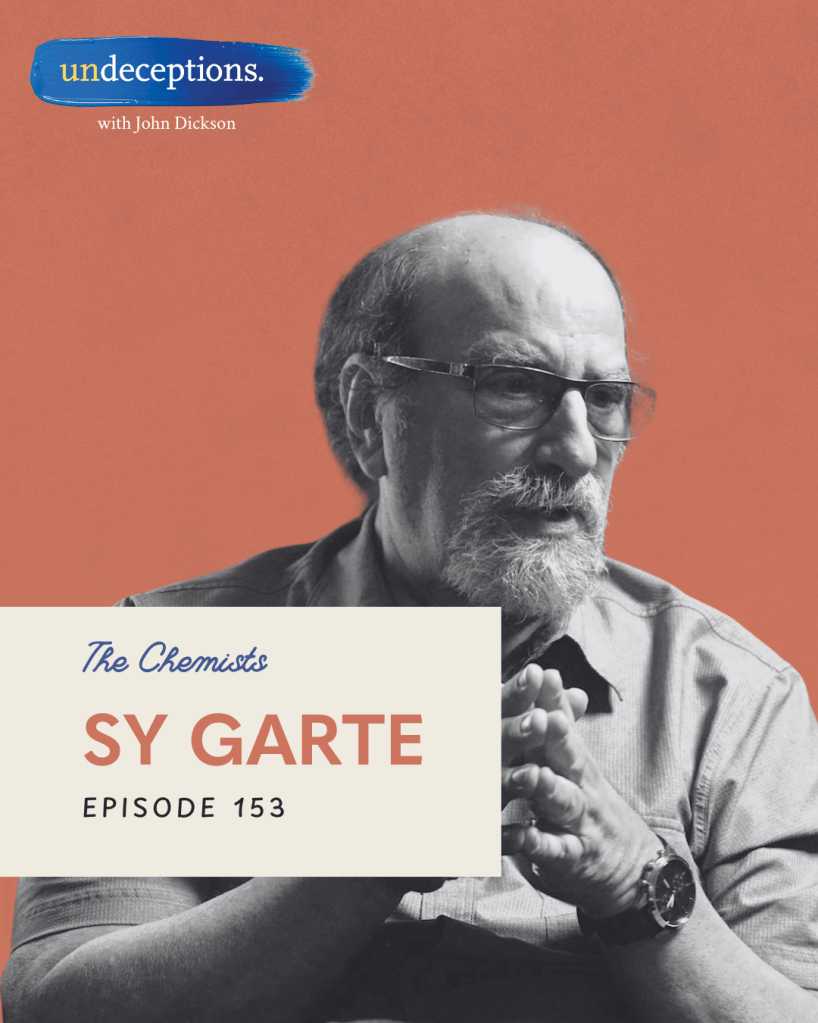

In a recent interview with John Dickson on the Undeceptions podcast, Sy Garte provides some advice to listeners who believe science holds all the answers to reality and truth by insisting that nothing in science contradicts the Bible.


If you read his whole story, he explains how science suggested the possibility of God to him, but he also emphasizes the importance of experience in belief. His acknowledgement of the role of experience, I think, is important, and it is underappreciated.

Skeptics and believers, alike, discount experience. A skeptic might chalk experience up to fantasy, a desire to believe, a disconnection with reality, or similar thinking. A believer might question the experiences of people who arrive at unorthodox beliefs based on their experiences.

Clearly, experience must be tempered by facts, science, and sound reasoning, but Sy Garte maintains that experience is good evidence, nevertheless, primarily for the one who has the experience. In doing so, he acknowledges the objection by the person who hasn’t had such an experience, and his response to the person who hasn’t had an experience with God is what I want to focus on today.

Continue reading “Why Doesn’t God Reveal Himself to Me?”
“Don’t Worry, Be Happy” Should Be Replaced with Don’t Worry, Be Thankful!

Verse 5 of Paul’s letter to the Philippians ends with the statement, “The Lord is near.” Then, it continues with, “Be anxious for nothing….” The Greek word translated “anxious” means literally to be drawn in opposite directions. It conveys the idea of being divided, pulled apart and distracted.

This is what worry does. It distracts us, dividing our attention, drawing us in opposite directions, pulling us from the tasks at hand. Worry distracts us and draws us from faith and trust in God and His promises.

Paul goes on to say: “Be anxious[1] for nothing[2], but in everything by prayer[3] and supplication[4] with thanksgiving[5] let your requests be made known to God. And the peace[6] of God, which surpasses all comprehension, will guard your hearts and your minds in Christ Jesus.” Phil. 4:6-7

The word translated, “anxious,” is in the present imperative, meaning to stop (right now!) being anxious. Stop being divided in your affections. Stop being distracted and pulled in different directions. Stop it, right now! Stop, being distracted by worry and fear.

The passage is predicated on the statement that the Lord is near! The Creator of the Universe is near us; He is with us. Implied is the question: What shall we fear if God is with us?

Paul’s statements echo the words of Jesus. Does not our heavenly Father clothe the lilies in the field? Does He not care for the birds? How much more does He care for you and me? (Matt. 6:25-30)

Because God is near, Paul says we should be anxious for nothing: no thing, not even one thing. Elsewhere, he said nothing can separate us from the love of God.

“[N]either death nor life, nor angels nor rulers, nor things present nor things to come, nor powers,  nor height nor depth, nor anything else in all creation, will be able to separate us from the love of God in Christ Jesus our Lord.”

Romans 8:38-39

We have no reason to be anxious when we fix our eyes on the author and perfecter of our faith (Heb. 12:2) who is near us.

In everything, every single thing that we face, we are instructed to make our requests known to God by prayer and supplication. God expects, and He desires us to bring our concerns to Him. Paul’s words echo Jesus again in this. (Luke 11:13: Matt. 7:11)

But God is not a Candy Man; He is our Father. He wants a relationship with us. He wants to come to Him when we are anxious. He wants us to come to Him when we have needs. He wants us to come to Him when we are thankful. He wants us to come to Him.

When we are going through difficulty, when we are anxious, when we have sinned, when we have been hurt, when we are happy, God wants us to come to him.

Continue reading ““Don’t Worry, Be Happy” Should Be Replaced with Don’t Worry, Be Thankful!”

The Boldness that Comes from Being Filled with the Holy Spirit … and Refilled


I wrote in the blog post before this one about fear and how God’s perfect love casts out all fear. The followers of Jesus feared when he was taken away by the Romans in the garden. They continued to fear while he was being mocked and beaten and hung on the cross. After he was dead and buried, they hunkered down behind locked doors for fear of the Jews. (John 20:19)

Even after Jesus appeared to them, risen from the dead in the flesh, the apostles continued to live in fear. It was not until they were filled with the Holy Spirit on the day of Pentecost that they emerged out of their funk from behind locked, closed doors to preach the Gospel boldly in the crowded streets of Jerusalem.

As I continue to read through the Bible, now in the book of Acts, I see something else that I hadn’t seen before. In Acts 3 & 4, we see Peter and John healing a lame man, being hauled in front of the Sanhedrin and being instructed to stop preaching in the name of Jesus. Afterward, Peter and John met with the other followers of Jesus in Jerusalem and prayed for boldness to keep speaking the gospel in the name of Jesus!

I previously observed that this change from fearful believers hiding behind closed doors to bold proclaimers of the Gospel on the crowded city streets happened only after they were filled with the Holy Spirit. It wasn’t Jesus appearing to them, risen from the dead, that overcame their fear; it was the Holy Spirit who filled them!

But there is more. They prayed for boldness while remembering the words of David in the Psalms (Psalm 2:1-2):

‘Why did the Gentiles [nations] rage,
And the peoples devise futile things?
‘The kings of the earth took their stand,
And the rulers were gathered together
Against the Lord and against His Christ [Anointed One/Messiah].’

Acts 4:25-26

There will be opposition when we preach in the name of Jesus. That’s why we need the boldness. We need to be able to overcome our fear of rejection and our unhealthy desire for favor from people to be able to preach the gospel. We can’t do it on our own; we need the help of the Holy Spirit.

I suffer greatly from this defect, myself, which I recognize as I read through these passages. I need that boldness that comes from God’s Holy Spirit, or I will continue hide “behind closed” doors – or maybe the keyboards of this computer on which I type!

And, there is one more thing before I get to the point. I think this is an area in which we could all use a little bit of dying to self. I certainly speak for myself when I say that I stand in my own way of being able to preach the Gospel boldly as Peter and John did. My self, my flesh, is in the way of me being who God wants me to be in Him. That flesh, that self that is in the way, needs to die. It needs to yield to God. It needs to be sacrificed to the purposes of God.

Not that I have overcome this self. I confess and admit to you as I write this that I have not. But, that brings me to the final point.

Continue reading “The Boldness that Comes from Being Filled with the Holy Spirit … and Refilled”

What Does It Mean to Be Transformed By the Renewal of Your Mind?

Broad is the way and wide is the path that leads to destruction.


I listened to a sermon by Tim Keller this morning. Before I get into what Keller said, though, allow me to share the verse I was meditating on before I listened to Keller. The verse is:

“Do not be conformed to this world, but be transformed by the renewal of your mind, that by testing you may discern what is the will of God, what is good and acceptable and perfect.” Romans 12:2 ESV

As I meditated on this verse this morning, I was first struck by the command, “Do not be conformed to this world, but be transformed by the renewal of your mind.” This is something Paul was telling the Romans to do.

As I went on in my meditation, I began to realize that the patterns of this world and the renewal of our minds are influenced by agents “outside” of us. We either allow ourselves to be conformed to the patterns of this world, or we allow ourselves to be transformed by the renewal of our minds. The patterns of this world and/or the renewal of our minds by God’s Spirit are influences on us that we can reject or embrace.

We have a choice to make, but the choice is in the allowing, in the submitting either to the patterns of this world or to the renewing of our minds by the Holy Spirit. It is something that happens to us that we can choose to participate in (or not).

The HELPS Word study (on biblehub.com) for the Greek word, sysxēmatízō, explains that “be conformed to the patterns of the world” means to be identified with those patterns and to assume a similar outward expression by following the same patterns. This conformance may happen consciously or unconsciously.

Paul is urging us to be conscious, to be mindful and intentional, in resisting conformance to the patterns of the world and to submit ourselves to the renewal (the transformation (metamorphóō)) of our minds by the influence of God’s Holy Spirit.,

The Greek word translated as “renewal” means literally metá “change after being with” and morphóō “changing form in keeping with inner reality”. The transformation Paul means is a metamorphosis. Like the caterpillar that changes into a butterfly, this is something that happens to us (within us), but only if we submit to it – only if we do not resist it and we allow it to happen.

We will be influenced one way or the other. We will conform to the patterns of this world unless we resist them. We will not be transformed by the renewal of our minds unless we choose to submit ourselves to God’s renewal process that is the work of the Holy Spirit.

My first thoughts focused on the fact that this is something that we do or do not do. We are acted on by outside agents either way. Yes, we participate in our own condition, but our participation is merely a matter of what we choose to respond to and yield ourselves to.

Continue reading “What Does It Mean to Be Transformed By the Renewal of Your Mind?”

A Story Demonstrating How God Works to Reveal Himself to People

The evidence for God is more often a string of improbable circumstances happening in the context of a message that is delivered with intimate, personal meaning.

As I have been reading through the New Testament, on my way through the Bible chronologically from start to finish, I have come to the Book of Acts. I wrote most recently about the prominence and importance of testimonial evidence for Christ. I continue to be struck by the key importance of this eyewitness testimony and the highly relational way in which God reveals Himself to people in Acts – and continues to reveal Himself to people today .

Jesus, of course, attracted people who gathered to him, joined him and followed him. Literally, they lived with him, ate with him, traveled with him, and followed him where he went. Thus, they became witnesses to everything he said and did.

As I continue reading in Acts, I have come today to the story of Peter, the apostle, and Cornelius, the Roman Centurion who lived in Caesarea. I wrote about this story not long ago, in Reflection on the Unity for which Jesus Prayed: Peter & Cornelius, but today I see a different twist that runs with the theme of eyewitnesses and God revealing Himself to people.

Continue reading “A Story Demonstrating How God Works to Reveal Himself to People”