
A funny thing happened to me one evening recently. I received a text from a number that was not in my contacts. The texter introduced himself and said he was from “VBC”. He said he emailed me, but I didn’t respond, so he was sending me a video of the child I sponsor from Uganda with a link for me to click.
I didn’t know the person. I didn’t get an email, and I don’t sponsor a child from Uganda.
Since scamming people is a billion dollar industry, I was cautious,. I do sponsor a child from Africa, but she lives in Ethiopia. The initials, “VBC”, are the initials for the church I go to, so I didn’t just delete it. I looked up name of the texter, but I couldn’t find his name in the directory.
I wanted to respond positively if he was a brother in my church, but I didn’t know him. What if someone hacked into the church directory? What if they found just enough information to make it sound good and to get me to click on a malicious link?
I texted him back and asked what email he had for me. The email he sent back was one letter off. He also sent an email with a shortened version of my former wife’s name, but it isn’t the shortened version she uses. It was close, but wrong. He had just enough of the right information for me to think it was legitimate but just enough of the wrong information for me to pause.
Finally, I texted the campus pastor, and he confirmed that the man was from VBC (but a different campus). He also did go to Uganda where the church has an ongoing missionary presence.
Then, I remembered: there is a young man in the church with exactly my first and last name. I have only met him once because he is a distant relative, and he goes to a campus of the church that is furthest from the one I go to. With this information, I called the man who texted me, and we had a good a laugh.
My name isn’t common. We both sponsor children in Africa. We both were marred to women with the same first name (different nicknames). The similarities were uncanny, but the differences signaled the need for caution.
I was thinking about this after doing my routine reading the next morning. The reading plan focused on James’s letter “to the twelve tribes scattered among the nations” (James 1:1), and it posed this question:
Have you ever been confused about who sent a text, email, or note?
In light of my experience the previous night, I realized that God might be talking to me! The follow up questions ask whether not knowing who sent the message confuses the meaning and whether knowing who the sender is changes our understanding.
The answer is definitely, yes and yes! I was confused when I wasn’t sure who sent me the original text, and knowing it came from a trusted source changed everything.
The context in which this story and my thoughts arise this morning is the confusion in the church caused by Donald Trump and his sidekick, Elon Musk. I have seen red flags since 2015 and reason for caution. The topic has been much on my mind, because some Christians champion these men and defend everything they do, and other Christians don’t.
It seems to boil down to who you trust and whether we should ignore look the other way at the things that seem a little “off”.
What are we to think? Can we trust them? Do we know who they are? Do we ignore the red flags? Perhaps, more importantly: Do we know who we are?
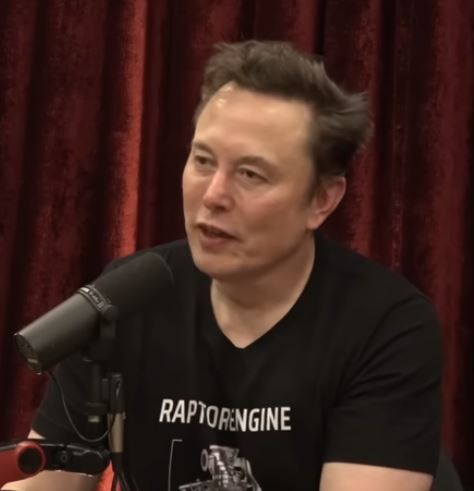
I am afraid I can’t get very deep into this subject without writing a tome, and I have already written much, so I want to stick with the context out of which this experience and these thoughts flow. Specifically the controversy over Elon Musk’s comment to Joe Rogan: “The fundamental weakness of western civilization is empathy.”
Continue reading ““Suicidal Empathy” and Weakness: Trust and the Church”

 Navigating by Faith