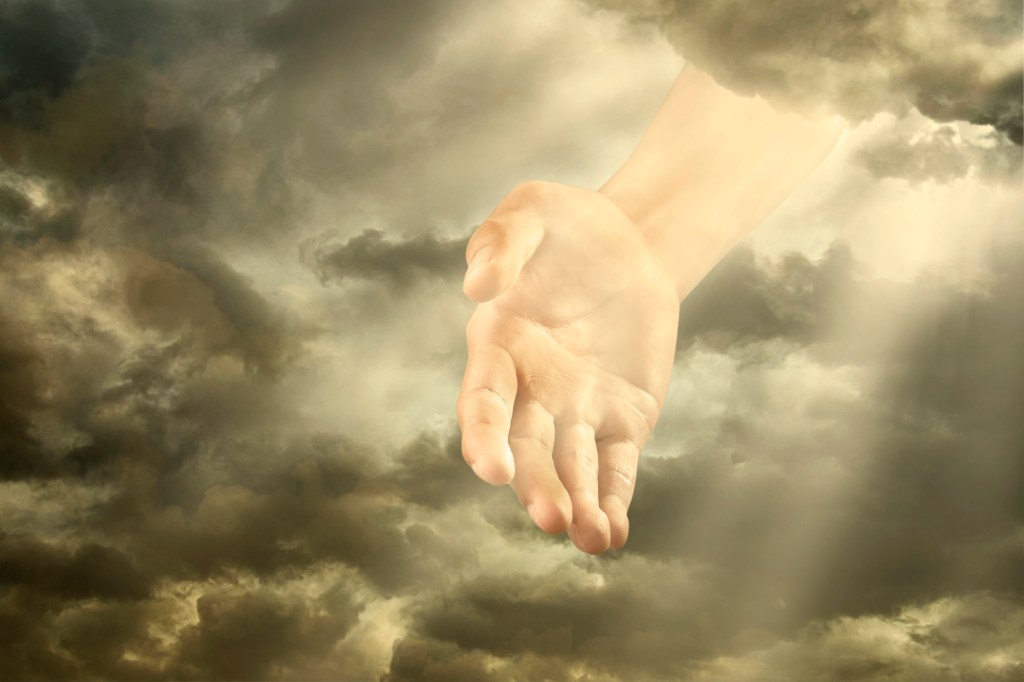
Heaven is my throne, and the earth my footstool. What sort of house will you build for me? says the Lord, or what will be my resting place? Did not my hand make all these things?
Acts 7:49-50 CSB
I have thought and written about the fundamentalists and the atheists of the world who, ironically, approach the Bible in the same way. Both groups of people read the Bible in a wooden, inflexible, literal kind of way. (See Sam Harris Podcast with Bart Ehrman – Part 2 – Wooden Fundamentalism)
This passage above gets me thinking about these things again. The passage quoted above is from Steven’s address to the Jewish leaders who had him stoned after calling them stiff-necked like their ancestors in the desert (among other things).
Steven recited the Jewish history to them, including the Ark of the Covenant that was created to hold the Ten Commandments and the Tent of Meeting that was carried through the desert and set up where they stopped as a place for God’s “presence” to “dwell” among them. The Tabernacle with the Ark of the Covenant became the inner sanctum of the Tent of Meeting. These structures the people carried with them became the place they would meet with God.
David desired to build God a home, a permanent place for the Ark of the Covenant and Tabernacle, and Solomon accomplished David’s dream. David knew, however, that God does not live in a temple made by human hands. Solomon, David’s son who built the Temple, acknowledged the same thing when he dedicated the Temple:
“But will God really dwell on earth? The heavens, even the highest heaven, cannot contain you. How much less this temple I have built!
1 Kings 8:27
They understood that the Tabernacle, the Tent of Meeting, and the Temple were symbolic. These physical structures and the activity organized around them and in them were meant to point to a metaphysical reality of much greater substance.
It’s ironic that David, a man after God’s own heart, knew these things, but the people of God generally often did not. David was a man after God’s own heart, but the Israelites on the whole were often stiff-necked, as Stephen said.
I find it ironic that people who try to interpret and apply the Bible in the most literal way fall on opposite ends of the spectrum. Fundamentalists and atheists both tend to interpret the Bible literally. They are the two sides of the same interpretive coin. The only difference is that one side believes every part of it, and the other side believes none of it.
At the end of the passage quoted above, the Lord poses the rhetorical question, “Did not my hand make all of these things?”
Does anyone literally believe that God’s hand made the universe? I suppose we should ask, also, “Does God have only one hand?”
I would venture to guess that everyone understands this phrase to be allegorical. Yet, there are so many things in the Bible that people try to take and apply literally that are, perhaps, not as obviously allegorical.
I’ve heard the counter statement that we cannot pick and choose the things we believe out of the Bible. We must believe every word of it, or reject all of it. This is the fundamentalist/literalist approach – all or nothing. Never mind that a verse like the one quoted above is clearly not intended to be taken literally!
Not to pick on “fundamentalists” (whatever that term might mean), but those people we tend to label with that term tend to push a very literal interpretation of Scripture. They, in a sense, double-down on the “facts” stated in the Bible and attempt to believe “everything”. Many atheists dig in on the same literal way of interpreting the Bible, but they believe none of it. They both approach the Bible the same way, but one believes 100% and the other believes 0%.
Continue reading “Taking the Hand of God, Literally; How We Read the Bible”




 Navigating by Faith