
Diving for Pearls in the stories of Dustin Kensrue and Mark Driscoll

Dustin Kensrue’s music is as good as ever, but it comes with the melancholy of what used to be.


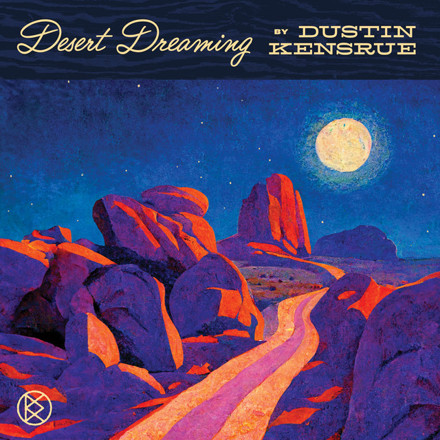
I recently spent some time listening to Dustin Kensrue’s new album, Desert Dreaming. I like his music, and the new album is good. The first song I heard, though, reminded me of the rumors that he has walked away from orthodox Christianity:

When I left town, I was swept up
With the visions of a man from Galilee
Along the way, I lost my bearings
I got swallowed up by sins of certainty
The heart of sedona

The words to this song triggered a desire to research the truth. Kensure was an impactful Christian musician who wrote the worship album of the year not to many years ago. I wondered, therefore, why he walked away (if indeed he did).


I learned that Kensrue was a former worship leader for Mars Hill, the failed church that rose to the heights of evangelical influence with many campuses, only to collapse with the failings of its erstwhile leader, Mark Driscoll.

Listening to the song, Heart of Sedona, off Kensrue’s new album, Desert Dreaming, gave me pause. The words seem to confirm the rumor, and the story seems all too familiar lately.

His music is as good as ever, but it comes with the melancholy of what used to be. Or maybe it never was. It’s hard to know how to process the deconstruction of someone else’s faith.

Given the back story (involvement in a failed church movement), I suspected his “deconstruction” (and many other artists who seem to have followed a similar path) may be symptomatic of some malady that has infected Evangelical Christianity.

My entre into Kensrue’s story begin with the article, It’s Not Enough: Dustin Kensrue’s Turning Away, which is where I learned that Kensrue was intimately involved in the toxic environment of the Mars Hill church movement led by Driscoll, a controversial and polarizing personality.

I had heard of the rise and fall of Mark Driscoll and the Mars Hill Church, but I did not jump on the curiosity bandwagon when people associated with Christianity Today produced the podcast, The Rise and Fall of Mars Hill. I only heard about it, and I had listened to a discussion of the podcast on another podcast. Therefore, I finally felt a need to hear it firsthand to gain some perspective.

The podcast describes the talent and bravado of Mark Driscoll, who was also polarizing and toxic and seemingly proud of it. Driscoll was staunchly reformed in his theology with a cultish personality and a flair for the dramatic. He attracted people on the edges of faith in the notoriously countercultural Seattle area. I summarized some of my thoughts on what I learned in Keeping It Real for the Church: Talent in Tension with Character)

I have also gone back, now, through the tweets highlighted in the article I noted above, and I have poured over Dustin Kensrue’s Twitter (X) feed to gain further insight. These things give me additional food for thought in considering the “deconstruction” of Dustin Kensrue as it relates to the American Evangelical Church.

Though I have spent considerable time researching these things, my thoughts remain preliminary and exploratory. I am not certain that I have gained sufficient perspective to be clear or certain of any conclusions, but all this seems to confirm my sense that the story is symptomatic of a problem with the American Evangelical Church.

In fact, the original article I found, itself, seems to be symptomatic of issues in the American Evangelical Church. These issues may also be reflected in current American culture, affected as it is by social media. I apologize for the length of this article, but I am afraid I do not do much more than scratch the surface here.

Continue reading “Diving for Pearls in the stories of Dustin Kensrue and Mark Driscoll”

Keeping It Real for the Church: Talent in Tension with Character

Talent, confidence, and boldness can be a dangerous combination in the Church without the character to counterbalance it.


I have been listening to the podcast series, The Rise and Fall of Mars Hill. I didn’t listen to it when it came out and was popular. I tend to eschew popular things. This might be wisdom. It might be pride, or it might just be the way I am wired.

That instinct or intuition or character trait, whatever it is, has been good for me in many ways. I resist going along with the crowd, and I have learned not to trust crowds and crowd mentality. That mentality may have been instrumental in my coming to faith and becoming a follower of Jesus.

Jesus said, “Enter through the narrow gate; for the gate is wide and the way is broad that leads to destruction, and there are many who enter through it. For the gate is small and the way is narrow that leads to life, and there are few who find it.” (Matthew 7:13-14, NASB) When I read that, I was (perhaps) predisposed to be drawn to that sentiment.

Perhaps, I was that way because of some noble intuition. Perhaps, I was that way because I felt like an outsider. It’s hard to be sure (really) of our own motivations. I think the prophet, Jeremiah, was right when he said that human hearts are deceitful. Who among us can really (truly) know our own hearts completely?

Pride has a way of making our own weaknesses look like strengths. Pride tempts us to embrace our character flaws and to lead with them. Pride can even clothe itself in a form of humility and nobility.

The truth is often a very mixed bag. My inclination to buck what is popular and trendy and to seek “the narrower” way may have helped me in being willing to embrace Jesus and become a follower, but it has also lead me down some rocky and rough terrain that was, frankly, dangerous.

For one thing, I almost didn’t return to college for my senior year because of a “cultish” denomination that believed their theology was right, and everyone else was wrong. I was afraid that going back to college might be walking away from God because I was predisposed to believe in the narrow path. (And their path was very narrow!)

Another example has had much more long lasting effects on my life and sent me on a trajectory that continues today. I shared recently some of my story in, Keeping it Real on the Path to Wherever I am Going. My predisposition to avoid the beaten path influenced me to take an alternative route to ministry, which is all I wanted to do after I got “saved” in college. In that piece I wrote:

“I didn’t trust my college advisors because they didn’t believe the Bible like I did. I should have gone to seminary, but I didn’t because the apostles who stood up on the day of Pentecost and preached powerfully and eloquently in various tongues to the crowds in Jerusalem were unlearned men. I wanted to be like them.”

Keeping it Real on the path to wherever I am going

That path to ministry never worked out for me, and maybe it’s a good thing it didn’t! The audacity to think that I could perform in ministry like the apostles without sitting at the feet of Jesus in the flesh for three years would not have been a good foundation for shepherding his flock.

The Rise and Fall of Mars Hill is an object lesson in where my kind of disposition can lead. I am not saying that it must (necessarily) lead to the kind of crash and burn that occurred with the Mars Hill church movement, but the danger is certainly great.

I have listened to all of the primary episodes of that podcast, and I am listening now to the bonus episodes. I am finishing the one that features Tim Keller. The more I listen to him and read what he has written, the more I appreciate his depth of understanding and wisdom.

(You can listen at the link below if you are so inclined. In fact, if you don’t have enough time, energy or inclination to go much further here, I suggest you stop and listen rather than read on. But, I will continue anyway.)

Continue reading “Keeping It Real for the Church: Talent in Tension with Character”