
In my last blog article, I focused on the way that Genesis 3:15 anticipates and foreshadows the coming of a Messiah, generally, and how it was specifically fulfilled in the virgin birth of Jesus. Not only that, but it introduces a thread in Scripture (the elevation of women) at the very beginning that runs through the entire Bible.
That the Bible uniquely elevates the stature of women despite the distinctly male dominated history of mankind should be noted. That this thread is embedded in the earliest biblical texts despite the ancient, backwards culture of the time speaks to a creator God who is able to influence the course of history even when people have a tendency to go their own ways.
I am constantly amazed how many hidden threads are woven into the great tapestry that is the Bible. I see new ones all the time, and I am going to highlight another thread in this article that I see in Genesis 3:15. In fact, I only noticed it as I was writing the last blog.
Genesis 3:15 reads as follows:
“And I will put enmity between you and the woman, and between your offspring and hers; he will crush your head, and you will strike his heel.”
In the last article I focused on the woman’s (Eve’s) offspring (seed) as a foreshadowing of the virgin birth. In this article, I will focus back on the second half of God’s statement to the serpent: “he [the woman’s offspring] will crush your head, and you will strike his heel.”
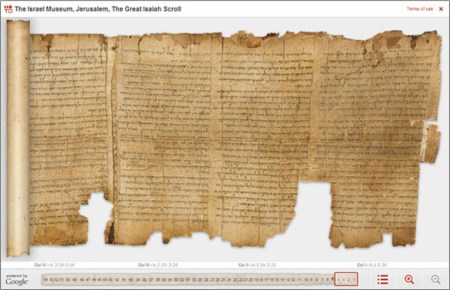
In my contemplation of the prophetic quality of this verse for the last article, I was drawn to Isaiah 53, which is (perhaps) the clearest prophetic passage anticipating and foreshadowing Jesus in all of the Old Testament:
- 2 – “He grew up before him like a tender shoot”;
- 3 – “He was despised and rejected by mankind, a man of suffering, and familiar with pain…., and we held him in low esteem;
- 4 – Surely he took up our pain and bore our suffering, yet we considered him punished by God, stricken by him, and afflicted”;
- 5 – “But he was pierced for our transgressions, he was crushed for our iniquities; the punishment that brought us peace was on him, and by his wounds we are healed”;
- 6 – “We all, like sheep, have gone astray, each of us has turned to our own way; and the Lord has laid on him the iniquity of us all”
- 7 – “He was oppressed and afflicted, yet he did not open his mouth; he was led like a lamb to the slaughter, and as a sheep before its shearers is silent, so he did not open his mouth”; and
- 8 – “By oppression and judgment he was taken away. Yet who of his generation protested? For he was cut off from the land of the living; for the transgression of my people he was punished”;
- 9 – “He was assigned a grave with the wicked, and with the rich in his death, though he had done no violence, nor was any deceit in his mouth”;
- 10 – “Yet it was the Lord’s will to crush him and cause him to suffer, and though the Lord makes his life an offering for sin, he will see his offspring and prolong his days, and the will of he Lord will prosper in his hand”
- 11 – “After he has suffered, he will see the light of life and be satisfied; by his knowledge my righteous servant will justify many, and he will bear their iniquities”; and
- 12 – “Therefore I will give him a portion among the great, and he will divide the spoils with the strong, because he poured out his life unto death, and was numbered with the transgressors. For he bore the sin of many, and made intercession for the transgressors”.
In reading through this passage again, I noticed multiple uses of the word “crush”. The Hebrew word, דָּכָא, (daka), found in Isaiah 53:5 and 53:10, is the same Hebrew word used in Genesis 3:15. It means, literally, “to crush” in English. It can also mean, figurately, to oppress (and it can mean contrite of heart for those who “are crushed”).
The appearance of the same word in both passages caught me eye. What are the odds of that? The imagery, however, is confusing.
Genesis 3 says that the offspring of the woman will crush the serpent. Whereas, Isaiah 53 says that God will cause the crushing and “cause him [the suffering servant] to suffer” as an “offering for sin”.
On the one hand, God will crush the suffering servant as an offering for sin (Isaiah), and on the other hand the woman’s offspring will crush the head of the serpent. (Genesis) These verses seem to describe very different things, but the very particular use of the same word in both passages is cause for further consideration.
Continue reading “The Curious Upside Down Kingdom of God Revealed in the First Prophetic Utterance in the Bible”




 Navigating by Faith