Myth, Seasons, and the Resurrection of Jesus

Should the claim that Christianity is similar to prior, pagan mythology concern us?

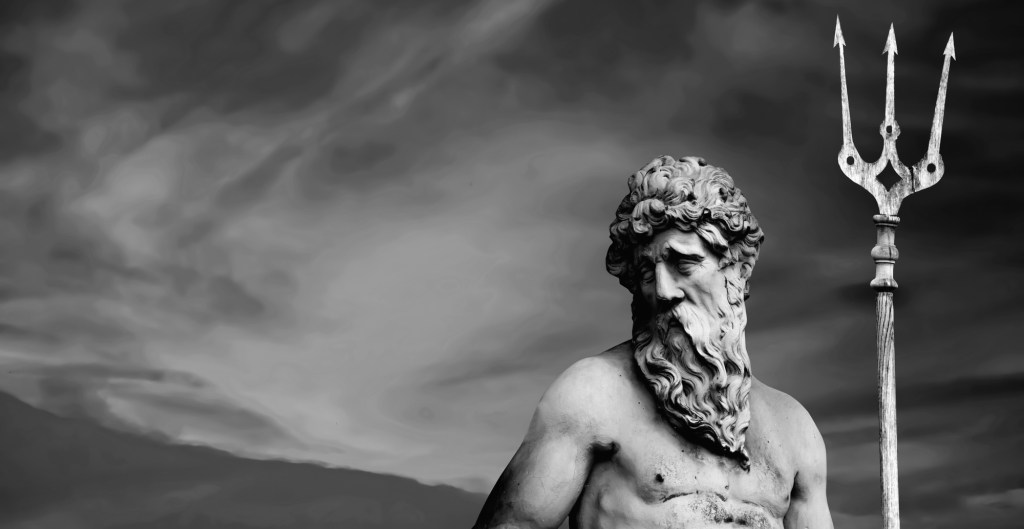
The god of the sea and oceans Neptune (Poseidon).

Popular trends arise in culturally contingent ways, and those trends often dominate the public mind for a season. Thus, the idea that Christianity borrowed from prior pagan mythology gained notoriety with the rise of New Atheism. The Zeitgeist: The Movie (2007) is a poster child for this popular trend in thinking.

The Zeitgeist movie forces the narrative, ignoring glaring dissimilarities, and manufacturing similarities that don’t really exist. It ignores (or isn’t familiar with) the relevant academic scholarship, but it has been watched well over one million times. We might say that the Zeitgeist movie has become legendary in a truly mythic sense itself.

I will go out on a limb, nevertheless, to say that Christians have shown far too much angst over this trend of claiming that Christianity is similar to prior pagan mythology. There are critical differences, and they are significant, but there are some similarities also. Do the similarities pose a problem for Christianity?

The short answer is, no. In fact, if truth is truth and reality is reality, ancient, pagan attempts at explaining that reality are likely to hit on some metaphysical truth. If they didn’t, I might begin wonder about the nature of reality and our ability to recognize and understand it.

Mythic literature as a genre is an attempt to provide some explanation and understanding of basic realities and the ebb and flow of life. I am reminded of these things as I sit outside on an unseasonably warm day in November with a view of trees bared of their multicolored leaves that have been collected by my earnest neighbors in piles lining the suburban streets for pickup.

Fall is ebbing into the dark night of winter. The subtle coolness in the breeze portends (what seems to me now) a distant spring. I am braced for what comes next as I enjoy what is likely to be the lest vestige of warmer days for longer than I care to think about.

My hope for the spring, however far off it seems in my present mood, is rooted in my experience of the certainty of the seasons. I know my hope is not fanciful, even as I brace (all too knowingly) for the cold, bleak trudge ahead.

It seems completely natural that ancient mythology captures this duality in stories that have religious significance. These experiences are common to man. We remind ourselves of the hope of spring as we gaze in wonderment at fall trees in the throes of seasonal death and the chill onset of winter. It reminds us of our own life and death sagas, even now in all our modern comforts.

Our modern comforts allow us to be a bit more disconnected and circumspect, perhaps, than our ancient forbearers. Those comforts and great advances in scientific knowledge allow us to be intellectual about these things. Ancient pagans lived literally at the mercy of the seasons, and all the things they didn’t know played like gods on the stage of their fraught imagination.

Modern people chalk seasonal changes up to natural cycles that just happen. We believe humans chased all the gods off long ago. The ownership we have asserted in our knowledge of the way the world works gives us an illusion of control that I surmise is not all that much different than the ancients, who sought some ownership and control of this world through the mediators of gods they thought they could appease.

Pagans found solace in the seasons as we do. Myth is rooted in collective experience, and it is driven by an impulse to understand and import control into our experience. We also have a natural inclination to seek meaning. We might call this impulse a “religious” one.

Though we have the chased the gods off, we still have a religious impulse. Though we no longer believe in many gods, and we no longer venerate ancient myths with more than a curious read, the idea of one, Creator God God persists, and it is not explained away by modern science and knowledge. The Bible, though it has ancient origins, stands up to our modern scrutiny in ways that pagan myth does not.

Continue reading “Myth, Seasons, and the Resurrection of Jesus”
Pulling at the Threads of the Christian Paradigm that Uniquely Influenced the Western World

Down at the bedrock of modern, western values remains a Christian foundation.

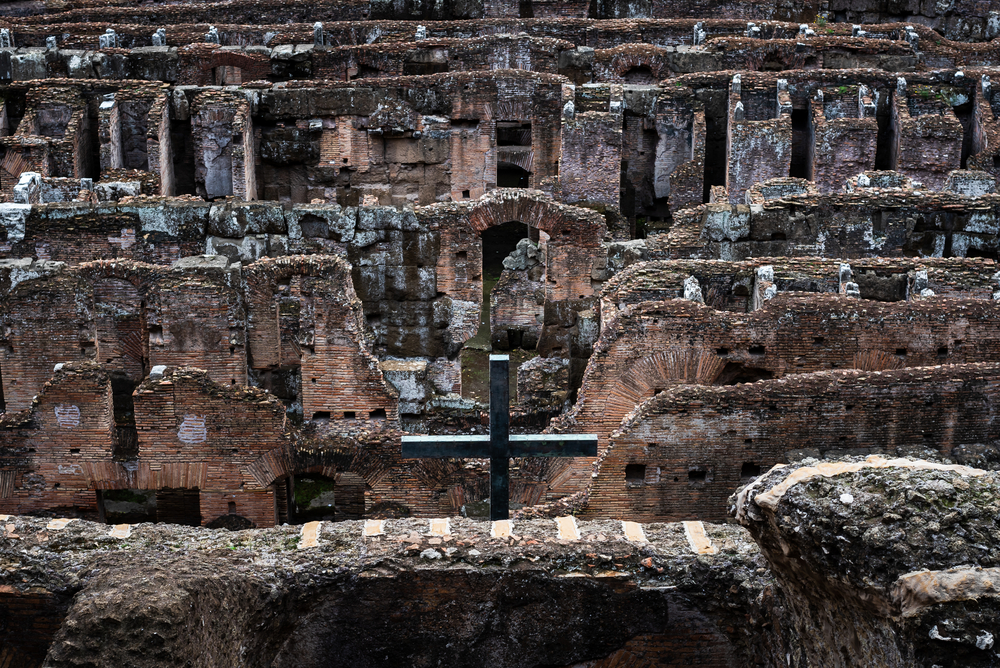
Galleries under the central arena of the Colosseum in Rome, Italy

I read Tom Holland’s new book, Dominion, about a year ago, and I have written about it a few times. Many Christians would not think to read a history about Western Civilization by a self-described secular humanist (once atheist, perhaps now agnostic) historian.

Most non-Christians are likely to be uncomfortable with the chronicle Holland describes of the radically influential role that Christianity played in the development of Western Civilization, providing the foundation, in fact, for secular humanist ideals. When Holland dug down to the bedrock of modern, western values, he was surprised himself to find them anchored on a Christian foundation.

Holland did not set out to write a Christian apologetic, and he seems to remain somewhat uncertain how to process what he “discovered”. What he found, though, changed his mind about Christianity. He gives a brief explanation in the following clip:

Though Holland has had a turnabout on his view of Christianity, he finds himself caught in an odd position wrought by the unexpected discovery that his lifelong, secular humanist values flow from the radical catalyst of Christian influence and remain embedded ubiquitously in its very fabric. The awkwardness of his current position is evident in his interviews and discussions about the book.

Christians and secular thinkers, alike, wrestle with his book. Holland doesn’t hide any warts, and he doesn’t pull any punches. Neither does he obfuscate the thoroughly paradigmatic shift in Western thinking that Christianity worked into a society that once proudly and unashamedly championed strength and privilege over the poor, the weak, and the lowly.

Holland exposes the metanarrative developed during the Enlightenment and thereafter that belies the foundation on which the Enlightenment structure was built. Far from advancing the progression of human values, the Enlightenment threatened to undo the distinctly Christian concern for the poor, weak, and lowly while attempting to wrest western civilization from the hold of the Divine. Humanism saved the Christian ethic, albeit divorced from Christ.

Consider the full title of Darwin’s great tome which staked out the ground of a scientific (and social) revolution free from God’s interference:

“The Origin of Species by means of Natural Selection or the Preservation of Favoured Races in the Struggle for Life”

The title of Darwin’s book championing the evolutionary paradigm, harkens back to the Greco-Roman value system that despised the poor, the weak and the lowly. That value system did not just turn a callous eye at wanton and discriminate cruelty, it cheered on the strong while they snuffed out the weak. It was national sport!

The very reason the full title never “stuck” (I now believe) is due to a fundamental, pervasive, and thoroughly entrenched counter-value of the intrinsic worth of human life that is uniquely Christian in its source.

The intrinsic value of all human life, from the greatest to the least, from the wisest and strongest to the weakest and most imbecilic, from the fittest to the most infirm, is traceable to the Christian belief that all human beings are made in the image of God. That the survival of the fittest did not take hold as a western social or ethical value is attributable to the deeply ingrained Christian ethic that survived yet, despite the efforts to eradicate its God from modern equations.

Modern humanists may attempt to recast Darwin into a humanistic mold, but the idea of “social Darwinism” bears his name through no model of random, unguided selection. According to John G. West, Charles Darwin, himself, set in motion the inertia for eugenics, among other things, that were associated with social Darwinism:

Darwin himself in The Descent of Man provided the rationale for what became the eugenics movement, and how the vast majority of evolutionary biologists early in the twentieth century were right to see negative eugenics as a logical application of Darwin’s theory.

While the defense of Darwin against the charge of social Darwinism has largely succeeded in popular and polite company, the very title of the Origin of Species (by means of Natural Selection or the Preservation of Favoured Races in the Struggle for Life) belies the success of that effort. The fact that the full title is merely a parenthetical today is evidence only of a concerted rescue campaign.

Christian values survived despite the Enlightenment coupe, not because of it. Humanism today assumes the evolutionary paradigm for its science alongside the uniquely Christian paradigm of intrinsic human value. That the two assumptions do not fit well together seems to be lost on modern minds.

Continue reading “Pulling at the Threads of the Christian Paradigm that Uniquely Influenced the Western World”

How Does a Living God Relate to a Pagan World?

We have our gods, though we don’t give them names or ascribe human personalities to them.

My thoughts today are based on the story of Paul and Barnabas while they were in Lystra, a city in central Anatolia, part of present-day Turkey. While Paul was speaking, his gaze came to rest on a man listening to him speak who was “crippled at birth”.

Paul saw the man had faith, so he loudly told the man to stand up. (Acts 14:8-10) The man sprang up, and the crowd was awed, saying, “The gods have come down to us in the likeness of men!” (Acts 14:11)

The people in Lystra were pagans. They worshiped Roman gods and, perhaps, other gods as well. They started calling Barnabas Zeus and Paul Hermes and began making preparations to worship them.

When Paul and Barnabas realized what was happening, they were appalled! They rushed into crowd, saying, “Don’t do that! We are just men like you!” (Acts 14:14-15 (paraphrasing)). Then, Paul addressed his pagan audience like this:

“[W]e bring you good news, that you should turn from these vain things[i] to a living God, who made the heaven and the earth and the sea and all that is in them. In past generations he allowed all the nations to walk in their own ways. Yet he did not leave himself without witness, for he did good by giving you rains from heaven and fruitful seasons, satisfying your hearts with food and gladness.”

Acts 14:15-18

This is, perhaps, the first sermon preached in the early church to people who are not Jews. The pagans did not believe one God. They didn’t understand Mosaic Law, the concept of sin or the prohibition against worshiping idols considered to be false gods.

Thus, Paul didn’t address them as he did his Jewish audiences. He didn’t appeal to Mosaic Law, or accuse them of sin, or call them to repent.

Just as the Gospel is good news to the Jews, it is good news to the pagan Gentiles. The message, however, is different. Paul urged them merely to “turn from vain things to a living God”!

By “vain things” Paul meant their gods, the idols that the pagans worshiped. Instead of calling them idols, as he would have done to a Jewish audience, he referred to them descriptively by their character – their worthlessness, emptiness and utter inability to accomplish anything.

We have a hard time relating to idol worship in the 21st Century. Idol worship is so Bronze Age! Our ancestors long ago stopped believing in gods and sacrificing to them, right?

Tim Keller, in his sermon, The Gospel for the Pagan, paints a different story. These pagans were not so different from us.

In a polytheistic society, of course, people worshiped and sacrificed to a variety of gods. There was no supreme god. People had to decide what gods to worship. Thus, people chose gods to worship based on how those gods could help them.


A a merchant might sacrifice to the god of commerce. A farmer might sacrifice to the god of agriculture. Other people might sacrifice to the god of art and music, or love and beauty, or a combination of gods, depending on what was most important to them.

Keller says that sacrificing to the god(s) of choice was, in effect, worshiping the things people valued most. By sacrificing to the gods of commerce, agriculture, art and music, love and beauty, etc., they were worshiping whatever it was the god represented.  Whatever a person sought help for was the thing from which they sought meaning in life, hope and fulfillment.

Thus, says Keller, “vain things” (idols) are things that “promise fulfillment, but leave you empty”.

We may think of ancient pagans as a brutish and unsophisticated lot, but we are no different than they in the sense that we sacrifice for the things we think will fulfill and satisfy us. The only difference is that we have dispensed with the representative gods.

The person who values career, or accomplishment or being respected by peers as a matter of first priority will sacrifice for those things. The person who thinks that love, romance and family are the highest forms of meaning will devout primary attention to those things. The person who loves art and music will sacrifice for those things and from them seek meaning and fulfillment.

We aren’t that different, really from our pagan ancestors, though we might scoff at the idea of gods, as in idols. We have our gods, though. We just don’t call them names or ascribe human personalities to them.

Paul’s message to the pagans in Lystra was, “These are worthless things!” They can’t fulfill you. Only the Living God can do that. His message has more application to us in the 21st Century than we might think at first glance.

Continue reading “How Does a Living God Relate to a Pagan World?”

The Story that Matters

The critical truth of most stories is contained within the story itself.


I was reflecting before God this morning and praying when the following question arose in my head: whether it is more important to believe the historical fact of the biblical stories or to believe the stories themselves.

For whatever reason, the story that occurred to me as I was thinking about this is the story of Lot’s wife. After they left Sodom, a place that was known for its wickedness and sin, a place in which God could not identify even 10 good men, she turned back (against the orders of God’s angels that led them (delivered) them out of Sodom), and she turned into a pillar of salt.

Is there really a pillar of salt somewhere in the vicinity of Sodom where lot’s wife turned back? Does it matter?

As I was thinking about the question, it occurred to me that the story is what matters. Sodom is representative of depravity, wickedness and sin, the nature of the world around us in which we live, the state of a person who has not given himself or herself over in loving submission to the God who made us. God calls us out of that sinful state to follow Him. This is true whether Lot’s wife turned into a pillar of salt or not.

In the Midrash, Lot’s wife is identified as a Sodomite. Sodom was her hometown. We read in Genesis that Lot was slow to leave when the angels warned him to get out. The Midrash suggests that Lot’s wife didn’t want to leave, and she left only reluctantly. The Hebrew word translated “looked back” implies a “wistful regard”. (See the Pulpit Commentary on Genesis 19:26 in BibleHub)

Looking back was as much an act of the heart (desiring to be back in Sodom) as a physical one. The application to us is that we should not be tempted to look back wistfully on the sinful lives we once lived. It’s like a dog returning to its own vomit. (Proverbs 26:11 and 2 Peter 2:22) Why would we turn back to the sin from which we escaped? And yet we are tempted to do that.

Returning to the point of the question that flitted into my mind this morning, I am reminded that “all Scripture is God-breathed and is useful for teaching, rebuking, correcting and training in righteousness….” (2 Timothy 3:16) The Scripture is what is useful, not (necessarily) that the stories are true. The critical truth of most stories is contained within the story itself.

I am not necessarily suggesting that the Bible is full of nothing but fanciful stories, religious and fables. (I tend to believe they are mostly, if not wholly, factual.) But, for those who have trouble reconciling the stories with historical fact, this is for you. The quantum of proof necessary to believe a biblical story may seem lacking in some cases, but reconciling historical fact with story isn’t the critical point. The story is the point.

Continue reading “The Story that Matters”

Bias is Revealed in What we Consider and Fail to Consider

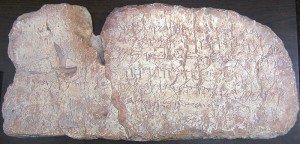
Siloam Tunnel inscription records
Siloam Tunnel inscription records when workers from the 8th Cent. B.C. met when digging from opposite directions. The inscription is now located in the Istanbul Archaeological Museum

When skeptics claim that Bible believers are biased, they are right. The truth is we all are biased, skeptics included. Some may be more aware of their own bias than others, but we all have our biases.

I am fascinated with stories of people who had one “bias” at one time and changed to the opposite “bias”. It happens both ways: atheist to believer/believer to atheist. Someday I will explore the similarities and the differences in those stories. There are some common threads, but that is a topic for another day. Continue reading “Bias is Revealed in What we Consider and Fail to Consider”