A Rational Explanation for Miracles: God in the Gaps

A contemplation based on human agency and the ability manipulate natural causes to generate beneficial effects.


In Episode 20 of the Christian Atheist Podcast (Ethics (Part 3): the Origin on Ought), John Wise focuses on a primary difference between human beings and animals. Though humans beings are animals, human beings are qualitatively different than other animals in rational capacity, and the rational capacity of humans allows humans to exercise agency over the natural world. This unique human capacity to exercise rationality through agency is the focus of my thoughts today.

Human beings exercise their agency and rational capacity to change and redirect the laws of nature. Other animals can do this in very primitive ways, but the human capacity to manipulate nature through human agency, rationality, and ingenuity is light years beyond what other animals can do.

Of course, humans cannot do things that defy the laws of nature. Rather, human beings use their understanding of those natural laws to manipulate them.

Wise observes that the human ability to manipulate the laws of nature includes the ability to separate cause from effect to acheive a desired result. For instance, human beings have learned to breed various types of plants and animals to achieve results imagined by humans which would never likely have occurred in the natural world left to random, natural processes.

Human beings can exercise their rationality to imagine different effects and to manipulate causes to achieve those desired effects. In this sense, human imagine the effects they desire to achieve, and they manipulate the causes in the natural world to achieve natural effects by design that the natural world would not obtain randomly.

The world seems to act randomly, unless agency acts upon the world. The examples of agency acting on the world to achieve results that would not obtain without such agency are legion. All of human endeavor is replete with examples of agency imagined and initiated by humans to obtain designed effects that we desire.

Human beings are able to produce effects that would never have occurred in the natural world but for human agency manipulating the natural processes. In other words, human input redirects the natural processes to produce results that would not have occurred if the natural processes were left alone.

Our ability to separate cause from effect to achieve desired ends that would not occur in the natural world by manipulating those causes to achieve the effects we desire is an example of supranatural agency in the world. In other words, we are in and of the natural world, and we use our knowledge of the natural world to manipulate natural causes to create natural effects.

We do not suspend the laws of nature or violate the laws of nature to accomplish our desires ends. We use the laws of nature to achieve our desired ends – albeit, ends that would not have occurred but for our intervention.

Ocean liners and skyscrapers are things that do not occur through the laws of nature, but for human agency. Even so, human agency des not suspend or violate the laws of nature to create them. Human agency uses the laws of nature to create them.


These observations are a model for understanding God. The fact that laws of nature act in very rational ways that are predictable and dependable suggests design. The way the laws of nature act suggest an intelligent agency that set them in motion just so. We would call that intelligent agent God.

If God created the laws of nature, He would certainly know how to manipulate natural causes to achieve His desired effects. God would have much greater capacity than us to manipulate natural causes to achieve desired effects. Exponentially so!

Many skeptics, like David Hume, reject the idea of miracles because they assume that miracles violate natural laws. The foundational premise of Hume’s logic, though, is false. The God that created the natural laws would not need to suspend or violate those laws to obtain desired effects. God could manipulate natural causes to achieve His desired effects without the need to “suspend” or “violate” natural laws just as we do.

God’s knowledge of those natural laws and the possible effects that can be achieved through the manipulation of them is certainly greater than ours. Exponentially greater.

Many people have called phenomena they didn’t understand miracles, but subsequent discoveries about the way the natural world works have provided explanations to us of natural laws and how they work that we didn’t previously understand. Once we understand the laws at work on those phenomena, we no longer call them miracles.

A primitive intelligent being might think that human beings are violating natural laws to fly airplanes, for instance. We know this is not true, but a more primitive being may not understand the principles of natural laws being manipulated to achieve the end of flying a heavy chunk of metal through the air.

Just as we manipulate natural causes to create effects that do not occur naturally, God may do the same. Thus, what we call miracles may be nothing more than the manipulation of natural causes by God to achieve effects that would not ordinarily occur in nature without the involvement of an agent.

Just because the primitive being does not know the principles being manipulated does not mean that a violation of natural laws has occurred. In this same way, a human being, who is certainly a more primitive intelligent being than God, may not be able to know or understand the principles of natural laws being manipulated by God to achieve a result that we call a miracle.

We call occurrences miracles that we cannot explain based our understanding of natural laws. But our measure of understanding is constantly changing. For this reason, modern people often say they no longer believe in miracles (and, by extension, God). Experience shows that many things we didn’t previously understand we now understand, and they assume, then, that we will find explanations in the natural laws to explain all the things we do not presently understand.

I note that this belief is not necessarily warranted, nor can we prove it. People who make this assertion do it on the basis of faith in the human ability to know and understand the world.

Further, our mere understanding of the way natural laws work, does not negate the need for intelligent agency to achieve desired ends. It isn’t enough for us to think something up; we must exercise our agency to act on the laws of nature to achieve our desired ends. Our understanding doesn’t create anything.

Imagine Aristotle seeing a pilot entering into a Boeing 737 and taking off into the air. Aristotle did not know enough about the law of gravity or aerodynamic lift to generate a good explanation based on the natural laws that were understood at the time. He may have called it a miracle because it defied explanation to him based on the level of knowledge he had.

The more often Aristotle might have seen a Boeing 737 takeoff, the less likely he might have considered it a miracle, even if the phenomenon still defied natural explanation to him. In fact, we still don’t really understand aerodynamic lift. (See No One Can Explain Why Planes Stay in the Air, by Ed Regis, Scientific American, February 1, 2020)  
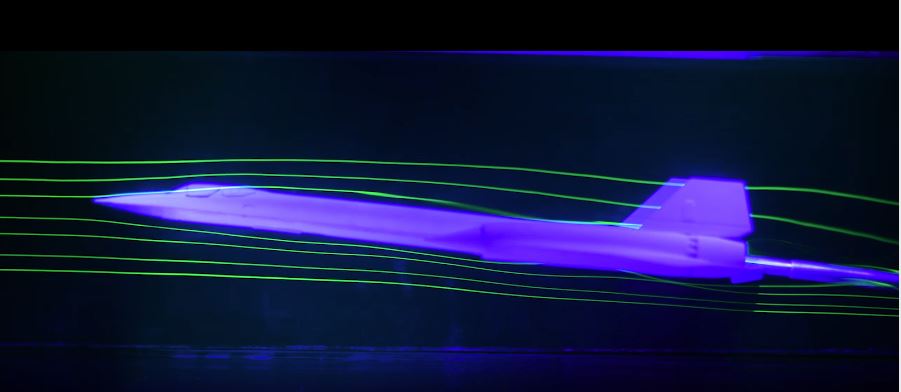
No One can Explain Why Planes Fly in the Air, Scientific American, Feb. 1, 2020

It is such a common phenomenon today, however, that we take it for granted even though we don’t completely understand it. Understanding that such a thing as aerodynamic lift occurs allows us to manipulate it, even if we don’t fully understand it.

Even if we think we fully understand natural laws, we probably don’t. One big example is the Big Bang. We know what happened from the “point” of the Big Bang, but we know virtually nothing before that “point”. We also have no idea how life formed.

Even if we did know exactly how the first living cell or organism developed. Our ability to trace the process and understand it does not tell us how or why it developed in the first place.

More precisely to the point, our understanding doesn’t create anything (without exercising our agency to act on that understanding), and it doesn’t eliminate the need for agency in our world to achieve desirous (beneficial) ends.

In fact, our experience suggests just the opposite. Our experience tells us that fire happens only randomly and often destructively in nature. We have learned to create fire and use it beneficially by exercising our agency in light of our understanding of the causes of fire. Agency is required to manipulate the natural causes for beneficial effects.

Our own experience affirms this. If I leave may backyard to nature, nothing is likely to grow there that is particularly beneficial. I might find a wild strawberry plant or wild raspberry vine with very small fruit on it. If I am lucky. The vast majority of it will be weeds and undesirable plants.

If I plant a garden with seeds cultivated by human ingenuity over many years of gathering seeds from the right kind of plants and developing new, heartier and more fruitful plants, I can turn my backyard into a cornucopia of beneficial plants that will feed my family and my neighbors’ families. This kind of benefit requires my agency.

I have to plant it, water it, weed it, and maintain it with much care and intentionality. If I stop maintaining it, my garden will relatively quickly return to a tangle of undesirable plants that will choke out and eventually replace my desirable plants.

It requires my agency to develop a garden and to maintain it. Nature, left to its own devices, will not do that. This is our common experience.

If you like archaeology, as I do, you become aware that time and nature destroys all the improvements generated by human agency and endeavor over time. Whole cities are reduced to rubble over time, and rubble becomes overgrown with windblown sediments, scrub brush and weeds such that we do not even recognize that a city once existed there, but for some remnants we can find by digging up the site.

We have made much about evolution since Charles Darwin first championed it as a theory. Evolution (the gradual improvement of life forms over time (by whatever means it occurs)) runs counter to our common experience. The formation of life from nonlife (the complex from the simple) (by whatever means it occurred)) runs counter to our common experience.

Does that mean that evolution is not fact or that life did not arise from nonlife? Not necessarily, but our common experience does suggest that this did not happen by natural forces acting according to their laws. Our common experience demonstrates that complex, beneficial effects arising from natural causes occur through agency and intentionality.

Human endeavor obviously did not create evolution or the formation of life from nonlife. Most scientists concede the appearance of design in the mind-bendingly complex interaction of amino acids, DNA, epigenetic materials, mechanical processes and other features of a living cell. If evidence of design appears in the world that was not achieved through human agency, that fact leaves us with the suggestion that some other intelligent agency is at work in the world.

Continue reading “A Rational Explanation for Miracles: God in the Gaps”
Exploring the Edges of Our Knowledge on Matters of Science and Faith


As often is the case with me as I read, listen to discussions, and watch YouTube videos, a number of strands from those media come together. I am going to attempt to weave some of those strands together today as I tackle the edges of our human limitations, dark matter, and knowing God.

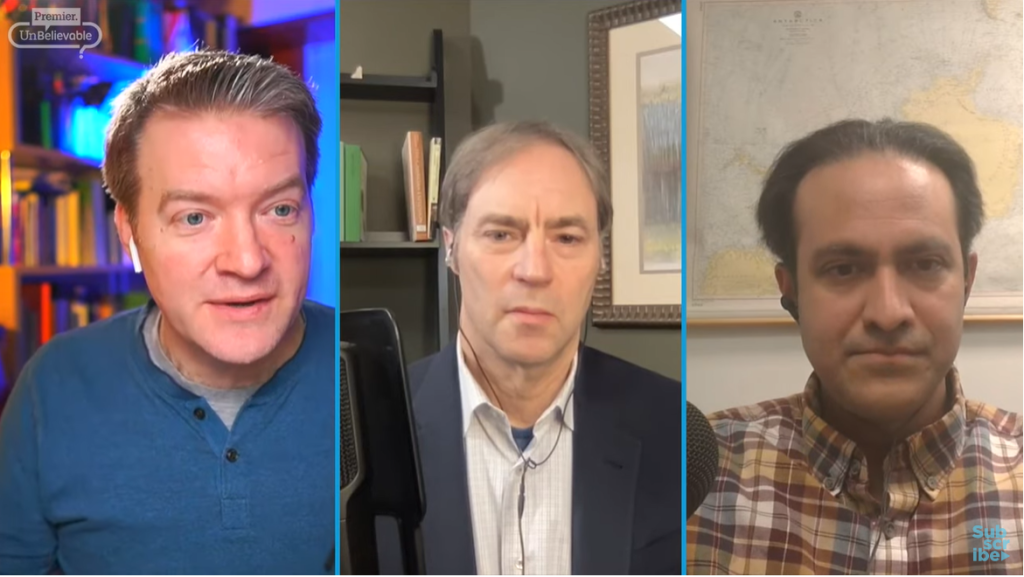
In a recent discussion between Saleem Ali and Stephen Meyer on the Unbelievable! podcast, Some things that Ali said prompted me to want to respond. I wrote of the discussion recently in What is the Basic Order of the Universe? Bottom Up? Or Top Down? But, today, I want to take my observations a bit further.

Saleem Ali has a background in chemistry and environmental studies, and Stephen Meyer has a background in physics, history and the philosophy of science. In their discussion, Meyer argues that our study of the physical world reveals evidence for a God who created it (a top-down design). In Ali’s response, I agree with his statement that certain things are unknowable to human beings because of our empirical limitations.

Ali said these things to highlight that we cannot know with scientific certainty that God exists. I agree with that. I would simply add this: Because science is the study of the natural, physical world, and humans are creatures of the natural, physical world, we are constrained to the limitations of the natural, physical world in our scientific endeavors.

Ali also admits that we may not ever be able to know the origin of the causes of the universe, or of the origin of the laws of physics, or of the origin of life because these things would require us to search beyond the parameters of the constraints of the natural, physical world in which we are bound.

Since we, ourselves, are physical creatures in a world that is limited by physical constraints, we may never know with scientific certainty what else exists.  

This assumes, however, that we have no capacity to know of anything that exists beyond the natural world. Some people are content to foreclose the idea that we are incapable of knowing anything that is not material and physical in nature. I am not convinced, and I see evidence that we are not so limited.

We have basically two choices: 1) assume that the existence of the universe is nothing more than a brute fact; or 2) assume that the universe had a creator. We can either resign ourselves to agnosticism or choose to test one of those two assumptions.

I made the assumption that the universe makes more sense on the premise of a creator, and I have been testing that hypothesis ever since. I won’t apologize for making that assumption, and the degree to which I have tested that assumption has not left my unsatisfied.

To those people want to judge me on that point, I say that you may be in a worse position than me to be a judge. I assume an intellect far greater than me created me with intellect. I do not trust it on my own account. On what basis do you have confidence in your intellect and agency that derived merely from inert, unintelligent matter?

To the extent that you believe your reasoning power evolved from lower life forms, why do you have confidence in the reasoning of a monkey’s mind? I say this not of my own accord; I am applying Darwin’s reasoning that he applied to own his convictions. (See Reflections on Faith and Atheism and Universal Design Intuition and Darwin’s Blind Spot))

As hints of the painter appear in his painting, our study of the natural world can (and does I believe) give us hints of the God who created it. We see the personality of the painter in his painting as we see the personality of God in His creation – including the creation of human beings.

I cannot prove that, just as I could not prove the painter by virtue of his painting. If I had no connection with the painter and knew no one who knew him, my knowledge of him would be mere speculation. But, I would be right in assuming a painter.

Ali says that finite creatures such as ourselves are going to encounter a certain amount of mystery and awe, but that mystery and awe does not necessarily validate a theistic explanation. Mystery and awe by themselves do not warrant a conclusion that God exists. I agree with him on the statement, as far as it goes, and I think we need to be candid about these things.

If God exists, who preexisted, and caused the universe and all things that we know to come into being, including ourselves, we may be cut off from knowing that God and from viewing that causality by our physical limitations and the physical limitations of the universe in which we are bound. Even if the universe hints of Him, we may be incapable of knowing Him by our own abilities because of our limitations.

The only exception I can think of would be for such a God to reveal himself in some way to us. Of course, that is the claim of theism.

We do not know the painter of a painting unless we meet him, and we cannot know the God of the universe unless we “meet” Him in some way. We might be able to track down the painter of a painting, because that painter exists within the same bounds of the same world as we do. Because of our limitations, however, God would have to introduce Himself to us.

That is the claim of people who claim to have “met” God in some fashion. We can explore those claims as we can explore the claims of anyone who witnessed an event or met a person we we have not met ourselves, but let’s lay that aside for the moment.

Continue reading “Exploring the Edges of Our Knowledge on Matters of Science and Faith”

Is Intelligent Design a Science Stopper?

Is intelligent design more of a science stopper than the evolutionary paradigm?

I listened to an episode of the Unbelievable! podcast from 2011 that was rebroadcast recently. Stephen C. Meyer was on with Keith R. Fox MA, MPhil, PhD, professor of Biochemistry, Principal Investigator (Nucleic Acids) at University of Southampton in the UK and Associate Director of the Faraday Institute for Science and Religion, Cambridge. The topic was Meyer’s groundbreaking book, Signature in the Cell, and the origin of life.

Keith Fox and Stephen Meyer are both professing Christians. Fox holds dogmatically to the evolutionary paradigm and does not believe intelligent design is an appropriate framework for scientific inquiry. Meyer maintains that intelligent design is a better explanation and is warranted by the science.

I will not attempt to explain everything they discussed, as I would require much more space than a blog article and more time than my schedule might allow at the moment. I encourage you to listen to the whole discussion if this article piques your interest. (You could also read the book.)

I want to focus on one point Steven Fox made about the intelligent design argument: that intelligent design is a “science stopper”.

He explained that he believes the promotion of intelligent design as an explanation for the origin of life would stop further scientific inquiry and frustrate science. It will effectively inhibit further inquiry as to how the origin of life occurred, says Fox. If we conclude that “intelligence did it” (a kind of God of the gaps argument), science would grind to a halt.

Meyer didn’t address the point immediately or directly. The discussion went off in a different direction, but I found myself unwilling to let it go.

“Why would intelligent design be a science stopper?” The statement begs for a response.

Fox claims that invoking the intelligent design explanation stops the process of asking questions, but he didn’t explain why. I have heard the statement before, but the statement is conclusory, and does it really follow?

I understand the anecdotal evidence of certain people who have advocated a kind of blind faith approach to the Bible and science issues, but that’s only a segment of the population of people who call themselves Christians. It’s not the majority, and they don’t have any influence over people who do science (Christian or non-Christian).

Implicit in that response is, perhaps, the thinking that we have done biological science very well on the evolutionary paradigm for about 150 years. It works. Let’s not mess it up.

I can appreciate that.

A person might also observe, correctly, that the focus of science, narrowed many years ago, focuses on purely natural processes. Science is not concerned with the supernatural. Let theologians think about God, but the scientists should focus on the natural world (the “non-overlapping magisterium” approach).

I understand that science is limited to the study of nature and natural processes. Science has nothing to do with theology (though theology was once considered the Queen of the sciences). Science has nothing to do with philosophy (though many scientists don’t appear to know the difference between science and philosophy, and that is a problem).

I am only speculating that these kinds of thoughts are behind the resistance against considering intelligent design as a competing paradigm to evolution. I understand them, but I would like to push back.

The objection to intelligent design seems to be an extension of the “God of the gaps” argument.

It incorporates the same assumption – that belief in God stifles and stymies science, but I don’t believe it’s a good assumption, and I don’t believe that the evidence warrants that conclusion.


Continue reading “Is Intelligent Design a Science Stopper?”

The Hole In the God of the Gaps Argument

All people, including scientists, fill in the gaps in their knowledge with a model of reality they believe best fills those gaps in light of the knowledge they have. 


Most people who have entertained the question, whether God exists, are familiar with the “God of the Gaps argument” that is made against the existence of God. It goes something like this: In the past, people couldn’t explain natural phenomenon, like rain, thunder, earthquakes, etc. so they attributed those things to the activities of the gods. People use the gods (or God) to fill gaps in their knowledge and understanding of how the world works out of ignorance.

From that observation (which is factually true as a simplistic statement), they add in the equally true observation that the progression of science over the centuries has been filling in the gaps in human knowledge and understanding of the natural world. We have found natural explanations for most phenomenon without having to resort to the conclusion that “God did it”. Thus, the argument goes, we should stop invoking divine explanations.

Many people take that even further and conclude that we should stop believing in God altogether. We don’t need God to do science; thus, we don’t need God at all, they say.

Thinkers realized during the Enlightenment period that they didn’t need to invoke divine explanations at all to be able to study the natural world. From that realization, a scholarly consensus the thinking has developed that divine explanations are not only not necessary; they are not appropriate.

Divine explanations are viewed today by most scholars as anti-scientific. Some people who are concerned with the purity of science would even deem divine explanations “heretical” to the current scientific orthodoxy.

The God of the gaps argument (as an argument to prove the nonexistence of God), however, is pretty weak. The fact that we can do science (which is, by definition, the study of the natural world) without appealing to a supernatural being or explanation isn’t surprising. It also can’t tell us what caused the natural world, as any cause of the natural world would have to be independent of it.

Just as the study of a painting can never introduce us to the painter, study of the natural world could never hope to introduce us to the creator of the natural world. At best, it might tell us something about the painter/creator. In both cases, we must be willing to look elsewhere to find the painter/creator.

Frankly, the order we see in the natural world is more surprising on a naturalistic worldview that assumes no intelligence behind the universe. We see intricate design in the universe, from the micro to the macro levels. How do unguided co-locations of molecules and matter acting randomly on each other produce the exquisite fine tuning we see?

The order to the natural world that we can study and know doesn’t preclude the existence of a supernatural (other than natural) Being behind it all. The order of the natural world is actually more difficult to explain without God.

The order of the world, by itself, is not proof that God exists, but the design we see is best explained by a grand Mind. This is not a gap-filling argument. It is an argument based on the best explanation we have – that all design we see in our experience is created by a being with agency who thought of it, designed it, and created it. This is the best explanation that we have.

If we resign ourselves to nothing but the study of the natural world, how do we expect to know anything about the possibility of reality beyond it? If we limit ourselves to naturalistic explanations, we foreclose any other possibility.

Thus, refusing to allow for the possibility of a God that might fill the gaps in our knowledge is just as arbitrary and closed-minded as filling every gap with God (and refusing further inquiry).

We all fill gaps in our knowledge, and we do it on the basis of what we know and believe about what we know. Our gap fillers are our basic assumptions. The theists assumes a Creator exists. An atheist assumes that no creative mind is behind the universe.

Frankly, there is a big gap between the fact that the natural world has order that we can study and the question whether anything beyond the natural world exists. I can turn the argument around and accuse the naturalist of filling the gap with the conclusion that no God exists.

But all of this really misses the important point. Hugh Ross addresses the God of the gaps argument in a recent interview with Kahldoun Sweis. He says,

“In science, there are always gaps. We will never learn everything. We are limited human beings.”

However, when we “push back the frontiers of science”, we have to ask ourselves whether the gaps in our knowledge are getting bigger and more problematic? Or are they getting smaller and less problematic?”

Continue reading “The Hole In the God of the Gaps Argument”

When the Why Questions become Rhetorical

Why questions can be fruitful if they drive us to understanding, but they are fruitless if they become roadblocks to advancing our understanding.


I am not sure that I am up to the task of writing what I want to write, but I’m going to attempt it anyway. These thoughts occurred to me as I was listening to Justin Brierley interviewed by David Smalley. Brierley hosts the British show, Unbelievable! on Premiere Christian Radio, while Smalley hosts the atheist counterpart, Dogma Debate.

Both men are cut from the same cloth in the sense that they usually host people with opposing views, and they do it in a refreshingly even-handed, civil manner, giving deference and respect to both “sides” and both individuals. They are shining examples of open, intellectual discourse. I much prefer the informal and civil discussion to the formality and contrary tone of a debate.

Much of their discussion focused on the “problem of evil”. If God is all-good and all-powerful, why does He allow bad things to happen to people? Either He isn’t all-good, or He isn’t all-powerful. This is the classic problem of evil.

For David Smalley, the answer is either that “God doesn’t care, or God doesn’t exist”. If the answer is that God doesn’t care, David Smalley concludes, “God isn’t worthy to be worshiped”.

Many smart people, like Albert Einstein and Charles Darwin, have run their faith aground on these rocky shores.

As the two men discussed their respective views, and as Smalley questioned Brierley (because Brierley was the guest of Smalley in this show), I listened with interest and some mild frustration and disappointment. To paraphrase (and very poorly, I’m afraid), Smalley repeatedly asked unanswerable questions, and Brierley repeatedly tried to answer them.

I don’t blame either man. This is the condition of our finite beings. How can we know what we don’t know? The lot of a finite being is that we are left with some unanswerable questions and insufficient answers.

Continue reading “When the Why Questions become Rhetorical”