The Hole In the God of the Gaps Argument

All people, including scientists, fill in the gaps in their knowledge with a model of reality they believe best fills those gaps in light of the knowledge they have. 


Most people who have entertained the question, whether God exists, are familiar with the “God of the Gaps argument” that is made against the existence of God. It goes something like this: In the past, people couldn’t explain natural phenomenon, like rain, thunder, earthquakes, etc. so they attributed those things to the activities of the gods. People use the gods (or God) to fill gaps in their knowledge and understanding of how the world works out of ignorance.

From that observation (which is factually true as a simplistic statement), they add in the equally true observation that the progression of science over the centuries has been filling in the gaps in human knowledge and understanding of the natural world. We have found natural explanations for most phenomenon without having to resort to the conclusion that “God did it”. Thus, the argument goes, we should stop invoking divine explanations.

Many people take that even further and conclude that we should stop believing in God altogether. We don’t need God to do science; thus, we don’t need God at all, they say.

Thinkers realized during the Enlightenment period that they didn’t need to invoke divine explanations at all to be able to study the natural world. From that realization, a scholarly consensus the thinking has developed that divine explanations are not only not necessary; they are not appropriate.

Divine explanations are viewed today by most scholars as anti-scientific. Some people who are concerned with the purity of science would even deem divine explanations “heretical” to the current scientific orthodoxy.

The God of the gaps argument (as an argument to prove the nonexistence of God), however, is pretty weak. The fact that we can do science (which is, by definition, the study of the natural world) without appealing to a supernatural being or explanation isn’t surprising. It also can’t tell us what caused the natural world, as any cause of the natural world would have to be independent of it.

Just as the study of a painting can never introduce us to the painter, study of the natural world could never hope to introduce us to the creator of the natural world. At best, it might tell us something about the painter/creator. In both cases, we must be willing to look elsewhere to find the painter/creator.

Frankly, the order we see in the natural world is more surprising on a naturalistic worldview that assumes no intelligence behind the universe. We see intricate design in the universe, from the micro to the macro levels. How do unguided co-locations of molecules and matter acting randomly on each other produce the exquisite fine tuning we see?

The order to the natural world that we can study and know doesn’t preclude the existence of a supernatural (other than natural) Being behind it all. The order of the natural world is actually more difficult to explain without God.

The order of the world, by itself, is not proof that God exists, but the design we see is best explained by a grand Mind. This is not a gap-filling argument. It is an argument based on the best explanation we have – that all design we see in our experience is created by a being with agency who thought of it, designed it, and created it. This is the best explanation that we have.

If we resign ourselves to nothing but the study of the natural world, how do we expect to know anything about the possibility of reality beyond it? If we limit ourselves to naturalistic explanations, we foreclose any other possibility.

Thus, refusing to allow for the possibility of a God that might fill the gaps in our knowledge is just as arbitrary and closed-minded as filling every gap with God (and refusing further inquiry).

We all fill gaps in our knowledge, and we do it on the basis of what we know and believe about what we know. Our gap fillers are our basic assumptions. The theists assumes a Creator exists. An atheist assumes that no creative mind is behind the universe.

Frankly, there is a big gap between the fact that the natural world has order that we can study and the question whether anything beyond the natural world exists. I can turn the argument around and accuse the naturalist of filling the gap with the conclusion that no God exists.

But all of this really misses the important point. Hugh Ross addresses the God of the gaps argument in a recent interview with Kahldoun Sweis. He says,

“In science, there are always gaps. We will never learn everything. We are limited human beings.”

However, when we “push back the frontiers of science”, we have to ask ourselves whether the gaps in our knowledge are getting bigger and more problematic? Or are they getting smaller and less problematic?”

Continue reading “The Hole In the God of the Gaps Argument”

Deconstruction Can Lead to a Stronger Foundation for Faith


I began writing down my thoughts as I was listening to an interview of Lisa Gungor and Alisa Childers on the Unbelievable? podcast with Justin Brierley. Both women went through what we now popularly call a period of deconstruction. Christians might have formerly called this experience backsliding (or falling away).

People in certain Christian circles have long characterized this experience as sinful (calling it backsliding or falling away). The more modern characterization of this experience focuses on doubt (deconstruction). The unspoken tension between these views is in how we view doubt. Is doubt bad (sinful)?

Hold that question.

Lisa Gungor says that she emerged from her period of “deconstruction” as a progressive Christian, no longer believing that Jesus is the only way, the only truth or the only life, no longer believing that Jesus definitely rose from the dead. Lisa Gungor says she now doubts that truth can be known in any absolute or definitive way.

Alisa Childers, on the other hand, come through her period of “deconstruction”, with a stronger faith and a more certain foundation. She doubled down on her quest for truth, putting her faith to the test, and she is now a Christian apologist.

Both woman went through periods that they call a deconstruction of their faith, but one of them came out the other end with a stronger, more resilient and truer faith. In this blog, I explore why that might be. I hope also to shed some light on the question whether doubt is sin.

Continue reading “Deconstruction Can Lead to a Stronger Foundation for Faith”

On Faith, Doubt and Truth

If faith is not robust enough to hold up to scrutiny, it isn’t worth holding on to.


I traveled for 12 hours in a car recently and spent most of that time listening to podcasts. I listened to interviews of Tim Keller and Os Guinness, and a joint interview of Lisa Gungor and Alisa Childers. They talked about their own faith journeys, doubt and the quest for truth.

As I considered those interviews at the end of my trip, some thoughts congealed and took shape. I will try to capture them in this short piece.

Continue reading “On Faith, Doubt and Truth”

Carried Off to Babylon

We are half-hearted creatures, fooling about with drink and sex and ambition when infinite joy is offered us.

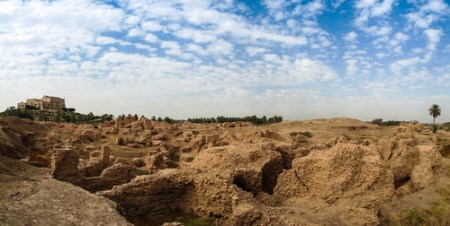
Panorama of partially restored Babylon ruins and Former Saddam Hussein Palace, Babylon, Hillah, Iraq

“Behold, the days are coming, when all that is in your house, and that which your fathers have stored up till this day, shall be carried to Babylon. Nothing shall be left, says the Lord.” (Isaiah 39:6 ESV)

This is a follow up blog piece to Here Today Gone Tomorrow. The story of King Hezekiah, and Isaiah Chapter 39, is, illustrative of our tendency to hold on to things in this world and in this life contrary to what God intends for us. Jesus speaks to God’s intention when he urges us to lay up our treasures in heaven, and not to focus on accumulating treasures on earth.

Hezekiah was a pretty good king as kings of Judah go. Many of those kings turned away from God to idol worship and other behaviors influenced by the pagan culture of the nations around them. These were the people who were never completely driven out of the Promised Land as God instructed. The people and their kings became corrupted by those influences and succumbed to them.

The descendants of Abraham, Isaac and Jacob split into two camps early on after the people rejected the rule of judges and wanted kings like the nations around them.  They split into the nation of Israel and the nation of Judah.

By the time King Hezekiah came around, the nation of Israel had been overrun, captured, and exiled to Babylon. During Hezekiah’s reign the people were hanging on by a thread, with the threat of Babylonian exile dangling like the sword of Damocles over the remnant, Judah, that remained in Jerusalem.

In Hezekiah’s fourteenth year as king, Sennacherib, the king of Assyria, attacked all the fortified cities of Judah and captured them, but for Jerusalem. King Hezekiah responded to this threat by turning to God. He prayed, and, as the story goes, 185,000 troops of the Assyrian king died in the camp overnight, sparing the City of Jerusalem from certain doom. (Isaiah 37)

Hezekiah turned to God when circumstances were dire and his death was imminent. Like most of us, though, the King was short-sighted. He focused on the immediate, protecting himself for the remainder of his short life.

Continue reading “Carried Off to Babylon”

Justification by Faith

Whether there are 613 laws to keep or just two, who tend to view morality as a competition in which we compare ourselves to others.


In a previous blog post, I observed that Scripture reveals a progression from law to relationship to faith. In Habakkuk, the prophet said, “The righteous will live by his faith.” (Hab. 2:4) This statement in Habakkuk is the second half of a verse that contrasts “the proud one” whose soul “is not upright to the righteous one who lives by faith. The implication is that the righteousness is linked to faith and is contrasted to pride.

We see this theme continued in the New Testament:

“The righteous shall live by faith.” (Romans 1:17)


“Now it is evident that no one is justified before God by the law, for ‘The righteous shall live by faith.’” (Galatians 3:11)


“[M]y righteous one shall live by faith” (Hebrews 10:37)

And the reason that salvation is by faith (in the grace of God) is so that no one can boast.

“For it is by grace you have been saved through faith, and this not from yourselves; it is the gift of God, not by works, so that no one can boast.” (Eph. 2:9)

When Jesus summarized all the law and prophets in just two statements (love God and love your neighbor) he whisked us past the academic details of the law to the simple heart and spirit of the law. (Luke 10:25-27) If we think this simplification of the law makes it any easier on us, however, we should think again. At the same time Jesus simplified the expression of the law, Jesus upped the ante on us when he said that, if we even lust in our hearts, we have committed adultery. If we have even gotten angry in our hearts at our brother, we may have committed the sin of murder. (See Mathew 5:21-48)

Jesus made the law simpler and more difficult to follow at the same time!

Maybe this is because our ability to follow the law (to maintain God’s standard of morality) isn’t the key point. In fact, the point is our inability, in ourselves, to live up to God’s standard! Until we realize that we can’t measure up, we don’t measure up, we are depending on ourselves and our own efforts to “be right with God”. But we never can. Whether it’s 613 laws or just two principles, we fall short.

Our focus shouldn’t be on the laws and other people. On this horizontal level, we compare ourselves to others, and we judge ourselves and others in comparison. This is where pride and self-righteousness dwell, and the focus is, ultimately, on ourselves. Rather our focus should be vertical, on God and our relationship to him.

Continue reading “Justification by Faith”