A Tale of Two Processions, Two Kingdoms, and the Triumph of God

Two processions, two kingdoms clashing, and God’s triumph in the death of God incarnate on the cross


Episode 124 – Statement of Triumph – from the BEMA Podcast, with Marty Solomon and Brent Billings, inspires my writing today. It was the subject of discussion for the Saturday morning Bible study I have attended off and on with an exceptional group of men for several years.

The subject was Matthew 21:1-11. The chapter heading in the NIV translation (which would not have appeared in the original text, because there were no chapter headings in the original text) is “Jesus Comes to Jerusalem as King”.

This is usually how we read it: a “triumphal entry”. We celebrate it as a triumph, and it was. But not perhaps in the way we tend to think about it. Certainly, not in the way the erstwhile followers of Jesus perceived it when it happened.

Marty Solomon sets the stage in the podcast, noting that Jesus rode into Jerusalem on a donkey during the week of Passover, an unusually tense time in this region of the Roman world. The uneasy tension arose in that time in that region because it was home to the only group of people in the Roman Empire who refused to worship the Emperor.

The Jewish people were stubbornly true to their God. Even so, Rome allowed the Jews to have their own ruler, Herod the Great. Herod was Jewish and powerful in his own right, but he was happy to be propped up by the Romans, and the Romans accommodated him to maintain stability in the region.

Even so, this small piece of real estate was problematic for Rome. It sat at the crossroads of the earth. The Hebrew people long inhabited it, but they were a headache for the Romans because of their entrenched religious traditions and unabated worship of their God.

When Herod the Great died, three of sons took over different areas of this land that Herod ruled as a vassal of the Romans. Herod Phillip ruled the north (Caesaria Phillippi). Herod Antipas ruled the middle region, and Herod Archelaus ruled in the south (Judea).

Archelaus only lasted two years, so Rome brought in its own ruler, Pontius Pilate (the Roman Bulldog), to maintain Rome’s control over the region. Pilate didn’t live in Jerusalem. Pilate lived in Caesarea Maritime (Caesarea, By the Sea), a city built by Herod to honor Caesar.

The week of Passover would have been a particularly tense time in Jerusalem, the Jewish holy city. Jews from all over were in town to celebrate the feast that remembered their great deliverance and triumph over the superpower of an earlier time, Egypt. The last thing that Rome wanted was for this celebration to get out of hand after rebel Jews got all fueled up with wine and remembrance of their former deliverance.

If there was any holiday that might make the Romans nervous in Judea, it was Passover. Zealots were always stirring up trouble, and Passover would be the most opportune time for a Jewish revolt against the Roman rule of this territory that the Jews long held out as their own. After all, the Jews still believed this land was to be theirs again through based on their understanding of prophecies about a military coup to be led by a messiah (savior) in the line of their once great King, David.

Every year at this time Pontius Pilate would head south from Caesarea down the coastal road to Joppa. He would head east from Joppa to make his way into Jerusalem. Pilate would enter Jerusalem from the west. He traveled with great pomp and a show of force, with an army of soldiers, trumpeters, heralds, banners, and pronouncements. Pilate would lead the way on a white stallion symbolizing Roman conquest and rule.
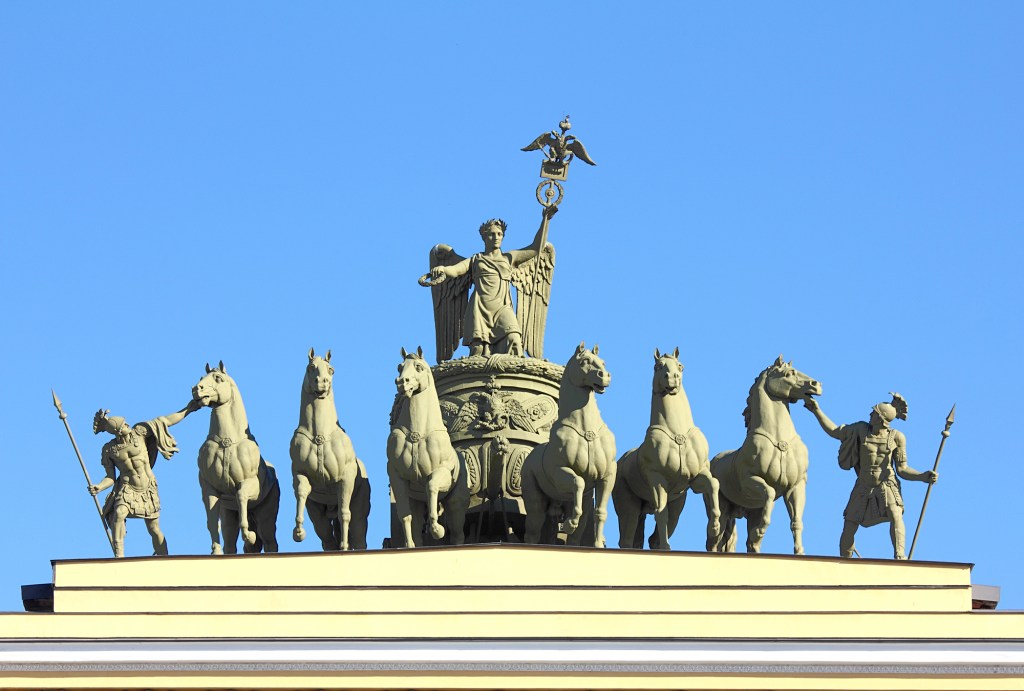

This show of power, of course, was intentional. I found the article, In Through the Back Door, September 24, 2022, by Terry Gau that describes these yearly processions made by Pilate into Jerusalem at the beginning of Passover week. He cites historians, John Dominic Crossen and Marcus Borg, in their book, Last Week, memorializing the historical and political context for the final chapter of Jesus’ ministry on earth. the procession is described this way:

“Traditionally, Pilate paraded into Jerusalem on the first day of Passover Week, entering the west gate – the front gate – with legions of chariots, horses, and foot soldiers, dressed for battle and armed with swords and spears.  Rome’s authority would not be questioned.  The majesty with which Pilate enters the front door of the city was meant to inspire awe and fear, respect and obedience.”

Marty Solomon says,

“You could have heard him coming from miles away. The message he wanted to send to the Jews was clear. ‘Don’t even think about it! Keep everything under control, or Rome will crush you!’”

BEMA Podcast, Episode 124

Pilate would stay in Herod’s palace in Jerusalem for the week until the festivities ended. Then he would go back to Caesarea. He wasn’t there to celebrate, though. He was there to ensure things didn’t get out of hand and to keep the peace.

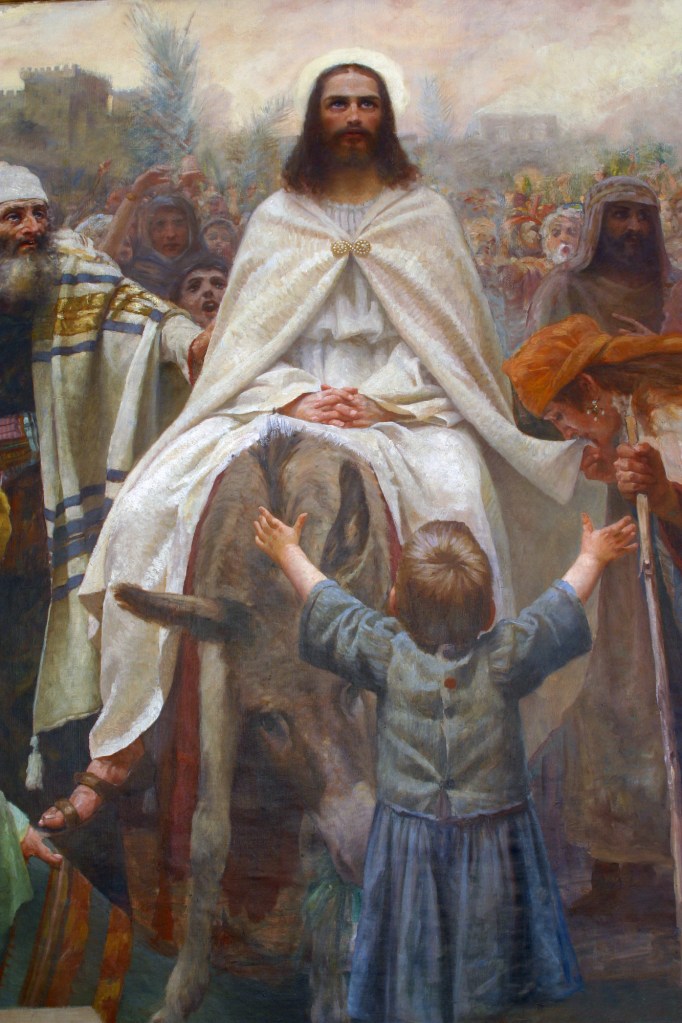
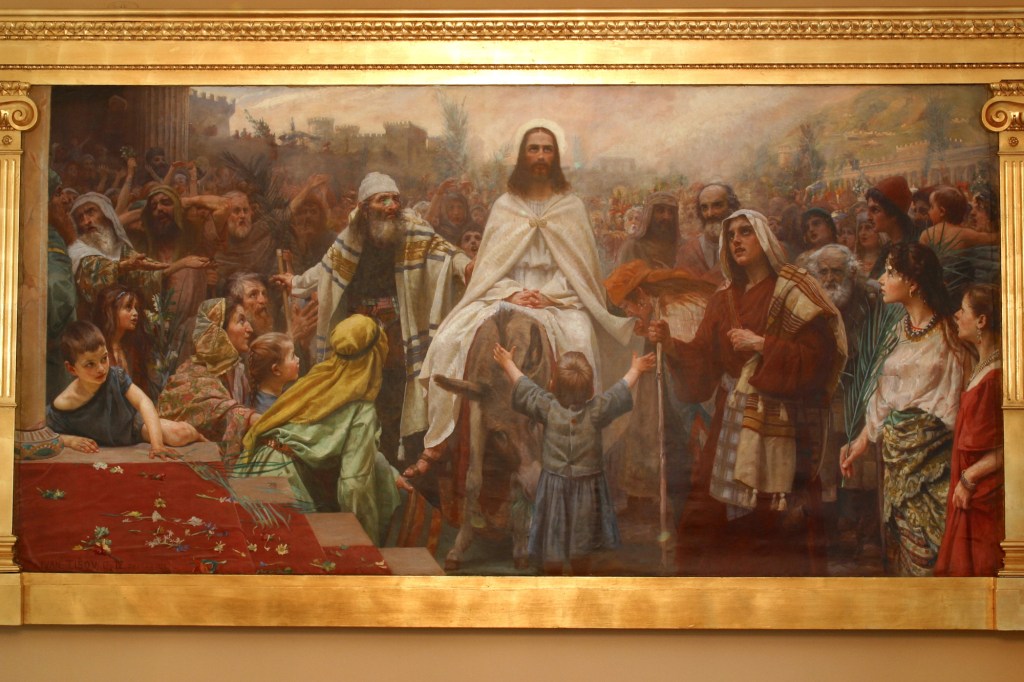
During one Passover week under the rule of Pontius Pilate in Judea another procession took place. It may have even happened on the same day at the same time that Pilate was entering the City from the west. This procession took place on the east side of Jerusalem where Jesus, riding on a lowly young donkey with a small, rag tag bunch of unarmed disciples entered through the east gate – the back door to Jerusalem.

“This parade was just as carefully staged as Pilate’s entry into Jerusalem. It was a counter-procession, a different vision of what a Kingdom should be, a subversive action against the powers that ruled Jerusalem. Jesus’ humble, yet triumphal, entry into Jerusalem stood in contrast to the magnificence and brutality on display at the opposite end of the city. Jesus brings peace, while Pilate brings a sword.”

In Through the Back Door

This was the backdrop for episode 124 of the BEMA Podcast and of our discussion. I sit writing at a temporary table with one chair left in my house that is all but cleaned out and being readied for sale. My future is uncertain as I recount one of the most pivotal times in human history and the dealings of God with man and what it means for us, today.

Continue reading “A Tale of Two Processions, Two Kingdoms, and the Triumph of God”
The Danger of Religiosity, Political Expediency and the Weight of the Cultural Moment

We can be so caught up in our own lives and the world around us that we fail to recognize the God who gave us life and created the world.

I have been reading through the Gospel narratives leading up to the death and resurrection of Jesus during Lent. My reading included the following passage that jumped out at me:

“Then they led Jesus from the house of Caiaphas to the governor’s headquarters. It was early morning. They themselves did not enter the governor’s headquarters, so that they would not be defiled, but could eat the Passover.” 

John 18:28 ESV

I will get the point, but first we need to build in a little context. This passage describes a passing moment leading up to the crucifixion after Judas betrayed Jesus in the garden. Jesus was taken, first, to the palace of Annas (John 18:13) and then to Caiaphas, the Jewish High Priest. (John 18:14)

After Caiaphas questioned Jesus, Jesus was taken to the Roman governor, Pontius Pilate. The High Priest wanted Jesus put to death for blasphemy, but only the Roman state had authority to impose capital punishment.

Caiaphas was the High Priest who presided over the Sanhedrin, the official religious body recognized by the Romans. Caiaphas was made the High Priest by the Roman procurator Valerius Gratus. Annas, the father-in-law of Caiaphas, had presided over the Sanhedrin before Caiaphas.

They were the official heads of the ruling group of religious leaders in First Century Judea in the time of Jesus, the Sanhedrin. They stood between the Romans, who conquered and controlled the region, and the Jewish people on matters of the Jewish religion.

During this tumultuous time, a group of violent men, the Zealots, who were opposed to Roman rule threatened to upset the political balance and peace. Similarly, the growing, unpredictable following of Jesus posed a threat to the Sanhedrin’s position as trusted middlemen trying to preserve peace and the status quo.

Potential disruption threatened the delicate balance. The Sanhedrin tried to walk the line between the threat of the Roman Empire on the one side and the Zealots and others who might provoke the Romans to tighten their grip on Judea, dismiss the Sanhedrin from their power position, and clamp down on the freedoms of the Jewish people they ruled.

Tensions were not just a threat to the Sanhedrin, who were officially given some overlapping authority the Romans; they were legitimately a threat to the well-being of all the Jews in Judea. Thus, we read in John that Caiaphas advised “advised the Jewish leaders that it would be good if one man died for the people”. (John 18:14)

The suggestion was based on practical expediency. Though Jesus wasn’t a Zealot, he was very popular among the people, likely including the Zealots who hoped Jesus would spell the end of the Roman occupation.

The concerns of the religious leaders were no doubt heightened to a critical level when Jesus came riding into Jerusalem on a donkey in triumphant celebration greeted by a “great crowd” that lined the streets, waiving palm branches and shouting,

“Hosanna!…. Blessed is the king of Israel!”

John 12:12

I am going to get to the danger of religiosity, political expediency and the weight of the cultural moment as the title to this article promises. First, however, I want to develop the backstory a bit further. To do this, we need to jump forward several months in time.

Continue reading “The Danger of Religiosity, Political Expediency and the Weight of the Cultural Moment”

Palm Sunday: the Prelude to the Crucifixion

Jesus didn’t live up to the expectations of the crowd who followed him, and, no longer believing he was the Messiah they had hoped for, they turned on him


Today is Palm Sunday. This is the day we celebrate the “triumphal entry” of Jesus into the City of Jerusalem. He rode into the city on a donkey. Many hundreds of thousands were gathered in Jerusalem for the coming Passover. John tells us that people gathered in expectation of seeing Jesus because of the word that he had raised a man (Lazarus) from the dead days before. (John 12:17-18)

As Jesus entered the City, people lined the streets with palm branches. They threw their cloaks on the road in front him, and they hailed him with. This is Luke’s account:

As he went along, people spread their cloaks on the road.
When he came near the place where the road goes down the Mount of Olives, the whole crowd of disciples began joyfully to praise God in loud voices for all the miracles they had seen:
“Blessed is the king who comes in the name of the Lord!”

Luke 19:36-38

And here is John’s account:

The next day the great crowd that had come for the festival heard that Jesus was on his way to Jerusalem. They took palm branches and went out to meet him, shouting, “Hosanna!” “Blessed is he who comes in the name of the LORD!” “Blessed is the king of Israel!”

John 12:12-13

As we celebrate Palm Sunday today, we know the story of Jesus is about to take a very dramatic, tragic turn for the worse. The triumphal entry of Jesus into Jerusalem is not the precursor of celebratory times. Ominous clouds are looming on the horizon.

The incongruity of this joyous moment days before Jesus will be crucified is sobering. He was hailed King of the Jews by an adoring crowd days before a jeering crowd yelled, “Crucify him!” Most sobering of all is the likelihood that many people in those crowds were the same people.

What happened?

Continue reading “Palm Sunday: the Prelude to the Crucifixion”

Emptied of Glory and Obedient to Death

Depositphotos: 31617591 Copyright: DesignPicsInc

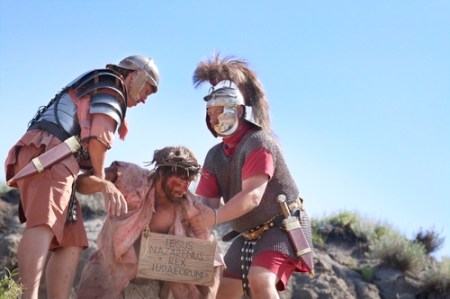
On Good Friday we remember the ultimate sacrifice God made for us. Not only did He empty Himself of His glory to become like us, taking on human flesh, but He was obedient to the law that He established for us – obedient to death – even death on the cross. We shudder at the thought of hanging on a cross, but it’s hard for us to imagine how utterly shameful crucifixion was in the 1st Century.[1]

This was not just a person, though, this was God who had already shed his glory to become like us and walked in humble obedience to all that He required of us – something that we do not even do ourselves. This man who hung tortuously and shamefully on the cross was also fully God who certainly suffered all the pain and shame that a man and God could possibly feel at the hands of His own creation.

In the article linked at the end of this blog piece, Trevin Wax makes three observations that have stuck with me since I read them: Continue reading “Emptied of Glory and Obedient to Death”

Christmas Thoughts: Psalm 22

We celebrate the humble birth of Christ, knowing that the redemptive work God started then is finished, even as it is playing out in our own lives and the times we live in.

canstockphoto32323116

I don’t typically think of the Psalms when I think of Christmas. My Christmas thoughts this season have revolved around prophecies in the Old Testament, and that is where the Psalms enter the picture. The Old Testament is full of prophecies that came true in the person of Jesus from Nazareth, who was born in Bethlehem a little over two millennia ago.

Psalm 22 may have been written by David before he became King when he was on the run from King Saul, who was jealous. On the other hand, it may have been written after David became king when his son, Absalom, formed a coupe to wrest the kingdom from him. Psalm 22 is David’s cry to God in the midst of his own impossible circumstance.

But Psalm 22 is more than that. Psalm 22 is a foreshadowing of God’s own cry when His creation turns against Him. It becomes the cry of God, who shed his divine glory to enter His own creation in the form of a man, which we celebrate at Christmastime. We don’t think of Christmas in these terms, but it foreshadows the death of God incarnate at the hands of His own creation.

Continue reading “Christmas Thoughts: Psalm 22”