Catholics, Pentecostals and the Body of Christ

God’s sheep hear His voice. God knows His own. They sit in the whole spectrum of churches on any given Sunday morning or Saturday night, and some of them do not visit churches very often at all.

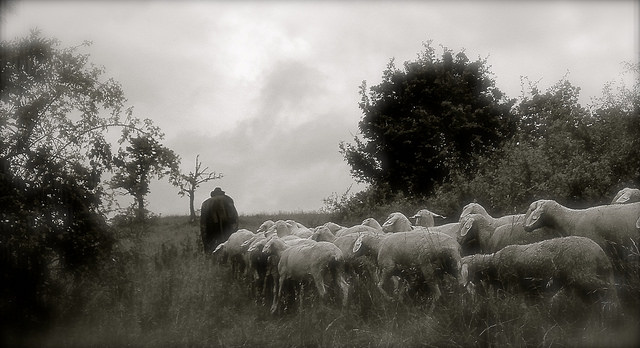
A Sheperd by Lauri Heikkinen

The article, A Classic Pentecostal Encounters Charismatic Catholics, takes me back to the early days of my Christian walk. I was raised Catholic, but I found little attraction to church as a child. We went to church religiously, a practice I later came to appreciate about my parents, but there seemed to be nothing in it for me. I even felt uncomfortable in church.

I went through some very rebellious teen years, wandering lost through the haze and fog induced by alcohol and drugs, drifting to the edge of the precipice, before I woke to the emptiness that I had inexplicably been embracing. That was not my conversion, but just the beginning of walking in a new direction.

Fast forward just a short while to college where I entered like a kid in a candy store with a new found passion for knowledge and truth. I thought I had left religion behind. Actually I did (and have never returned). What I did not realize is that I would discover the life that religion seemed to enshroud like an empty tomb. Continue reading “Catholics, Pentecostals and the Body of Christ”

Revisiting King Henry VIII

Henry VIII King of England
Depositphotos Image ID: 5598102 Copyright: georgios

I recently saw Shakespeare’s King Henry VIII at the Chicago Shakespeare Theater. The play, Shakespeare’s last one performed at the Globe Theater approximately 400 years ago, was very well done. The story line is not as compelling as most of Shakespeare’s works, but the interrelationship of church and state theme struck a chord with me, albeit a discordant one.

King Henry the VIII was born into aristocracy. Young Henry was appointed Constable of Dover Castle at age two, Earl Marshal of England and Lord Lieutenant of Ireland at age three, inducted into the Order of the Bath soon after, and a day later he was made the Duke of York. A month or so after that, he was made the Warden of the Scottish Marches. He had the best education available from the best tutors, was fluent in Latin and French and was familiar with Italian.

For all of his privilege, he was not expected to become king. His brother, Arthur, Prince of Wales, was the first born and heir to the throne, but Arthur died only 20 months after marrying Catherine of Aragon (daughter of the King and Queen of Spain). Henry VIII was only 10. (Wikipedia)

Henry became the Duke of Cornwall and assumed other figurehead duties. His father, the King Henry VII, made sure young Henry was strictly supervised, did not appear in public and was insulated from real authority. Henry VII quickly made a treaty with the King of Spain that included the marriage of his daughter, Catherine, to young Henry – yes the widow of recently deceased brother Arthur. (Wikipedia)

From this point begins a history of manipulation, abuse of power, shameless excess and rationalizations twisting biblical and religious notions to serve the king’s self-interest. This is a story that parallels the “marriage” of State and Church. The two are intertwined in an adulterous affair of blasphemous indiscretions.

Continue reading “Revisiting King Henry VIII”