An “Other” View of Christianity

it is more intellectually honest to acknowledge the different worldviews and social practices, including the resulting necessity that there is a choice to be made to determine which is more truthful than the others

© Can Stock Photo Inc. / Bialasiewicz

I began my college career with a World Religions class that exposed me to the major world religions. My professor boasted a Christian upbringing and background, but he was more of a universalist than a Christian in his theology and philosophy. The class focused more on the religions other than Christianity than Christianity, partly, I suppose, because most people sitting in a World Religion class in a small liberal arts college in Iowa already were acclimated to Christianity.

Western Civilization was another class I took. Western civilization, not surprisingly, dominates and colors most of the history of American thought since the United States is predominantly an extension of Greek, Roman and western European philosophy and ideology. My Jewish religion professor put that in context for me one day in a class on the Old Testament when he asserted that Judaism has roots in Eastern religion and civilization. (I was a thesis away from being a religion major.)

I will not repeat the context or expand on the details of that proposition. I have forgotten most of the details anyway. The take away I want to chew on with this piece is that we make assumptions about religion and the world based on how we have been acculturated and “indoctrinated” by our culture. Listening to the perspectives of “others” provides us valuable, different perpectives, even on the things with which we are familiar (like Christianity).

Continue reading “An “Other” View of Christianity”

Islam & Christianity Through a Former Muslim’s Eyes


I am going to do something a little different in this blog. I often weave other people’s presentations and thinking into my articles, but, in this one, I am going to lay out another’s person’s presentation in its entirety.

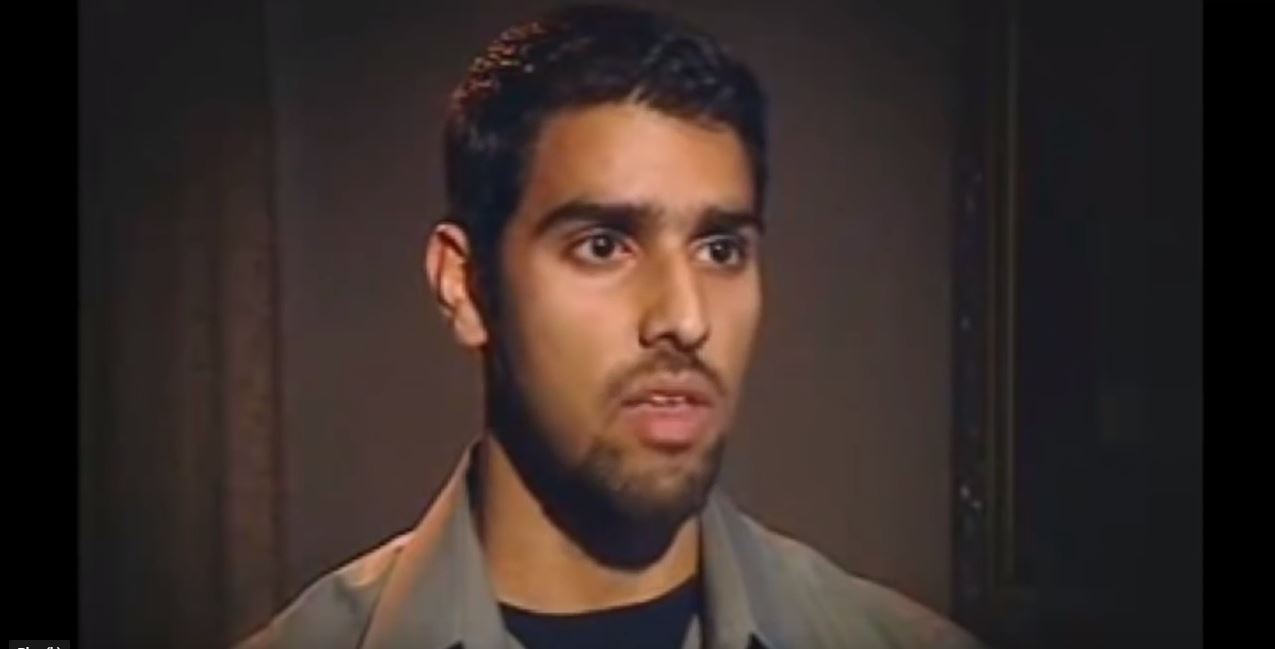
No one topic, perhaps, in all the world today has demanded more of the world’s attention than the happenings involving radical Islamic terrorists.  This article is not going to attack Muslims; neither is it going to defend them. Rather, if you will listen to each of the segments, it will help you to understand Islam and Christianity in comparison to each other from the viewpoint of a man raised a devout Muslim of Islamic missionary parents.

Continue reading “Islam & Christianity Through a Former Muslim’s Eyes”

The Idol of the Mind

Wise_Fools


I listened to a lecture on materialism yesterday. Materialism is a predominant worldview that informs many people who adopt a view of science that conflicts with faith. A materialist worldview sees no purposeful principles in nature, no designing influence, no God, no inherent moral or ethical laws and ultimately no meaning in life. The world, in essence, is arbitrary and capricious. It is “governed” by unguided processes and chance.

When I woke this morning, I began thinking about government. I am an attorney, and I represent local governmental bodies. One cardinal rule that applies to governmental bodies in the United States is this: they can never be arbitrary or capricious. Every law must have a rational basis and (at a minimum) an articulable reason for every law. If no rational basis exists for a law, it will be determined unconstitutional and void because it is arbitrary and capricious.

Ironic, is it not, that we would govern ourselves by such a standard and not believe in purpose, meaning, intelligent design, God or inherent ethical and moral laws. We govern ourselves by reason and design, but many of us believe we live in a world that has no reason or design.

Continue reading “The Idol of the Mind”

Revisiting King Henry VIII

Henry VIII King of England
Depositphotos Image ID: 5598102 Copyright: georgios

I recently saw Shakespeare’s King Henry VIII at the Chicago Shakespeare Theater. The play, Shakespeare’s last one performed at the Globe Theater approximately 400 years ago, was very well done. The story line is not as compelling as most of Shakespeare’s works, but the interrelationship of church and state theme struck a chord with me, albeit a discordant one.

King Henry the VIII was born into aristocracy. Young Henry was appointed Constable of Dover Castle at age two, Earl Marshal of England and Lord Lieutenant of Ireland at age three, inducted into the Order of the Bath soon after, and a day later he was made the Duke of York. A month or so after that, he was made the Warden of the Scottish Marches. He had the best education available from the best tutors, was fluent in Latin and French and was familiar with Italian.

For all of his privilege, he was not expected to become king. His brother, Arthur, Prince of Wales, was the first born and heir to the throne, but Arthur died only 20 months after marrying Catherine of Aragon (daughter of the King and Queen of Spain). Henry VIII was only 10. (Wikipedia)

Henry became the Duke of Cornwall and assumed other figurehead duties. His father, the King Henry VII, made sure young Henry was strictly supervised, did not appear in public and was insulated from real authority. Henry VII quickly made a treaty with the King of Spain that included the marriage of his daughter, Catherine, to young Henry – yes the widow of recently deceased brother Arthur. (Wikipedia)

From this point begins a history of manipulation, abuse of power, shameless excess and rationalizations twisting biblical and religious notions to serve the king’s self-interest. This is a story that parallels the “marriage” of State and Church. The two are intertwined in an adulterous affair of blasphemous indiscretions.

Continue reading “Revisiting King Henry VIII”

Calvin & Will

Lynn Johnson Calm Beach


Calvinism and Arminianism represent two diverging views of God’s relationship with man. The two views are summarized at the graceonline.com website and charted at the jesusfollowme.com website. In a nut shell, Calvinism represents the view that people are predestined to believe or not believe; and Arminianism represents the view that people have free will to believe or not to believe. I am oversimplifying the positions, of course.

As an aside, I am no theologian. I was one thesis short of a religion major in college (finished with an English Literature major). I became a believer in college in the midst of prevailing liberal thinking and unbelief. I say this only to acknowledge that I am not an expert, but I have a personal faith in Jesus Christ. I have no doubt that I was drawn by God and that salvation comes by grace through faith, not by anything I have done or will ever do.

The countervailing views get to the heart of the Christian faith. Does God choose man? Or does man choose God? Continue reading “Calvin & Will”