As often happens with me, the things I have been listening to and reading have converged in a meaningful way. Whether we attribute these “convergences” to God’s presence in our lives or dumb luck, pure happenstance, or “coincidence” is a matter of speculation and faith.
Whatever you want to call it, I take special notice of these things. I pay attention. I take them seriously, and they become signposts on my journey through life.
Perhaps, I am just being a good attorney. I am trained to find harmony and contrast in nuanced fact patterns and to apply legal principals to them. Finding harmonies and contrasts and applying spiritual principals to them operates in the same vein. That’s the way my mind works.
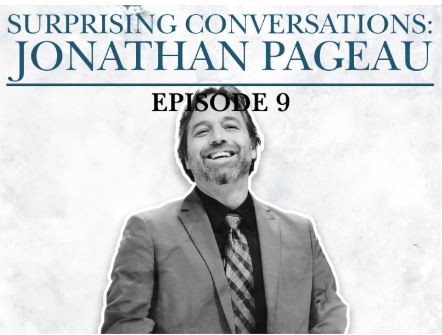
Yesterday, I listened to an interview of Jonathan Pageau by Justin Brierley. Pageau is an interesting character and a critical thinker. His recent conversation with Brierley inspires my writing today.
Raised in Montreal influenced by French Catholicism in a French Baptist Church community, Pageau has moved over to Eastern Orthodoxy by way of 4-year and 3-year stints in the Congo and Kenya. He has an undergraduate degree in postmodern art. He returned from Africa to obtain a degree in Orthodox Theology and Iconology from Sherbrooke University in Quebec. Along the way, Jonathan Pageau has become a cutting edge Christian thinker who is in demand as a speaker.
One line of discussion caught me ear in the interview with Justin Brierley that I want to explore. The subject touches on post-Enlightenment, neo-religious thinking and the proof of God.
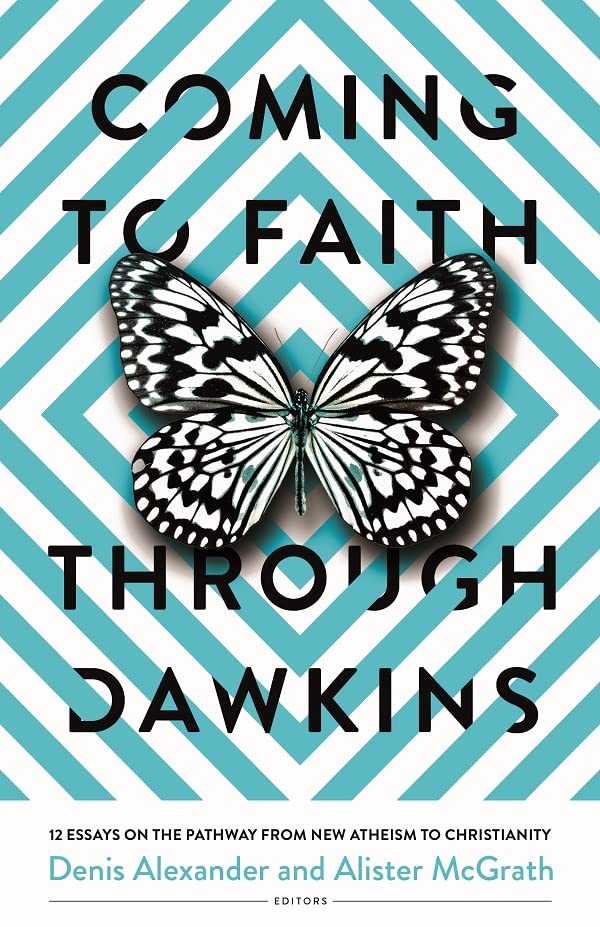
In case you don’t know, the book is a compilation of the stories of twelve people who were influenced by Richard Dawkins in their journeys from atheism to belief in the God of the Bible. Dawkins, of course, is one of the original (and most vocal) of the “new atheists. Thus, the title and subject matter of the book is ironic, intriguing, and not a little controversial.
O’Connor’s critique of the people whose stories are recounted in the book is that they seem to focus on their personal experiences. He says he is not convinced by the personal stories because they focus too much on personal experience and too little on syllogisms, rational arguments, and logical processes in their coming to faith.
This statement, as we shall see, is not a little ironic. O’Connor, though, expresses the modern western sensibility about personal experiences that are discounted and dismissed in favor of more objective evidence.
To be fair, many of the stories in the book recount the intellectual paths people trod on their way to faith, though the stories do not rigorously lay out the arguments, logic, and proofs. We shouldn’t be surprised by that, as the book focuses on peoples’ stories, and people’s stories are personal experiences.
Each of these journeyers from atheism to faith found problems, errors, bad philosophy, and nonsensical statements in Dawkins’s positions that led them to question his underlying assumptions (which were their underlying assumptions also). This, itself, was a rational process. The intellectual problems they saw in Dawkins’s positions made them skeptical of his skepticism.
O’Connor’s critique of the experiential nature of the stories might be discounted on that basis, but I want to focus on something else. This critique came up in the second of two segments. I want to go back to the first segment and contrast his critique with another statement O’Connor made to get to my point today. (See Coming to Faith through Richard Dawkins Part 1)
When asked what might convince him of the existence of God in the first segment, O’Connor said (without hesitation) that personal experience would be the most likely thing. Therefore, the critique O’Connor made in the second segment (complaining of the overly experiential nature of the stories) is ironic in light of O’Connor’s own admission that personal experience might be the one thing that could convince him that God exists (if he had such an experience).
This incongruity in O’Connor’s criticism about personal experience, and the value of personal experience in what we believe, is the thing I want to explore today. Atheists are not alone in being skeptical of personal experience. And with good reason. But personal experience is, nevertheless, vital to our human understanding of anything.
I’m listening to the Unbelievable? podcast replay of the discussion with Holly Ordway & Laura Miller: A convert and skeptic in Narnia. As always, I find the conversation on the Unbelievable! podcast intriguing and thought provoking, engaging people on opposite ends of the thought spectrum.
Holly Ordway and Laura Miller had similar experiences in reading the Chronicles of Narnia by CS Lewis. They read them as young children and loved the books purely for the fantasy. When they were older and discovered that the books had Christian themes and symbolism, they felt betrayed.
Laura Miller explained her sense of betrayal. The fantasy world she imagined and loved turned out to be something different than she thought. The discovery left her feeling like she was on the outside looking in.
As I think about it, the allure of the Chronicles of Narnia is exactly the sense of being on the inside, of discovering a world through the back of an ordinary wardrobe that is unknown and unseen by adults. As a child, perhaps nothing is as intriguing as a secret adventure unknown by your parents.
The experience of finding a whole new world quite by accident through an ordinary wardrobe that is unknown to the greater world, is a fantastical and intimate experience for a child. That intimacy, perhaps, is what gave way to Laura Miller’s feeling of betrayal.
The discovery of “hidden” Christian symbolism, allegory, and themes “planted” in the Chronicles of Narnia betrayed her sense of intimacy with the story. The unveiling of the “secret” behind the secret world she loved for its own sake, destroyed the world of her imagination. The secret that lured her in was a facade.
Holly Ordway felt the same betrayal at first. The secret behind the secret turned the story on its head. The secret, the real secret, was initially hidden from them. When the secret was exposed, they found a world they didn’t expect or know they had encountered.
For Miller, the experience was like losing innocence. In a moment, her childlike fantasy world was forever undone. The story wasn’t the same. The magic was lost.
For Holly Ordway the sense of betrayal gave way to curiosity – like the curiosity with which a young child might explore a hidden world found inside a wardrobe. It led her eventually out of atheism and into the world of faith in God. The secret behind the secret opened up a better, larger world to her.
The discussion was a good one. I am reminded of a series of dreams I had as a child. The first night found I could fly as I clutched Silly Putty in my hand. It was the most exhilarating dream I ever had. It seemed real, and the realness of it lingered after I woke.
I had the same dream the next night, but I became but I self-conscious. I didn’t know how it worked. I was afraid I couldn’t repeat the feat. I was still able to fly but not as long. My self-consciousness seemed to dispel the magic, leaving me with a dreaded sense of not knowing how the magic worked.
The next night I had the Silly Putty in my hand, but my wishful thinking didn’t work. Try as I might, to make myself fly. I could not recreate the magic, and I never had another dream of flying.
In the initial dream I had tapped into magic quite by accident, like wandering into a wardrobe that opened into an unknown world. But, I could not reproduce the magic because I didn’t have the knowledge of the magic. In Laura Miller’s case, the discovery of the secret behind the secret, the knowledge of the magic, undid the magic for her.
She says that the world of Narnia was no longer as she imagined it when she first read the Chronicles. That knowledge was the undoing of her own understanding of that world. Faced with the reality of it, it was no longer magic to her. Some adult turned the lights on, and the magic was gone.
I am putting some words into what she said, but I can feel her sense of loss. It was the same sense of loss I felt when I could no longer fly in my dreams and never dreamed of flying again.
While I feel her sense of loss, the similarities in our experiences end there. In my case, a lack knowledge about the magic flying was my undoing, or so I felt. In Laura Miller’s case, the knowledge of the Christianity behind the Chronicles of Narnia was her undoing, or so she felt.
She developed her own image of that fantasy world of Narnia, and discovering Christian themes in the Narnian fabric betrayed her own imagination. I read the Chronicles of Narnia in college as a very new Christian. The way those Christian themes played out for me in the pages of those books was entering the wardrobe inside the wardrobe. It was like black and white giving way to technicolor. The nuance and subtlety in which Lewis wove those themes into a beautiful story was inspiring. Images from those books live in my imagination still today and color my theology.
Laura Miller had a distasteful experience of religion as a child. She didn’t get into much detail, though she says she grew up Catholic. I grew up Catholic also. I don’t want to be unfair to Catholics or Catholicism, but I can relate to her negative feelings. (Holly Ordway, on the other hand, found the wardrobe inside the wardrobe, so to speak, and became a believer, and a Catholic.)
Laura Miller went on to claim that “believers” live in a reality that “operates on another plane that, if I am lucky, I can fall in a hole and be in the reality they live in.” She assumes that Christian faith is just another fantasy world – one that is foreign to her.
She says, “I just don’t experience it that way,” meaning life, I suppose, though I don’t want to put words in her mouth. I encourage you to go back and listen to the conversation yourself. The following statement, however, sets the stage for my thinking today, which is this:
“I don’t think I ever really feel in danger of accidentally believing… or stumbling into it.”
She goes onto to explain her interpretation of Lewis’s past: that “he found himself wanting to believe…. and then he was able to find the pathway… towards the thing that he wanted.” She goes on to say, “I don’t really feel that desire…, and it’s kind of impossible to accidentally, or sort of inadvertently, to come into a state of a desire to believe.” She concluded, “I have emerged from all kinds of literature from all kinds of faith without feeling [such a desire].”
Her comments about “accidentally believing,” and “stumbling into” faith,” and “a desire to believe,” as she puts it, is what inspires me to write today. It begs for comment.
Heaven is my throne, and the earth my footstool. What sort of house will you build for me? says the Lord, or what will be my resting place? Did not my hand make all these things?
Acts 7:49-50 CSB
I have thought and written about the fundamentalists and the atheists of the world who, ironically, approach the Bible in the same way. Both groups of people read the Bible in a wooden, inflexible, literal kind of way. (See Sam Harris Podcast with Bart Ehrman – Part 2 – Wooden Fundamentalism)
This passage above gets me thinking about these things again. The passage quoted above is from Steven’s address to the Jewish leaders who had him stoned after calling them stiff-necked like their ancestors in the desert (among other things).
Steven recited the Jewish history to them, including the Ark of the Covenant that was created to hold the Ten Commandments and the Tent of Meeting that was carried through the desert and set up where they stopped as a place for God’s “presence” to “dwell” among them. The Tabernacle with the Ark of the Covenant became the inner sanctum of the Tent of Meeting. These structures the people carried with them became the place they would meet with God.
David desired to build God a home, a permanent place for the Ark of the Covenant and Tabernacle, and Solomon accomplished David’s dream. David knew, however, that God does not live in a temple made by human hands. Solomon, David’s son who built the Temple, acknowledged the same thing when he dedicated the Temple:
“But will God really dwell on earth? The heavens, even the highest heaven, cannot contain you. How much less this temple I have built!
1 Kings 8:27
They understood that the Tabernacle, the Tent of Meeting, and the Temple were symbolic. These physical structures and the activity organized around them and in them were meant to point to a metaphysical reality of much greater substance.
It’s ironic that David, a man after God’s own heart, knew these things, but the people of God generally often did not. David was a man after God’s own heart, but the Israelites on the whole were often stiff-necked, as Stephen said.
I find it ironic that people who try to interpret and apply the Bible in the most literal way fall on opposite ends of the spectrum. Fundamentalists and atheists both tend to interpret the Bible literally. They are the two sides of the same interpretive coin. The only difference is that one side believes every part of it, and the other side believes none of it.
At the end of the passage quoted above, the Lord poses the rhetorical question, “Did not my hand make all of these things?”
Does anyone literally believe that God’s hand made the universe? I suppose we should ask, also, “Does God have only one hand?”
I would venture to guess that everyone understands this phrase to be allegorical. Yet, there are so many things in the Bible that people try to take and apply literally that are, perhaps, not as obviously allegorical.
I’ve heard the counter statement that we cannot pick and choose the things we believe out of the Bible. We must believe every word of it, or reject all of it. This is the fundamentalist/literalist approach – all or nothing. Never mind that a verse like the one quoted above is clearly not intended to be taken literally!
Not to pick on “fundamentalists” (whatever that term might mean), but those people we tend to label with that term tend to push a very literal interpretation of Scripture. They, in a sense, double-down on the “facts” stated in the Bible and attempt to believe “everything”. Many atheists dig in on the same literal way of interpreting the Bible, but they believe none of it. They both approach the Bible the same way, but one believes 100% and the other believes 0%.
A listener to the Unbelievable! podcast wrote in to Christian Premiere Radio in the UK and shared his faith journey. He was invited in for an interview. His story is a modern tale.
Jim Thring grew up in a non-religious home. He didn’t know much about religion, which is a typical experience for people growing up in the increasingly post-Christian world that characterizes the UK in the 21st Century.
He became a Christian in college. It wasn’t something he set out to do. He didn’t go seeking for truth. Friends of his introduced him to Christianity. They invited him to believe, and he accepted the invitation.
Over the years, though, his faith waned. It became shallow and lifeless. He eventually walked away and became an atheist. He says his atheism become harder core when he came across the New Atheists and began reading their books and attending their lectures.
He was an atheist for almost a decade. He joined the British Humanist Association. He “rode the rhetoric” of people like Christopher Hichens and Richard Dawkins to justify to himself intellectually that he had made a sound decision.
As time went on, though, he began to question the rhetoric. Some of it seemed shallow. Many atheists were putting Christians down as “people who weren’t thinkers or rational at all”. It seemed as if they were simply against whatever Christians said. If Christians believed something, they were against it.
He remembered people he knew from years earlier who were “a lot smarter” than him who were still Christians. He began to soften in his atheism. He began to realize that reason, logic and rational thinking are tools available to more people than atheists, and they don’t inexorably lead to atheism.
He began to realize that a person can dismiss anything. Dogmatic people dismiss things out of hand, and atheists can be as dogmatic as believers.
Darren Brown talks about the “power of belief” as a stimulant. Jim would listen to that and think to himself, “Yeah! That’s what belief is, and now I am free from all that.” As time went on, however, he began to see that his atheism had a powerful stimulant behind it as well.
The maxim that “for everything there is a material explanation” is a very powerful belief. “It means that it doesn’t matter whatever evidence someone puts in front of you, it doesn’t matter what arguments, however well-constructed they might be, or how valid they are, you’ve got a reason to dismiss them.”
He began to be honest about where his atheism lay. Thus, he gradually began going to church again with his wife and spending time with her church friends. He began to take another look at Christian arguments.
At the same time, he sought to address the issues he had with origins, evolution and young earth. He wanted to take a different look at those issues from a different perspective, but he didn’t want a source that was just a “Christian institute”.
He came across John Lennox, the professor of Mathematics at Oxford, and read his book called Gunning for God: How the New Atheists are Missing the Mark. Lennox put those issues in perspective for Jim, but he also addressed the evidence that Jim thought were “knockdown arguments” against the Christian Faith. Lennox turned them around and applied them to atheism.
Jim’s deconstructed faith began to be rebuilt. Jim’s journey is an interesting one. To hear the whole story, I have embedded the interview below:









 Navigating by Faith