An Intriguing Interview with Dr. Hugh Ross

When we try to rely on science, alone, to answer the big questions, we can’t do it without sneaking philosophy into the equation.


In this age in which fake news seems to dominate the public domain, how do we know what is really true? How can we trust any news? That is a legitimate question today, one that people in my generation didn’t ask as often as we have to ask now.

Skepticism that was once the esoteric tool of elite, fringe intellectuals is now, perhaps, as often used as a hammer in the intellectual toolkit of the common person. What years of intellectualism was not able to accomplish has been achieved in less than a generation by the constant barrage of biased and untrustworthy “news outlets” in the Internet age.

Such an atmosphere of skepticism might cause despair of ever knowing, or being able to know, what is really true. Perhaps, the only thing we can trust is skepticism itself. That is the forlorn cry of a post-modern age.

Many people have retreated to science and what can be known about the world that we observe with our five senses. Science seems like the only protector of truth in a world that can’t be trusted without concrete evidence.

Some people even hold to a position that science is the only way we can know the world: the five senses are the only way to know truth. These people discount psychology, sociology and “soft” sciences, and they largely dismiss philosophy (and theology most of all).

Some people even take the position that science is the only way of knowing truth, and philosophy, therefore, is no longer needed or even useful (because it can’t be trusted).

At that moment, however, if we are paying attention at all, we realize that the person who says this is actually asserting a philosophical position! The scientist who rejects philosophy on this basis has cut off the limb he hangs on, and he doesn’t even realize it. Not even science, then, is the safe harbor we wish it was.

Frankly, mathematics might be the only certain way of knowing things, if the truth be told, but mathematics doesn’t tell us anything about the most important questions that people ask. Why are we here? Where does life come from? Is there purpose to life?

We try to rely on science, alone, to answer these big questions, but we can’t do that without sneaking philosophy (or theology, heaven forbid) into the equation. What we observe with our five senses can’t answer those questions without the help of philosophy and theology.

That leaves us with the more difficult talk of synthesizing and harmonizing all the ways we analyze truth and reality, including science, psychology, sociology, philosophy, theology, etc. It would be more convenient and may seem like an easier task to eliminate one or more of those disciplines from the mix, but we would be missing nuances of truth and reality in the process.

In the end, the best we can do is strive for honesty, integrity, objectivity, knowledge, understanding and humility in our efforts to understand the nature of reality and truth. Humility is important because it recognizes and factors into the equation the fact that we are finite creates with limited perspective and capacity.

With that introduction, I am providing a link to an interview with Dr. Hugh Ross who has spent his life trying to synthesize and harmonize what he knows about science (which is a lot) with philosophy and theology. I like him because of his humility and commitment to science, logic and understanding.

Continue reading “An Intriguing Interview with Dr. Hugh Ross”

Significance in the Way Christianity Spreads

Islam rivals Christianity in its “travel” around the world. But the spread of Islam looked different than the spread of Christianity.

Os Guinness talks about differences between Christianity and other religions in an interview with Justin Brierley a few years ago. He made a statement that Christianity is the only “traveling religion”.

He observed that Hinduism began in India and remains primarily in India. Buddhism began in India and remains primarily in India and Eastern Asia. Islam began in the Middle East and remains primarily in the Middle East. Christianity, however, began in the Middle East. Then it moved to Europe; and then it moved to North America; and now Christianity is growing fastest in Africa and Latin America and Asia.

While I think Guinness overstates the case little bit, he got me thinking about the how the major world religions have spread. For instance, Islam, which rivals Christianity in numbers, grew very rapidly during the life and immediately after the death of Muhammad. It spread throughout the centuries into Europe and down into Africa and more recently across Southern Asia.

Islam rivals Christianity in its “travel” around the world, but the spread of Islam happened very differently than the spread of Christianity. This is the significant fact, in my opinion – not so much that Christianity has traveled through all the world like no other religion. (Though it has.)

Continue reading “Significance in the Way Christianity Spreads”

Remembering Palmyra: a Call to Enter Through the Narrow Gate

The destruction of the ancient ruin of Palmyra is a war crime, but we risk a greater loss.

The Palmyran Valley and Oasis
The Palmyran Valley and Oasis by Steve Murray

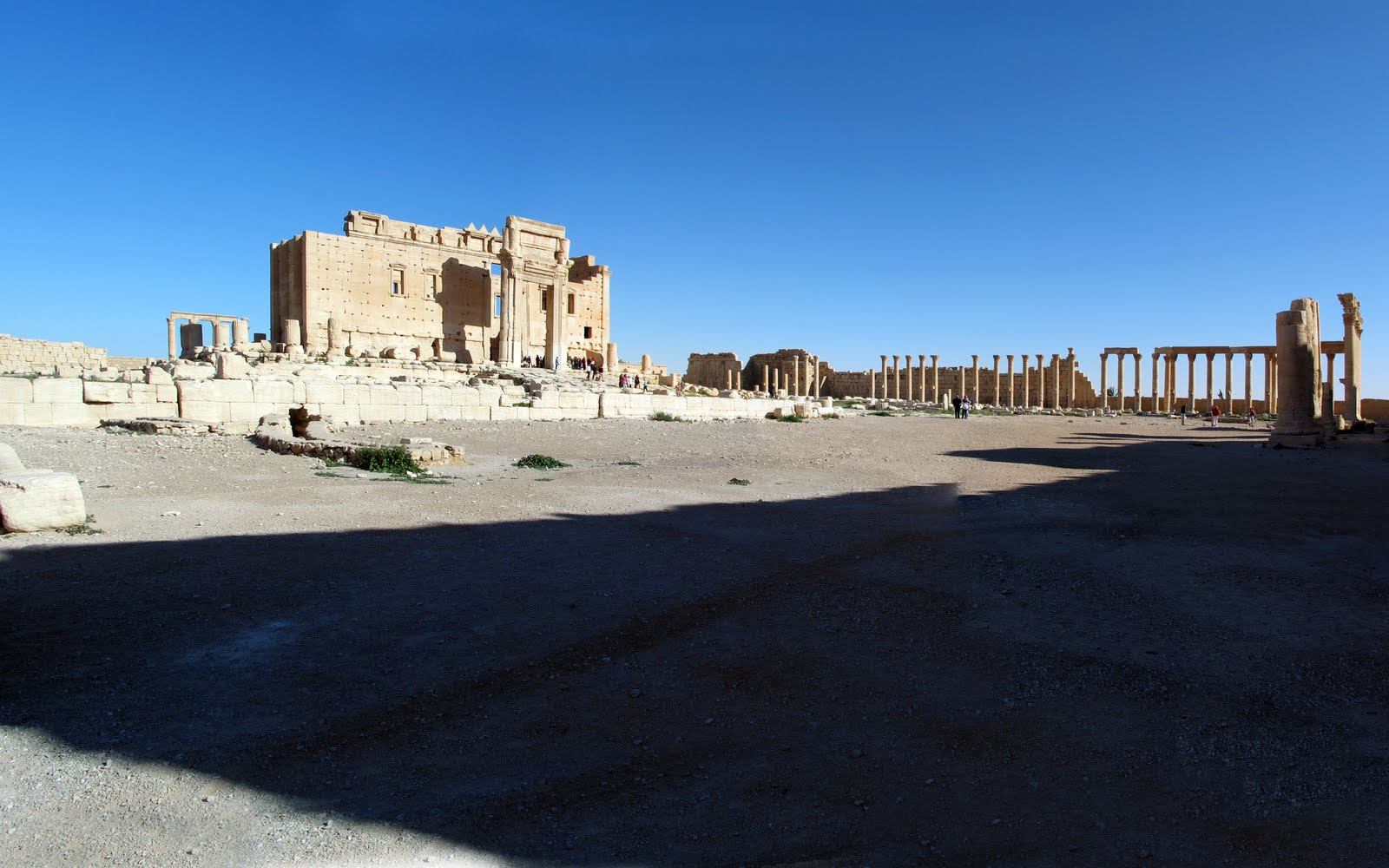
Sometimes things we read in the news hit close to home, even from halfway around the world in an ancient, foreign land. A friend from college has a personal connection to the ruins of the temple in the Palmyra Valley of Syria. He visited there and took the photos I have published in this blog with his permission. He describes the Valley, sitting about 125 miles north-east of Damascus, Syria, in the desert, as it appears above, “a welcome relief after weeks, months on the road” for the people traveling the Silk Road from the east.

The “peaceful place… filled with memories” was no longer peaceful and filled with pleasant memories when I began this piece. I started this blog article years ago, when ISIS was at it’s public height. I don’t know how things stand today. The news has moved on, leaving whatever ravages that continue and desolation that remains out of the pubic eye.

“‘Among the great cities of antiquity, Palmyra is comparable only to Petra in Jordan, Angkor Wat in Cambodia, and the Athenian Acropolis in Greece,’ argues GW Bowersock, professor emeritus of ancient history at the Institute for Advanced Study in Princeton.””(quoted in Isis’s Destruction Of Palmyra: ‘The Heart Has Been Ripped Out of the City’ by Stuart Jeffries in the Guardian Sept. 2, 2015)

In light of fond reminiscences of a peaceful time, relationships developed between disparate brothers and sisters who shared good will and the historic significance of this desert oasis along the ancient Silk Road, the utter sadness and ache of the loss of the ruins is deep and vacuous. And more so now that my part of world has largely forgotten the devastation that exploded in front of the world’s eyes just a few short years ago.

Palmyra’s Baalshamin temple ‘blown up by IS’, read the headlines in Britain. Another British headline grimly pronounced, ISIS behead archaeologist who wouldn’t give up priceless artifacts for terrorists to loot and destroy.

In the Atlantic, the headline read with finality, An Ancient Temple in Palmyra Is Destroyed. “Reports of the site’s destruction come just days after the Islamic State killed Khaled Asaad, an 82-year-old Syrian expert on Palmyra who refused to divulge the location of artifacts despised by the militant group [and coveted for the booty they would bring]. Asaad had run Palmyra’s antiquities department for 50 years.”

“The taking of the historic city of Palmyra by Islamic State represents ‘the fall of a civilisation’, according to Syria’s antiquities chief Maamoun Abdulkarim. Speaking to Reuters today, he said: ‘Human, civilized society has lost the battle against barbarism. I have lost all hope.’” (Mark Woods Christian Today Contributing Editor 21 May 2015)

Temple at Palmyra
Temple at Palmyra by Steve Murray

Barbaric, incomprehensible, brutal, evil, criminal, atrocity …. Words fall short. No regard for history, culture, art, life …. The ISIS militants did not even have regard for their own lives, and the wrought unspeakable destruction and the taking of precious life in the Venice of the Sands.

Christians, humanists, peaceful Muslims, people of all stripes condemn what ISIS has done. The destruction of the ancient ruin of Palmyra is a war crime. The killing of Khaled al-Assad, the curator and protector of the Palmyran antiquities, is an atrocity of the worst order. He gave his life to protect those beautiful, ancient ruins…, but the ruins were destroyed with him. The various reactions to the crime and atrocity are understandable and expected.

The worldwide reports emphasized a common theme: the harsh clash of religious fundamentalism with civilized society is characterized by destruction and violence. “ISIS did not merely blast apart old stones—it attacked the very foundations of pluralistic society.” (The Rubble of Palmyra by Leon Wieseltier in the Atlantic Sept. 4, 2015). Indeed, ISIS displayed the worst of religion – the worst of humanity.

The destruction of ancient historical artifacts and buildings is nothing new, of course.

“In this iconoclasm – literally, the destruction of religious icons and other images or monuments for religious or political motives – Isis has its place in a rich history of destruction. Moses reduced the Golden Calf, made from Israelites’ golden earrings, to dust. Centuries later, the 93 carved relief sculptures of the life and miracles of the Virgin Mary in Ely Cathedral’s lady chapel, were hacked off during the Reformation. In between Moses and the mutilation of Ely was something called the Iconoclastic controversy in the history of the Eastern or Byzantine Christian church. Between AD 726 and 843, the then emperors of Byzantium believed icons were not only a reversion to the pagan idolatry of the ancient Greeks and Romans, but that their existence was the chief obstacle to the conversion to Christianity of Jews and Muslims, to both of whom the image was anathema. Iconoclasm, then, is by no means only an Islamic thing.” (quoted in Isis’s Destruction Of Palmyra: ‘The Heart Has Been Ripped Out of the City’ by Stuart Jeffries in the Guardian Sept. 2, 2015)

www.yourmiddleeast.com 660 x 390
www.yourmiddleeast.com

As we reel in sadness and righteous anger (something the irreligious seem to have learned well from the religious in recent times) over the destruction of such significant ancient preserves, there is a greater loss.  Ross Burns, adjunct professor of ancient history at Macquarie University in Sydney, Australia, whose life is devoted to the preservation, study and appreciation of antiquity, appropriately recognized,

“[T]here are more important considerations in Syria in 2015 than the preservation of ancient monuments. ‘The physical damage to monuments has to be assessed against the scale of the human tragedy….’” (Id.)

Continue reading “Remembering Palmyra: a Call to Enter Through the Narrow Gate”

The Roots of Modern Ethics in the Ancient Near East

Of the origins of monotheistic religion and ethics.

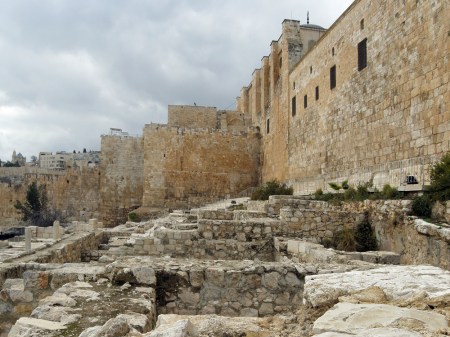
Jerusalem: The Temple Mount from the time of the Second Temple

When I was in college, the first class I took was World Religions. Though I graduated with an English Literature major, I also had enough credits to be a Religion major. I didn’t need the dual major. I only took the religion classes because they interested me.

I also became a believing Christian during my college years. It was a transition that took place between that World Religion class and the summer between Sophomore and Junior years. It’s a long story that I might tell in detail some time, but the point for now is that I did a lot of reading and thinking about these things in those years and in the decades since. It doesn’t make me a theologian, but I have more than a passing interest.

Early on I learned that the creation story and flood story in Genesis, among other things, have counterparts in other religions, including other religions in the same area of the world – the Ancient Near East. Phoenicians, Assyrians, Persians, and other people groups had similar myths that have been uncovered from that general time period.

I learned that Zoroastrianism shared attributes similar to the ancient Hebraic view of the world, including the idea a singular creator God, a dualistic cosmology of good and evil, the ultimate destruction of evil, judgment after death, etc. The scholarly understanding when I was in college was that Zoroastrianism predated Hebraic thought and influenced it.

It occurred to me at the time, not having any reason to doubt what I was taught, that Abraham may have been particularly open to his encounter with God if, indeed, he had lived in an area of the world and in a time in which there was this kind of influence. It made some sense. He was the right guy in the right place with the right influences setting the table for an encounter with God, the Creator of the world. Perhaps, Abraham brought the influence of monotheistic Zoroastrians into the pagan, polytheistic world of Canaan.

Recently I did some research on Zoroastrianism. Wikipedia acknowledges that Zoroastrianism has “possible roots dating back to the second millennium BC”, though the “recorded history” of Zoroastrianism dates back only to the 5th Century BC. (Wikipedia). The conjecture that Zoroastrianism dates back further to the second millennium BC is has no present support in the historical record.

If we date the accounts of Abraham and his descendants according the biblical chronology and references, that history goes far back into the second millennium BC, but the consensus of modern archaeologists and theologians reject that dating in favor of first millennium BC dating. (See Wikipedia, for example) Modern scholars don’t take the Bible at face value. In fact, they presumptively dismiss the Bible as historical record.

Scholarly views are not universal on this issue, of course. Not by a long shot. Modern archaeological and written evidence exists to suggest that the modern consensus is wrong about the timeline for the life of Moses, the Exodus and other things. (See for instance Patterns of Evidence: The Moses Controversy) The Patterns of Evidence theory is that historians and archaeologists who assume a particular timeline for certain events are not apt to see the evidence for those events if they occurred in a different timeline.

The Patterns of Evidence thesis is that evidence for the events described in the biblical narrative is there if we use the right timeline and look for them in the right time periods. Specifically, the biblical accounts of Moses, the Exodus, and entry into the land of Canaan are apparent in the archaeological record and historical data on the biblical timeline (second millennium BC), but they are not evident in the first millennium timeline applied by modern, skeptical scholars.

Certain archaeological finds, like the Ebla Tablets, also raise questions about the modern scholarly consensus. The importance of “looking” in the right places according to the right timelines is explored in Timing the Walls of Jericho.

Back to Abraham, though. He was reportedly from the area of Ur (in modern southwest Iraq), which is quite a distance from the area of Canaan (later Judea) where he ended up – about 1600 miles in fact. In Ur, he may have come in contact with Zoroastrians and similar influences. That idea intrigued me in college, and it still does. So I revisit that thought journey again today.

Continue reading “The Roots of Modern Ethics in the Ancient Near East”

To Those Who Don’t Believe in Religion

Some thoughts from a person whose friends probably consider religious who bristles at the word, religion.


A friend of mine commented recently, “I don’t believe in religion.” I agreed with him, responding, “Religion is man-made.” But part of me flinched a little bit at my own comment.

Religion is what I left when I left the Catholic Church, but religion is what I studied in college. A World Religion class led me forward on a journey that ended in my commitment to Jesus as the Savior and Lord of my life, terminology I realize that smacks of religion.

That commitment made in a particular place and time began a life-long journey of faith, of attempting to know, understand and follow a living God. Not religion, but relationship with God, the creator of heaven and earth Who “knit me together” in my mother’s womb, Who can number the hairs on my head, Who knows the thoughts and intents of my heart.

I bristle at the word, religion, but I realize my friends probably consider me religious. Ironic isn’t it.

These thoughts are triggered by reading Colossians 2:8:

“See to it that no one takes you captive by philosophy and empty deceit, according to human tradition, according to the elemental spirits of the world, and not according to Christ.”

I realize this may seem like so much religious mumbo jumbo. All the more reason to unpack it if I can.

Continue reading “To Those Who Don’t Believe in Religion”