The Best Explanation for a Finite Universe (or an Infinite Universe)

What if new evidence calls into question that the universe had a beginning?


The best scientific data and analysis that we have today leads to the conclusion that the universe we live in began a finite time ago. That understanding, however, was far from evident just 100 years ago. In fact, most scientists, then, believed the universe always existed (the Steady State Theory).

Evidence that suggested to the contrary, that the universe is expanding (and therefore had a beginning “point”), was not received enthusiastically. Even the people whose discoveries led to that conclusion resisted it. Einstein famously added a cosmological constant to his equations on general relativity to avoid that conclusion.

Such was the commitment in the scientific community to the “Steady State” theory: the theory that the universe always existed infinitely in the past.

Indeed, that evidence unfolded like a “big bang” that blew apart the previous scientific consensus. Thus, the “Big Bang Theory” theory of an expanding universe from a “point” of beginning was coined, perhaps, more for the effect it had on the scientific community than as a descriptor of the occurrence. (See Is the Big Bang finally Over?)

The evidence as it has unfolded since the discovery of the red shift on stars farther away from us (the first big clue that our universe is expanding) has continued to strengthen the so-called Big Bang Theory. The design of the James Webb Telescope is only the latest in a long line of evidence vindicating the “Big Bang Theory” that dramatically changed the paradigm of physics and cosmology.

Though the evidence continues to substantiate the view that our universe is expanding (and therefore had a beginning a finite time ago), I have often been aware that science is provisional. Just when we think we know something, something else comes along to change the paradigm. The recent history of physics and cosmology is a case in point.

A primary reason that the Big Bang Theory landed so hard in the scientific community is because it challenged more than the accepted science. It challenged the prevalent worldview of the scientific community since the Enlightenment.

Since the days of Darwin (and even before Darwin), people in the scientific community had been advocating for separating science from religion. When Darwin proposed evolutionary theory (natural “selection” acting on random changes), the scientific community was more than ready to use that “key” to unlock what they viewed as the “shackles” of religion.

The Steady State Theory, that the universe always existed infinitely in the past, was the natural assumption of scientists based on a worldview with no God and no religion at the center of it. Life was good for the proponents of naturalistic materialism until the specter of a beginning to our universe (and the real possibility of a “Beginner”).

That many people have managed to keep that specter at bay despite the strong evidence that gets stronger as time goes on that our universe is expanding is a testament to the faith some people have in naturalistic materialism. Never since before the Enlightenment, however, has science been so harmonious with the Bible and belief in God.

Even so, I have often wondered: what if the paradigm shifts again? What if new evidence is discovered to upset the apple cart again? What if that new evidence begins to cut against the grain of the Big Bang Theory and reinvigorates the Static State Theory?

What if the new evidence shows what Einstein and most other cosmologists and physicists believed 100 years ago? That our universe is past eternal; that it is not expanding after all; or that the earth is expanding, but that the expansion is not proof of a “singularity” (beginning)?

Indeed, this is what many preeminent scientists have been trying to prove since the scientific world conceded the evidence of the apparent expansion and singularity of our universe.

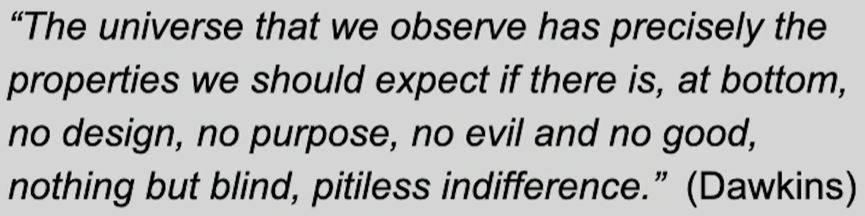
Would Christians, like myself, and other theists simply cling to faith without evidence? Would we cling to our faith “in the teeth of the evidence”, as Richard Dawkins has charged?

I wasn’t sure before today. As I was listening to Return of the God Hypothesis by Stephen C. Meyer on Audible, an answer to my question began to materialize. I will attempt to summarize it.

Continue reading “The Best Explanation for a Finite Universe (or an Infinite Universe)”

Joe Rogan Interviews Stephen Meyer on Intelligent Design

Joe Rogan tackles intelligent design


I am going to do something unusual (for me) today. I have listened to long podcasts and summarized them or focused on particular aspects of them. I have also read books and done the same.

Today, I am going to link to a long podcast without much comment. the podcast is the Joe Rogan Experience, the most poplar podcast available today. I am not really a Joe Rogan fan. I don’t often listen to his podcast. I am not sure I have ever listened to an entire episode, so this is a first for me.

Joe Rogan is unquestionably a curious and surprisingly intelligent interviewer. He can say some stupid things, but then (I have to confess) so can I. I suppose that combination of “common guy” persona, willingness to ask the “stupid” questions and challenge the status quo, and a modicum of intelligence is why he is so popular.

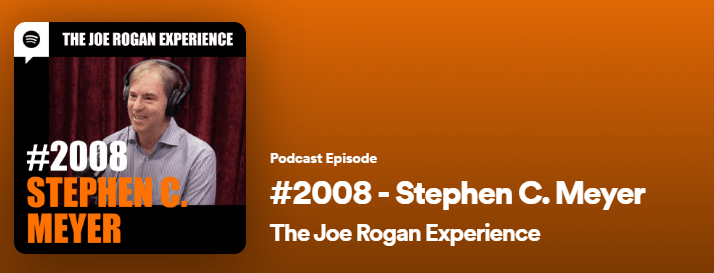
In the episode I am embedding below, Joe Rogan interviews Stephen C. Meyer, a “proponent” of “intelligent design”. The interview is particularly interesting because Joe Rogan tends toward people like Sam Harris, and Bart Erhman, and other materialists, atheists, and skeptics of religion.

Rogan isn’t just a Cretan (to use an old biblical word) as his popular persona might suggest. Though he clearly favors materialist explanations of the world, he asks good questions and gives his guests opportunity to explore contrary points of view. This is the case in the embedded interview that lasts for over 3 hours.

I am still working my way through it, but I have heard enough at the 50 minute mark to consider it worthy of putting it out there. Maybe I will come back to summarize or focus on particular aspects of the conversation. If you have listened to it (or are listening to it as I am), feel free to post your own comments.

Stephen Meyer is the author of the New York Times bestseller Darwin’s Doubt: The Explosive Origin of Animal Life and the Case for Intelligent Design and Times (of London) Literary Supplement Book of the Year Signature in the Cell: DNA and the Evidence for Intelligent Design. His many other publications include contributions to, and the editing of, the peer-reviewed volume Darwinism, Design and Public Education (Michigan State University Press, 2004) and the innovative textbook Explore Evolution (Hill House Publishers, 2007). His most recent book, Return of the God Hypothesis: Three Scientific Discoveries That Reveal the Mind Behind the Universe, is generating much discussion, like the interview embedded in this blog.

Meyer graduated from Whitworth College in Spokane, Washington, in 1981 with a degree in physics and earth science. He worked as a geophysicist before returning to academia at Cambridge University, to earn an M.Phil. in 1987 and a Ph.D. in 1991 in the Philosophy of Science. His doctoral thesis was titled “Of Clues and Causes: A Methodological Interpretation of Origin-of-Life Research.”

Thoughts on Perspective, Science and Faith

As finite beings, We have no choice put to adopt our fundamental principles on faith. We do not have the requisite perspective to have more certainty than that.

I have two blogs I maintain currently: Perspective and Navigating by Faith. Perspective and faith loosely characterize my journey over many years: trying to find perspective and understanding the value, the necessity, and the integrity of a faith grounded in reality, both observable and unseen.

Many people believe that faith is the opposite of fact and at odds with science and reason. I strongly disagree. I have come to believe that faith is inescapable for finite beings – both religious ones and non-religious ones alike – and faith lies at the core of everything we believe to be true.

I was listening to a podcast discussion recently when one of the participants said something like this: When we approach any evidence, we approach it with a perspective. This is a non-pejorative way of saying that we are all “biased”.

As finite beings we are all necessarily “biased” by our own perspective, our own experiences, our own knowledge, understanding and ability to grasp, synthesize and categorize what we know and understand. Our perspective is influenced and filtered through our location in the world, our place in the culture and society in which we live, the history that we remember, and too many other things to summarize them adequately in a short blog article.

The discussion in the podcast that prompts this writing focused briefly on the fact that we all bring assumptions to the table when we consider anything. Those assumptions, however intentionally or surreptitiously developed, are the bedrock of each of our worldviews. They are the foundations on which we stand. They are the filters through which we see the world.

Those assumptions are developed, to a greater or lesser degree, by some combination of our external influences, our internal leanings and reactions to those external influences, and our consciously or unconsciously chosen compass points we use to guide ourselves in sorting out the information we encounter.

At the most basic level, those assumptions are axiomatic. They are truths we take for granted. We cannot prove them, and we rarely question them without crisis. We are fortunate if they hold us in good stead, if they are well-enough grounded in reality and fact to be of benefit to us in our dealings with the circumstances of our lives.

If those basic assumptions are not well considered and well-grounded, we can be blown about by every wind. If they are not based in fact and an accurate grasp of the nuance of reality, they can prove little consolation or comfort in times of crisis. If they are not well-anchored in timeless truth, they can leave us adrift when we need to count on them most.

The unique perspectives in light of which finite beings approach any evidence is necessarily limited and biased because we are limited and finite beings. At best, we can only hope to orientate ourselves in the direction of truth. We don’t define truth. We don’t establish truth. We don’t’ generate truth.

This is necessarily the case with finite beings who can only approach reality from a particular location at a particular time in the context of a particular cultural, historical, and philosophical point of view.

If I was omniscient and all seeing, I could have ultimate confidence in my perspective. My perspective would be objective and factual. My perspective would be the measure of all reality.

But no human being can validly make that claim (though we may and often do think and act like we can). In all honesty and humility, we must each admit that we come at evidence from a perspective with bias born out of our own experience, cultural context, limited knowledge and limited understanding.

We don’t know what we don’t know.

As a necessary corollary to these things, which I believe with all the certainty that I can possibly ascribe to these things, we are creatures of faith. All of us. We have no choice put to adopt our fundamental principles on faith. We do not have the requisite perspective to have more certainty than that.

My conclusion in this regard is based on fact (that humans are finite beings) and “logic” or philosophy, which reasons from the fact that we are finite to conclude that our perspective is limited thereby. Because our perspective is limited, we must rely on faith in making our conclusions which, themselves, derive from the fundamental assumptions we also take on faith. We can’t escape these limitations because they are inherent in finite creatures such as ourselves.

Some people even in this modern age, however, have boldly claimed that science is the study of all the reality that exists. Further, they say, therefore, we no longer need philosophy or theology. (I have heard Neil deGrasse Tyson say this very thing.) I am going to push back on that idea in this blog post.

Continue reading “Thoughts on Perspective, Science and Faith”

Christianity’s Ties to the Scientific Method

Christianity was the fertile soil in which scientific method and modern science began to grow


I have heard a number of people assert that Christianity gave birth to the scientific method. Perhaps, the first time I heard that claim was from John Lennox, the famous Oxford University professor of mathematics. I was intrigued, but I didn’t take the time to research his claim at the time.

I have heard the claim repeated multiple times, most recently by Dr. Michael Guillen the astrophysicist, former Harvard professor and TV personality. In fact, he devoted a podcast to the subject (embedded below), so I figured it was time to learn more.

I started with Wikipedia, which has a page on scientific method. Wikipedia begins with Aristotle and focuses on rationalism as the basis for scientific method.

Properly speaking, rationalism is not a method. It is a philosophy, a way to approach the world. Rationalism and Aristotle, though, seem to have led the way to the development of the scientific method.

Aristotle’s inductive-deductive method that depended on axiomatic truths and the “self-evident concepts” developed by Epicurus was an early conception of the way to do science. It was jettisoned, however, for something more like the modern scientific method beginning around the 16th Century. Perhaps, this is why Guillen doesn’t mention Aristotle, except in passing.

After those early pioneers, Wikipedia references some great Muslim thinkers who were influenced by Aristotle (including Avicenna (Ibn Sina) and Averroes (Abū l-Walīd Muḥammad Ibn ʾAḥmad Ibn Rušd)). They placed “greater emphasis on combining theory with practice”, focusing on “the use of experiment as a source of knowledge”. Guillen starts his history of scientific method with these early “flashes” of scientific method in the Muslim world.

These men of the Islamic Golden Age pioneered a form of scientific method, but the inertia did not continue. Moses ben Maimon (Maimonides), the great Jewish theologian, physician, and astronomer, developed a similar emphasis on evidence. He urged “that man should believe only what can be supported either by rational proof, by the evidence of the senses, or by trustworthy authority”. He foreshadowed a future scientific posture, but his prescience also did compel further advancement at the time.

Dr. Guillen credits Robert Grosseteste and Roger Bacon with the formation of the first actual principles of scientific method. Their ideas “caught fire” in Christian Europe from the tinder of academies that began just after the turn of the first millennium, igniting a blaze that would fuel scientific inquiry and endeavor for centuries to come.

“Concluding from particular observations into a universal law, and then back again, from universal laws to prediction of particulars”, Grosseteste emphasized confirmation “through experimentation to verify the principles” in both directions.

Roger Bacon, Grosseteste’s pupil, “described a repeating cycle of observation, hypothesis, experimentation, and a need for independent verification”, including the recording of the way experiments were conducted in precise detail so that outcomes could be replicated independently by others. Bacon’s methodology lead to the modern emphasis on peer-review in science, says Guillen.

Wikipedia mentions Francis Bacon and Descartes. Bacon and Descartes emphasized the importance of skepticism and rigid experimentation, expressly rejecting Aristotle’s dependence on first principles (axioms). Guillen, however, glosses over Descartes to get to Galileo Galilei and Isaac Newton.

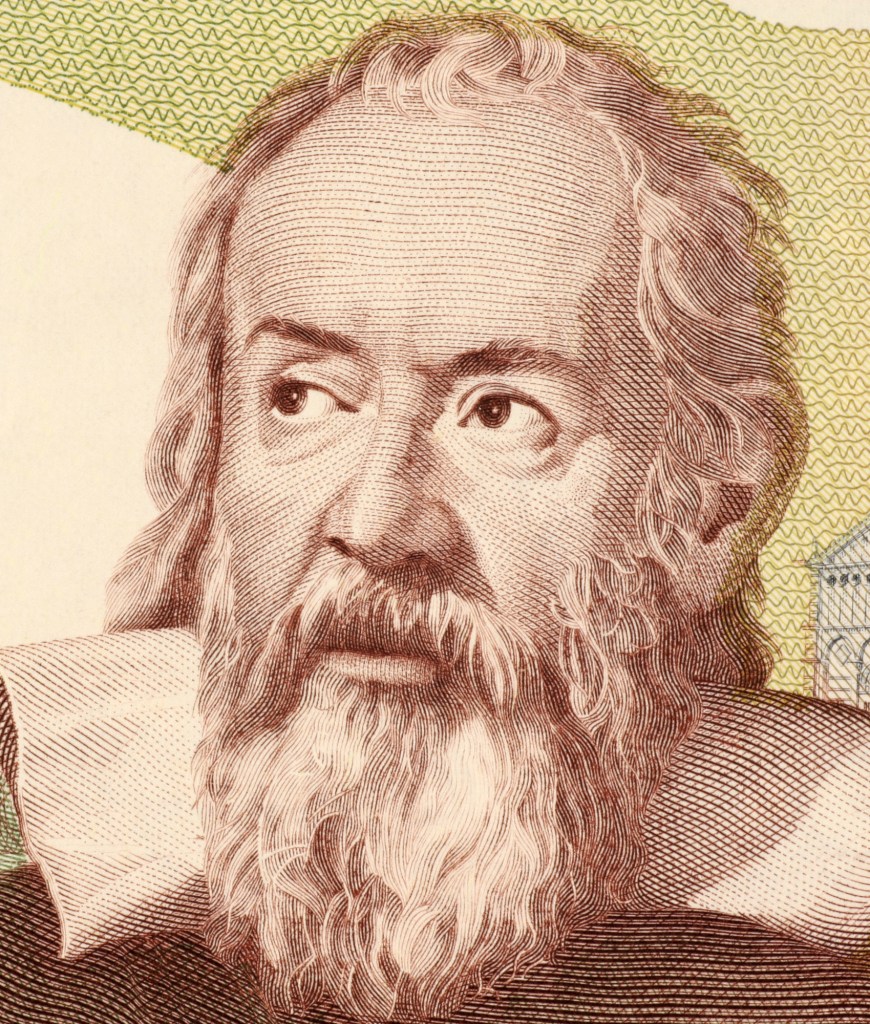
Galileo Galilei introduced mathematical proof into the process and continued to distance science from reliance on Aristotelean first principles. Galileo and Newton reformulated the terms of scientific method that would inform modern scientists ever afterward.


That the two latter men were men of faith, along with Grosseteste (a Catholic Bishop) and Roger Bacon, his student, is significant. Maimonides and the Islamic thinkers before him were also men of faith. These men who pioneered the way to modern science were all monotheists who believed in a creator God. 

Science did not really take off until the 17th Century. The trailblazers of the modern scientific method were religious men, and the modern scientific method was born in the religious environment in Christian Europe lead, primarily, by men of faith.

Why did science catch fire in Christian Europe and not in other parts of the world? Why not in China? Or in the world of the eastern religions? This is a question Guillen poses, and he provides a possible answer.

Continue reading “Christianity’s Ties to the Scientific Method”

“If I Were God….”: An Exploration of the Human Heart and Need for God

Photo Credit to Tyler Drendel, a sunrise at Fermi National Laboratory in Batavia, IL

The last episode of the Unbelievable? Podcast (May 21, 2022) featured Francis Collins and Richard Dawkins on Biology, Belief and Covid: Can science and faith be reconciled? Justin Brierly has set the standard for facilitating thoughtful, civil conversations on opposing views of the world, like faith and atheism.

In this particular conversation, Francis Collins, the former head of the Human Genome Project and well-known scientist who professes religious faith, just finished explaining briefly why he came to believe in God at the age of 27. Richard Dawkins, the very well-known scientist and “new atheist”, responded this way:

“If I were God and I wanted to create life, maybe even human life, which is part of the expectation of a religious person, I think I would not use such a wasteful, long-drawn-out process. I think I would just go for it. Why would you choose natural selection, which has the possibly unfortunate property that it could have come about without you? Why would God have chosen a mechanism to unfold His design and chose the very mechanism that would make Him superfluous?

Dawkins speculated that God might have thought, “I wonder what would happen if I set up a primeval, self-replicating molecule and leave it to see what happens.” Dawkins called such an experiment “interesting” and sympathized with the thought of God experimenting in that way. Then he added, “If I wanted to make complex life, I wouldn’t choose that astonishingly wasteful, profligate – cruel actually – way of doing it.”

Dawkins focused on the suffering that comes from competition and evading starvation. He focused on the weeding out process of some animals starving to death, being eaten by predators and succumbing to disease. Dawkins summarized, “It is not a benign process at all.”

Dawkins admitted that this line of thinking is “not a good argument”, but it is what “struck” him as Francis Collins was talking. Indeed, I have heard Richard Dawkins say similar things in debate and in his writings. This line of thinking is obviously compelling to him, good argument or not.

I don’t want to be overly critical of Dawkins. I am not here to blast him or judge him. We all have a judge, I believe, and it isn’t me!

Dawkins is not an ignorant man, obviously. He is a foremost scientist who is a very poignant and elegant communicator and champion of the evolutionary paradigm. His many books and body of work speak to his exceptional intelligence. As people go, he is at the top of the food chain in scientific knowledge and understanding.

Francis Collins is good company for Dawkins, having advanced the relatively new science and understanding of human DNA, perhaps, further than any person before him. Yet, these two men have diametrically opposed views of whether God exists. Neither of them is an intellectual slouch.

I am writing, though, on what Richard Dawkins said. Just as Dawkins was “struck” by what Collins said to respond in the way he did, I am struck to respond by what Dawkins said.

His instinct or intuition or line of thought – whatever you want to call it – was to consider, “If I were God….” Dawkins gravitated toward comparing what he would do if he were God and the world as it exists. Dawkins’s point is, ultimately, that he finds the world as it exists not to live up to what he would have created if he were God.

Let’s examine that line of thinking.

Continue reading ““If I Were God….”: An Exploration of the Human Heart and Need for God”