What is the Nothing Out of which the Universe Emerged


On a typical Sunday morning, I am contemplative, thinking about God, the nature of the world and other ultimate things. I have gotten home from church. The distant rumbling of thunder portends more rain to add to the buckets (more like vats) that came down earlier this morning. (We’ve had an unusual amount of precipitation in the Chicago area for about a year now.)

Though sunlight threatens to break through the clouds, despite the rumblings to the contrary, it’s a good day for reading and thinking.

In that vein, I read an article from Forbes magazine that came up in my Google feed: Ask Ethan: Can We Really Get a Universe From Nothing? Ethan, is Ethan Siegel, a Forbes contributor. He is an astrophysicist, author and “science communicator” according to the short bio at the end of the article.

It just so happens that I spent my Friday evening this week with another astrophysicist, Hugh Ross, a brilliant man who is a Christian, and also a man of science. In fact, it was science that led him to his belief in God. But I digress. (You can hear the story of how science led Hugh Ross to God in his own words here.)

My meeting with Hugh Ross isn’t really relevant to the topic, other than the fact that our conversation got me thinking about science and ultimate things, things that science doesn’t really address (or hasn’t yet answered). Does God exist? Where did the universe come from?

The article suggests an answer to one of those ultimate questions: where did the universe come from? It suggests that the universe didn’t really come from nothing – at least not the kind of nothing that we usually imagine when we think of nothing. It entices the reader with a title that suggests an ultimate answer, but it doesn’t deliver.

Continue reading “What is the Nothing Out of which the Universe Emerged”

Welcome to the Faith Club

Our commitment to brute assertions is faith.


Here is a bold statement: faith is the foundation on which all reasoning proceeds. Though it is a bold statement, indeed, I believe it is true (pun intended). Let me explain why.

First of all, though, I have to admit that didn’t come up with the statement. Tim Keller did, but it aligns with what I have come to believe is true: that we all have faith, even materialists who say they have no faith.

I have written about it from time to time, including Reflections on Confidence in Faith and Atheism, Darwin’s Faith: The Religion of the New Atheism, and  Are Reason & Faith in God Contradictory Terms?, to cite just a few examples. So this isn’t a new thought for me, but I like the way Keller approaches the topic.

Keller asks us to consider the Enlightenment premise: the only things we can really be sure of are things that are scientifically proven. This Enlightenment position is the popular modern sentiment on faith, science and the nature of truth and reality. We have increasingly come to trust science and what science can tell us, and we have grown to distrust faith. But is that a sensible position?

Continue reading “Welcome to the Faith Club”

Gary Habermas on Near-Death Experiences

Many accounts of near-death experiences can’t be explained by the involvement of the central nervous system.


I have recently watched a number of recollections of near-death experiences (NDEs). I also recently listened to a lecture by Gary Habermas, who has studied NDEs for more than a couple of decades. He notes that NDEs have been known for millennia. Some scholars speculate that Plato ‘s Myth of Ur is about a real NDE. There are even near-death experiences recorded in Scripture.

I had no idea NDEs were so common. Habermas says Americans, alone, have reported about 8,000,000 NDE experiences, and they occur around the world in all cultures.

Many NDEs could be made up, though there are many similarities among the reported NDEs. Just listening to a dozen or so of them I could identify the similarities. NDE accounts often don’t fit with worldviews, including the Christian worldview.

Naturalists, however, have the most difficult position in respect to NDEs. Naturalism is the premise that the universe is comprised of nothing but material things: matter, motion, time and space. They hold to a position that no transcendent or supernatural reality exists.

How do we deal with NDEs? How do we account for them?

Continue reading “Gary Habermas on Near-Death Experiences”

Commitment to a Worldview

The commitment to atheism can be as dogmatic as any other belief.

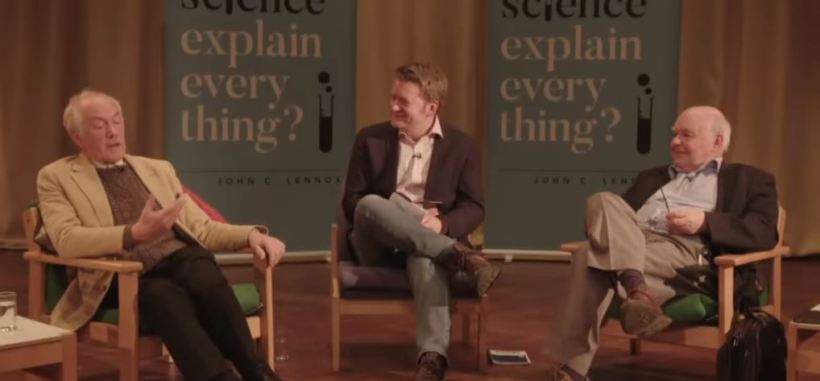
From the Unbelievable! discussion involving John Lennox vs Peter Atkins – Can science explain everything?

In a recent discussion on theism and atheism with the Oxford professors, John Lennox and Peter Atkins representing both ends of the spectrum, the dialogue stopped, and a time of questions and answers began. One person, a scientist, wrote in saying that he is an atheist, but his commitment as a scientist to follow the evidence suggested to him that God does exist. For him, the issue isn’t the evidence, but his own feelings, instincts and emotions.

When this question was put to the two guests to respond, the answers were very intriguing. John Lennox, the Christian, suggested that the man should continue to question and research and to test the position (that God exists) personally, not from afar. The response of the atheist, Peter Atkins, was simple: stick to your “commitment to rationality” (which to him presupposes atheism).


Think about it. Would you suppose the answer, to stick to your commitment, would more likely come from the Christian or the atheist? I would. I think most people would expect that answer to come from the Christian, but it doesn’t in this case. It’s the atheist sticking dogmatically to a presupposition.

Continue reading “Commitment to a Worldview”

The Trickiness of Consciousness

Is the ghost in the machine nothing more than information?


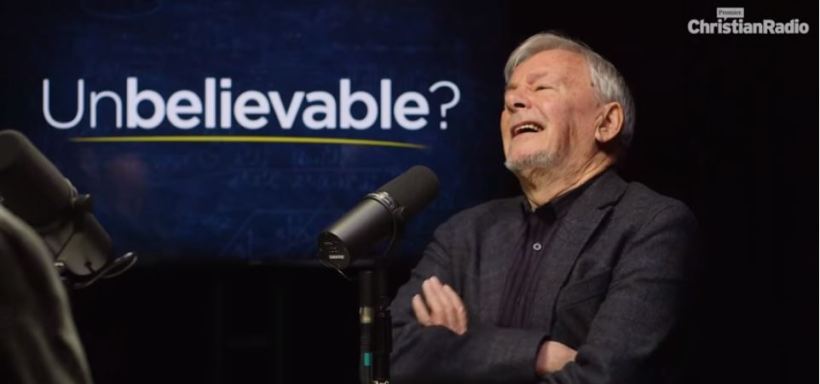
Justin Brierley has been doing a series of interviews entitled “the Big Conversation” on his Unbelievable? podcast on the British Premiere Christian Radio. In the latest, and I believe the last, episode, he interviews Daniel Dennett, the Tufts professor and so-called “new atheist” and Keith Ward, the British philosopher, theologian, priest and scholar. Their topic is consciousness. The idea of the “ghost in the machine” comes up about half way through the discussion, and Dennett responds in the segment below:


Among other things, Dennett says that the “ghost in the machine” is nothing more than information. He says, “Information is embodied in the brain”, and “the user of the brain is the brain.” There is no “ghost”.

Of course, to call what Keith Ward describes as the most important aspect of you and me a “ghost” is to minimize it and to reduce it to something of insignificance. Dennett, though would say that the information is the significant thing. There is nothing going on other than the embodiment, transfer and process of information.

So what about consciousness?

Dennett says, “Consciousness is the user illusion of the brain itself…. The brain has been designed to have user interfaces inside it…. Consciousness is a user illusion that is designed by evolution and by learning and by cultural evolution to make our brains capable of getting out bodies through this complicated world.” [Emphasis added]

These remarks are the backdrop for my thoughts today.

Continue reading “The Trickiness of Consciousness”