“If I Were God….”: An Exploration of the Human Heart and Need for God

Photo Credit to Tyler Drendel, a sunrise at Fermi National Laboratory in Batavia, IL

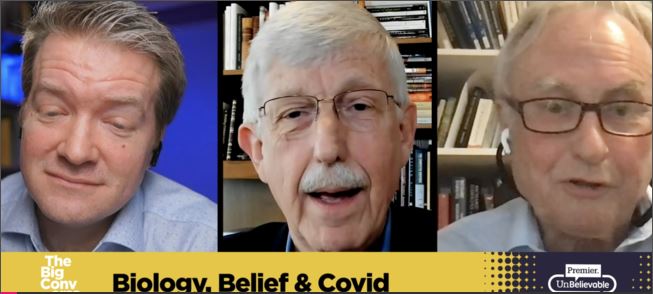
The last episode of the Unbelievable? Podcast (May 21, 2022) featured Francis Collins and Richard Dawkins on Biology, Belief and Covid: Can science and faith be reconciled? Justin Brierly has set the standard for facilitating thoughtful, civil conversations on opposing views of the world, like faith and atheism.

In this particular conversation, Francis Collins, the former head of the Human Genome Project and well-known scientist who professes religious faith, just finished explaining briefly why he came to believe in God at the age of 27. Richard Dawkins, the very well-known scientist and “new atheist”, responded this way:

“If I were God and I wanted to create life, maybe even human life, which is part of the expectation of a religious person, I think I would not use such a wasteful, long-drawn-out process. I think I would just go for it. Why would you choose natural selection, which has the possibly unfortunate property that it could have come about without you? Why would God have chosen a mechanism to unfold His design and chose the very mechanism that would make Him superfluous?

Dawkins speculated that God might have thought, “I wonder what would happen if I set up a primeval, self-replicating molecule and leave it to see what happens.” Dawkins called such an experiment “interesting” and sympathized with the thought of God experimenting in that way. Then he added, “If I wanted to make complex life, I wouldn’t choose that astonishingly wasteful, profligate – cruel actually – way of doing it.”

Dawkins focused on the suffering that comes from competition and evading starvation. He focused on the weeding out process of some animals starving to death, being eaten by predators and succumbing to disease. Dawkins summarized, “It is not a benign process at all.”

Dawkins admitted that this line of thinking is “not a good argument”, but it is what “struck” him as Francis Collins was talking. Indeed, I have heard Richard Dawkins say similar things in debate and in his writings. This line of thinking is obviously compelling to him, good argument or not.

I don’t want to be overly critical of Dawkins. I am not here to blast him or judge him. We all have a judge, I believe, and it isn’t me!

Dawkins is not an ignorant man, obviously. He is a foremost scientist who is a very poignant and elegant communicator and champion of the evolutionary paradigm. His many books and body of work speak to his exceptional intelligence. As people go, he is at the top of the food chain in scientific knowledge and understanding.

Francis Collins is good company for Dawkins, having advanced the relatively new science and understanding of human DNA, perhaps, further than any person before him. Yet, these two men have diametrically opposed views of whether God exists. Neither of them is an intellectual slouch.

I am writing, though, on what Richard Dawkins said. Just as Dawkins was “struck” by what Collins said to respond in the way he did, I am struck to respond by what Dawkins said.

His instinct or intuition or line of thought – whatever you want to call it – was to consider, “If I were God….” Dawkins gravitated toward comparing what he would do if he were God and the world as it exists. Dawkins’s point is, ultimately, that he finds the world as it exists not to live up to what he would have created if he were God.

Let’s examine that line of thinking.
Continue reading ““If I Were God….”: An Exploration of the Human Heart and Need for God”

Drinking Living Water & Embracing the Unseen: of Science and Faith

My inspiration this morning comes from “the woman at the well” and Galileo. They are separated by about 1500 years, but their stories resonate together for me this morning.

The theme is inspired by the questions: “How should we read Scripture?” and “How should we understand science and faith?” Those questions were relevant over 2000 years ago; they were relevant 500 years ago; and they are still relevant today.

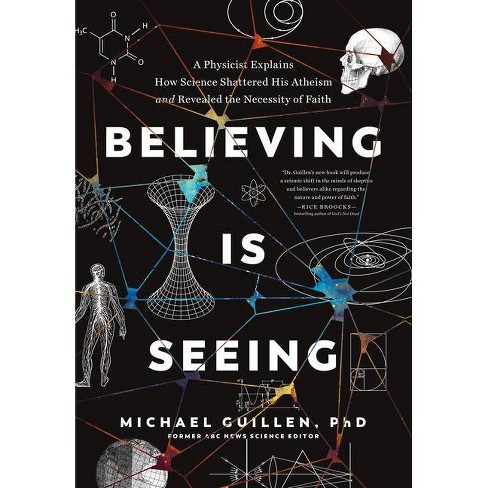
Michael Guillen, in his book, Believing is Seeing, reveals how logical and trans logical thinking are different tools, and each have a place in the intellectual toolbox. Logic is necessary to understand simple, “trivial” truths, but “profound” truths, he says, require trans logical thinking.


We err to apply logic to every problem. Simple matters are the province of logic, but complex matters require trans logic. As much as we might want to keep complex matters simple, we cannot gain insight into many complex matters without a willingness to go beyond the familiar confines of simple logic.

Guillen recognized the necessity to stretch beyond simple logic to more complex, trans logical thinking, among other things, in the realization that dark matter and dark energy make up 95% of the universe. In other words, 95% of the universe is invisible to us! (p. 9)

If we insist on limiting ourselves to things that we can see, touch, feel, smell, and hear, we must give up on 95% of the universe. If we want to explore outside the boundaries of what we can see, we need to adopt more robust, trans logical thinking.

Trans logical thinking is not anti logic, but it isn’t as linear as logic, and it may require holding things in tension that may seem contrary on their face. Classical physics and quantum physics are good examples of things we believe are both true, but which seem to be contradictory on their face.

If we are not willing to give up on 95% of reality, we must be willing to adapt. We must let go of our insistence that everything be reduced to what we can affirm with our senses and to what will fit into simple formulas and logical constraints. We need to think outside the box.

Guillen sees a parallel in the “stretching” that scientists must do to grapple with the unseen world at the edges of simple science and the revelation of the Bible of more “spiritual” things:

“’What no eye has seen,
    what no ear has heard,
and what no human mind has conceived’ —
    the things God has prepared for those who love him—
these are the things God has revealed to us by his Spirit.”

1 Corinthians 2:9

What the Spirit of God can reveal to us is somewhat similar to the stretching the scientist must do in his thinking to understand things like dark matter and dark energy, quarks, quantum entanglement and other mysteries of science that defy Aristotelian logic and conventional principals. For people who like to live with their feet planted solidly on the ground and with certainty anchoring their beliefs, the prospect of revelation by God’s Holy Spirit is like a black hole. We dare not venture too close for fear of being sucked into a black hole.

Yet, God not only invites us in; He insists that we venture close to understand Him.

“The Spirit searches all things, even the deep things of God. For who knows a person’s thoughts except their own spirit within them? In the same way no one knows the thoughts of God except the Spirit of God. What we have received is not the spirit of the world, but the Spirit who is from God, so that we may understand what God has freely given us. This is what we speak, not in words taught us by human wisdom but in words taught by the Spirit, explaining spiritual realities with Spirit-taught words.”

1 Corinthians 2:10-13

The difference between logic and trans logic in science and the study of the edges of the physical world have application to the metaphysical world in the encounter of the woman at the well with Jesus. I will lay out the similarities I see below.

Continue reading “Drinking Living Water & Embracing the Unseen: of Science and Faith”

“Don’t Worry, Be Happy” Should Be Replaced with Don’t Worry, Be Thankful!

Verse 5 of Paul’s letter to the Philippians ends with the statement, “The Lord is near.” Then, it continues with, “Be anxious for nothing….” The Greek word translated “anxious” means literally to be drawn in opposite directions. It conveys the idea of being divided, pulled apart and distracted.

This is what worry does. It distracts us, dividing our attention, drawing us in opposite directions, pulling us from the tasks at hand. Worry distracts us and draws us from faith and trust in God and His promises.

Paul goes on to say: “Be anxious[1] for nothing[2], but in everything by prayer[3] and supplication[4] with thanksgiving[5] let your requests be made known to God. And the peace[6] of God, which surpasses all comprehension, will guard your hearts and your minds in Christ Jesus.” Phil. 4:6-7

The word translated, “anxious,” is in the present imperative, meaning to stop (right now!) being anxious. Stop being divided in your affections. Stop being distracted and pulled in different directions. Stop it, right now! Stop, being distracted by worry and fear.

The passage is predicated on the statement that the Lord is near! The Creator of the Universe is near us; He is with us. Implied is the question: What shall we fear if God is with us?

Paul’s statements echo the words of Jesus. Does not our heavenly Father clothe the lilies in the field? Does He not care for the birds? How much more does He care for you and me? (Matt. 6:25-30)

Because God is near, Paul says we should be anxious for nothing: no thing, not even one thing. Elsewhere, he said nothing can separate us from the love of God.

“[N]either death nor life, nor angels nor rulers, nor things present nor things to come, nor powers,  nor height nor depth, nor anything else in all creation, will be able to separate us from the love of God in Christ Jesus our Lord.”

Romans 8:38-39

We have no reason to be anxious when we fix our eyes on the author and perfecter of our faith (Heb. 12:2) who is near us.

In everything, every single thing that we face, we are instructed to make our requests known to God by prayer and supplication. God expects, and He desires us to bring our concerns to Him. Paul’s words echo Jesus again in this. (Luke 11:13: Matt. 7:11)

But God is not a Candy Man; He is our Father. He wants a relationship with us. He wants to come to Him when we are anxious. He wants us to come to Him when we have needs. He wants us to come to Him when we are thankful. He wants us to come to Him.

When we are going through difficulty, when we are anxious, when we have sinned, when we have been hurt, when we are happy, God wants us to come to him.

Continue reading ““Don’t Worry, Be Happy” Should Be Replaced with Don’t Worry, Be Thankful!”

How We Miss Jesus in the Dust of Our Own Hopes and Expectations

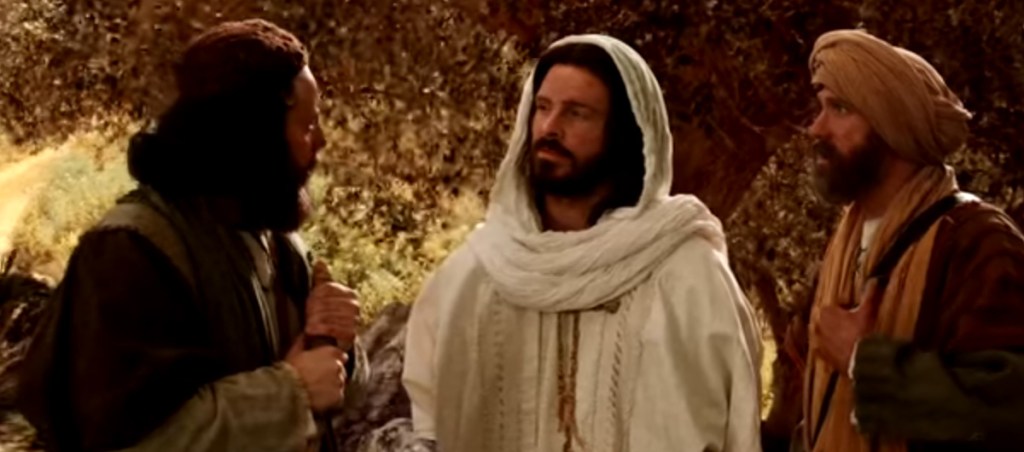
Reading from Luke 24:13-21.

"That very day two [men] were going to a village named Emmaus, about seven miles from Jerusalem, and they were talking with each other about all these things that had happened. While they were talking and discussing together, Jesus himself drew near and went with them. But their eyes were kept from recognizing him. And he said to them, “What is this conversation that you are holding with each other as you walk?” And they stood still, looking sad. Then one of them, named Cleopas, answered him, “Are you the only visitor to Jerusalem who does not know the things that have happened there in these days?” And he said to them, “What things?” And they said to him, “Concerning Jesus of Nazareth, a man who was a prophet mighty in deed and word before God and all the people, and how our chief priests and rulers delivered him up to be condemned to death, and crucified him. But we had hoped that he was the one to redeem Israel."

This encounter took place after Jesus was publicly seized, tried and crucified. These men were discussing those events. Everyone was talking about it. Jesus had stirred up the hopes and dreams of the people, including these two men, but those hopes and dreams ended shockingly and abruptly just few couple of days ago.

Everything changed. Expectations deflated Hopes crashed. The shameful and humiliating death of Jesus, the man in whom so much hope had been placed, was overwhelming. It’s all they could talk about.

When Jesus, himself, came and joined them, walked with them, and and spoke with them, they didn’t recognize him. It wasn’t the first time Jesus wasn’t recognized by his people.

Jesus was born into a world that was ripe for his coming. The last of the Hebrew scriptures was written about 300 years prior, and the thrust of those writings, the prophets, anticipated the coming of a Messiah.

The first century Jews believed this Messiah would be a king that would rescue them from Roman rule and reestablish God’s Kingdom in their promised land, rekindling the glory of their heritage. The air was virtually electric with that hope and expectation.

Jesus didn’t deliver what they expected and hoped for. He was a controversial figure from the start. He offered them hints of the promise they hoped for, but he didn’t deliver on their expectations.

Jesus was controversial because he seemed to stand in opposition to the existing Jewish leadership. He seemed to be more critical of the contemporary religious leaders than the secular Roman imposters that governed their homeland.

The orientation of Jesus in opposition to the contemporary religious leaders was not lost on them. They saw Jesus as a threat. Jesus seemed to provoke them with violations of the laws they handed down. He appeared to say blasphemous things like, “Before Abraham was I am”, and claiming to have the authority to forgive sins.

The Jewish leaders were aware of the miracles Jesus performed and the following Jesus had with the poor, the weak, the vulnerable and the downtrodden people. They loved him and who flocked to him, but he gained no trust or respect from the leaders and learned men.

The men with the religious credentials characterized his miracles as magic, sorcery. They called him a hypocrite for hanging out with prostitutes, tax collectors and sinners. That their protestations failed to detract from his popularity was worrisome.

The Zealot movement that predated the birth of Jesus was driven by people had gotten tired of waiting for a Messianic figure to come. They determined to take the course of history into their own hands, to overthrow the Roman government by their own force and to reestablish the Kingdom of Israel in the present time.

Many zealous leaders rose promisingly in in opposition to Roman rule. They quickly generated a following. Just as quickly their followings fell away as those leaders were caught, tried and executed. Jesus seemed no different than they.

This was the atmosphere of First Century Judea. It was a tumultuous time, but a time filled with an air of expectation. Jesus was the closest thing to the promised Messiah that had come along. He had just been welcomed by throngs of adoring people as he entered Jerusalem. They public spectacle they caused stood, now, in contrast to disappointing end to their hopeful Messiah.

Continue reading “How We Miss Jesus in the Dust of Our Own Hopes and Expectations”

Simply Simon

Simply Simon is you and he is me. Today, the anonymous day in between, we can identify with being simply Simon. He didn’t know there would be a resurrection. Sometimes, we doubt it.

thebookofworks's avatarThe Book of Works

I have posted this before.

Today is simply Saturday,  the day between. We know very little about what happened on this day, but we can imagine.  We can imagine a man, much like us. A man defeated, alone, miserable and afraid. This man, who was once called a rock, today thinks of himself as simply – Simon. Imagine him sitting in a strange house in a city not his own, staring out the window, seeing nothing but his own failure, and the loss of all of his hopes and dreams. I have felt this way at times, and perhaps you have also.

He thinks of the glorious promise that he has witnessed the past months, the miraculous and wonderful things he has seen and heard. He thinks of the Man who showed so much faith in him, the Man who has now gone, died, left them all alone, without hope…

View original post 504 more words