
Thoughts on A Plea for Round-Table Discussion, not Debates — Follow Jesus

We should attempt to be more led by the Spirit than by our capacity to debate when we engage with non-believers. Like Jesus did.


Larry Hurtado wrote this in his blog:

Debating is a win/lose contest, little subtlety or complexity allowed.  It doesn’t make for the sort of careful consideration of matters that is most often required. It certainly doesn’t allow for people to grow, develop/alter their understanding of matters[…]

via A Plea for Round-Table Discussion, not Debates — Larry Hurtado’s Blog

I’ve often been frustrated with debates as a tool for advancing knowledge and understanding. Many times, maybe even most often, both sides claim a victory, but wins and losses are hard measured in debates. Debates are seen as win/lose propositions, but they rarely deliver that kind of satisfaction.

Listen to any political debate, and both sides will claim victory. Listen to any debate of atheist and theist, and both sides will claim victory. The after debate responses are continuations in kind of the debate – both sides trying to convince the other and the world of their victory. The claims usually fall flat and ring hollow to anyone who makes an effort at remaining objective.

If we want to get at truth and understanding, debates are not the way to do it. Respectful discussion and dialogue are much better platforms for truth and understanding.

Since this is a faith-based blog, a little reference to Jesus is in order. Jesus didn’t debate people, ever. He often asked questions. He spoke in parables. He connected with people where they were – healing them, addressing them at a personal level, touching on their psychological, emotional and physical and spiritual issues.

Jesus treated everyone with respect, even the spiritually high-minded Pharisees. He took everyone seriously.

We can not get “inside” other people’s heads like Jesus could – knowing the thoughts and intents of their hearts – , but we have the Holy Spirit to guide us. We should attempt to be more led by the Spirit than by our capacity to debate when we engage with non-believers. Like Jesus did.
Judging the Church and Reconciling the World

God’s heart is to have the Gospel (Good News) preached to all the world, but the Church is preaching judgment instead.


Paul wrote to the Corinthians urging them “not to associate with sexually immoral people”, but he qualifies that statement to say that he is “not at all meaning the sexually immoral of this world or the greedy and swindlers or idolaters since you would need to go out of the world”. (1 Corinthians 5:9-10) Thus, Paul clarifies by adding “not to associate with anyone who bears the name of brother if he is guilty of sexual immorality or greed, or is an idolater, reviler, drunkard, or swindler – not even to eat with such a one.” (1 Cor. 5:11)

Paul is obviously making a distinction between people in the church and people outside the church, Christ followers and non-Christ followers. This distinction is something we have generally glossed over in the modern church today, and it seems to me that we have gotten these instructions from Paul to the Corinthians exactly backwards.

I think of the Moral Majority with which I grew up in the faith when I say this. I think of more modern efforts of Christians fighting in the “culture war” to try to impose Christian values on our world. I used to be wholeheartedly behind those efforts, but my reading of what Paul said in his first letter to the Corinthians has caused me to rethink.

Continue reading “Judging the Church and Reconciling the World”

Reach out to our Muslim neighbors

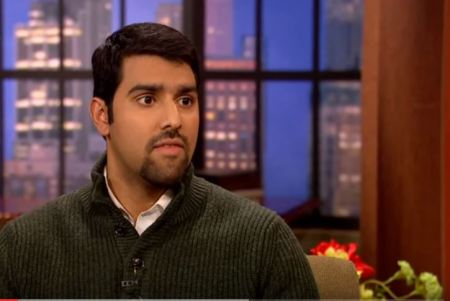
Nabeel Qureshi Interview


Nabeel Qureshi was raised in a devout Muslim family in Virginia Beach, VA. He memorized the Qur’an by the age of 6 and prayed five times a day. When he went to college, his college roommate was a Christian. They spent three years debating the historical claims of both religions, and he came to realize that Christianity could withstand historical scrutiny but Islam could not.

At that point, he came face to face with a a difficult, life-changing decision: whether to abandon the Islam of his family and and heritage by embracing Christianity, or remain a Muslim, knowing that it could not stand up to history and reason. This was a decision that would ostracize him from his family. Continue reading “Reach out to our Muslim neighbors”

Intellectualism and Scholarship for Christ

On the other side of our language is something which sustains it which can’t be contained within it … and that’s what we call God.

Olin Hall


As Christians, we naturally emphasize faith because faith is what God rewards. Faith is what connects us to God. Without faith it’s impossible to please God. But, faith also separates people from God – when they don’t have it.

Faith is a stumbling block for the agnostic and the atheist.

When agnostics and atheists (and sometimes even Christians) talk about faith, they often talk about faith in the “blind” sense, divorced from reason and rationality. Real faith, however, is anything but blind or irrational.

For the Christian, faith informs a God logic that is captured in doctrine. This logic is far from irrational or inconsequential. Faith is part of that God logic, but it isn’t divorced from logic or truths discoverable in  the material world that God created. Continue reading “Intellectualism and Scholarship for Christ”

Do We Stand in the Way of the Prodigal

A look at the prodigal son parable through the medium of music.


I am compelled by a phenomenon that I see in modern culture. Maybe it is not a new phenomenon, but the current expression of it is new (because it is happening now). The video above is an example: Jesus, Jesus, is a haunting ballad of the unbeliever by Noah Gunderson. Continue reading “Do We Stand in the Way of the Prodigal”