Myth, Seasons, and the Resurrection of Jesus

Should the claim that Christianity is similar to prior, pagan mythology concern us?

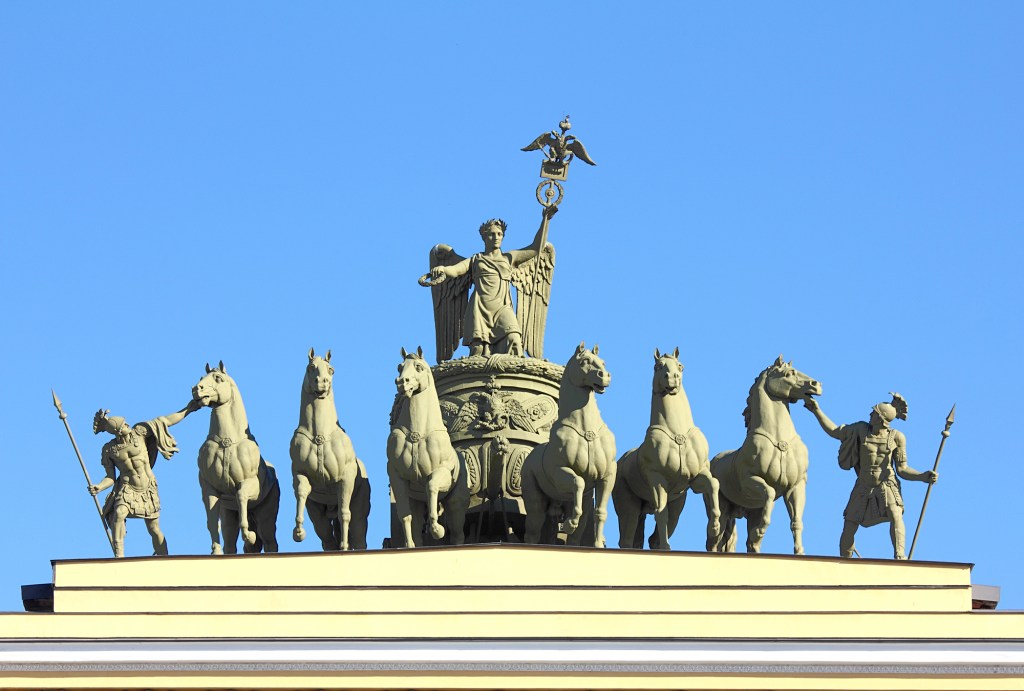
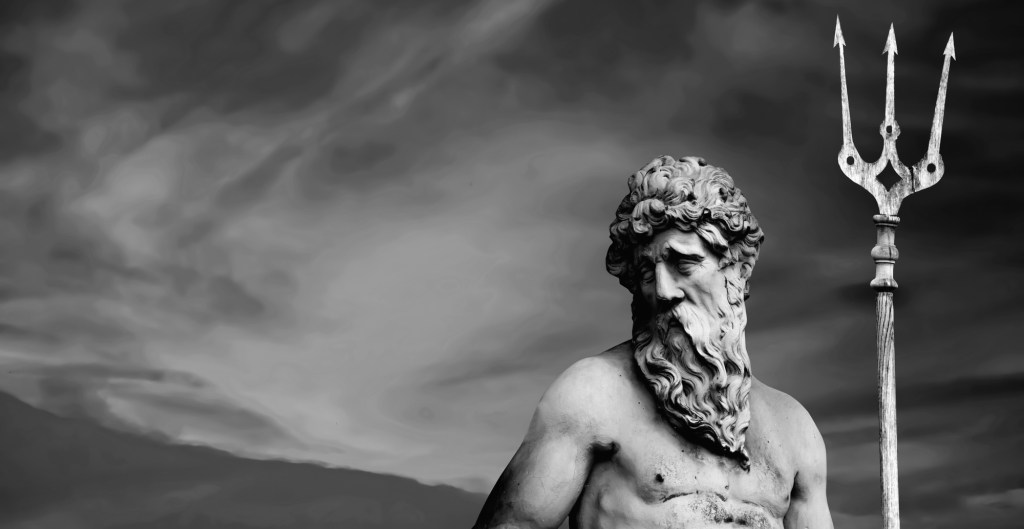
The god of the sea and oceans Neptune (Poseidon).

Popular trends arise in culturally contingent ways, and those trends often dominate the public mind for a season. Thus, the idea that Christianity borrowed from prior pagan mythology gained notoriety with the rise of New Atheism. The Zeitgeist: The Movie (2007) is a poster child for this popular trend in thinking.

The Zeitgeist movie forces the narrative, ignoring glaring dissimilarities, and manufacturing similarities that don’t really exist. It ignores (or isn’t familiar with) the relevant academic scholarship, but it has been watched well over one million times. We might say that the Zeitgeist movie has become legendary in a truly mythic sense itself.

I will go out on a limb, nevertheless, to say that Christians have shown far too much angst over this trend of claiming that Christianity is similar to prior pagan mythology. There are critical differences, and they are significant, but there are some similarities also. Do the similarities pose a problem for Christianity?

The short answer is, no. In fact, if truth is truth and reality is reality, ancient, pagan attempts at explaining that reality are likely to hit on some metaphysical truth. If they didn’t, I might begin wonder about the nature of reality and our ability to recognize and understand it.

Mythic literature as a genre is an attempt to provide some explanation and understanding of basic realities and the ebb and flow of life. I am reminded of these things as I sit outside on an unseasonably warm day in November with a view of trees bared of their multicolored leaves that have been collected by my earnest neighbors in piles lining the suburban streets for pickup.

Fall is ebbing into the dark night of winter. The subtle coolness in the breeze portends (what seems to me now) a distant spring. I am braced for what comes next as I enjoy what is likely to be the lest vestige of warmer days for longer than I care to think about.

My hope for the spring, however far off it seems in my present mood, is rooted in my experience of the certainty of the seasons. I know my hope is not fanciful, even as I brace (all too knowingly) for the cold, bleak trudge ahead.

It seems completely natural that ancient mythology captures this duality in stories that have religious significance. These experiences are common to man. We remind ourselves of the hope of spring as we gaze in wonderment at fall trees in the throes of seasonal death and the chill onset of winter. It reminds us of our own life and death sagas, even now in all our modern comforts.

Our modern comforts allow us to be a bit more disconnected and circumspect, perhaps, than our ancient forbearers. Those comforts and great advances in scientific knowledge allow us to be intellectual about these things. Ancient pagans lived literally at the mercy of the seasons, and all the things they didn’t know played like gods on the stage of their fraught imagination.

Modern people chalk seasonal changes up to natural cycles that just happen. We believe humans chased all the gods off long ago. The ownership we have asserted in our knowledge of the way the world works gives us an illusion of control that I surmise is not all that much different than the ancients, who sought some ownership and control of this world through the mediators of gods they thought they could appease.

Pagans found solace in the seasons as we do. Myth is rooted in collective experience, and it is driven by an impulse to understand and import control into our experience. We also have a natural inclination to seek meaning. We might call this impulse a “religious” one.

Though we have the chased the gods off, we still have a religious impulse. Though we no longer believe in many gods, and we no longer venerate ancient myths with more than a curious read, the idea of one, Creator God God persists, and it is not explained away by modern science and knowledge. The Bible, though it has ancient origins, stands up to our modern scrutiny in ways that pagan myth does not.

Continue reading “Myth, Seasons, and the Resurrection of Jesus”
A Tale of Two Processions, Two Kingdoms, and the Triumph of God

Two processions, two kingdoms clashing, and God’s triumph in the death of God incarnate on the cross


Episode 124 – Statement of Triumph – from the BEMA Podcast, with Marty Solomon and Brent Billings, inspires my writing today. It was the subject of discussion for the Saturday morning Bible study I have attended off and on with an exceptional group of men for several years.

The subject was Matthew 21:1-11. The chapter heading in the NIV translation (which would not have appeared in the original text, because there were no chapter headings in the original text) is “Jesus Comes to Jerusalem as King”.

This is usually how we read it: a “triumphal entry”. We celebrate it as a triumph, and it was. But not perhaps in the way we tend to think about it. Certainly, not in the way the erstwhile followers of Jesus perceived it when it happened.

Marty Solomon sets the stage in the podcast, noting that Jesus rode into Jerusalem on a donkey during the week of Passover, an unusually tense time in this region of the Roman world. The uneasy tension arose in that time in that region because it was home to the only group of people in the Roman Empire who refused to worship the Emperor.

The Jewish people were stubbornly true to their God. Even so, Rome allowed the Jews to have their own ruler, Herod the Great. Herod was Jewish and powerful in his own right, but he was happy to be propped up by the Romans, and the Romans accommodated him to maintain stability in the region.

Even so, this small piece of real estate was problematic for Rome. It sat at the crossroads of the earth. The Hebrew people long inhabited it, but they were a headache for the Romans because of their entrenched religious traditions and unabated worship of their God.

When Herod the Great died, three of sons took over different areas of this land that Herod ruled as a vassal of the Romans. Herod Phillip ruled the north (Caesaria Phillippi). Herod Antipas ruled the middle region, and Herod Archelaus ruled in the south (Judea).

Archelaus only lasted two years, so Rome brought in its own ruler, Pontius Pilate (the Roman Bulldog), to maintain Rome’s control over the region. Pilate didn’t live in Jerusalem. Pilate lived in Caesarea Maritime (Caesarea, By the Sea), a city built by Herod to honor Caesar.

The week of Passover would have been a particularly tense time in Jerusalem, the Jewish holy city. Jews from all over were in town to celebrate the feast that remembered their great deliverance and triumph over the superpower of an earlier time, Egypt. The last thing that Rome wanted was for this celebration to get out of hand after rebel Jews got all fueled up with wine and remembrance of their former deliverance.

If there was any holiday that might make the Romans nervous in Judea, it was Passover. Zealots were always stirring up trouble, and Passover would be the most opportune time for a Jewish revolt against the Roman rule of this territory that the Jews long held out as their own. After all, the Jews still believed this land was to be theirs again through based on their understanding of prophecies about a military coup to be led by a messiah (savior) in the line of their once great King, David.

Every year at this time Pontius Pilate would head south from Caesarea down the coastal road to Joppa. He would head east from Joppa to make his way into Jerusalem. Pilate would enter Jerusalem from the west. He traveled with great pomp and a show of force, with an army of soldiers, trumpeters, heralds, banners, and pronouncements. Pilate would lead the way on a white stallion symbolizing Roman conquest and rule.


This show of power, of course, was intentional. I found the article, In Through the Back Door, September 24, 2022, by Terry Gau that describes these yearly processions made by Pilate into Jerusalem at the beginning of Passover week. He cites historians, John Dominic Crossen and Marcus Borg, in their book, Last Week, memorializing the historical and political context for the final chapter of Jesus’ ministry on earth. the procession is described this way:

“Traditionally, Pilate paraded into Jerusalem on the first day of Passover Week, entering the west gate – the front gate – with legions of chariots, horses, and foot soldiers, dressed for battle and armed with swords and spears.  Rome’s authority would not be questioned.  The majesty with which Pilate enters the front door of the city was meant to inspire awe and fear, respect and obedience.”

Marty Solomon says,

“You could have heard him coming from miles away. The message he wanted to send to the Jews was clear. ‘Don’t even think about it! Keep everything under control, or Rome will crush you!’”

BEMA Podcast, Episode 124

Pilate would stay in Herod’s palace in Jerusalem for the week until the festivities ended. Then he would go back to Caesarea. He wasn’t there to celebrate, though. He was there to ensure things didn’t get out of hand and to keep the peace.

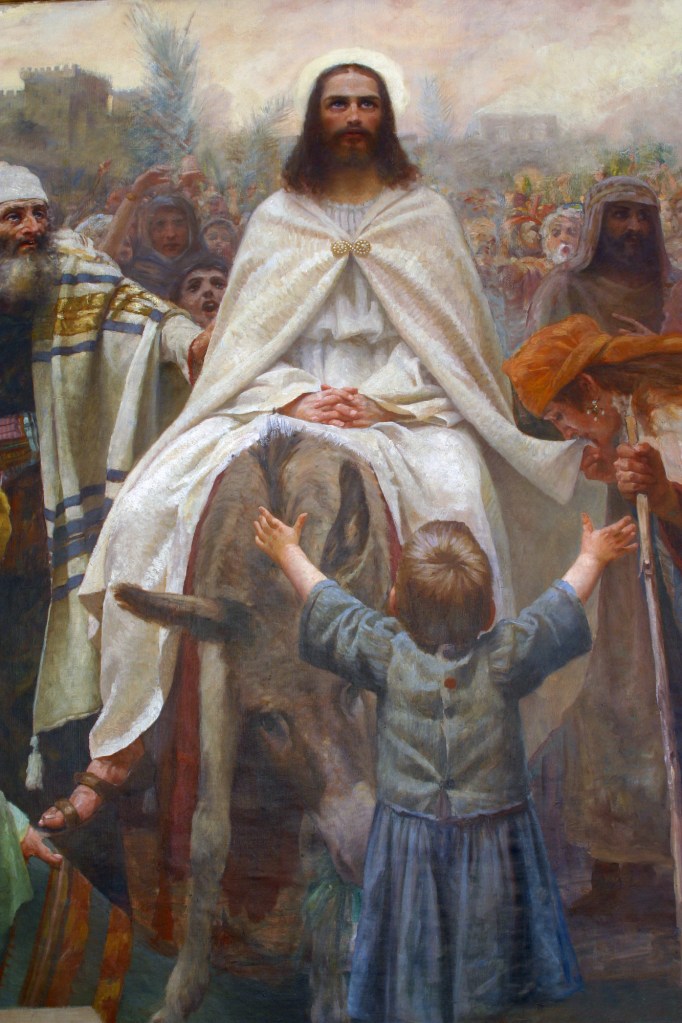
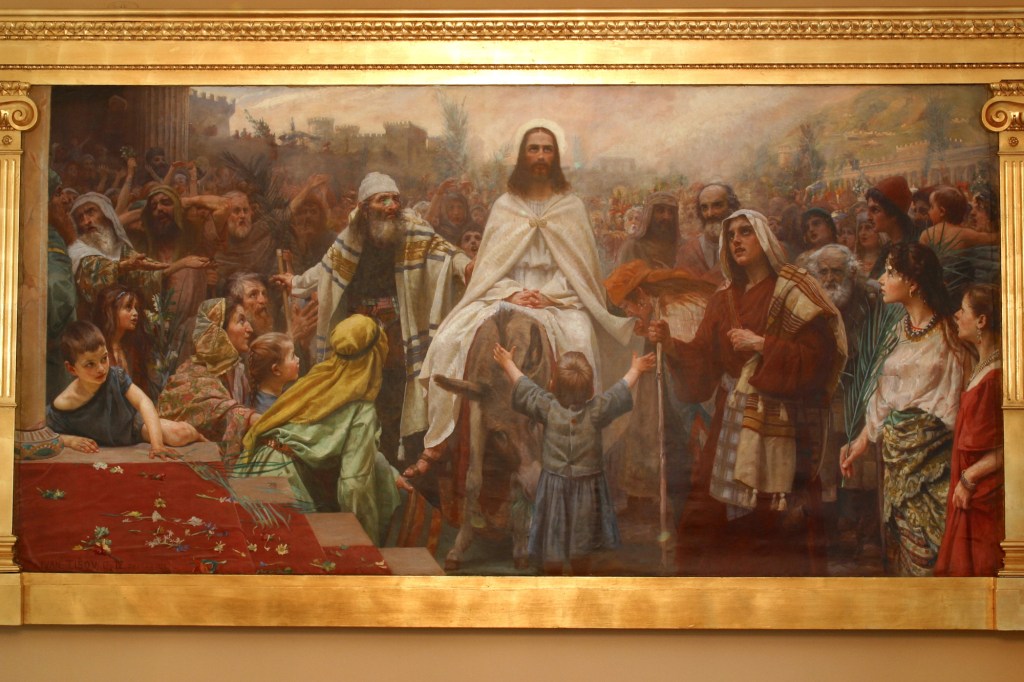
During one Passover week under the rule of Pontius Pilate in Judea another procession took place. It may have even happened on the same day at the same time that Pilate was entering the City from the west. This procession took place on the east side of Jerusalem where Jesus, riding on a lowly young donkey with a small, rag tag bunch of unarmed disciples entered through the east gate – the back door to Jerusalem.

“This parade was just as carefully staged as Pilate’s entry into Jerusalem. It was a counter-procession, a different vision of what a Kingdom should be, a subversive action against the powers that ruled Jerusalem. Jesus’ humble, yet triumphal, entry into Jerusalem stood in contrast to the magnificence and brutality on display at the opposite end of the city. Jesus brings peace, while Pilate brings a sword.”

In Through the Back Door

This was the backdrop for episode 124 of the BEMA Podcast and of our discussion. I sit writing at a temporary table with one chair left in my house that is all but cleaned out and being readied for sale. My future is uncertain as I recount one of the most pivotal times in human history and the dealings of God with man and what it means for us, today.

Continue reading “A Tale of Two Processions, Two Kingdoms, and the Triumph of God”

The Danger of Religiosity, Political Expediency and the Weight of the Cultural Moment

We can be so caught up in our own lives and the world around us that we fail to recognize the God who gave us life and created the world.

I have been reading through the Gospel narratives leading up to the death and resurrection of Jesus during Lent. My reading included the following passage that jumped out at me:

“Then they led Jesus from the house of Caiaphas to the governor’s headquarters. It was early morning. They themselves did not enter the governor’s headquarters, so that they would not be defiled, but could eat the Passover.” 

John 18:28 ESV

I will get the point, but first we need to build in a little context. This passage describes a passing moment leading up to the crucifixion after Judas betrayed Jesus in the garden. Jesus was taken, first, to the palace of Annas (John 18:13) and then to Caiaphas, the Jewish High Priest. (John 18:14)

After Caiaphas questioned Jesus, Jesus was taken to the Roman governor, Pontius Pilate. The High Priest wanted Jesus put to death for blasphemy, but only the Roman state had authority to impose capital punishment.

Caiaphas was the High Priest who presided over the Sanhedrin, the official religious body recognized by the Romans. Caiaphas was made the High Priest by the Roman procurator Valerius Gratus. Annas, the father-in-law of Caiaphas, had presided over the Sanhedrin before Caiaphas.

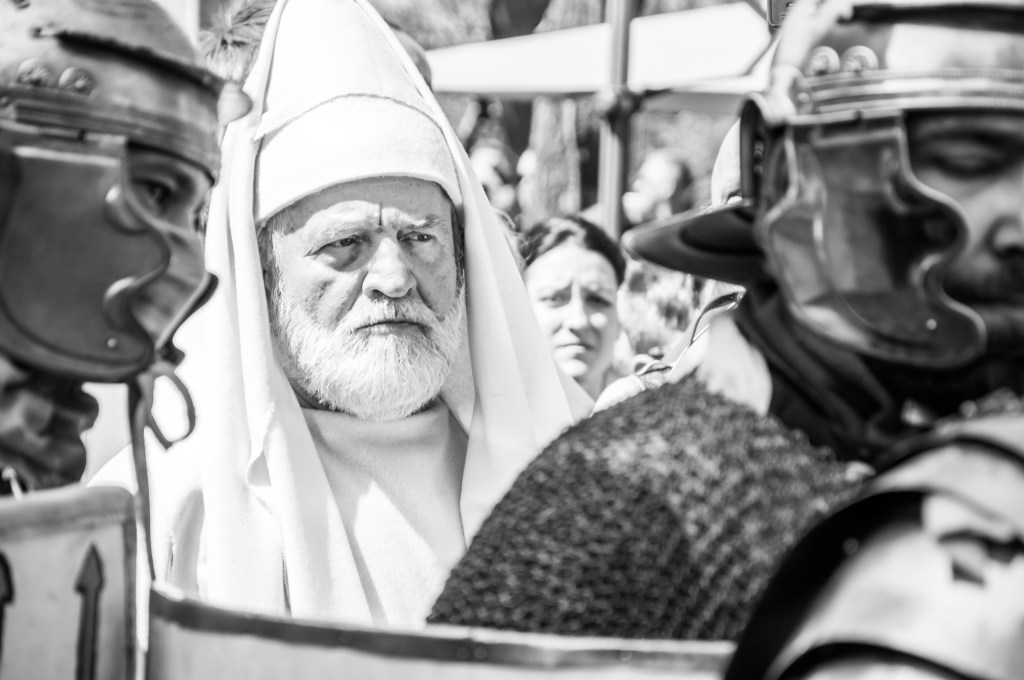
They were the official heads of the ruling group of religious leaders in First Century Judea in the time of Jesus, the Sanhedrin. They stood between the Romans, who conquered and controlled the region, and the Jewish people on matters of the Jewish religion.

During this tumultuous time, a group of violent men, the Zealots, who were opposed to Roman rule threatened to upset the political balance and peace. Similarly, the growing, unpredictable following of Jesus posed a threat to the Sanhedrin’s position as trusted middlemen trying to preserve peace and the status quo.

Potential disruption threatened the delicate balance. The Sanhedrin tried to walk the line between the threat of the Roman Empire on the one side and the Zealots and others who might provoke the Romans to tighten their grip on Judea, dismiss the Sanhedrin from their power position, and clamp down on the freedoms of the Jewish people they ruled.

Tensions were not just a threat to the Sanhedrin, who were officially given some overlapping authority the Romans; they were legitimately a threat to the well-being of all the Jews in Judea. Thus, we read in John that Caiaphas advised “advised the Jewish leaders that it would be good if one man died for the people”. (John 18:14)

The suggestion was based on practical expediency. Though Jesus wasn’t a Zealot, he was very popular among the people, likely including the Zealots who hoped Jesus would spell the end of the Roman occupation.

The concerns of the religious leaders were no doubt heightened to a critical level when Jesus came riding into Jerusalem on a donkey in triumphant celebration greeted by a “great crowd” that lined the streets, waiving palm branches and shouting,

“Hosanna!…. Blessed is the king of Israel!”

John 12:12

I am going to get to the danger of religiosity, political expediency and the weight of the cultural moment as the title to this article promises. First, however, I want to develop the backstory a bit further. To do this, we need to jump forward several months in time.

Continue reading “The Danger of Religiosity, Political Expediency and the Weight of the Cultural Moment”

The Case for Jesus Christ Rests on the Evidence of Eyewitnesses

As a lawyer, I am keenly aware of the central importance of eyewitnesses to getting at the truth of any matter. There is no better proof in the law than eyewitness testimony. The rules of law allow hearsay testimony (the testimony of what someone else said) only in extreme and limited circumstances because eyewitness testimony is considered inherently much more reliable.

Eyewitness testimony is light years more reliable than secondhand testimony, but even eyewitness testimony needs to be carefully considered along with the credibility of the eyewitnesses. People aren’t always good at observing details accurately. People sometimes fill in the gaps in understanding of what happened with details that are assumed, but which aren’t accurate. People do this consciously and unconsciously.

Eyewitnesses can also be influenced by subconscious biases and influences. Sometimes eyewitnesses even lie about what they have seen.

Because eyewitness testimony isn’t foolproof, we always compare eye witness testimony with other evidence, including other eye witness testimony. Judges and juries weigh the credibility of the witnesses, and they look for evidence that corroborates or contradicts the eyewitness testimony. At the end, weigh the totality of the evidence to reach a verdict.

Still, most cases are built on eyewitness testimony. A case can be built on the testimony of a single, good eyewitness, but multiple eyewitnesses are always better. The more eyewitnesses that agree with each other on key facts, and the more evidence that corroborates that testimony, the stronger a case is.

The narrative accounts contained in the Bible that we call the Gospels keys in on eye witness testimony. The the biblical writings are expressly self-conscious of the eyewitness sources of the accounts. Following is a summary of the eyewitness testimony that runs throughout the New Testament.

Continue reading “The Case for Jesus Christ Rests on the Evidence of Eyewitnesses”

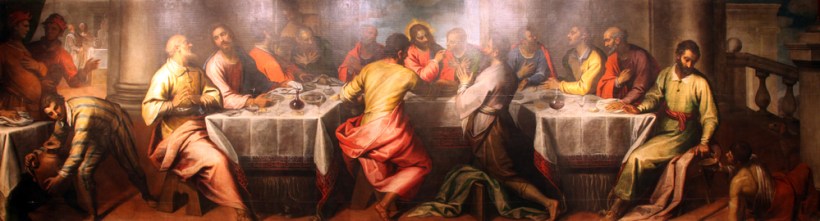
The Cup of the New Covenant Poured Out for Us


Imagine being a close friend of Jesus in the 1st Century, reclining at the table with him, eating a meal. It’s been a roller-coaster three years! Your whole world is buzzing about him. He is absolutely the talk of the town.

You are still not quite sure what all he is talking about, but you have come to believe in him. If he is not Messiah your ancestors have talked about for many generations, he is certainly a prophet. Maybe he really is the Messiah?!

Your people have held on to hope for hundreds of years of returning to former glory. This Roman rule is not the way it is supposed to be. God rescued your ancestors out of the land of Egypt, and He gave them the promised land. God drove out all the inhabitants of the promised land before them. He could do it again! Certainly, He would do it!

When Jesus rode into Jerusalem on that donkey, it seemed almost so real you could taste it. This really seems to be it! The people are behind him. Everyone is waiting to see what’s next. A new day for Israel seems to be right around the next corner!

But, you never know with Jesus. He is anything but predictable, and he says some really weird things sometimes. Hard things. You don’t completely understand what he is getting at when he talks about the Temple being destroyed and rebuilt in three days. What does that have to do with anything? All of those statements about being the Bread, and the Living Water and the Vine….

As you sit at the table, the talk is excited. It is Passover. Expectation in the air. This Passover is particularly poignant with all that has been going on, but Jesus is quiet.

Not that it’s unusual for Jesus to be quiet at times. They had gotten used to it. He often went off by himself, and he would often seem to drift into deep thought, especially lately.

Jesus had left all of you instructions about preparing the Passover meal. No one knew where Jesus was, but everything was left for you as he said it would be. He finally showed up and watched as you finished. You didn’t really notice his silence until he finally spoke as everyone was finally reclining at the table.

Jesus was obviously waiting for just this time. His voice carried a certain weight to it. More than usual. There was a firm, but calm, urgency to his words. The excited tones of the men around the table fell immediately quiet as Jesus opened his mouth to speak. Continue reading “The Cup of the New Covenant Poured Out for Us”