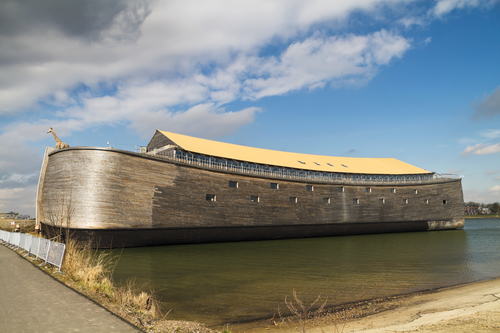
How many people watched the Bill Nye v. Ken Ham, young earth/old earth debate the other night? Apparently, Pat Robertson did, and he thinks that Ken Ham is full of water (as reported by many, including Patheos).
I have to say that I wanted to believe Ham, but it was hard to do. Of course, I do not buy Nye either. Just because one person of faith may not have it right, does not mean the baby should be thrown out with the bathwater (or Noah for that matter).
What is it about people that we want to know everything? We want everything to be tied up in neat bows and make perfect sense. But life is not like that. It just isn’t.
It seems to me, in my imperfect opinion, that we tend to get ourselves in trouble when we insist on knowing. Not that there is anything wrong with knowledge or with wanting to know things. But wanting to know everything and for all of it to make perfect sense is just asking too much this side of heaven. It also plays in to pride that is the root of all sin.
We are finite, limited beings. That we know as much as we do is, indeed, remarkable. That we should expect to know it all is something else altogether. (Interestingly, it was the temptation of knowledge, the knowledge of good and evil, that led Adam and Eve into sin.) Not that either Bill Nye or Ken Ham professed to know it all in the debate; they did not.
Let me say this though: I get Ken Ham: he takes the Bible for what it says, and he stands on faith that it is true. I get Ken Ham more than I get Bill Nye. Without faith, we can’t please God.
But the Bible does not say “the earth is 6000 years old”. It could be 10,000. It could be 10,000,000. I, personally, do not think that any of those scenarios matter much in the big scheme of things. The exercise of considering what if the world is only 6000 years old is interesting. It’s kind of fun, but only in a “what if” kind of way. My faith surely does not depend on it.Continue reading “Debriefing the Nye v. Ham Debate”→
“In the middle of the garden were the tree of life and the tree of the knowledge of good and evil.” Gen. 2:10
Sometimes things jump out when I read the Bible. Two days ago, I was reading Genesis, and it struck me:
There were two trees mentioned in the garden
The tree of life and the tree of the knowledge of good and evil….
and God only told Adam and Eve they could not eat from one tree – the tree of the knowledge of good and evil.
God did not forbid them to eat of the tree of life.
That suggests that they could have eaten of the tree of life without prohibition, and it struck me: What if Adam and Eve had chosen life? Would there have been a fall? Would God have allowed them to remain in the garden with the tree of knowledge after having partaken of the tree of life?
We can only speculate because Genesis tells us Adam and Eve chose knowledge instead of life. They were drawn to the one tree that God forbade them to eat. It dawns on me that the very act of choosing was a sort of an introduction to that knowledge, and I suspect God knew that they would choose it: the one thing He told them they could not have. What is it in us that we are drawn to the things that we cannot have? Why are we drawn to the things we know we should not have, even over the things that we would rather have?
I suppose some people might choose knowledge again, even knowing that life would be forfeited. Even so, one theme of great literature and art over the centuries is a longing for eternal life. The fountain of youth is the coveted grail. Nothing strikes more darkly at the heart than the certainty of death and takes more of toil on the human heart than the loss of a loved one to its clutches.
I am certain that God foresaw and knew the path that His crowning creation would take. We are created in God’s image and for a purpose higher than our own designs. God must have known that Adam and Eve may have chosen (wold choose?) knowledge over life. He gave them that choice, and he must have been prepared to respond to it. In that sense, it seems to me that knowledge was a part of the plan, even if meant that we would be separated from life and separate from God by it.
Ironic it is that partaking in the knowledge of good and evil would mean loss of fellowship with God and loss of a personal knowledge of God.
It had to be part of God’s plan as, without the ability to choose, and without the knowledge of good and evil, there would be no truly free will, and without free will, no true love. There would be no place for God’s mercy, no reason for Him to extend it. Without the knowledge of good evil and the opportunity to exercise truly free will, people would be one directional beings, not different in kind from every other animal, unable to appreciate God or to love Him fully.
Knowledge, however, could only come with a price. After gaining the knowledge of good and evil, there would need to be additional work done in the hearts of men, work which could not have been done without that knowledge, work that could not have been accomplished if knowledge were combined with eternal life, work that could take root only in the shadow of inevitable death, separation from God and the need for God’s redemptive mercy.
I do not believe that God could have (or would have) allowed the knowledge of good and evil to be gained along with eternal life. Knowledge, alone, puffs up. Indeed, it was the temptation to know what God knows and to be like God that induced Eve to eat. Sin, separation from God, toil, pain and inevitably death remind us that we are not in control, that knowledge, alone, cannot save us from this condition – that we are the creatures and not the Creator.
Knowledge alone does not make us like God. It does not ensure character, heart, mercy, justice, kindness, goodness and ultimately love. Those things must be chosen, and evil must be rejected. The knowledge of good and evil ensures that there is a choice to be made. It cannot be avoided. And in having to make the choice to embrace good, even though the tendency of man is to choose that which is forbidden, is where God meets the heart and does His work.
God placed the trees side by side; He forbade one, but made them both available. God made eternal life available in the Garden, and He makes it available to us still. God put eternity in the hearts of men. (Eccl. 3:11) He gave us the desire for eternal life. God desires that no one perish; and that all come to eternal life. (John 3:16) … but, men must choose. We must choose God, who is good, and His ways over ourselves and our ways. We must choose the merciful redemption of God, embrace the goodness of God and reject our own ways.
In the end, believers will have both knowledge and life, and that life that God gives freely will be given precisely because we choose goodness – because we choose God. The knowledge that was chosen in disobedience to God puts the horrible responsibility on us to choose, and by choosing, to end up with goodness and God for eternity … or separation from God. It would have been so much simpler and better for us if we had chosen life, instead of knowledge. Instead, it is a matter of life and death.
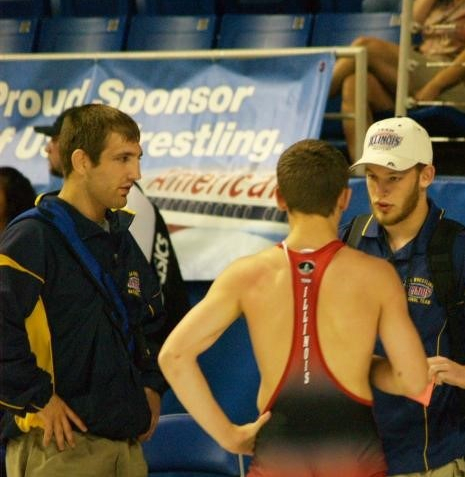
Just four years ago, a good friend of my son – a coach, a mentor, a teammate, a friend – died. Unexpectedly, he died. He was the epitome of strength and character, the product of hard work, moral fiber, faith and overcoming determination. He was a leader. He was a wrestler.
He was an overcomer. He fought off cancer and epilepsy in high school to place 5th as a senior in the Illinois State Wrestling tournament.
He was Jake Curby.
He coached my son to a runner up finish in the national Greco Roman wrestling tournament, and my son became his teammate at the Unites States Olympic Education Center. There Jake was a mentor, a beacon pointing the way to top of the Olympic ladder that Jake was climbing. From overcoming leukemia to 5th in the State wrestling tournament, from high school wrestling to earning a spot on the United States national team at 66kg in Greco Roman wrestling, Jake showed the way by doing it himself.
Jake returned from wrestling in Russia in January of 2010. He had jet lag from the time change. He was tired, but could not sleep. He went and worked out at the new senior level Greco Roman training center in Boise, ID where he was starting his final ascent to the top of the Olympic mountain. He returned to his home after the workout, and he died….
It was sudden and shocking. He was a specimen of strength, physical, character, emotional and otherwise. He had not had an issue with epilepsy for years. It seemed he had conquered that opponent, but he was worn out that day, tired and stressed by lack of sleep. Death came like a thief in the night and took him from us.
It was devastating to the USA Wrestling community, to the kids he coached, to his teammates and friends, to his family – to his fiancé – to all who knew him and celebrated his life. Few people at the age of 25 have the impact that Jake had, and few have been missed as much by so many people. He was the living example of a great human being with rock solid character and full of life.
Jake’s example lives on. His short, but full, life continues to be a source of inspiration for aspiring young people – not just wrestlers, but anyone who has a dream and dares to chase it. The Curby Cup that Jake’s father and mother and family and friends and the greater wrestling community have put on every year in the Chicago area is a testament to Jake’s life and the impact he has had on people. It is a marvelous event pulling in the best Greco Roman wrestlers in world to take on the best in the United States.
No one knows the day or hour that each person will breathe their last on this earth. There are no guaranties. What we do with the time that we have, the impact we have on those around us and how people remember us is our legacy. Jake is gone, but he still inspires. His sister, Courtney, has captured that sense of sacred time wonderfully in this short video.
Whether we live 25 years or 100 years, we all have the same end awaiting us. The time we have is a precious gift. There is no promise it will be easy. In fact, it most likely will not. It is in the striving, in the overcoming, in the courage to press on and to achieve the most that can be achieved with the raw material we have been given, that the fullness of being human is reached.
We live not as islands, as John Dunne penned, but are connected to the mainland of humanity. In all that we do, every single thing, we are influencing those around us for better or worse. Jake showed what it is like to live with a higher purpose and to dare to dream and chase those dreams with passion, determination, humility, good humor and grit.
Jake also showed the value of faith and the freedom that comes from leaving the things that we cannot change to the God who made us. That is the freedom that allows a person to run unhindered toward the goals before them without the baggage of worry, doubt, regret, fear or a hundred base emotions that pull at most of us like a pack of dogs on the hunt.
In the end, however, all of our human striving is empty, the medals and trophies and accolades are meaningless, without a connection to the God who made us. We can not take those prizes with us when we shuffle off these mortal coils…. but there is a better end awaiting us: a new beginning.
The gift of life that we have in jars of clay is a shadow of the eternal life that is promised by the God who dared to shed his own heavenly glory and walk humbly among us, suffering and dying a cruel death to show us that even death, itself, cannot hold Him…. And He offers that same gift to us.
The challenges and troubles believers face in this life are working in us an eternal glory that outweighs them all. We should all dare to dream of great things, but do not neglect to hitch those dreams to greater, eternal things. Our days chasing these earthly dreams will end. Jake’s dream ended, but a far greater glory awaited him and awaits us who set our hearts on God.
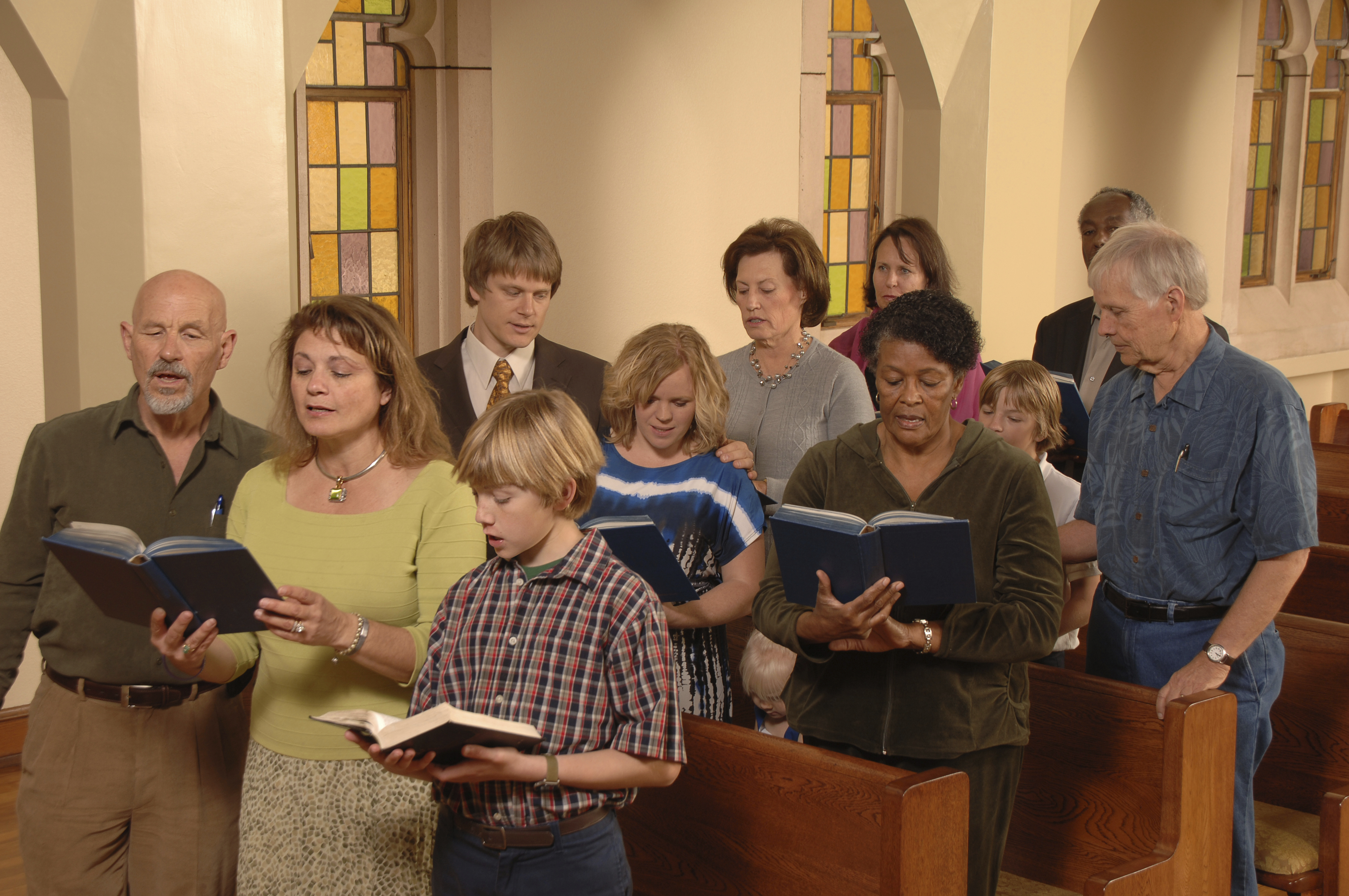
Most people in American grew up with some connection to “the church” and to Christianity. Many, many people had just enough of a taste to reject it. I think that, when most people reject Christianity, they are rejecting the institution of the church.
People reject the principles they believe the church stands for and the hypocrisy they saw in the church. Indeed, I believe this because I was one of those people.
I have come to put that reality in perspective, however: the church, as most people perceive and know it, is a human institution. It is far from perfect. Every human frailty and weakness and shortcoming exists in the church – because people make up the church. That is the reality.
Further, the message that informs the church, the root and heart of it, the reason the church exists – the Gospel – is not always readily apparent in the church. Some churches are closer to the expression of it than others, but churches, generally fall short of the ideals of the Gospel.
I do not mean to point fingers at anyone or judge anyone. I think it is sufficient for purposes of what I am trying to say to assume that this is true to some degree or another in every church, even the best of them. I am going to say some things next that may make churchgoers upset, but bear with me.
Monogamous marriages are unnatural. On this, I agree with the emailer below.
Now, behold these enlightening thoughts that I found in my inbox this morning:
Greetings Mr. Walsh,
I am a college professor, author, and researcher. It was obvious to me before you ever stated it that you are a man of little education and limited intelligence. Still, I commend your newfound fame and congratulate you on the enormous amounts of money you must be making.
[Five more sentences of insults and pretentious self-aggrandizement]
…You have become a hot topic in some of my classes and this very much worries me. It wasn’t until your name came up for a fifth time that I decided to investigate you. Your prose are rife with fallacies and Neanderthalic musings, so I could easily disembowel and discredit any part of it. But I’d like to concentrate on what seems to be your most common themes:…









 Navigating by Faith