The Hole In the God of the Gaps Argument

All people, including scientists, fill in the gaps in their knowledge with a model of reality they believe best fills those gaps in light of the knowledge they have. 


Most people who have entertained the question, whether God exists, are familiar with the “God of the Gaps argument” that is made against the existence of God. It goes something like this: In the past, people couldn’t explain natural phenomenon, like rain, thunder, earthquakes, etc. so they attributed those things to the activities of the gods. People use the gods (or God) to fill gaps in their knowledge and understanding of how the world works out of ignorance.

From that observation (which is factually true as a simplistic statement), they add in the equally true observation that the progression of science over the centuries has been filling in the gaps in human knowledge and understanding of the natural world. We have found natural explanations for most phenomenon without having to resort to the conclusion that “God did it”. Thus, the argument goes, we should stop invoking divine explanations.

Many people take that even further and conclude that we should stop believing in God altogether. We don’t need God to do science; thus, we don’t need God at all, they say.

Thinkers realized during the Enlightenment period that they didn’t need to invoke divine explanations at all to be able to study the natural world. From that realization, a scholarly consensus the thinking has developed that divine explanations are not only not necessary; they are not appropriate.

Divine explanations are viewed today by most scholars as anti-scientific. Some people who are concerned with the purity of science would even deem divine explanations “heretical” to the current scientific orthodoxy.

The God of the gaps argument (as an argument to prove the nonexistence of God), however, is pretty weak. The fact that we can do science (which is, by definition, the study of the natural world) without appealing to a supernatural being or explanation isn’t surprising. It also can’t tell us what caused the natural world, as any cause of the natural world would have to be independent of it.

Just as the study of a painting can never introduce us to the painter, study of the natural world could never hope to introduce us to the creator of the natural world. At best, it might tell us something about the painter/creator. In both cases, we must be willing to look elsewhere to find the painter/creator.

Frankly, the order we see in the natural world is more surprising on a naturalistic worldview that assumes no intelligence behind the universe. We see intricate design in the universe, from the micro to the macro levels. How do unguided co-locations of molecules and matter acting randomly on each other produce the exquisite fine tuning we see?

The order to the natural world that we can study and know doesn’t preclude the existence of a supernatural (other than natural) Being behind it all. The order of the natural world is actually more difficult to explain without God.

The order of the world, by itself, is not proof that God exists, but the design we see is best explained by a grand Mind. This is not a gap-filling argument. It is an argument based on the best explanation we have – that all design we see in our experience is created by a being with agency who thought of it, designed it, and created it. This is the best explanation that we have.

If we resign ourselves to nothing but the study of the natural world, how do we expect to know anything about the possibility of reality beyond it? If we limit ourselves to naturalistic explanations, we foreclose any other possibility.

Thus, refusing to allow for the possibility of a God that might fill the gaps in our knowledge is just as arbitrary and closed-minded as filling every gap with God (and refusing further inquiry).

We all fill gaps in our knowledge, and we do it on the basis of what we know and believe about what we know. Our gap fillers are our basic assumptions. The theists assumes a Creator exists. An atheist assumes that no creative mind is behind the universe.

Frankly, there is a big gap between the fact that the natural world has order that we can study and the question whether anything beyond the natural world exists. I can turn the argument around and accuse the naturalist of filling the gap with the conclusion that no God exists.

But all of this really misses the important point. Hugh Ross addresses the God of the gaps argument in a recent interview with Kahldoun Sweis. He says,

“In science, there are always gaps. We will never learn everything. We are limited human beings.”

However, when we “push back the frontiers of science”, we have to ask ourselves whether the gaps in our knowledge are getting bigger and more problematic? Or are they getting smaller and less problematic?”

Continue reading “The Hole In the God of the Gaps Argument”

Questioning the Skepticism about Some of Paul’s Letters

A little skepticism of the skeptics might be in order in questioning the rejection of the authorship of some of the “questionable” Pauline epistles.

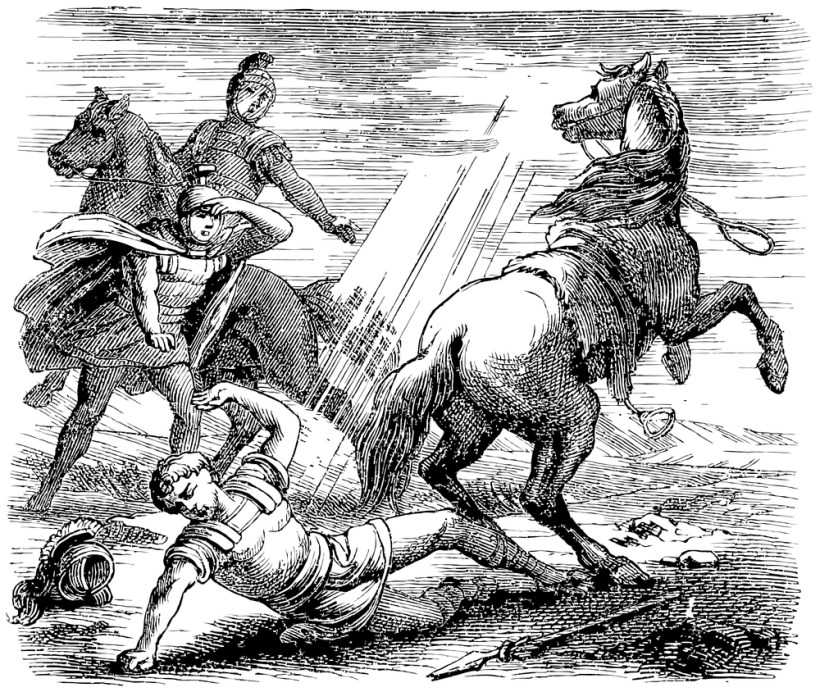
Old Engraving of the Conversion of Paul

I first learned that some of the “Pauline epistles” were not written by Paul in my religion courses in college. That was the scholarly consensus then, as it is now, among the elite New Testament scholars in colleges and universities around the world. This consensus grows out of the “school of higher criticism” that began in the 19th Century in Tubingen, Germany.

The so-called “school of higher criticism” is textual criticism with a heavy emphasis on the text. (I will explain that comment below.) Not that textual criticism, itself, should be suspect. Textual criticism is “a branch of textual scholarship, philology, and of literary criticism that is concerned with the identification of textual variants, or different versions, of either manuscripts or of printed books…. The objective of the textual critic’s work is to provide a better understanding of the creation and historical transmission of the text and its variants.” (Wikipedia)

And by the way, there are differences among the New Testament manuscripts. Many differences. That fact shouldn’t come as a shock to anyone in this information rich age. If you aren’t aware of that fact, you would do well to consider the work of Daniel Wallace on the subject. I have addressed this issue before (Can We Trust the Bible?). But, I digress….

I have no issue with textual criticism applied to the Scriptures. We have learned much about the Bible from the method of study called textual criticism. “Criticism” here doesn’t mean, necessarily, rejection or doubt, but is more of a method of study that recognizes textual differences between manuscripts and attempts to identify the text that is most true to the original text, among other things.

Because we have so many manuscripts, well over 25,000 of them in various languages, there are variants that need to be addressed and understood. Textual criticism helps us with this understanding. (I should add that we have such a high degree of certainty about what the original text says precisely because we have so many manuscripts. If you want to dig in to the topic of textual criticism as applied to the Bible, I recommend The Basics of New Testament Textual Criticism.)

Some people take the fact that there are many differences among the manuscripts as a reason to reject the New Testament as Scripture, believing it to be inherently unreliable, questing whether we even know what the original authors wrote. This is an extreme view, in my opinion, though one that skeptical intellectuals seem to like. Perhaps, their fondness of this view is that it eliminates the need to take Scripture seriously or to apply it to their lives (to apply a little skepticism to the skeptics).

The fact is that we have such a wealth of New Testament manuscripts (5800 Greek, 10,000 Latin and 9800 Syriac, Coptic, etc.) that we can know with a very high degree of accuracy precisely what the original text was (like 98.5% per Dr. Wallace). Even if we didn’t have a single manuscript left, there are some 36,000 quotations of New Testament text by the early church leaders. Wallace observes that we could assemble the entire New Testament from those quotations alone, without the need for a single manuscript of the text.

But, I digress. Only a little. The point is that we should be as skeptical of the skeptics as they are skeptical of the text. In fact, Skepticism is the hallmark of the higher school of criticism. Skepticism is their starting place. They assume a skeptical approach. They don’t just wipe the slate clean, and start from neutral; they assume that the plain meaning of the text, the authenticity of the text and the reliability of the text has the burden of proof. And for this reason, we have good reason to be skeptical.

This form of skepticism is the flip side of what some might call blind faith. There is a danger in being skeptical that will not admit a positive result. There is a commitment to skepticism that is counterfactual. We can be as “committed” to skepticism as we are to belief to the exclusion of the facts and reality. I believe this is the case with the Pauline epistles that scholars reject.

Continue reading “Questioning the Skepticism about Some of Paul’s Letters”

Significance in the Way Christianity Spreads

Islam rivals Christianity in its “travel” around the world. But the spread of Islam looked different than the spread of Christianity.

Os Guinness talks about differences between Christianity and other religions in an interview with Justin Brierley a few years ago. He made a statement that Christianity is the only “traveling religion”.

He observed that Hinduism began in India and remains primarily in India. Buddhism began in India and remains primarily in India and Eastern Asia. Islam began in the Middle East and remains primarily in the Middle East. Christianity, however, began in the Middle East. Then it moved to Europe; and then it moved to North America; and now Christianity is growing fastest in Africa and Latin America and Asia.

While I think Guinness overstates the case little bit, he got me thinking about the how the major world religions have spread. For instance, Islam, which rivals Christianity in numbers, grew very rapidly during the life and immediately after the death of Muhammad. It spread throughout the centuries into Europe and down into Africa and more recently across Southern Asia.

Islam rivals Christianity in its “travel” around the world, but the spread of Islam happened very differently than the spread of Christianity. This is the significant fact, in my opinion – not so much that Christianity has traveled through all the world like no other religion. (Though it has.)

Continue reading “Significance in the Way Christianity Spreads”

What Jesus Thinks of Doubters

In light of the recent announcements of Christian leaders struggling with doubt, what does Jesus think of doubters?


Following the announcement of Joshua Harris that he no longer considers himself a Christian, and Marty Sampson, who says he is loosing his faith, the Christian world has exploded with conversation about doubt and doubters. So much angst. Some of the comments have been harsh with criticism.

These kinds of announcements tend to rock a world that may look shaky to begin, especially from the outside. Sometimes even from the inside.

These guys may not be household names, (I didn’t know either name until a few weeks ago), but they have each influenced 21st Century Christianity in the United States (Harris) and beyond (Sampson). Joshua Harris wrote a book, I Kissed Dating Goodbye (1997), that influenced dating culture (or the lack thereof) for a generation of young Christians. Marty Sampson was a worship leader and songwriter for one of the most prolific and visible (if not controversial) Christian churches, Hillsong.

In the wake of his divorce, Joshua Harris publicly eschewed his faith, stating that he is no longer a Christian. Not many weeks later, Marty Sampson, the Hillsong worship leader, announced that he was losing his faith. Since then he has clarified that he hasn’t walked away from the faith. He is simply struggling with doubt – something most Christians have experienced (even if we don’t like to talk about it).

The reactions have predictably poured in. High profile Christians struggling with their faith is like an earthquake that hits close to home (for Christians) or in a third world country (for people who are not). You know there will be casualties. (The fact that we put so much faith in our leaders is another topic in itself!)

Many of those reactions have been negative, even harsh. That’s why I write. That’s why Mike and Debbie Licona have taken to the Internet in a video to discuss the issue.

Mike has written, perhaps, the most significant work on the evidence of the resurrection – The Resurrection: A New Historiographical Approach. His mentor, Gary Habermas, revolutionized the way people think about the resurrection by using the “minimal facts” that even skeptics will accept to make a compelling case for the resurrection.

And here’s the thing: the works that have come to define these men and the quality of their scholarship were born out of doubt. They were once doubters. Their doubts led them to dig deeper and get answers, even as they feared those answers might unravel the faith that had come to define them.

They each stared doubt in the face and dared to seek truth, and their doubts led them on journeys that became their life work.

Doubts are not necessarily a bad thing. Fear, I believe, is worse than doubt. Fear feeds on and exasperates doubt, but fear keeps us from resolving those doubts in a productive way.

When I survey the Bible, I see admonitions against fear that suggest that fear, not doubt, is the antithesis to faith.

As for doubt, we shouldn’t be so reluctant or fearful. If our faith can’t hold up, it isn’t worth holding onto. If God is true, and I believe He is, we have nothing to fear. He is a God of truth that gives us confidence that we can expose our doubts to the truth with assurance that they can and will be resolved.

Further, I think it’s important to consider what Jesus thought about doubters. Jesus didn’t condemn them. He was patient with them. We don’t find him railing against doubters, though he did find fault with people who were more confident in themselves than they had a right to be!

Jesus embraced people who doubted. Consider the observations along these lines by Mike Licona in the video below:


I have often thought about Thomas, (aka Doubting Thomas) in this context. He didn’t just doubt after Jesus died, when he famously demanded to see his hands and side; Thomas was a doubter from the beginning. Do a search for all the places Thomas is mentioned in the Gospels, and you will see what I mean.

Now, consider this: Jesus chose Thomas and invited Thomas to follow him though Thomas was a doubter! That means that Jesus didn’t just leave Room for Doubters and Skeptics; he affirmatively chooses doubters who are willing to follow him, despite their doubts. Thomas walked with Jesus for three years, doubting all the while until Jesus proved himself to Thomas in a compelling and intimate way.

So the message is this: if you are doubting, be honest about it and seek answers. Jesus invites us to knock, and keep on knocking, to seek and keep on seeking, to ask and keep on asking. You might even read the book by Gary Habermas, The Thomas Factor: Using Your Doubts to Draw Closer to God.

And to Christians who are not (presently) wrestling with doubt, remember the words of Jude: “Be merciful to those who doubt….” (verse 22) Jesus demonstrates a merciful attitude towards Thomas, who doubted from the beginning, to Peter, who denied Jesus three times when the chips were down, and toward us when we doubt.

What is the Nothing Out of which the Universe Emerged


On a typical Sunday morning, I am contemplative, thinking about God, the nature of the world and other ultimate things. I have gotten home from church. The distant rumbling of thunder portends more rain to add to the buckets (more like vats) that came down earlier this morning. (We’ve had an unusual amount of precipitation in the Chicago area for about a year now.)

Though sunlight threatens to break through the clouds, despite the rumblings to the contrary, it’s a good day for reading and thinking.

In that vein, I read an article from Forbes magazine that came up in my Google feed: Ask Ethan: Can We Really Get a Universe From Nothing? Ethan, is Ethan Siegel, a Forbes contributor. He is an astrophysicist, author and “science communicator” according to the short bio at the end of the article.

It just so happens that I spent my Friday evening this week with another astrophysicist, Hugh Ross, a brilliant man who is a Christian, and also a man of science. In fact, it was science that led him to his belief in God. But I digress. (You can hear the story of how science led Hugh Ross to God in his own words here.)

My meeting with Hugh Ross isn’t really relevant to the topic, other than the fact that our conversation got me thinking about science and ultimate things, things that science doesn’t really address (or hasn’t yet answered). Does God exist? Where did the universe come from?

The article suggests an answer to one of those ultimate questions: where did the universe come from? It suggests that the universe didn’t really come from nothing – at least not the kind of nothing that we usually imagine when we think of nothing. It entices the reader with a title that suggests an ultimate answer, but it doesn’t deliver.

Continue reading “What is the Nothing Out of which the Universe Emerged”