Is the Bible Sexist and Racist? Part 4 – Sexism

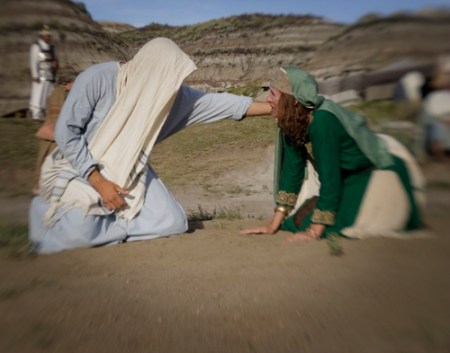
Though Paul is often accused of being misogynistic, we find that he carried over a similar view of women from Jesus, declaring that there is neither male nor female in Christ.

depositphotos Image ID: 138541616 Copyright: Rawpixel

I have been exploring an answer to the question: whether the Bible is sexist and racist. The discussion was introduced in Part 1, sexism was tackled in Part 2 by looking at the sweeping theme of the Bible in dealing with men and woman, and an overarching view of what the Bible has to say about racism was addressed in Part 3. In both cases, I started at the beginning, where the Bible expresses poetic form God’s ideals and purposes in creating humankind.

Regarding sexism, Genesis provides a glimpse into God’s motivations, intentions and purposes for men and women. God created an idyllic habitation for men and women to live in harmony with Him and nature, but He allowed people to have free will. In fact, it was part of the plan.

Free will introduced the possibility that people would choose their own values over God’s values and go their own ways. We are told Adam and Eve, the first people (or representative people) did choose their own way, and that choice introduced sin into the world.

Sin means “to miss the mark”. The “mark” would include, among other things, God’s values. People have chosen their own values over God’s values, and the result is that we live in a world in which God’s values are distorted from what He intended. But what are God’s values?

God created men and women as counterparts who, together, reflect the image of God. Neither one is valued higher than the other. We see that God intended them to be fruitful and multiply, to diversify, and not to hunker down in one place with one language in a homogeneous civilization. God wanted diversity.

These are the overarching themes of the Bible. We see them in the penultimate vision of heaven that John describes in Revelation 7:7-9.

The Old Testament is largely the story of how God chose one people through whom He intended to bless all the nations of the world, but His chosen people continually chose to go their own way. They largely did not reflect God’s values in the way they lived.

The Church, today, is not much different in its failure to reflect God’s values in they way they live. Paul says, though every man may be a liar, still God is true. (Romans 3:4)  We can’t judge God’s values by what we see people doing – even church people.

In fact, only one person in history, we are told, truly reflected all that God is – Jesus. Jesus was “the image of the invisible God” (Colossians 1:15) and the “exact representation of His nature”. (Hebrews 1:3) Jesus said, “Whoever has seen me has seen the Father.” (John 14:9)  In this segment, therefore, we will look at what Jesus said and did that can be applied to the subject of sexism.

Continue reading “Is the Bible Sexist and Racist? Part 4 – Sexism”

Is the Bible Sexist and Racist? Part 3 – Racism

“There is no difference between Jew and Gentile—the same Lord is Lord of all and richly blesses all who call on him.” (Romans 10:12)

Depositphotos ID: 136218314 Copyright: renaschild

This is the third part in a series on whether the Bible is sexist and racist. We introduced the question in Part 1 and explored whether the Bible is sexist in Part 2 by going back to the beginning, back to the creation story, where God introduces us to the crown of His Creation, Adam and Eve. We will explore what the Bible reveals to us about God’s view of racism in this Part 3 of the series before turning to what Jesus had to say about sexism in Part 4 and racism in Part 5.

As we try to understand what the Bible has to say about racism, I want to go back to Adam and Eve again. They are depicted in the Bible as representative of the human race. Genesis, therefore, has application not only to gender relations but to race relations as well.

In Genesis we will look at clues for what God intended when He created the world and the people in it,. Then we will go to Revelations to glimpse how things will ultimately be when the redemption of the world is complete and God’s purpose is fulfilled.

This sweep, from Genesis to Revelation, from beginning to end, will show us the big picture on how God sees views race.

Continue reading “Is the Bible Sexist and Racist? Part 3 – Racism”

Is the Bible Sexist and Racist? Part 2 – Sexism

If anything, Genesis 2 suggests that men need help, and Eve is to Adam what God is to mankind.

Depositphotos Image ID: 31694753 copyright: DesignPicsInc

Racism, sexism and oppression are themes in the story of man’s relations to other men (and women) throughout history. Many people today have the enlightened notion that the Bible perpetuates those old tropes from the Bronze Age and that modern men and women who have progressed by our will to advance know better. But is that really true?

We introduced the question, “what the Bible says about sexism and racism”, in Part I. In this second part in the series, we look at what the Bible reveals to us about sexism. In Part 3, we begin to explore how the Bible addresses racism. In Part 4, we observe what Jesus reveals about sexism, and Part 5 tackles racism through the life of Jesus and what he taught.

Regarding sexism, the Bible first reveals God’s view of the interrelationship of men and women at the very beginning, back before sin entered the world. In Genesis, we are told God created Adam and Eve, the first (or representative) people, and we get a glimpse, there, of what God intended. Genesis gives us critical clues on how God views men and women in their original, intended state.

Continue reading “Is the Bible Sexist and Racist? Part 2 – Sexism”

Is the Bible Sexist and Racist? Part 1

The Bible has been used to justify racism, sexism and other similar things, but, are those things what the Bible really stands for?

Depositphotos Image ID: 150906934 Copyright: Rawpixel

Many people charge the Bible with being sexist and racist. Whether the Bible is sexist and racist goes to the heart of who the Bible says God is. What does the Bible say about these things? How does the Bible describe men, women, ethnicity, diversity and human life?

Is the Bible accurately portrayed in the media on these issues? Is it accurately understood by the common person? Is the Bible accurately followed by the people who claim the Bible as their guiding light?

These questions are relevant today as Black Lives Matters and women’s marches and gatherings make the news and immigration policy is being debated in the national media in the United States.

How do we value human life? What is the basis for the value of human life?

And what does the Bible really say about these things?

This begins a five part series that looks at the evidence of how God views sexism from a biblical overview and evidence of how God views racism from a biblical overview, followed by the evidence in the Bible of the way Jesus viewed sexism and the evidence in the Bible of the way Jesus viewed racism.

Continue reading “Is the Bible Sexist and Racist? Part 1”

In Need of a Raja

The story of an elephant and a group of blind men, but with a twist.

Depositphotos Image ID: 42117413 Copyright: vverve

Most of us have heard the story about the blind men and the elephant. I heard it in a world religion class in 1978, my first year of college. The story is most often told in the context of the world religions. And, the story is most often told as an allegory suggesting that all religions are really getting at the same thing (the elephant).

If you haven’t heard the story, I will re-tell it. If you have heard the story, please bear with me because telling the story with its original conclusion is an important exercise in understanding the message.

If your antennae are up, you might have caught the hint that this story, with the original conclusion, has a twist. The story usually isn’t told with the original conclusion, so the point of the original conclusion is often “lost in the translation”. And, the original conclusion leads to a very different point than the commonly asserted message.

Continue reading “In Need of a Raja”