
Jesus is the Alpha and the Omega, the beginning and the end. (Revelation 1:8; 21:6; and 22:13) Jesus was in the beginning with God, the Father, and the universe and all that is in it was made through Jesus. (John 1:1-3)
At this time of year, we celebrate God descending to become man in Jesus of Nazareth, born in Bethlehem into a common family in a far flung place. Jesus was God in his very nature, but he deigned to shed himself of that glory and power to become man, to become a servant to his own creation, and to humble himself to the point of death at the hands of his own creation. (Philippians 2:5-8)
In the end, Jesus will be exalted to the “highest place” with a “name that is above every name.” (Phil. 2:9) Every knee in heaven and on earth will bow to him, and every tongue will acknowledge that “Jesus Christ is Lord,” to the glory of God the Father.” (Phil. 2:10-11)
From the garden of Eden to the new heavens and earth and the New Jerusalem in which God will dwell with His people, God has had a plan from the beginning to the end. God set eternity in the hearts of people, but not so that we would know the beginning from the end. (Ecclesiastes 3:11) We don’t know, but God knows. Do we trust Him?
That is the question in my mind on this 1st day of the New Year in 2026. That is the question with which I challenge myself. Will I trust Him with my life? With the world? With the insanity that seems to characterize the year that just ended in United States of America where I live?
Since God created the universe and populated it with people and animals, God ordained and allowed people to populate the Earth. God didn’t dictate how the history of His creation would unfold. He created Adam and Eve with the capacity to live in sync with God and the universe, but He also gave them the capacity to go their own ways. God had a plan from the beginning, but He allowed the universe and mankind, His crowning creation, to unfold as it would.
I am beginning a new year of reading through the Bible as I have done many years in the past. I have read through the first handful of chapters in Genesis, and my thoughts gather around the question: will I trust God better in the New Year?
After Cain killed Abel, mankind, and especially Cain’s line of descendants, drifted further and further into sin to the point where Lamech killed a young man and boasted: “If Cain is avenged seven times, then Lamech seventy-seven times.” Lamech characterized the violence and the corruption of mankind to that point.
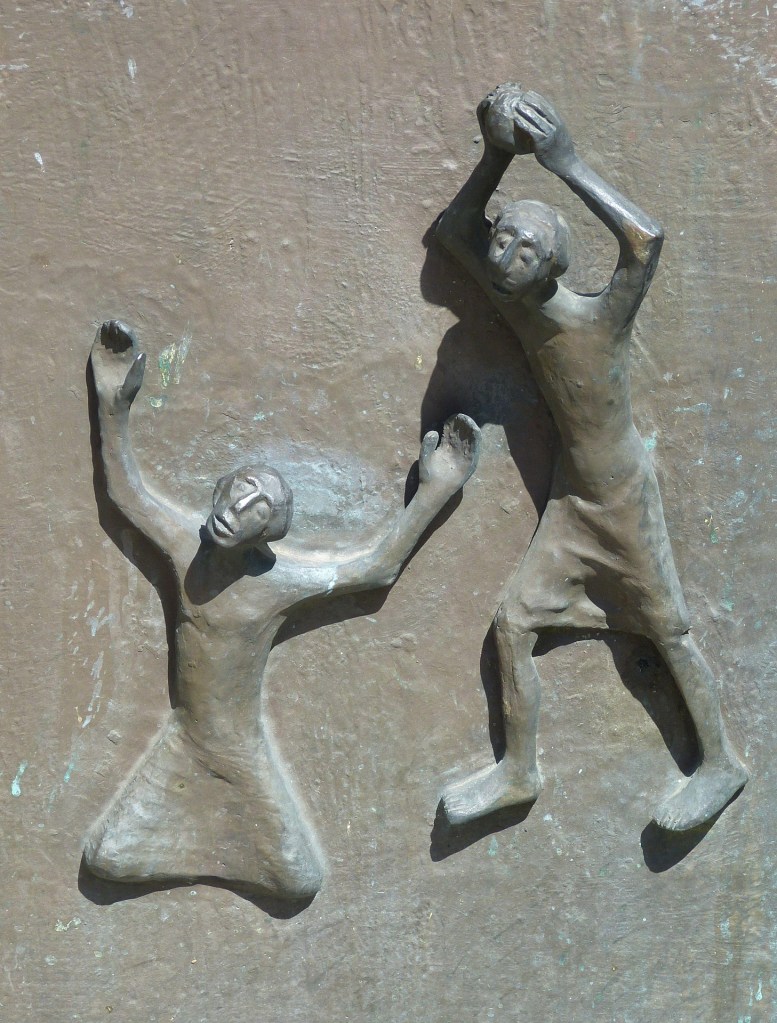
I never noticed before that the seven times and seventy seven times theme is repeated in Peter’s question to Jesus: “Lord, how many times shall I forgive my brother or sister who sins against me? Up to seven times?” (Matthew 18:21) In response, Jesus said, “I tell you, not seven times, but seventy-seven times.” (Matt. 18:22)
If Lamech’s vindictive violence characterized the corruption of mankind that triggered God’s judgment in the flood, then the forgiveness that Jesus preached and demonstrated with his life characterizes the way of righteousness in a redeemed world.
Adam and Eve had other descendants, eventually leading to Enoch who “walked faithfully with God.” (Genesis 5:21) Though Enoch walked faithfully with God, he only lived 365 years; “then he was no more, because God took him away.” (Gen. 5:24)
I never noticed before that the other descendants of Adam and Eve (who were not killed prematurely) lived 800-1000+ years. Enoch is the only one of whom it was said that he walked with the Lord, and he is the only one who lived shorter than 800 or 1000+ years.
Why did God take Enoch when he was the one who walked with the Lord? Perhaps, God was being gracious to remove him from the violence and the corruption of the world.

We tend to think of death as the ultimate evil, but death is not the ultimate evil. Sin is the ultimate evil. Jesus triumphed over both sin and death, but the greater triumph is his victory over sin. The fact that God took Enoch, suggests that death is not the ultimate evil we think it is.
Death is not the final straw. Death is actually a mercy to those who love and trust in God. Death means going home to the Lord where God has made room for us. As Paul says, “For to me, to live is Christ and to die is gain.” (Phil. 1:21)
Enoch fathered Methuselah, who fathered Lamech (not the same Lamech), who fathered Noah. Noah also “walked faithfully with God”; he was a righteous man and “blameless among the people of his time.” (Gen. 6:9) Noah trusted God and responded to God by building an ark has God instructed him. The ark saved Noah and his clan by lifting them above the chaotic waters that destroyed the known world.
Why would God allow the world to become so violent and corrupted? If we are going to trust God, we might pose the question differently: What was God accomplishing in allowing His creation to play out the way it did?
God saved Noah and Noah’s family as part of that plan. In Noah, God found a man who was willing “to walk with Him.” God in Noah found a man who was willing to listen, to trust, and to respond, and God started over with that man and his family.
I think it is significant that God allowed mankind to develop through the generations as they did. Some, like Cain and his descendants, grew increasingly more violent and corrupt. Others, like Enoch and his descendants developed over generations into people who were willing to “walk with God.”
God was patient to wait for these things to develop and play out. God did not program or predetermine the results. I am not saying that God did not have any hand in what happened or that God did not put some bumpers in place like we do in bowling to prevent a gutter ball, but it seems pretty obvious that God was more or less hands off as mankind progressed from bad to worse, though a remnant in Enoch and his descendants chose a different way.
I think it’s significant that Noah was righteous and blameless “among “the people of his time.” This suggests a comparative standard. Though God is absolutely just, God doesn’t judge Noah by an absolute standard. Noah is commended for walking with God, which makes him righteous and blameless “among the people of his time.”
Noah’s name also means comfort. His father gave him that name because, “He will comfort us in the labor and painful toil of our hands caused by the ground the Lord has cursed.” (Gen. 5:29)

Noah was given and apparently embraced this redemptive purpose – to comfort people laboring and toiling under the curse that resulted from the fall. Noah’s character is in contrast to the rest of mankind who embraced the violence and corruption of the fall.
Noah was a comforter. Noah was willing to listen to God and respond to him. Noah became the key to God’s redemptive plan for His creation God intended from the beginning.
I think about Noah as a precursor to Abraham, who was also a man who was willing to walk with God, listen to God, and trust God by responding as God instructed. When God called Abram to leave his family and homeland behind, Abram went. He didn’t know where he was going, but he trusted God to take him to a land that God promised.
Even when Abram reached the land that God showed him, he didn’t set down roots in that land. He lived in tents as a foreigner in the land, because he knew that he had not yet arrived to the ultimate “land” that God promised, the city of which the architect and maker is God. (Hebrews 11:8-10) Violence and corruption still existed, so he knew he had not yet arrived.
Indeed, we are still waiting today, like all the men and women of faith who are commended to us as examples of the kind faith that pleases God. (Hebrews 11:39-40) We are still waiting for that City, the New Jerusalem that come down from heaven, in which God will dwell among us face to face.
Therefore, we can be content to live as aliens and strangers in this world as Abraham and all people of faith have done, though the world continues to go off the rails. Violence and corruption continues.
Sure, people may have good intentions. The fruit of the tree of the knowledge of good and evil “was good for food” and “pleasing to the eye” and “desirable for gaining wisdom.” (Gen. 3:6) By eating it, though, our predecessors chose to go their own way and to seize control from God. That mentality has continued throughout history and continues today.
A world controlled by human beings is a world that will never achieve God’s desired ends. Yet God works within that world despite the wayward tendencies of people. God will accomplish His ultimate goals. The New Jerusalem, however, will come down from heaven. (Revelation 21:2) The City of God is not built by human hands.
Noah and Abraham exhibited the kind of faith, trust, and confidence in God, and willingness to listen and respond (walk with God) that characterizes what God is looking for from us. May we be people like that in 2026! God works with and through people like that.
Noah was a comforter. Abraham was known for his hospitality. They loved God, and they loved people in real, practical ways. They loved God by walking with Him. They loved God by trusting Him. They loved God by responding to His voice. They loved God by loving people, and that made them active players in the redemptive work that God has planned from beginning to end.
We live in God’s redemption story. We may not know the beginning from the end, but we know the Alpha and the Omega. We can trust and have confidence in Him, though the world continues in its violent and corrupt ways in 2026.

 Navigating by Faith
You describe the dilemma we as disciples of Jesus face very well – to stay constant in striving for righteousness and justice without forgetting grace and mercy as “people of our time.” Even in the face of evil and cruelty directed straight at us by people who reject Jesus and those who represent him. As you say, God often (most often?) seems to keep his distance in the midst of the ugliness and wrong we see being done all over the world. There are really hard questions – such as why is He not moving to protect His people in Nigeria? Or many other situations we could name. But Jesus too submitted to death, even death on the cross, and identifies with the innocent and persecuted and oppressed. His promise was not to prevent any injustice and any horrors being inflicted on the innocent and those who name Him, but to stand there with us/them when we face these agents of utter evil.
LikeLiked by 1 person
That is my favorite verse in the Bible from my favorite book in the Bible. It was the subject of one of my first blog articles in 2012, and I bet I have quoted it dozens, if not hundreds of times. I have also written about near death experiences and what the evidence reveals. I link to them at the end of this article: https://navigatingbyfaith.com/2012/10/21/god-set-eternity-in-the-hearts-of-men/
LikeLike