
Divine hiddenness is an argument suggesting that God does not exist. According to J.L. Schellenberg, if a perfectly loving God exists, He would desire a genuine relationship with every person He creates. A loving relationship requires, at minimum, awareness that God exists, so a perfectly loving God would make Himself known. Some sincere and willing people who want to know God are unable to find sufficient evidence that He exists to believe in Him. Therefore, either God does not exist or He is not perfectly loving.
I don’t buy it. I think the argument is flawed, but other people have provided robust responses to this argument, so I am not going to attempt to provide a counter argument here. I am also unconvinced that arguments are the best way to achieve understanding.
On that ground, I am intrigued by the hiddenness of God, and I am intrigued that the Bible is forthright about the hiddenness of God. The Prophet Isaiah says it plainly: “Truly, you are a God who hides himself, O God of Israel, the Savior.” (Is. 45:15)
The entire Book of Job is about God’s hiddenness. Job assumed that God existed and had blessed him until he lost everything. When Job sought God in the desperation of his circumstances, he lamented, “Behold, I go forward, but he is not there, and backward, but I do not perceive him… I cannot behold him.” (Job 23:8-9)
David, who is held up in the Bible as a man after God’s own heart, lamented the hiddenness of God at various times in his life: “Why, O LORD, do you stand far away? Why do you hide yourself in times of trouble?” (Psalm 10:1); “How long, O LORD? Will you forget me forever? How long will you hide your face from me?” (Ps. 13:1); and “My God, my God, why have you forsaken me?… I cry by day, but you do not answer.” (Ps. 22:1-2)
Those last words were famously echoed by Jesus on the cross. Imagine, Jesus, who demonstrated and expressed the deepest and most intimate relationship with the Father, experiencing the utter absence of God at the moment of his greatest need.
I saw early in a world religion class in college when I wasn’t a believer that the Bible purports to be about the unfolding story of God’s encounter and revelation of who God is to mankind. Elsewhere, I have written about how God found in Abram a man who was able to grasp that the God of the universe is not like the gods of the provincial tribes and nations with which Abram was familiar. (For example, Abraham, Isaac and Paradigm Shift; and The Story of Abraham and Isaac Revisited: Introduction)
The revelation of God unfolded slowly as God needed to dispel notions of divine arbitrariness, capriciousness, brutality, and uncaring of the gods that Abram and ancient humanity understood. The gods of human imagination are no gods at all, and God is noting like ancient Near Easterners imagined.
While it is true that God is completely OTHER, the true God who made the heavens and the earth desires the benefit of and reciprocal relationship with the pinnacle of His creation. How does a God who is so completely OTHER than His creation communication Himself?
Consider a God who could make our universe with its vastness and detailed complexity down to the minutia of the precise intricacy of living cells and the unseeable building blocks of the physical world, like neutrinos, that are so small they can pass through your body and the core of the earth without hitting another particle. How does such a God who created such a world reveal Himself to finite creatures who live on a tiny planet in a tiny solar system among more stars, planets, and whole solar systems than such a creature can even imagine – how does such a God reveal himself to delicate, ephemeral creatures with limited perspective?
Once our forefathers, like Abram whose name God changed to Abraham, began to grasp what God is actually like, they understood that God is unimaginably OTHER than His creation – so much so, that they developed a system of symbols to identify God (YHWH), and would not even speak His name. They came to know Him as the great I AM: I am that I am.

Yet, they also understood that this unfathomably great God who was utterly OTHER than His creation desired their good and desired connection. They learned that this God was not arbitrary and capricious; He made covenants, and He was faithful to the covenants He made.
Even as Abraham, Isaac, Jacob, Joseph and their progeny discovered more and more of the relational and covenantal character of God, the God of the universe remained unmeasurably greater than a human being. How does the God who is not part of His creation reveal Himself to His creation?
Throughout Scripture, God finds ways to communicate, though He remains largely a mystery. Moses is told that he cannot see God’s “face” and live (Exodus 33:20), but in response to the plea of Moses to make Himself known, God said He would cause “all my goodness” to “pass in front” of Moses, and God “removed his hand” to allow Moses to see His “back”. (Ex. 33:19-23)
These are anthropomorphic descriptions of what happened in God’s interaction with Moses, because of our limited frame of reference. We are limited to thinking of God in human terms.
God is not being arbitrary about not allowing people to see His “face”. Something about God in relation to man would make such an encounter a death sentence.
The unveiled “presence” of God can be utterly undoing. The Bible describes various encounters with God’s Holy and unmasked presence in which the human response is awe and fear. (See Genesis 17:3 (Abraham); Exodus 3:6 (Moses); Isaiah 6:1-5; Ex. 20:18 (the Israelites); Leviticus 9:23-24) (the Israelites); Job 42:5-6); and Ezekiel 1:28) The same response is even true of encounters with the “angel of the Lord” and God’s messengers. (See Judges 6:22 (Gideon); Daniel 8:17 and 10:7-9).
Similar responses are recorded in the New Testament also. The disciples with Jesus were frightened and fell on their faces at the Mount of Transfiguration. (Matthew. 17:5-6) Paul collapsed in fear on the road to Damascus when he encountered the risen Christ. (Acts. 9:3-4) John also fell on his face when the risen Christ came to him. (Revelation 1:17) Indeed, awe and worship characterize the ongoing, natural response of God’s creation even in heaven. (Rev. 4:10; 5:8; 7:11; 11:16; 19:4)
The instinctive response of creature in the unmitigated presence of DIVINE is falling on one’s face, overwhelmed by holiness, glory, and fear. The physical body collapses before the transcendent.
God’s unveiled presence is dangerous to us in our earthly, sinful, fallen bodies. This suggests that God is merciful to remain hidden to us.
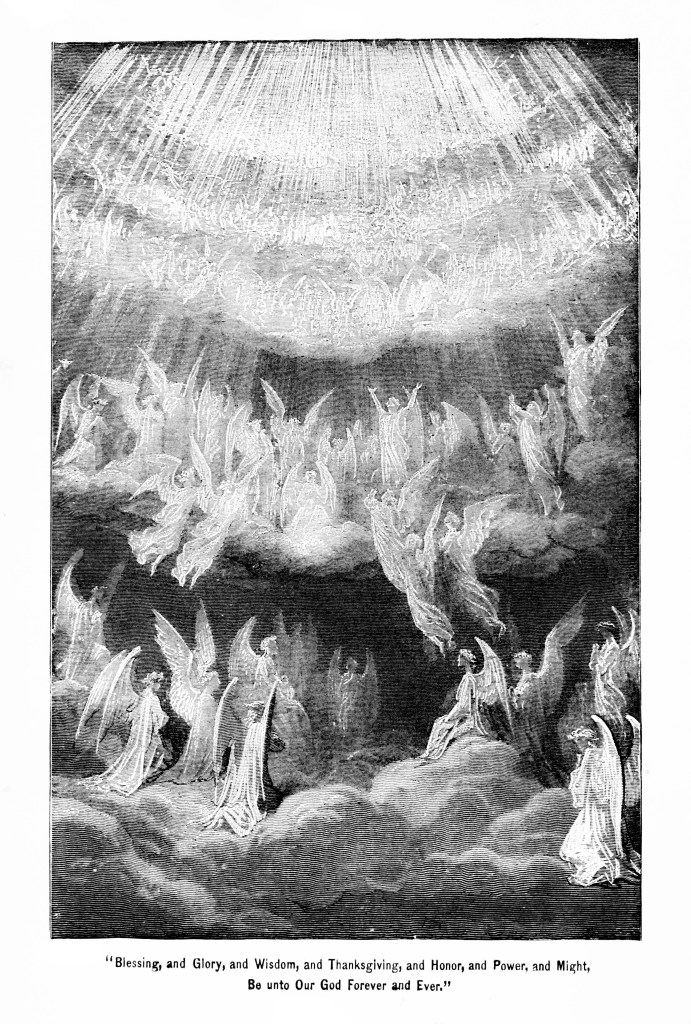
Yet, God desires and endeavors to get through to us. He was able to communicate through His “voice” and through manifestations of Himself by the “angel” of the Lord” and a “divine messenger” to people like Abraham, Jacob, Moses, Joshua, Isaiah, Ezekiel, etc. who were willing to encounter Him.
The “angel of the Lord” or “messenger of the Lord” was mysterious before Jesus came. If we are going to read the Bible not to argue with it, but to understand it, we accept what it says about Jesus: that he was God who became man. Jesus (the Word) was “with God,” and Jesus “was God.” Jesus was the exact representation of God’s being (Hebrews 1:3); Jesus was the image of the invisible God (Colossians 1:15); and Jesus, himself, said he was one with the Father (John 10:30).
In Jesus, we see the exact representation and image of the invisible God stripped down in human flesh. Jesus, who was nothing if not approachable, reveals the heart of God to human beings whose instinct in the unfiltered presence of God Almighty is to cower in abject fear.
God’s desire is for relationship with us. In Jesus, He shows us Himself – full of self-sacrificial love, gathering children to Himself, healing, giving sight to the blind, and seeking and saving lost and lonely souls. In Jesus, we see all the things people sensed about God, though He remained distant and “far off”:
A father to the fatherless, a defender of widows is God in his holy dwelling.”
Psalm 68:5
In Jesus, also, God experiences what it is like to be human. Jesus had to retreat from the busyness and distraction of human life to commune with God, going off into the wilderness and lonely places to pray. In human body, we only see as in a glass darkly is the way the Apostle, Paul, describes out present condition in relation to God. (1 Corinthians 13:12 (KJV)) Even Jesus felt the utter absence of God as he hung, dying in human body on the cross. (Matt. 27:45-53)
The Apostle John, who was the person closest to Jesus, says that all things were made through Jesus (Jn. 1:3), and though the world was made through Jesus, and though God “became flesh and made his dwelling among us” in human form exhibiting “the glory of the one and only Son, who came from the Father, full of grace and truth” (John 1:14), and though God came to His own people with whom He cultivated a relationship over many centuries, His own people did not recognize Him. (Jn. 1:11)

God the Father may remain enshrouded in His infinite dwelling where no man can see Him face-to-face. But God who became flesh, incarnate in Jesus, allowed us a face-to-face encounter with Himself stripped down in human form. Though God remains hidden to us in His full deity, Jesus revealed His nature and heart to us through intimate, human interaction.
The angel of the Lord or divine messengers in the Old Testament were similar manifestations of God. These passages give us clues to the ways in which God makes Himself manifest in the world, though He remains hidden in His full deity.
In 1 John, the apostle says that we know God if we know Jesus. And Jesus left us the third person of the trinity, the Holy Spirit, who is able to dwell in us when we accept him and yield to Him. The Holy Spirit gives us a direct interface with God in a similar way, perhaps, to the way people in the Old Testament communed with the “voice of the Lord.”
Thus, while God does remains largely hidden, being an infinite God of unimaginably vast capabilities and characteristics of which we cannot fully know in our finitude, God does make Himself manifest to us in various ways so that we can understand enough. The hiddenness of God is a function of who God is and who we are in comparison to Him. Someday, however, we will see him face to face and fully know Him even as He fully knows us. (1 Corinthians 13:12)

 Navigating by Faith
2 thoughts on “An Exploration of God’s Hiddenness in the Bible”