I am listening to The Basic Folk podcast episode 316 with Joy Oladokun (an artist I like by the way) Perhaps, that is a strange way to open a blog post on the age old heresy of Marcionism – the belief that the god revealed in the Old Testament is different from God revealed in the New Testament. Hang with me though!
Joy Oladokun (who is a musical artist you should check out) grew up in the church and cut her musical chops on worship music and listening to Phil Collins with her father. She uses biblical themes in her music, which also has a distinctly spiritual character to it.
Though she may have some heretical ideas about God and the Bible, I believe we can appreciate and like music even when the artist doesn’t believe exactly as we do and, in this case, even when she has heretical ideas about God and the Bible. We are all on a journey in our relationship to God, and I appreciate that about people and the music people make on their own journeys.
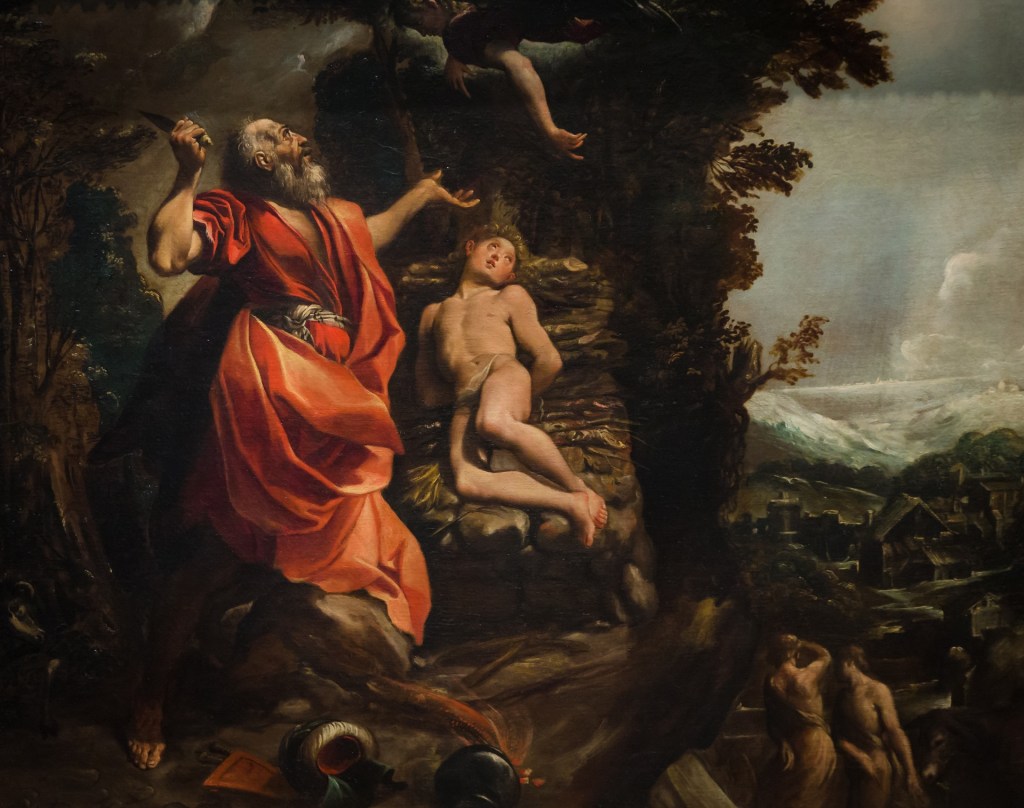
Anyway, around the 15 minute mark in the podcast Joy Oladokun expresses her understanding that God, in the Old Testament flip flops. Then, she provides this short theological synopsis, “It’s like, ‘Sacrifice your son…. Never mind, here’s a goat.” I am chuckling even now, but her thoughts and the example she gives deserves a response.
Many people her age (and all ages, really) have an issue with the story of Abraham sacrificing Isaac. It also opens up a biblical theme that I glimpsed as a young nonbeliever reading the Bible for the first time many years ago that continues to develop as I age.
Perhaps, I am fortunate that I didn’t pay much attention to theology in my formative years, because I didn’t formulate many theological ideas that colored and warped my view of God. When I read the Bible for the first time in college, I came to it with no preconceived ideas and no assumptions (that I recall).
I was raised Catholic, but I didn’t even realize that the readings in the mass were from the Bible (until after I became a Christian). I could not recall anything from the catechism classes I took. I was pretty much too zoned out (and, later, stoned out) to latch onto many theological constructs.
I didn’t know anything about evangelical ideas, like biblical inerrancy, predestination, and eschatological schemes. I came at the Bible like I approached all literature, poetry, and philosophy. I let it speak to me and convey its message to me.
Early on (as I read Genesis), I learned that Abraham heard the voice of God, and he responded in faith (with trust). I learned that the Ancient Near Eastern people from whom Abraham descended and believed in many gods who were more or less arbitrary and capricious. One of those beliefs that was ubiquitous in Abraham’s day was the belief that gods require child sacrifice to be appeased.
I could see that the God who Abraham “heard” was not like those other gods that he and the people around him believed in. I could see that Abraham lived his life on a journey (quite literally) of discovery about this God whose “voice” he heard.
Abraham’s understanding was evolving as he sensed this God and responded in faith to Him. He was learning that God was not like the gods with which he was familiar. This God made promises, and He kept them. This God desired a relationship with Abraham, and He was trustworthy.
I have to admit that the story about Isaac was a bit of a mystery to me then, but I didn’t rush to any conclusions. I understood that child sacrifice was practiced throughout the ancient Levant, but something was different about this story that carried some significance, though I wasn’t quite sure of all that it meant at the time.
There was a lot I didn’t understand. I was on a journey myself, and I realized there was mystery in the stories that belied quick or simple explanations. I, like Abraham perhaps, was willing to explore where a connection to this God might take me (after a brief flirtation with Eastern religion).
I have been on this journey now for over 45 years. I responded to the God of Abraham when I was 19 (the summer after I first read the Bible). I was far from knowing all the answers (though I did go through a period in which I thought I knew much more than I did).
I guess the thought that we know more than we really do is a human trait, and it is one we are well advised to resist. We are finite beings, regardless of the knowledge we collect, and we will never be more than finite beings in these earthly bodies that we will take to our graves.
I can’t tell you how many years I have taken to get to a place of some comfortable understanding on the Abraham and Isaac story. It is more than I might like to admit, but I have always been willing to give God the benefit of the doubt, which is what Abraham did. It is what he was commended for: faith, which is simply trusting in the goodness of God.
The Bible we have says that God told Abraham to go sacrifice his son, Isaac. We cannot escape that is what the Bible says. But, is that what God actually said?
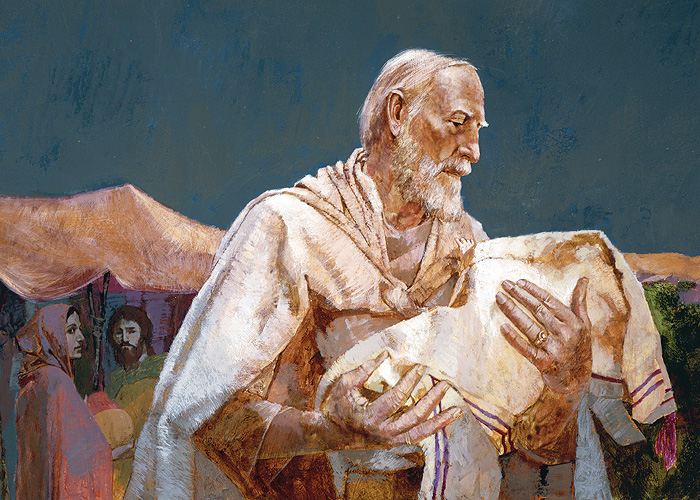
Or is that just what Abraham “heard”? Or is it just what Abraham understood? Or is it just what he felt compelled to do?
I don’t know, and I think it is ok to say, “We don’t really know.” I also think it is ok to ask the question and to assume we may not necessarily have the right answer.
In any event, Abraham clearly believed that God told him to sacrifice his son. That requirement, of course, is antithetical to the promise God had given Abraham – that Abraham’s descendants would fill the earth and become as numerous as the stars in the sky. Yet, Abraham dutifully (if not reluctantly) complied with what he believed he must do.
This is a kind of faith that we don’t understand today, especially in the post Enlightenment age of reason and science driven more recently by post-modern skepticism. We are told in Sunday school (as I have learned) that this story is about Abraham’s faith and willingness to do what he was told, though it didn’t make sense
I think that is partially true, but I have come to see that the story is not only (or maybe even primarily) about faith. The story isn’t primarily about Abraham, either. He is just the vessel through which the story unfolds. The story is about God, and who God is, and the character of God.
Whether God told Abraham to sacrifice his son, or Abraham jumped to that conclusion, doesn’t matter so much. Child sacrifice was demanded by the gods, according to Ancient Near Eastern religious thought that was formative in Abraham’s outlook on the world. He responded according to the custom, practice, and wisdom of his age.
I have written about this a number of times before. (See the Abraham and the Paradigm Shift, Abraham and the Love of God, Abraham and Isaac Revisited: Introduction, Abraham and Isaac Revisited: Here I Am, Abraham, Abraham and Faith and the Hope Deferred, and Abraham and the Blood Path) I am not going to cover all that ground again, but I return to the same theme again because it has roots in my initial revelation of God and my own journey of faith. As I hope to flesh out, it also provides some insight into the God who seems to flip flop.
I am convinced that God has not changed. Jesus, who is universally the most revered figure in all of religion, honored the God of the Old Testament and claimed to be one with Him. This same Jesus claimed to be the incarnation of that God in human flesh, and the writer of Hebrews says that “Jesus Christ is the same yesterday and today and forever.” (Heb. 13:8)
I believe that God doesn’t, but people change. Abraham and the people whose stories are told in the Old Testament were Ancient Near Easterners. They had different concepts about God and the world than we do (though we can see basic elements of their beliefs, still, in people today), though people have changed in their thinking also over the millennia.
The stories told by the people in the Old Testament were related through the filter of Ancient Near Eastern minds. They were inspired by God. They were “God-breathed” as Paul described it to Timothy. They are useful for “useful for teaching, rebuking, correcting and training in righteousness” for us, but we need to recognize that their understanding was limited, nevertheless, by their times, culture, and place.
Process Theology proposes that God is the entity who changed over time, as is revealed in the Bible, but I don’t believe that. I believe we (human beings) have changed as God has revealed Himself to us over time.
To that extent, it is amazing to me that God could have orchestrated such a revelation of Himself that begin in the Ancient Near (and before that) in such a way that the stories and that revelation continues to inspire and inform and revolutionize our thought still in this 21st Century!
I believe the story of Abraham and Isaac is part of that progression. In the context of the Abrahamic story, God was revealing to Abraham (and to us thousands of years later) that He is not arbitrary and capricious.
Though Abraham believed he must sacrifice Isaac despite waiting decades for the fulfillment of the unattainable promise God gave him, God revealed to Him that He is not like that. He doesn’t require such sacrifice.
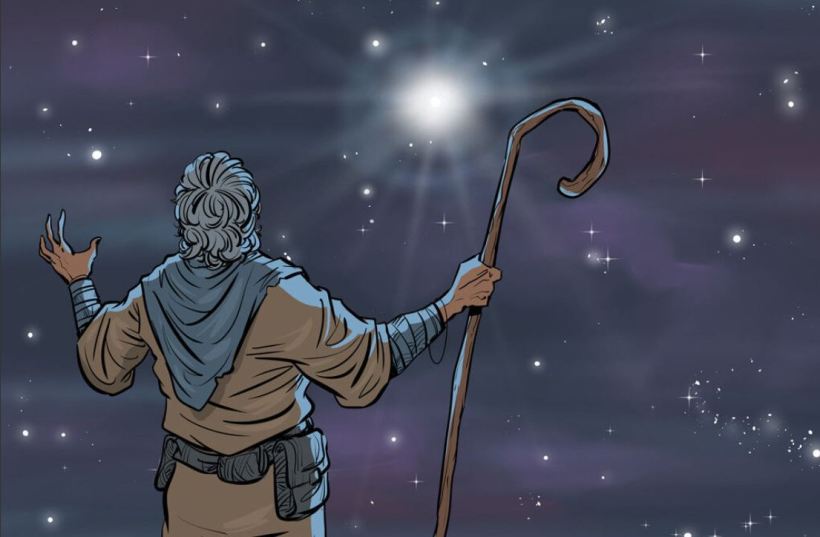
He is a God who cares for His us and desires relationship with with us. He is not a God who forces Himself on us. He is a God who reveals Himself to those who are hear his voice and are willing to trust Him.
God did that by allowing Abraham to walk right up to the edge of doing what he felt compelled to do in order to show Abraham that God provides another way. The demonstration of this proof, for Abraham, was all the more compelling for having walked through this demonstration personally.
Whether God told him to do it, or not, God did not change. Abraham was the one who changed in his understanding of who God is. God was taking Abraham through the thought process he knew in the culture with which he was intimately familiar to reveal to Abraham something that Abraham was sensing, but did not fully understand.
As Abraham and Isaac worked their way up Mount Moriah with the wood for the sacrifice to be made on that high place – which is where such sacrifices were made – Isaac asked where the sacrificial lamb was. Abraham’s response was, “God will provide”. He sensed it, but he didn’t fully understand it.
Abraham had to carry through with what he thought was required of him by his limited understanding to learn that God provides. Abraham had to do this to learn that God is not One who needs to be appeased, to learn that God provides the means by which we can attain relationship with Him, to learn that we can trust God with the things most dear to us.
So profound and life changing was the lesson that Abraham learned that his descendants perceived God diametrically different than those from whom Abraham descended. The paradigm shift was so great that we, today, find the story (itself) so distasteful (to think that God might have asked Abraham to do it) that we recoil in horror at the thought.
It’s ironic that we find it so difficult to make sense of the story that we think God actually intended Abraham to do what we find (now) so unthinkable. Yet, we think nothing of the child sacrifice we practice today – not in subservience to gods (or God) who we think we must appease, but in subservience to our own ends.
God is not the one who flip flops. We are the ones who change.
I cannot begin to get into what has changed between the Old Testament to the New Testament, but I will say this in closing: God has not changed. I believe He has been revealing Himself little by little and unfolding His plan through all the generations of people from the beginning, and His plans are progressing to a conclusion that He has intended from the beginning.
He is the one who sees the end from the beginning. (Ecclesiastes 3:11) We do not have the perspective in our finitude to see what God sees. We often find greater understanding in retrospect, but our understanding will always be incomplete. Now, we only see “as in a mirror dimly” (or “through a glass darkly”), but someday “we shall see face to face; how, we know only in part; but then we shall know fully, even as we are fully known! (1 Corinthians 13:12)

 Navigating by Faith
I like hearing stories about how people come to their faith and increase their knowledge of the Lord. Over time, our understanding increases bit by bit as the cry of our heart is that we want to know him. I enjoyed your post. Thank you.
LikeLiked by 1 person