
In 2014, during the Syrian refugee crisis, I watched the flood of humanity escaping from the ruthless butchery that occurred during that time in that region of the world. I recall the controversy in the various countries to which this seemingly unending stream of people fled in desperation and anger. Some countries like Germany opened the floodgates; other countries like Hungary closed their borders.
I empathized with people who didn’t want their countries overrun by foreign refugees. I watched the mass of displaced foreigners overwhelming the roads and rails in Europe, and I read stories of mobs of young Arab men taking out their anger on the countries they entered and women they encountered there.
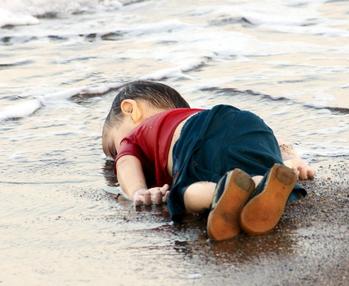
I saw mothers and fathers with desperation in their eyes and fearful children in tow. The image of a lifeless little boy washed up on a sandy Mediterranean beach still haunts me.
Syria was home to the oldest population of Christians on earth, and Christians were caught in a sectarian and political power struggle between largely Muslim factions fighting for and against Democracy. Both Christians and Muslims fled from the conflagration between the deadly governmental crackdown against the popular rebel uprising, and the ruthlessly uncompromising, opportunistic butchers of ISIS who joined in the fight.
Though many of the refugees were Christians caught in the cross fire, and the though the rebels fought for Democracy, President Obama resolutely refused to open American borers to more than a handful of Syrian refugees. As the flood of humanity streamed into Turkey and Europe, we stood aloof.
I was torn. The throngs of young and angry Muslim men mixed with desperate parents and fearful children pulled me in different directions, and I didn’t know how to respond.
I had recently done an apologetic study of Christianity vs. Islam, and my concern about the angry, displaced Muslims was keen. President Obama and the Democratic majority acted as if the moral fabric of the universe would rend in two if we verbalized what everyone knew and thought: that angry young men indoctrinated by radical Islam are dangerous.
Yet, the faces of those parents and children and the haunting visage of the 3-year old Alan Kurdi lying lifeless and washed up on a Mediterranean shoreline begged for a compassionate response.
I realized in that conflict of opposing strains of response to the Syrian crisis that I really had no idea how a Christian should look at these things. I realized that I didn’t know what, if anything, a robust reading of Scripture might suggest.
So, I did what I should have done a long time before that. I did a deep dive into what the Bible has to say about immigrants.
For anyone who does not honor or respect or believe in the Bible, this won’t mean much to you. For me, it was important to know whether the Bible addressed the subject and, if so, what the Bible has to say about it.
I discovered to what should not have been my surprise that a consistent thread runs through the Bible with a strong message on the subject of immigrants.
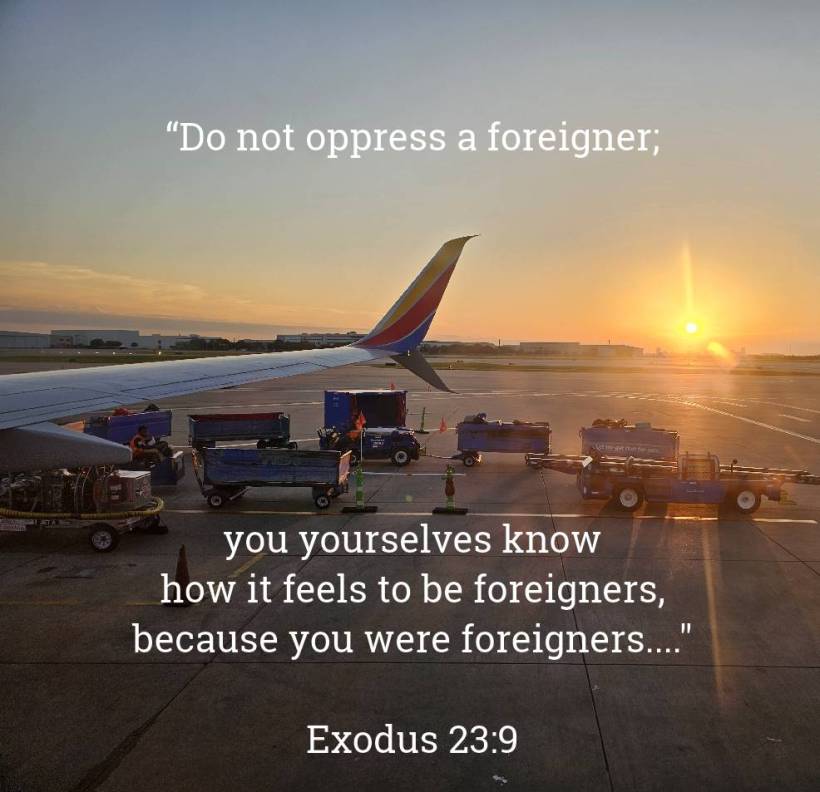
That message is that God’s people should be gracious, hospitable, welcoming, protecting, looking out for, and aiding the foreigners who come to reside peacefully among us.
In many places throughout the various books of the Bible, God’s people are reminded that they once were foreigners in a foreign land in Egypt. God reminded them so they would not forget the 400+ years they were foreigners in a foreign land. They were expected and encouraged to develop a sense of identity and kinship with foreigners.
I realized that Christians, also, have a similar identity. As citizens of heaven, we are now aliens and strangers in this world (1 Peter 2:9-12) if, indeed, we are in Christ. Our core identity should be as sojourners and foreigners on this earth, waiting (like Abraham) for that city the architect and builder of which is God. Our roots should be planted in the soil of heaven and not in the soil of this earth.
Moses introduced the great narrative of loving our neighbors in Deuteronomy and Leviticus that Jesus famously extended to loving our enemies in the Sermon on the Mount. When Moses introduced this overarching law of God, did so in the context of foreigners living among God’s people.
Loving your neighbor and treating them as you would want to be treated is embedded in that context. Leviticus 19:34 illustrates the idea of loving your neighbors as yourself with the instruction to treat foreigners like native-born people.
I was impressed how clear the message is and how consistent it is through the Torah, the Psalms, and the Prophets. God’s word consistently emphasizes the importance of treating foreigners with compassion, justice, mercy, and love. This message is predicated on the admonition to God’s people who were saved out of Egypt to remember their own experience as foreigners in in a foreign land.
The salvation of God’s people out of the land of Egypt is an archetype and foreshadowing of the salvation we have in Jesus, who saves all people from sin and death in our plight as foreigners driven out of the garden. Because of Jesus – if we accept him as our Lord and Savior – we are now citizens of heaven and no longer citizens of the kingdoms of this earth.
We might wonder whether God would instruct us as He instructed Moses and the people coming out of Egypt. Perhaps, that was a different time and place. Perhaps, God had unique purposes for His people at that time that are no longer at play.
Maybe, but I don’t think so. God, Himself, watches over foreigners (Psalm 146:9), and foreigners, like the Samaritans during the time of Jesus, are a litmus test for God’s people. Are we willing to do as God says and love them as we love ourselves? Are we willing to extend the same grace and mercy to them that God extends to us that He would call us citizens of His heaven?
Jesus doubled down on loving our neighbors as ourselves when he said all of the Law and Prophets are summed up in just two principals: love God and love your neighbor. That is at the core of who we should be.
The Parable of the Sheep and the Goats illustrates how personal these things are to God. When we neglect and reject a poor person, a hungry person, or a stranger/foreigner, we neglect and reject Jesus, himself.
When Jesus said he came to preach good news to the poor and to set the oppressed free (Luke 4), he was echoing Isaiah and all the prophets who consistently urged God’s people to care for widows, orphans, and foreigners. We tend to spiritualize these words and separate them from the reality that Jesus set people free physically and spiritually.
This attitude we find in Scripture of sensitivity and compassion towards foreigners stands in contrast to the attitudes towards foreigners on display in our country today. I can understand people with no respect for the Bible cheering on the swift, powerful hammer of government crushing the “illegals” in this country. That is the prerogative of a sovereign nation.
So be it. Such nations and the people who do their bidding have a Judge, and it isn’t me.
We as Christians, however, owe our allegiance to Christ and his kingdom, which is not of this earth. I appeal to people who do believe in and respect the Bible to adopt a different attitude.
The witness of Scripture is full of God’s instruction to His people to embrace a different attitude toward foreigners – an attitude of care and concern. This attitude flows from the very heart of God who seeks to protect the foreigner and would have us to the same.
The God of the harvest is bringing the world to our doorstep, and how do we respond? Do we protect our earthly turf and turn them away, protecting our treasures we are laying up here in this world?
This current administration in 2025 seems to assume that justice must be swift, and harsh, unbending and cruel. Righteousness and justice without mercy, however, is not biblical justice. (See Justice and Mercy and the Faithfulness of God)
Again, God instructs His people to have different attitudes than those in the world who don’t know Him. How people judge their neighbors is how they will be judged. Should we, who have received God’s ultimate grace by which the borders of heaven have been opened to us, adopt an attitude of turning away and deporting foreigners who seek an earthly grace? Should we not open our borders to the harvest?

I was recently inspired by Isaiah 30:18 and wrote about the interplay of justice and mercy demonstrated by God. God waits to be gracious. He is exalted in showing mercy.
God’s attitude and His desire is to be gracious and to show mercy. This should be our attitude and desire also. Just as Paul says in Philippians that we should have the same attitude as Christ, who emptied himself of his glory and became a man and died on a cross for us, we should have the same attitude as God the Father who desires to extend grace and show mercy.
But, if our justice is without mercy, we will receive justice without mercy. For by the measure with which we judge, we will be judged. (Matthew 7:2) According to the mercy we have shown, we will be shown mercy. (James 2:13) Just as we are forgiven as we forgive.
This is how God’s economy works. It isn’t like the world, and we should not support or defend an attitude that runs contrary to God’s clear message to us, His people.
Justice in immigration demands mercy, because God is exalted in showing mercy; God’s justice is demonstrated in showing mercy; God desires us to be merciful as He is in doing justice. Justice expressed in our attitudes toward immigration must be informed by grace and mercy if we are going to be true to God’s character and his clear instruction.

 Navigating by Faith