The following words were Paul’s assessment of the Corinthians when he wrote to them in the letter we call 1st Corinthians:
“[Y]ou are still influenced by the flesh. For since there is still jealousy and dissension among you, are you not influenced by the flesh and behaving like unregenerate people?”
1 Corinthians 3:3 NET
Paul admonished the Corinthians for having jealousy and dissension among them. What Paul meant in that phrase (jealousy and dissension) may not be exactly as you imagine, however. Of course, I will explain.
First of all, though, we need to understand that Paul wrote this letter to the Christians at Corinth. He was writing to people who were born again who were “still influenced by the flesh” , causing those Christians to behave “like unregenerate people”.
Christians today are also still influenced by the flesh, and we sometimes act like unregenerate people. And, that’s not okay!
God’s plan for you is to be conformed to the image of Jesus Christ (Romans 8:29) who is the “the exact representation of [God’s] being”. (Hebrews 1:3) God had same plan for the Corinthian Christians, and He has the same plan for all Christ followers today.
If I have time and focus enough, I will make this a series. Today, though, I want to focus on the influence Paul specifically identified the Corinthians – jealousy. (If you read the whole letter, you find that jealousy wasn’t the only issue, but it’s the one Paul leads with.)
The word translated as jealousy in this verse is ζῆλος, ου, ὁ (zelos), meaning eagerness, zeal, rivalry. (Biblehub) It is an onomatopoeic term that mimics the sound of water bubbling over from heat. It may even derive from the Greek world, zéō (“to boil”).
Zeal comes from the same root word (zē), which means “hot enough to boil”. This word can be used in the positive or the negative. It can be used metaphorically with many emotions such as boiling anger, burning love, burning zeal, etc.
A person who burns with zeal for God is exhibits a positive form of zelos, but a person who burns with zeal for idols exhibits a negative form of zelos. Burning passion for one’s spouse can be good (unless it gets possessive), but burning passion for someone else’s spouse is not good.
Paul pairs zelos with ἔρις, ιδος, ἡ (eris) in the verse quoted above, which means strife and is often translated as contention, strife, wrangling, or quarreling. It means to have a contentious spirit. Thus, zeal (zelos) with a contentious spirit (eris) is how Paul assesses some people in the church in Corinth.
That kind of zeal is caused by the influence of the flesh. That kind of zeal, Paul says, is unregenerate behavior, and needs to stop. So, what is Paul specifically talking about?
Paul is talking about the quarreling among them over who they follow: “One of you says, ‘I follow Paul’; another, ‘I follow Apollos’; another, ‘I follow Cephas’; still another, ‘I follow Christ.'” (1 Cor. 1:12) He comes to the point again in Chapter 3 when he says, “Are you not acting like mere humans? For when one says, ‘I follow Paul,’ and another, ‘I follow Apollos,’” are you not mere human beings?”
Stop and think about that for a moment…. Don’t we still do that in the 21st Century, too? Paul says that this kind of attitude is worldliness; it is acting like “mere infants in Christ” (1 Cor. 3:1); it is acting as of we are unregenerate.
If we are going to take Paul (and God) seriously, we should not allow ourselves to burn with a contentious spirit that leads to dissension with fellow Christians. With that in mind, let’s take a deeper dive into what I believe Paul is saying.
I am not completely sure why zelos is translated as “jealousy” in many translations (NIV, ESV, NASB, etc.), but I have an idea. Jealousy is a strongly possessive emotion. It can have positive connotations, (as in God being jealous for us), but it can easily devolve into negative emotions driven by selfish desires to hold on to something, and it is often motivated by a fear of loss.
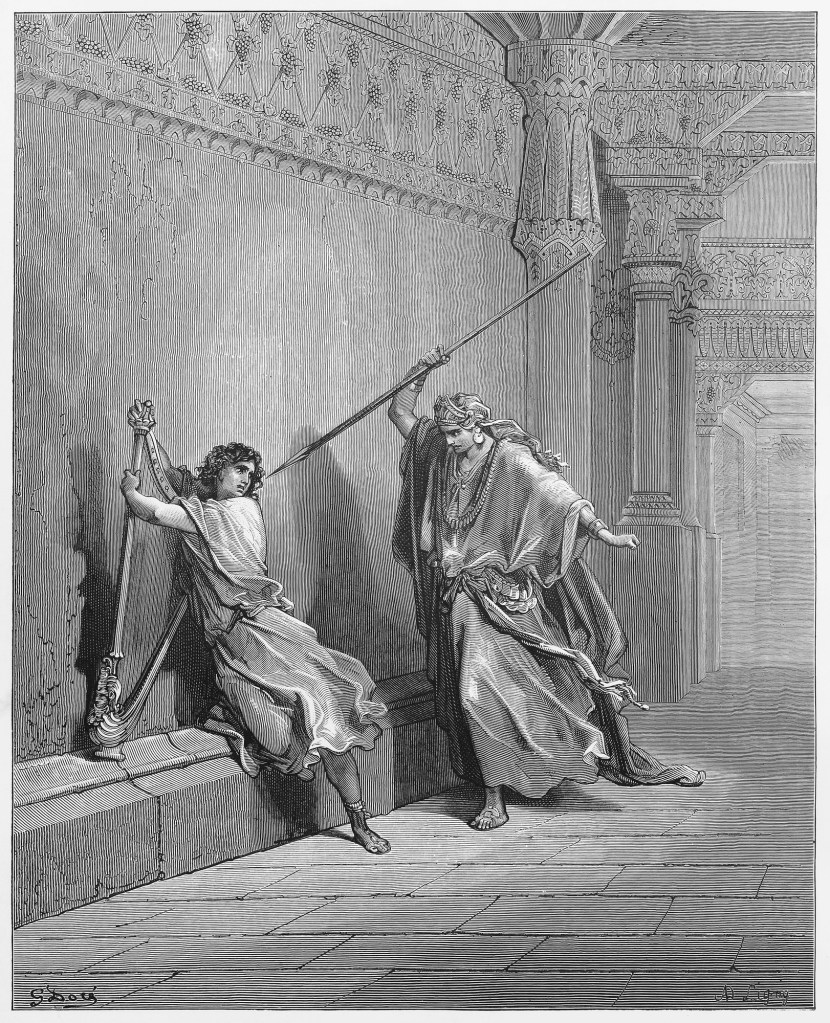
A classic example of this kind of zeal/jealousy in the Bible is Saul who became jealous of David. (1 Samuel 18:6-9,29) Saul was losing his grasp on the calling God gave him as king. He was turning away from God, exalting himself, and losing touch on reality, and he became jealous of David.
David was blessed, favored by God, and increasing in popularity among the people. Saul’s jealousy led him to want to kill David to hold on to the position he had.
All things come from God. He gives, and He takes away. When we try to hold onto what we have (or think we have), and when we strive for what we want or think is right with zeal that is not subservient to the Holy Spirit – even good things – we risk being influenced by the flesh and acting like unregenerate people.
I presume that following Paul was a good thing, and following Cephas (Peter) and Apollos was good. Certainly following Christ was a good thing! Right?!
Who they followed really wasn’t the issue. The issue was that they were quarreling about it. Who each person followed became a point of contention.
I heard someone say recently that sports teams give us an excuse (or an outlet) for venting our human tendency to be biased. It is an acceptable form of prejudice. We all know that person, though, who seems to take their sport affiliation(s) far too personally.
The my team/your team dichotomy is basic human tendency. Taken to a zealous extreme by, that tendency is fleshy, sinful, and sometimes even evil. The “my dad is better than your dad” playground talk has the same root as “us” against “them”. It can turn “them” (whoever “they” are) into enemies.
Our focus should be the kingdom of God and His righteousness (Matthew 6:3), but we all too often focus on other things. When we burn with passion for the wrong things, we are being influenced by the flesh, and we act like unregenerate people.
Even when we burn with zeal in the wrong way for good things, we are being influenced by our basic human instincts and acting like unregenerate people.
Think about it: what’s wrong with being proud that I follow Christ? Didn’t Paul include those “who follow Christ” as a category of those who are being influenced by their flesh?
It’s isn’t the following of Christ that is the problem; it is the quarrelling about it; the uncontrolled zeal; the jealousy (being possessive) about it. The fruit of the wrong attitude that Paul was addressing is dissension. WHENEVER there is dissension among fellow believers, I suspect the influence of the flesh is behind it.
Christ followers who are contentious act like people who don’t know Christ. Plain and simple. Contentiousness and dissension doesn’t come from the Holy Spirit; it comes from the flesh. Being militant, dogmatic, argumentative, etc. comes from the flesh, not from the Spirit.

When we burn with zeal for anything other than God, we risk becoming jealous. When we burn with zeal to possess something – even good things – trying to hold on to them, and becoming absorbed in the desire to have them and keep them, we are missing the mark.
Jealousy is marked by possessiveness. Possessiveness leads to exclusivity. Thus, the Corinthians had dissension in their midst. Each one championed a different leader, and they took it too far. They became quarrelsome and exclusive. They became “jealous” of their own positions, not wanting to give an inch to acknowledge someone else’s “champion” of the faith.
This kind of jealousy (burning zeal that goes too far) leads to church breakups, denominational splits, and bitter doctrinal disputes with each group trying to hold on to their own pet ways of doing things, ways of seeing things, and ways thinking to the exclusion of all other ways.
Perhaps, this is why Paul brings them back to focus on the basics of Christian faith. When Paul gets near the end of this letter, he focuses them on the matter he says is of “first importance”:
that Christ died for our sins according to the Scriptures, that he was buried, that he was raised on the third day according to the Scriptures, and that he appeared….
1 Corinthians 15:3-5

Paul took them back to the basics. He took them back to the foundation of the faith. In the beginning of the letter, Paul said in response to the dissension they were having over who to follow, “I resolved to know nothing while I was with you except Jesus Christ and him crucified.” (1 Cor. 2:2)
It seems he did this, so they would stop their quarreling over who each one of them followed in the faith and to focus them back on the basics of the faith. Regardless of the sophistication of their doctrinal reasons for championing each man, Paul said they were acting like “mere infants in Christ” and needed the milk of the Gospel – pure and simple.
Sometimes, our desires and wants need to be stripped away. Sometimes our thinking needs to be torn down and rebuilt. Sometimes, we need to be pruned back to the foundation because we have wandered too far in our burning zeal to hold onto our own ways of thinking and the tribe to which we have pledged allegiance.
Was it wrong to honor, respect, and follow Paul, Cephas, Apollos, or Christ? I don’t think so. What was wrong was to be possessive, burning with zeal, and exclusive about who they followed. Anytime, believers have dissension, we must be concerned that we have gotten off track.
I know that the word, “deconstruction”, is a loaded term in the Christian world these days. I dare say, though, that deconstruction of our wrong ways of thinking, of our wrong attitudes of the heart, and of our wrong desires is often necessary so that we can rebuild true and plumb with Christ on a firm foundation.
When we get off track, we need to go back to the foundation of faith and “reorientate” ourselves in the right attitudes, thinking, and posture toward God and fellow believers. That orientation is love, because God is love! (1 John 4:9) If we have all knowledge and can fathom all mysteries, but we have not love, we have nothing. (1 Cor. 13:1-3)
Though God is jealous for us, He is not possessive in a negative way – as in being coercive, manipulative, or overbearing. God could immediately overwhelm the entire universe with his manifest presence, but He doesn’t do that. He gives us space.
He does that because, being love Himself, God desires love in return. We could not love him (as He loves us) if God was possessive, as in being coercive, manipulative, or overbearing.
We should not be that way either. We need to give each other space. As finite creatures (not all knowing like God), this should be all the more true for us because none of us knows everything. We know only in part. (1 Cor. 13:9)
When it comes to following Christ, doctrines that are not counter to the foundation of Christian faith (the life, death, resurrection, appearance of Jesus in bodily form, and ascension into heaven) should be held by us loosely, with respect (allowing space) for other ways of thinking.
As Paul says elsewhere, we should each be convinced in our own minds, because whatever is not of faith for us, individually, is sin. We each need to be true with integrity to walk out our own faith as the Holy Spirit works within us in the way that seems right to our own consciences, but we need to recognize that every other person who Calls Jesus Lord is trying to do the same thing.
We should not burn with zeal after our own ways of following Christ (whether we follow Paul, Apollos, Calvin, or Ham), causing dissension among the ranks of fellow Christians. We should not be so zealous for our positions and those that agree with us that we become contentious and argumentative, resulting in quarrels and disagreement.

Rather, we should be unified in the foundation of our faith. Thus, Paul says:
I appeal to you, brothers and sisters, in the name of our Lord Jesus Christ, that all of you agree with one another in what you say and that there be no divisions among you, but that you be perfectly united in mind and thought.
1 Corinthians 1:10
That unity comes from a focus on the foundation of our faith – the matter that is of first importance – that Christ died, was buried, rose again, and he appeared. Most everything else is (according to Paul’s letter to the Corinthians) is on the periphery.
Of course, we all know it isn’t quite that simple. More on that next time. In the meantime, though, we can take our clues from Paul in his first letter to the Corinthians: Jealousy (possessiveness) and dissension (contentiousness) among Christians means we are being influenced by the flesh. (1 Cor. 3:3) it means something is wrong – at least in our attitudes.
If we have dissension among us, we need to go back to the basics (go back to a point of agreement). (1 Cor. 3:2) It seems obvious that, if we don’t have agreement on the basics, we we may have to questions the faith of those who can’t ascribe to those basics. Even then, though, quarreling is not the answer. (Jesus told his disciples simply to wipe the dust of their feet and move on.)
We all need humility, which comes in the form of recognizing that knowledge and understanding (the ability to fathom all mysteries) without love is nothing. (1 (Cor. 13:2) We seem to put more emphasis often on believing the right things (knowledge and understanding), when Paul says that love is most important.
Of course, knowledge and understanding is important. Paul doesn’t say it isn’t important, but we need to recognize that we ALL only know in part. (1 Cor. 13:9) Even those who are smartest among us know only in part. So, be humble!
The greatest thing is love (followed by faith and hope). (1 Cor. 13:13) LOVE, because God first loved us. LOVE, because God is love. LOVE, because that is how the world will know us – by the love we have for each other.

 Navigating by Faith