I go back from time to time to the early “church fathers” for perspective. Most recently, I have focused on what we call The Epistle of Mathetes to Diognetus (the “Letter”). Even when translated from the Greek language in which it was written, the words and thoughts ring foreign to our American ears.
As I read this early Letter, I am impressed that Christians in the 21st Century have much to learn from 2nd Century Christians. They lived into the message of Jesus in ways that we seem to have long since forgotten
We don’t know who the author was. The Greek word, “mathetes“, merely means “student”. The person or ruling family to which the letter was written is also uncertain. We only know it was written in the early to mid 2nd Century.
The Church had grown slowly but steadily into the 2nd Century. Persecution ebbed and flowed around those early Christians, but they were more generally ignored and almost universally despised. In many ways, Christians were a complete oddity. They didn’t fit into the pagan (Greco/Roman) culture or the Jewish culture.
Christianity was centered in Jerusalem until the Roman war against the Jews and the destruction of the Temple in 70 AD. Christians scattered at that point, though Jerusalem remained one of many hubs of Christian life. The 2nd Century was a time of decentralization and spreading out throughout the Roman Empire and beyond – into areas of Africa and Asia, some of which were controlled by the Roman Empire, and some not.
According to the Letter, Christians were not physically, culturally, or linguistically distinguishable from the people in the many places in which they lived. They were distinguishable in other ways:
“But, inhabiting Greek as well as barbarian cities, according as the lot of each of them has determined, and following the customs of the natives in respect to clothing, food, and the rest of their ordinary conduct, they display to us their wonderful and confessedly striking method of life. They dwell in their own countries, but simply as sojourners. As citizens, they share in all things with others, and yet endure all things as if foreigners. Every foreign land is to them as their native country, and every land of their birth as a land of strangers.”
The Epistle of Mathetes to Diognetus
chapter 5
The most distinguishing feature of those Christians, according to the author of the Letter, was their “striking method of life”: they lived as strangers in their own countries. Though they were citizens in those countries, they “endure all things as if foreigners”.
We might be tempted to think that the “uprootedness” of early Christians was merely a product of rejection and persecution by non-Christians, but the Apostle Peter suggests otherwise: Christians are a “royal priesthood” and a “holy nation” who live as “foreigners and exiles” in this world. (1 Peter 2:9,11) This echoes the writer of Hebrews, who described all great people of faith as “foreigners and strangers on earth”. (Hebrews 11:13)
These passages in the New Testament epistles highlight a fundamental trait of Christians in the world at that time. But not just at that time; Jesus spoke to all his followers (including us) when he said, “[Y]ou are not of the world” (John 15:19), and, “My kingdom is not of this world.” (John 18:36)
How strange are these words and concepts to modern Americans! From the earliest days of our youth, we are taught about our freedoms and rights as American citizens. In contrast, 1st and 2nd Century Christians enjoyed some rights as citizens of the various countries in which they lived (maybe not as robust as the rights we enjoy), but they lived as if they had none. And, this was their “distinguishing “striking” feature as a people! It is what made them stand out.
They marry, as do all [others]; they beget children; but they do not destroy their offspring. They have a common table, but not a common bed. They are in the flesh, but they do not live after the flesh. 2 Corinthians 10:3 They pass their days on earth, but they are citizens of heaven.
the Epistle of Mathetes to Diognetus
chapter 5
Second Century Christians lived as if they were really not of this world. And, this “feature “striking method” of living was noticeable. They adapted and fit into their surroundings and culture wherever they lived, except for this one thing: they lived like they were not citizens of the countries in which they lived – even if they were actually citizens.
They were outsiders wherever they lived because they lived like citizens of heaven. They fit in wherever they went, but they stood out by their allegiance to loving God and loving others. How strange and foreign that may seem to us!
I learned recently that Augustine wrote the City of God after Rome was sacked by the Visigoths. I had never connected the timing or the reason for writing it historically, but that fact underscores my thoughts today.
The City of God is known as one of the greatest Christian writings. Ever. Bar none. It was written to console the Christians in the Roman Empire after Rome fell to outsiders. Augustine was motivated by the destruction of Rome to contemplate and write about the ultimate destination of all Christians – the city of God, the city with foundations, whose architect and builder is God. (Hebrews 11:10)
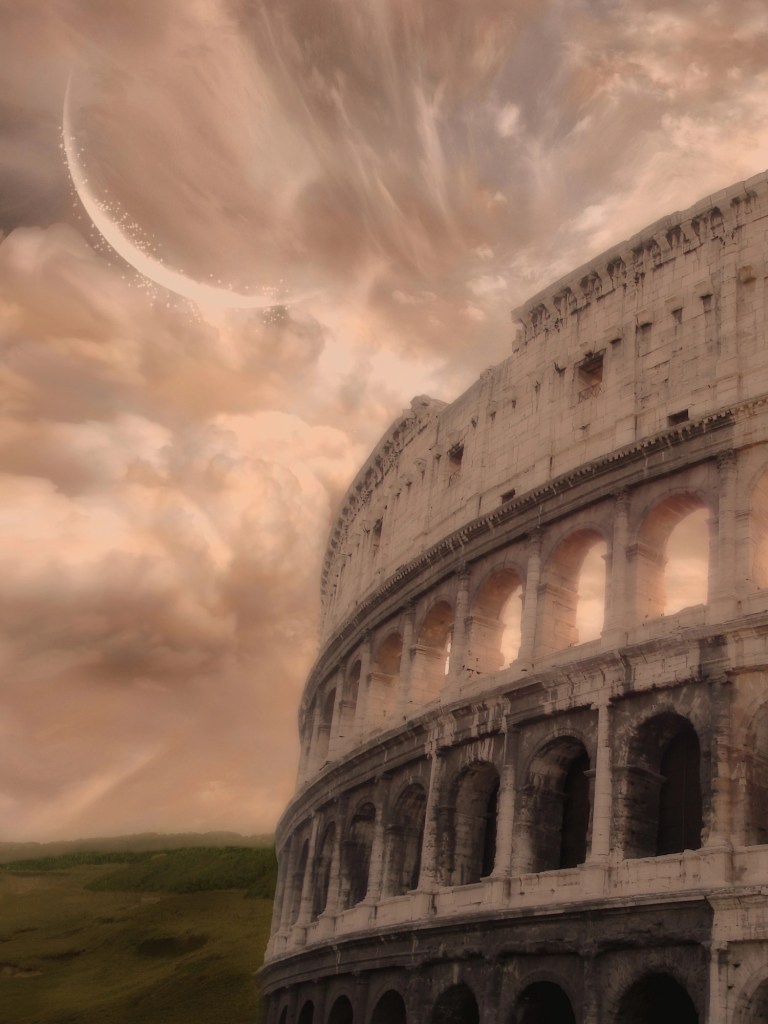
We might think of the Roman Empire as barbaric, the empire that hung Jesus on a cross, the great Beast that persecuted Christians, and the Babylon of Revelations. Fifth Century Christians, however, thought of Rome as Christian – just like we consider the United States of America to be a Christian nation.
Emperor Theodosius made Christianity the official religion of the Roman Empire by the Edict of Thessalonica in 380 AD. Rome was sacked by the Visigoths in 410 AD. Imagine the disappointment of Christians who had suffered great persecution and difficulty for centuries. They finally reached the pinnacle of influence in the world – becoming the official religion of the Roman Empire – to the great Roman capital overtaken by outsiders.
Augustine, however, had the perspective and presence of mind to recall and remind them from their scriptural heritage that they were not citizens of an earthly kingdom, but a heavenly one. They were citizens of the City of God first, foremost, and always.
Perhaps, no one had more right to claim a land and to rule over it than Abraham and his descendants. God promised it to him and his descendants and sealed that promise with a divine covenant. Yet, Abraham lived in tents like a foreigner in that land God promised him. Such was Abraham’s faith:
“By faith he made his home in the promised land like a stranger in a foreign country; he lived in tents, as did Isaac and Jacob, who were heirs with him of the same promise. For he was looking forward to the city with foundations, whose architect and builder is God. “
Hebrews 11:9-10
Not just Abraham lived this way. The writer of Hebrews heralds all the great people of faith for having the same perspective:
They did not receive the things promised; they only saw them and welcomed them from a distance, admitting that they were foreigners and strangers on earth. People who say such things show that they are looking for a country of their own. If they had been thinking of the country they had left, they would have had opportunity to return. Instead, they were longing for a better country—a heavenly one.
Hebrews11:13-16
What are we looking for? Where is our place in the world?
A return to the Christianity of our founding fathers? To make America great again? To attain our manifest destiny in this world?
Do we not know that we, also, have a heavenly country waiting for us?
I just listened to a podcast in which a missionary in Bolivia shared how he feels like an outsider there. Though he is now a Bolivian citizen and had three children in Bolivia, he lives with the sense that he is still a foreigner in a foreign land. When he returns to the United States, now, he also feels like an outsider because of his new life in Bolivia.
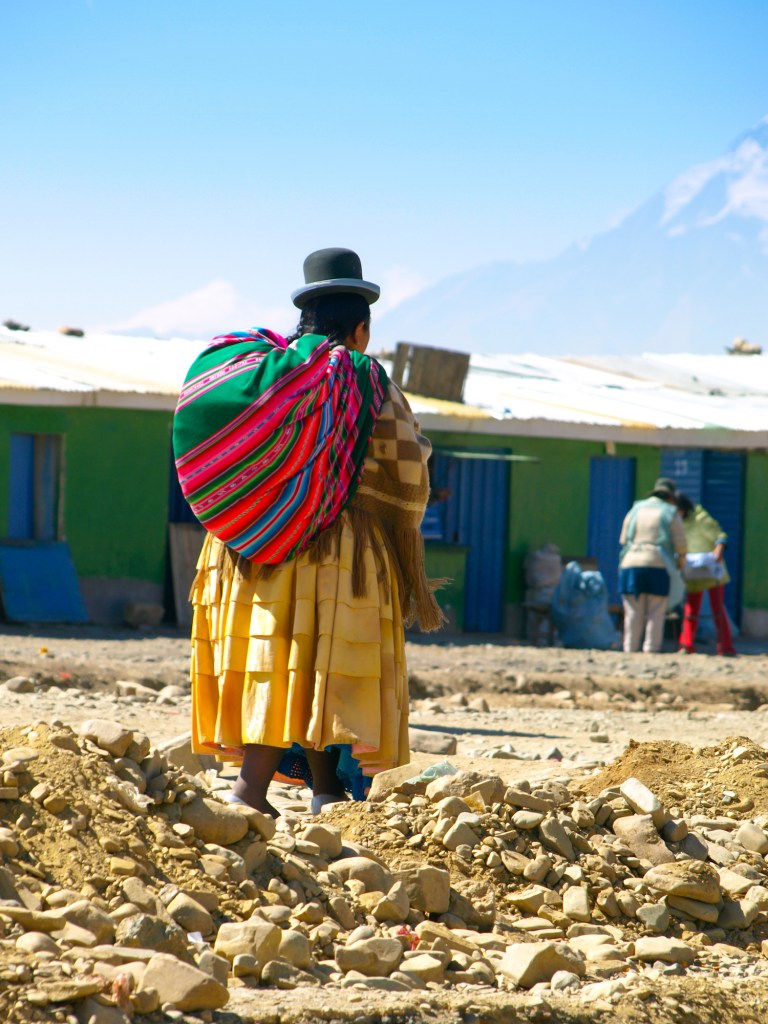
He loves and serves the Bolivian people as an ambassador of God, but he does not get involved in their politics because he is an outsider. He recognizes, “It’s not my culture, and it’s not my fight.”
As an outsider, he listens to all people, and he sees merit in all their voices, though political tensions often separate them from each other. He recognizes that he doesn’t have a dog in their fight, so he is able to love and to serve everyone.
From his outside perspective he can see that the positions people in different political factions take blind them from seeing the value in what “others” say. He is too distant from their culture to get involved in their politics, but they are too close to it to be objective.
I am not suggesting that Christians should never get involved in politics, but I think we should be more like the missionary to Bolivia who maintains a perspective as an ambassador of Christ. I am not saying that we should live in tents and disconnect from American culture, but I am convinced we need to live more robustly into our heavenly citizenship, and we need to live, therefore, as foreigners sojourning in this world.
I recently heard someone decrying the great deconstructing that is going on in the American church and the rapid rise of the “nones”, especially among the younger generations. He remarked that, “Maybe they no longer believe in Christianity because they can see that their parents don’t live as if we really believe it!”
We are “foreigners and exiles” in the world, as Peter said, living “among the pagans” – if we truly believe what Jesus said.
The early Christians turned the Roman world upside down, not by influence or power, but by “liv[ing] such good lives among the pagans that, though they accuse you of doing wrong, they may see your good deeds and glorify God on the day he visits us.” (1 Peter 2:12) That way of living among the pagans in the world that Peter identified can be seen in the Letter describing Christians to Diognetus.
I would be surprised if anyone writing a letter to the US government would describe Christians living in the United States in the same way. Christians in the United States seem to have lost this flavor that was so striking among the early Christians. We have lost our saltiness.
I am reminded that our place in the world is anywhere and everywhere, and our place in the world is nowhere at the same time. Just as Abraham was called to a place God promised to Abraham and his descendants, we are children of that promise (If we believe). Just as Abraham went in faith to that place, yet he lived in the land like a foreigner in tents, we live in the places in which we are called only as sojourners, passing through.
The place God gave to Abraham and his descendants (and all of us) is temporary because we are temporal. We live and die in this world – from dust to dust – but our destiny is a heavenly country.
These earthly bodies in which we live are temples, but they are tents at the same. Our bodies are perishable, but we will be raised with an imperishable body. (1 Cor. 15:42-44) We look for a city whose architect and maker is God just like the men and women of faith in Hebrews 11. We look for a heavenly country because we are just passing through.
Yet, though we live as foreigners in this world, we make our home here and live well for the benefit of the family of God and our neighbors who are the world of people around us. This is God’s will for us – that we would love Him and love others in this world, as Jesus did, while we are passing through.

 Navigating by Faith