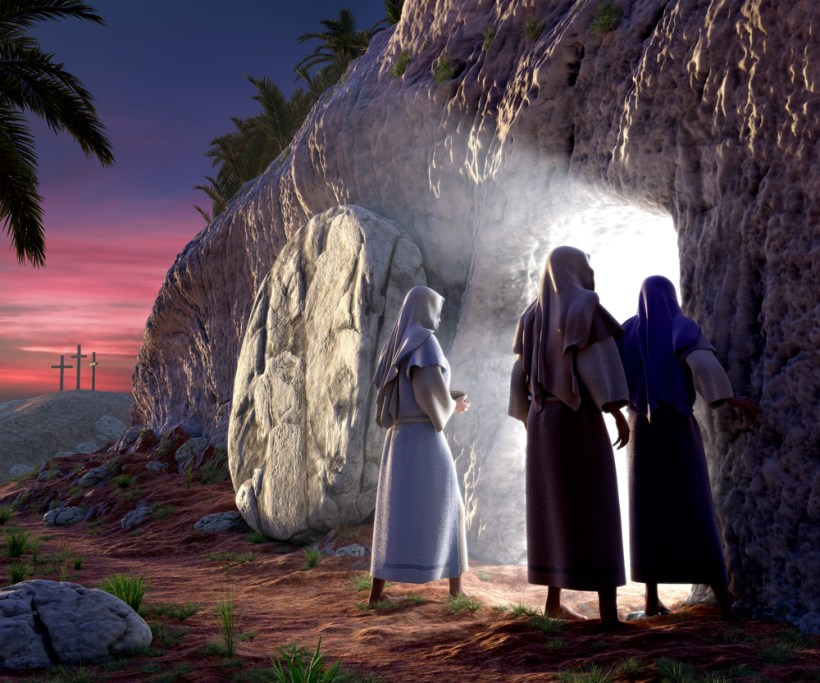
Three days and two night ago, Mary’s entire world came crashing down. The earth opened up and swallowed Jesus, whom Mary loved, into the abyss. Mary’s world was thrown into darkness and confusion, leaving only soul crushing grief, bewilderment, and emptiness.
She barely had enough time to get him down from that tree on which he had died. A very generous leader risked his life and reputation to help her with the body and prepare the body properly for burial before Sabbath began. (John 19:42)
The crash of his arrest and the whirl of those events that followed came upon her in a rushing torrent so quickly that she was completely overwhelmed, reeling, barely able to breath from beginning to end, and they ended with his death. The commotion of the last minute burial gave way to the silent weight of yawning emptiness and overwhelming grief in the dark night that followed.
All the men abandoned Jesus as the world began to unravel. The petty squabbling that broke up dinner the night before left Mary confused about what Jesus had been saying. Jesus was trying to tell them something important, but she could only remember bits and pieces….
Something about a cup… and pouring out his blood and…. It was all so surreal and confusing. So impossible to fathom. Jesus seemed to know what was going to happen. She could see it in his eyes. He was resigned to it, but she didn’t understand.
All the mysterious things Jesus said during the exciting and hopeful years they traveled with the Jesus played in her mind like a long, beautiful song ending in a discordant whimper. The mystery that seemed so poignant and momentous now seemed ominously empty. Through the looming darkness, a slight flame of hope sputtered amid the whirlwind of elements around her.
Jesus wouldn’t let anyone try to defend him. “He just gave himself up!” she thought. He utterly gave himself over to them. It was painful to watch, and painful to remember.
But even in his weakness he was noble. He was so beautiful. He seemed like everything they thought he was. Even in the end. Even as he resigned himself to death. She wept.
And those men were always arguing about who was the greatest. They didn’t do anything. They couldn’t even stay awake with him and pray. They were too dull to realize Jesus needed them!
They could have, at least, gone with him! But, they left him. They knew what was happening, but they pretended not to know! they didn’t lift a finger. When Jesus needed them most, they abandoned him. Peter even claimed he didn’t know Jesus! Peter!
Mary and the other women would not leave him. They saw the whole, unimaginable thing … and John. At least, John was there. Not that he did anything.
If it wasn’t for Joseph, who knows where his body would have ended up. Mary was grateful that Joseph owned a tomb nearby and even more grateful that Joseph and his associates helped with the body. (Luke 23:50-53). Even so, Mary couldn’t help but wonder where they were when Jesus needed someone. Anyone!
Even as she felt her heart shrink in anger and frustration, she knew they could not have stopped what happened. She softened, and she wept again.
They had no time to prepare him properly. It was the Sabbath, and night was upon them. The hours labored by. It seemed like Jesus lay there for an eternity through the night. Everything weighed so heavily on Mary’s heart. She needed to get to him.
Joseph and Nicodemus came through with the spices and ointments for Mary to prepare the body in the morning. (Luke 23:56) She was up before the dawn. She couldn’t sleep anyway.
The hopeful sounds that emerge in light’s first dawn might have lifted her heart on any other morning. Tears came in waves. She could hardly see at times.
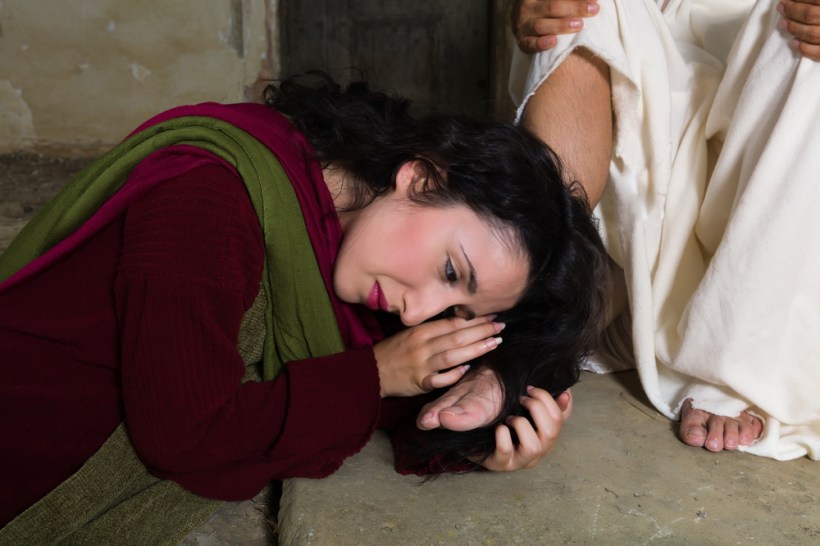
Tears she could not manage to wipe way with the back of her hands fell from her cheeks into the mixture of ointment and spices. She recalled the day she wiped tears from his feet with her hair in waves of repentant gratitude and joy, knowing her sins were forgiven, and her life was forever changed.
Her tears turned to waves of incontrollable sobs. She could not continue until they subsided.
Mary could not adequately express the depth of gratitude for Jesus for rescuing her from the demons that haunted and tormented her from her youth. She didn’t care what anyone thought.
Nothing had been more precious to her than the ointments she collected… until Jesus set her free. She would have spent her entire life pouring her very self out for him.
She desperately longed to wind time back. The impossibility of it all was maddening. Those demons lurked again in the back of her mind. She shuddered as if to shake them off, and she continued with the ointment and spices.
Continue reading “The Resurrection from the Point of View of Mary Magdalene”




 Navigating by Faith