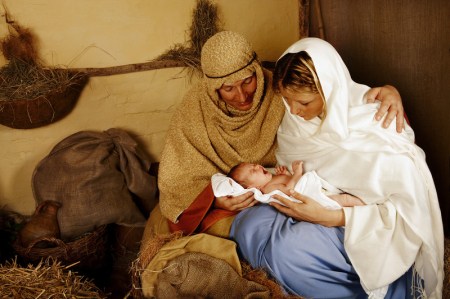
Christmas thoughts: Humble Beginnings, Worldwide Ends


Christmastime is a time to consider the birth of Christ. It’s “the reason for the season”, as the saying goes. Even with the busyness, commercialism and looming red eclipse of Santa, we usually pause to connect the dots to the birth of Jesus.

Whether you wish people a Merry Christmas or Happy Holidays, Christmas involves some acknowledgment of the birth of a man who was called Jesus who lived and died in the 1st Century in the region we identify as Palestine and Israel today. Here, in the confluence of Roman, Greek, Jewish and pagan influences, an obscure carpenter who lived maybe 33 years began a movement in human history that has spanned the globe and stood the test of time.

That movement has become the largest religion in the world today found on every continent and in every corner of the world. It is largely responsible for all the fundamental values of Western Civilization, though many people in “the west” have lost of sight of its influence. As appreciation seems to be waning for those foundations in the west, its influence is spreading in the east and global south.

It flourishes in the cold, communist climate of China and in the hotly hostile religious climate of Iran. It has made its way into the far reaches of the earth, down remote jungle streams and over barren desert sands to touch all people groups of the earth.

The circumstances of the birth of this influential, but humble, man are shrouded in mystery and quiet awe. Though many doubt the claims attached to him, no one can doubt his time enduring and global influence. His birth is the pivotal moment in human history and the pivotal point of God’s plan for his creation if we believe what has been told.

Continue reading “Christmas thoughts: Humble Beginnings, Worldwide Ends”
The Thoughts of Many Hearts Revealed

canstockphoto14185731
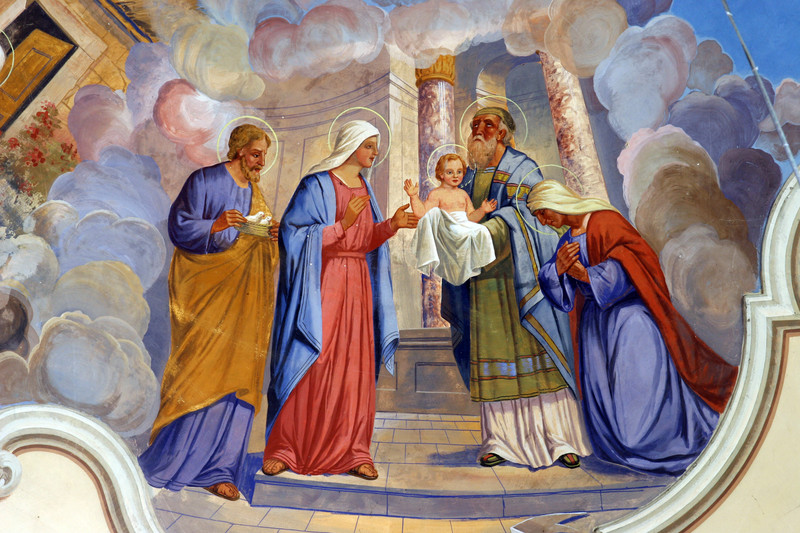
Young Jesus presented to Simeon at the Temple

“Then Simeon blessed them and said to Mary, his mother: ‘This child is destined to cause the falling and rising of many in Israel, and to be a sign that will be spoken against, so that the thoughts of many hearts will be revealed.'” (Luke 2:34-35)

People tend to focus on the “Christmas story”, but this verse that follows the account of the birth of Jesus is significant, if not subtle, in its ramifications.

Simeon was a temple priest who entertained the rituals performed by Mary after Jesus was born. Luke says that it was revealed to Simeon by the Holy Spirit that Simeon would not die before he had seen the Messiah.

Devout Jews of the time were expecting a Messiah (“Christ” in Greek). Keep in mind that more than 300 years had passed since the last of the Old Testament prophets who foretold the Messiah. Simeon knew this baby was the One because the Holy Spirit had spoken to him!

Following an article I read recently, the author had a back and forth discussion with a reader about whether Jesus actually existed. The skeptic questioned the reliability of the Bible and did not believe that Jesus of Nazareth was an historical figure. Among other things, he questioned the lack of reference in First Century historical accounts sources external to the Bible of Jesus and the miracles that the Bible describes. The reader argued: if so many miraculous things really happened, wouldn’t everyone have heard about them and made mention of them in historical accounts?

Never mind that social media was late to arrive in First Century Galilee and CNN had not yet been picked up Jerusalem at that time. I wonder, though, even if social media and CNN existed, would you believe accounts of miracles if they were reported in India? Mexico? Montana? Would you have even give it a second thought if some fishermen, homeless people, or prostitutes claimed to be healed?

Of course, this question begs another question: Is the Bible an historical account? The “books” of the New Testament are written like historical accounts, especially the Gospels and the Book of Acts. The epistles (letters) also have historical significance.

Simeon is recorded as saying to Mary that the Christ child was “destined to cause the falling and rising of many in Israel”. Isn’t that what happened with Jesus, who only lived a short 30 some years? He caused quite a stir, and the stir even continues today, almost two millennia later.

Many continue to speak against Jesus today, just as Simeon said they would, which is an odd thing if Jesus was never an historical figure. The thoughts of many hearts are revealed if this Jesus really was God who came in the flesh to walk among us. He is the continental divide between those who are open to God and those who deny him.

But, what is the evidence that Jesus was an historical figure who claimed to be God in the flesh?

Continue reading “The Thoughts of Many Hearts Revealed”