I have come to realize God meets people where they are.
When I was growing up, the concept of “finding yourself” was a popular idea. I thought I needed to go out into the world to find myself, and that’s what I did. I launched myself on that journey, even before I left high school, reading poetry, philosophy, literature – anything that seemed to have some hint of a claim on truth.
I remember the old adage that the wind can’t carry a ship at anchor, or a ship at anchor can’t be steered (or something like that). That idea became a guiding principal, and I have given that guidance to my children. You have to get up and move, even if you don’t know precisely where you are going. (That’s what Abraham did when God called Him to go to a land God would show him.)
I think it’s generally good advice. It has held me in good stead. If we wait around for the perfect opportunity to come our way, it may never come. We even find wisdom along those lines in Proverbs:
The mind of a man plans his way, but the Lord directs his steps.
Proverbs 16:9 (NASB)
When I set out to search for truth as a young adult who had squandered his teenage years in reckless drinking, drug use and risky behavior, I thought the truth was “out there”. I just had to go search for it and find it.
In more recent generations, the conventional wisdom might run along the line of finding the truth within. Oprah Winfrey and other popular prophets of modern wisdom would say we don’t need to go searching for the truth “out there” because the truth is inside us.
In my latter days now, as a journeyer who moves a bit slower, I have come to see things a bit differently. Neither paradigm rings completely true. I think we can find truth “out there”, and we can find truth “within”, but truth is not limited to any one “place”. Truth is part of the fabric of reality of the world God created.
I certainly don’t want to make light of the search! The search is critical. We have to want “it”. We need to orientate our hearts toward finding “it”. We need to value the truth for its own sake and be willing to let go of anything that runs counter to it – even if we don’t like it, even if the truth doesn’t look all that attractive to us – even if the truth is hard to accept.
At the same time, truth isn’t necessarily “out there”, and it isn’t “within” either. I am (you are) not the arbiters of truth. “My truth” doesn’t mean anything in the face of reality. We don’t talk about “my scientific truth”, and we shouldn’t talk about “my spiritual truth” – if we are really interested in truth at all.
People say, “I found God”. I used to say that too, but the words always sounded a bit off as they stumbled from my lips. Sometimes, we can’t find exactly the rights words to say what we mean, so we settle for the only words we can find. I think I have better idea about these things, now, than I once had.
Mary Magdalene, Mary, & Salom walking up to the bright empty tomb of Jesus Christ early Sunday morning
Three days and two nights ago, Mary’s entire world came crashing down. The earth opened up and swallowed Jesus, whom Mary loved, into the abyss. Mary’s world was thrown into darkness and confusion, leaving only soul crushing grief, bewilderment, and emptiness.
She barely had enough time to get him down from that tree on which he had died. A very generous leader risked his life and reputation to help her with the body and prepare the body properly for burial before Sabbath began. (John 19:42) It was the least they could do.
The shock of his arrest and the whirlwind of everything that followed came upon her in a rushing torrent so quickly that she was completely overwhelmed, reeling, barely able to breath. The that unbelievable, astonishing, implausible whirlwind of events ended with his death. It’s all too unreal.
When the devotion of last minute burial preparation ended and the tomb was sealed, tornadic activity gave way to the silent weight of reality. The yawning emptiness and overwhelming grief descended on Mary as she labored to get home in the darkness.
All the men abandoned Jesus as their world began to unravel. The petty squabbling at dinner the night before left Mary confused about what Jesus had been saying. Jesus was trying to tell them something important, but she could only remember bits and pieces….
Something about a cup… and pouring out his blood and…. It was all so surreal and confusing. So impossible to accept.
Igt seemed clear to her in retrospect that Jesus seemed to know what was going to happen. She remembered seeing it in his eyes. He was resigned to it, but she didn’t understand. How could she have understood?
All the mysterious things Jesus said during the exciting and hopeful years they traveled with him played in her mind like a long, beautiful symphony suddenly ending in a grand, discordant cacophony that would not resolve before it faded into a whimper. The mystery seemed so poignant, but no less momentous and ominously empty. Through the looming darkness, a slight flame of hope sputtered as she recalled these things like a lone survivor clinging to whatever is close hand in the receding waters of a tsunami .
As she reached her destination for the night, she recalled that Jesus wouldn’t let anyone try to defend him. “He just gave himself up!” she thought. He utterly gave himself over to them. It was so painful to watch.
But even in his weakness he was noble. He was so beautiful. He seemed like everything they thought he was. Even in the end. Even as he resigned himself to death…. She wept and the torrent of her tears broke through the dam of the brave front she put on through all of it.
“Those men!” she thought, “They didn’t do anything. The torrent took an angry turn. “They were always arguing about who was the greatest.” Her thoughts tumbled like rocks that could not withstand the current. “They couldn’t even stay awake with him! Jesus needed them!”
She let out a long, mournful gasp as she recognized the dark cloud threatening her and swallowed her anger.
“They could have, at least, gone with him! But, they left him,” she mourned. “They saw it happening, but they pretended not to know!” her thoughts raced again. “They didn’t lift a finger. When Jesus needed them most, they abandoned him. Peter even claimed he didn’t know Jesus! Peter!” She stopped as the dark cloud threatened again.
Mary and the other women would not leave him. They saw the whole, unimaginable thing … and John. “At least, John was there…. Not that he did anything, either,” Mary recounted.
She realized, “If it wasn’t for Joseph, who knows where his body would have ended up.” Mary was grateful that Joseph owned a tomb nearby and even more grateful that Joseph and the people with him helped with the body. (Luke 23:50-53). Even so, Mary couldn’t help but wonder, “Where they were earlier – when Jesus needed someone. Anyone!”
Even as she felt her heart constrict in anger and frustration, the realization came in like the gentle lapping of the waves on the shore, “They could not have stopped what happened.” There were powerful forces at work that Mary did not understand. She softened, and she wept.
They didn’t have time to prepare him properly. It was the Sabbath, and night was upon them. The hours labored by through the night. The force of things undone kept slept at bay. Everything weighed so heavily on Mary’s heart. She needed to get to him as soon as she could, as soon as the doaw broke and Sabbath was over.
Mary was up before the dawn. Sleep was not an option anyway. She hurried to the tomb, where she met Joseph and Nicodemus who came through with the spices and ointments for Mary to prepare the body in the soft light of the morning. (Luke 23:56)
The hopeful sounds of birds gently singing in the still of the early morning might have lifted her heart on any other day. She was drowning in sadness, as tears came in waves. She could hardly see at times.
Tears she could not manage to wipe way with the back of her hands fell from her cheeks into the mixture of ointment and spices. She recalled the day she wiped her own tears from his feet with her hair in repentant gratitude and joy, knowing her sins were forgiven, and her life was forever changed.
The dam of whatever shame might have remained was swept away. Her tears turned to waves of uncontrollable sobs. She could not resist them. She gave herself over to them in a gush of new gratitude for all Jesus had done, and she could not continue until the waves of emotion passed.
Mary could not adequately express the depth of gratitude for Jesus for rescuing her from the demons that haunted and tormented her from her youth. She tried. It wasn’t enough. She didn’t care what anyone thought, but it still wasn’t enough.
Nothing had been more precious to her than the ointments she collected… until Jesus set her free. None of those precious ointments mattered anymore. They were all she had, and they weren’t enough. She would have spent her entire life pouring her very self out for him.
The grief returned, and she desperately longed to wind back time. The impossibility of it all was maddening; it seemed so impossible, yet it was so formidably real. Those demons lurked again in the back of her mind. She caught herself again, shuddered, and and devoted her weary mind to the ointment and spices and the body of her precious love, Jesus, lying lifeless at her side.
Like many people, I suppose, I have been thinking about the phenomenon known as “deconstruction” since it has become popular to tell deconstruction stories in recent years. A deconstruction story is an “anti-testimony”; it’s a testimony of a journey from belief in the God of the Bible to non-belief in the God of the Bible.
Last summer, a high profile Christian worship leader and the guy who wrote the book urging Christians not to date (that created a generation of non-dating Christians) “deconstructed”. They walked away from their faith and publicly announced it, blogged about it, were interviewed about it and became celebrities of the walk away from faith movement.
Other notables come to mind as well, but I am not going to name them. That isn’t the point. I only recount these stories to demonstrate that “it’s a thing”, as my kids say.
Old timey religious folks used to call it “backsliding”. By that, they meant turning back to a sinful lifestyle, lured away by the temptation of sin. I remember people calling it “falling away”. By that we meant, losing faith, not being able to hold on to it.
Deconstruction seems to be a much more noble and honorable thing to do than backsliding or falling away. (I say that not without my tongue in cheek.) Deconstruction suggests that you had a hand in it. You didn’t backslide against your better judgment or let faith slip through your fingers; you rolled up your sleeves and dismantled your faith, and you found that it didn’t fit back together again.
It’s scientific, right? So it must be a good thing.
Deconstruction is popular, I believe, because skepticism is gaining in popularity. Scientists, like Neil de Grasse Tyson and pseudo-scientists, like Bill Nye, “the Science Guy”, have ridden that wave of popularity scaling away religious (and philosophical) ideas and replacing them with science, because (they say) science has all the answers.
Deconstruction is science, right?
I don’t buy it for a second that science and religion are incompatible, and neither do many scientists. I participated in a Zoom conference just this morning with a biochemist who is a believer. On the other hand, deconstruction might not be the evil that some Christians may believe it is. In fact, I think, deconstruction can be a good thing.
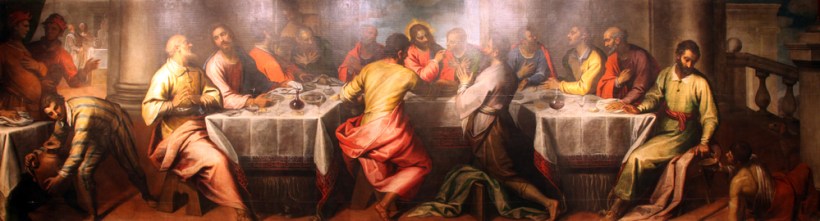
Imagine being a close friend of Jesus in the 1st Century, reclining at the table with him, eating a meal. It’s been a roller-coaster three years! Your whole world is buzzing about him. He is absolutely the talk of the town.
You are still not quite sure what all he is talking about, but you have come to believe in him. If he is not Messiah your ancestors have talked about for many generations, he is certainly a prophet. Maybe he really is the Messiah?!
Your people have held on to hope for hundreds of years of returning to former glory. This Roman rule is not the way it is supposed to be. God rescued your ancestors out of the land of Egypt, and He gave them the promised land. God drove out all the inhabitants of the promised land before them. He could do it again! Certainly, He would do it!
When Jesus rode into Jerusalem on that donkey, it seemed almost so real you could taste it. This really seems to be it! The people are behind him. Everyone is waiting to see what’s next. A new day for Israel seems to be right around the next corner!
But, you never know with Jesus. He is anything but predictable, and he says some really weird things sometimes. Hard things. You don’t completely understand what he is getting at when he talks about the Temple being destroyed and rebuilt in three days. What does that have to do with anything? All of those statements about being the Bread, and the Living Water and the Vine….
As you sit at the table, the talk is excited. It is Passover. Expectation in the air. This Passover is particularly poignant with all that has been going on, but Jesus is quiet.
Not that it’s unusual for Jesus to be quiet at times. They had gotten used to it. He often went off by himself, and he would often seem to drift into deep thought, especially lately.
Jesus had left all of you instructions about preparing the Passover meal. No one knew where Jesus was, but everything was left for you as he said it would be. He finally showed up and watched as you finished. You didn’t really notice his silence until he finally spoke as everyone was finally reclining at the table.
Jesus was obviously waiting for just this time. His voice carried a certain weight to it. More than usual. There was a firm, but calm, urgency to his words. The excited tones of the men around the table fell immediately quiet as Jesus opened his mouth to speak. Continue reading “The Cup of the New Covenant Poured Out for Us”→
A friend of mine, my closest friend in college a dear brother in Christ, shared with me something a friend of his shared with him. His friend claimed it to be a prophecy from God. I give it you as it was given to me. He said:
“In the wake of the panic-demic, a great national re-set will settle into the culture. We will witness clarifying ‘adjustments’ to what we value or hold dear. Healthy ones. Already this has served as a great sifting….. [W]e (collectively) have not lost much, though we have faced the specter close on the horizon. When the dust settles, we may be surprised to find ourselves in a much better place. Immunized perhaps by just a taste.”
Many people don’t believe that God gives people prophecies today as He did in Scriptural times. Indeed, if God does still do that, we should be careful to accept them. As Paul said then, “Do not despise prophecies, but test everything; hold fast what is good.” (1 Thessalonians 5:20-21)
Were all of the prophecies Paul was talking about then written down?
No. We have letters from Paul and other close associates of Jesus, but we don’t have the prophecies Paul was talking about to the Thessalonians. Those prophecies, I believe, were for them. They weren’t to be despised [ignored, treated as nothing and lacking value][i], but they were to be tested.
Testing prophecies means taking them seriously. The word for “test”[ii] here implies that the prophecies are to be put to the test, examined and proven by testing. This is not a skeptical exercise, as a 21st Century believer (or unbeliever) might suppose. The idea was to prove what is good.
Perhaps, our reluctance to think that prophecy is a way God still communicates to us today is based in our lack of understanding of what is meant by prophecy. We think of predictions of things to come. Indeed, the Old Testament is full of such prophecies. Jesus also predicted things.
Prediction and foreshadowing of future events is partially what prophecy can mean, that isn’t all that prophecy means. The Greek word translated “prophecy”[iii] can mean simply speaking the mind of God. Hopefully, your pastor does that when he preaches!
Prophecy does tend to have predictive elements to it, but that isn’t all that it is, and prophecy doesn’t have to be predictive. It can simply be admonishment, encouragement, provide comfort or otherwise speak the mind of God in a particular moment or circumstance. When we seek to comfort or speak a timely word to a friend, praying to God for wisdom, we are attempting to use the gift of prophecy.
Sometimes we fail. We kind of know it when we do. What we say falls flat. But sometimes, we feel the Holy Spirit in the words that are spoken that confirms we have hit the mark. This is prophecy.
Prophecy is a timely word, a fitting word, a word that resonates with Scripture in the moment. It’s a word that carries some weight in the moment such that it encourages, comforts, rebukes, corrects or has whatever affect the Holy Spirit gives it. If you are blessed to have a good preacher in your church, your preacher may speak the mind of God (prophesy) most Sundays.
Prophecy isn’t to be confused with the gift of teaching. Teaching is the gift of being able to pull the meaning out of a text and communicate it clearly. The gift of prophesy is the ability to make Scripture poignant and apply it in the moment providing direction for the future. A preacher with the gift of teaching and the gift of prophecy is a rare gift.
So, back to my friend’s friend.
I am not going to hang on what he said like Scripture. I don’t think that is the purpose of prophecy, and especially not since the time of Christ. Still, I take it seriously. It rings true to me.








 Navigating by Faith